• Following Us

  • Categories

  • Check out the Archives


  • Awards & Nominations

New Escapist Column! On the Understated Power of Pierce Brosan’s Bond…

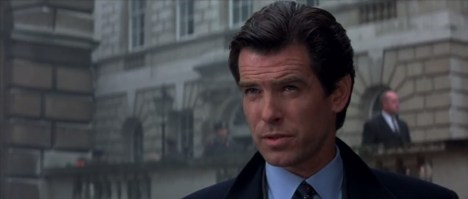
I published a new In the Frame piece at Escapist Magazine last week. With the release of No Time To Die pushed out, and St. Patrick’s Day relatively understated, I thought it was worth taking a look at Pierce Brosnan’s tenure playing James Bond.

Brosnan is often overlooked in assessments of the James Bond franchise, largely overshadowed by the (deserved) reappraisal of Timothy Dalton’s vulnerability in the role and the (deserved) celebration of the emotional complexity that Daniel Craig brought to the icon. This is a shame, because there’s a lot to like about Pierce Brosnan’s interpretation of the superspy. Most obviously, there’s a sense in which Brosnan’s interpretation of the character refused to be tormented and tortured by the work that he did. Brosnan played Bond as a man uniquely attuned to the demands of his job, an unchanging man in a rapidly changing world. The result is a character who seems unflinchingly brutal, but who also collapsed his patriotism into satisfaction of his more personal vices.

Whether intentional or not, Brosnan’s interpretation of the character makes the audience uncomfortable, particularly the joy that he takes in violence and the sense in which little really matters to him beyond satisfying his own urges. It’s a provocative approach to the character, one that stands in marked contrast to the more considered introspection of the the two performers either side of him. Brosnan’s Bond often seems to be challenging the audience, asking whether we enjoy the callous violence and detached brutality as much as the protagonist does, without offering us the “get out of jail free” card that Dalton and Craig’s more solemn portrayals afford viewers.

You can read the piece here, or click the picture below.

New Escapist Column! On “Rogue One” as “Star Wars” for the Twenty-First Century…

I published an In the Frame piece at Escapist Magazine a little while ago, looking at Rogue One: A Star Wars Story.

Like most films, the original Star Wars was a product of its time. It spoke to simmering tensions and traumas related to the late seventies, from lingering atomic anxieties to the horrors of the Vietnam War. However, a lot of time has passed since the original trilogy, and our cultural anxieties have changed over the intervening years. Since the purchase of Lucasfilm by Disney, the Star Wars franchise has been fixated and focused on the original trilogy. However, Rogue One: A Star Wars Story is the only film to make an effort to ask what those tropes and conventions mean moved to the present day.

You can read the piece here, or click the picture below.

161. The Irishman – This Just In (#158)

Hosted by Andrew Quinn and Darren Mooney, and this week with special guests Phil Bagnall and Jay Coyle, The 250 is a fortnightly trip through some of the best (and worst) movies ever made, as voted for by Internet Movie Database Users.

This time, Martin Scorsese’s The Irishman.

Sitting alone in an older retirement home, former gangster Frank Sheeran recounts a life story that spans the second half of the twentieth century, charting a life lived on the margins of greatness but also at the outskirts of decency.

At time of recording, it was ranked the 158th best movie of all time on the Internet Movie Database.

Continue reading

150. Joker – This Just In (#9)

Hosted by Andrew Quinn and Darren Mooney, and this week with special guest Jenn Gannon, The 250 is a (mostly) weekly trip through some of the best (and worst) movies ever made, as voted for by Internet Movie Database Users. New episodes are released every Saturday at 6pm GMT.

This week, Todd Phillips’ Joker.

In eighties Gotham, a failed clown descends into madness as the city breaks down around him. Garbage builds up in the streets as violence lurks in the alleyways. What kind of a man can survive such a world?

At time of recording, it was ranked 9th on the Internet Movie Database’s list of the best movies of all-time.

Continue reading

Non-Review Review: Rambo – Last Blood

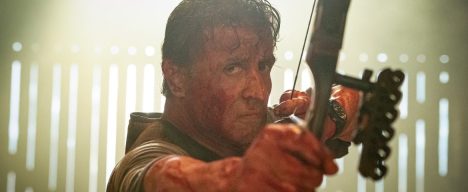
There’s something almost disappointingly pedestrian about Rambo: Last Blood.

The sequels to Rambo: First Blood have often struggled to live up to the original film, to capture the aspects of that early eighties action drama that elevated above so many of its contemporaries. Watched today, First Blood is a surprisingly sensitive piece that exists worlds apart from the gleeful revenge fantasies of Rambo: First Blood, Part II or Rambo III. It exists a world apart from superficially similar action movies like Missing in Action or P.O.W.: The Escape, a surprisingly meditative and reflective piece of work.

Parting shots.

It isn’t really a surprise that Last Blood strips out a lot of that meditation and reflection. Even the best of the sequels – the no-nonsense Rambo, from 2008 – was relatively straightforward in its ambitions and its methods. What is disappointing about Last Blood is how mundane its own ambitions and methods really are. The bulk of Last Blood is given over to a story that feels lifted from the most crass of the spiritual descendants of the original Rambo, with the eponymous Vietnam veteran embarking on a mission into the Mexico underworld to recover his surrogate daughter.

That said, Last Blood roars to life in its final act, recapturing some of the thrills that distinguish the series from so many of its imitators and successors. There’s a pulpy absurdist thrill to the film’s final act, which tries awkwardly to combine the wry commentary of the original film with the hyper-violence of the sequels. The result is a film that averages out to somewhere around “just about fine.”

Take a bow.

Continue reading

Non-Review Review: Ready or Not

“It’s true what they say,” remarks Daniel Le Domas at one point in Ready or Not. “The rich really are different.”

The basic plot of Ready or Not should be familiar. A young woman finds herself welcomed into a wealthy family with an eccentric tradition. After each wedding, the new member of the family is invited to compete against the family in a game. That game can be anything, from tic-tac-toe to checkers. (“I will play the f&!k out of checkers,” Grace playfully boasts when the tradition is revealed.) However, when Grace draws the “hide and seek” card, things quickly take a turn for the macabre. Unlike other games, “hide and seek” is deathly serious. The family plan to hunt Grace down and offer her up as a ritual sacrifice.

What’s on the cards for this evening?

Although Ready or Not brings its own unique perspective to the template, the film is consciously riffing on the classic Most Dangerous Game set-up. Armed with bows-and-arrows, antique firearms and crossbows, the Le Domas family stalk their prey through their decadent mansion as the stakes gradually become clear to Grace. Ready or Not filters this premise through the lens of class and wealth, focusing on economic divide between Grace and her husband’s family. “She’ll never be one of us,” complains Charity Le Domas during the wedding, to her husband Daniel. Daniel responds, “Of course not. She has a soul.”

Ready or Not is pulpy and visceral fun, an engaging and exciting horror-comedy that skillfully blends the two genres in a way that plays to each’s strength. Ready or Not shrewdly positions itself as both a side-splitter and a skull-splitter.

The family that prays together, stays together.

Continue reading

143. Once Upon a Time… in Hollywood – This Just In (#127)

Hosted by Andrew Quinn and Darren Mooney, and this week with special guest Phil Bagnall, The 250 is a (mostly) weekly trip through some of the best (and worst) movies ever made, as voted for by Internet Movie Database Users. New episodes are released every Saturday at 6pm GMT.

This time, Quentin Tarantino’s Once Upon a Time… in Hollywood.

It’s February 1969. Everything is changing. Hollywood itself seems to be facing an inevitable collision with the turmoil that has engulfed the rest of the world. Against this backdrop, lives intersect and collide. Returning from the United Kingdom, Sharon Tate moves in next door to washed up fifties western star Rick Dalton, both completely unaware of how profoundly their lives will impact one another.

At time of recording, it was ranked 127th on the Internet Movie Database’s list of the best movies of all-time.

Continue reading

“Ladies, That Was Fun”: What’s Happening Under the Hood in “Death Proof”…

Okay… Warren’s sending over shots, and you know the house rules. If he sends over shots, you gotta do them.

What?

Hey, them’s the rules, baby.

Warren says it, we do it!

I love that philosophy! “Warren says it, we do it.”

The filming of Kill Bill, Vol. 1 and Kill Bill, Vol. 2 took nine arduous months. There were a variety of reasons for this, most obviously that the film represented a departure from the stylistic sensibilities and aesthetic associated with Quentin Tarantino. A director best known for his snappy dialogue and vivid characters was pushing himself outside of his comfort zone, building a movie that would incorporate elaborate action sequences and even an animated interlude. In fact, the films came after something of a short break in the director’s career. The six year gap following Jackie Brown was the longest in his career to that point.

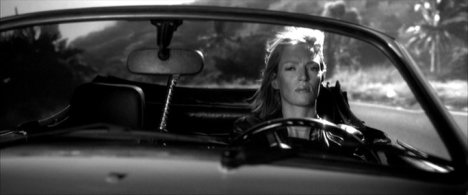
As shooting was winding down, an incident occurred on the set. Details of that incident would not be made public for more than a decade and a half, although it would have a profound impact on all involved. By all accounts, Tarantino pressured Uma Thurman into driving a stunt car herself, leading to an accident. Thurman recalls, “The steering wheel was at my belly and my legs were jammed under me. I felt this searing pain and thought, ‘Oh my God, I’m never going to walk again.’” Thurman was not paralysed, but she was scarred by the experience, with a “permanently damaged neck and […] screwed-up knees.”
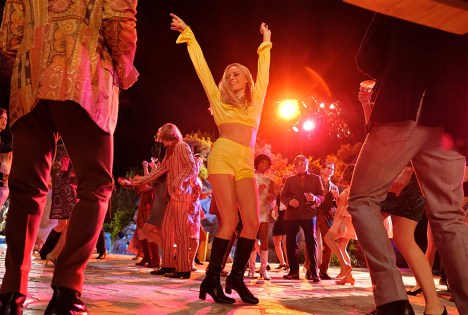
It was an act of reckless malfeasance from a director who had – with Reservoir Dogs and Pulp Fiction – announced himself as one of the preeminent directorial voices of his generation. Tarantino is remarkable among directors of his generation for establishing a cult of personality, being as effective on the chat show circuit as behind the camera. Tarantino has been known for making brass pronouncements and asserting his authority, from his famous assertion that he is god within his fictional universes to his insistence on shutting down lines of questioning in interviews to rejecting reporters’ questions outright.

The case involving Tarantino and Thurman is perhaps more complicated than a lot of the similar stories of directorial abuse that have entered the spotlight since the #metoo movement rippled through Hollywood. This complexity is compounded by the fact that Thurman has publicly forgiven Tarantino for his part in the accident, and for Tarantino’s contrition on that point. (Tarantino’s public support of progressive causes like Black Lives Matter also plays a part, even if there is still a larger debate to be had about Tarantino’s relationship with African American culture.)
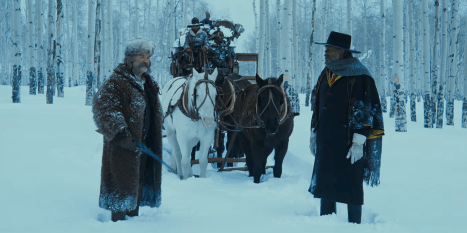
Even if none of this was made public until after the release of The Hateful Eight, these details hang over a lot of Tarantino’s work since the accident. Tarantino has conceded, “Beyond one of the biggest regrets of my career, it is one of the biggest regrets of my life.” It is notable that Tarantino had always been particularly close to Thurman. The story for the Kill Bill films is credited to “Q and U”, the pair practically living together during the development of the story. (Tarantino allegedly promised the script to the actor as a thirtieth birthday present.)

The tragedy echoes through a lot of Tarantino’s subsequent work. It is notable, for example, that a lot of Tarantino’s later work focuses explicitly on the idea of rewriting history. Inglourious Basterds famously offers an alternate ending to the Second World War, a striking piece of historical revisionism. There are also shades of the tragedy to be found in Once Upon a Time… in Hollywood, which features two protagonists that are – to quote actor Brad Pitt – “two sides of the same coin.” Rick is a washed-up has-been who worries he is out of touch. However, his best friend is a reckless stuntman who may have killed his wife.
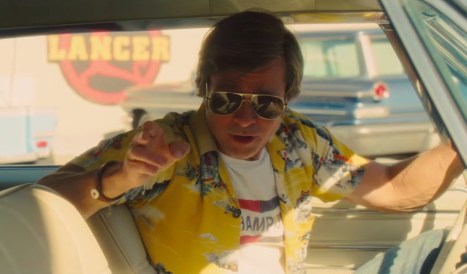
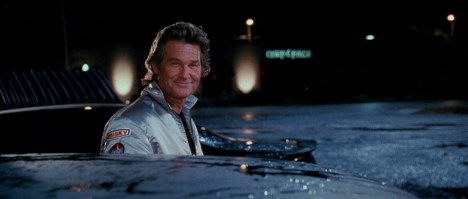
A lot of the discussion around Once Upon a Time… in Hollywood has likened it to Inglourious Basterds. This makes a great deal of sense. Both stories are effectively historical revisionist fairy tales. Notably, the opening chapter of Inglourious Basterds is even helpfully subtitled “Once Upon a Time in Nazi-Occupied France.” It is a logical point of comparison, but one that conveniently glosses over an even more obvious reference point for Once Upon a Time… in Hollywood within Tarantino’s filmography.

That point of comparison is Death Proof.
Continue reading

New Podcast! The X-Cast – Season 4, Episode 15 (“Kaddish”)

Always a delight to stop by The X-Cast again. This time discussing a (relatively) underrated fourth season installment, Kaddish with the fantastic Russell Hugo.

Kaddish exists at a very weird point in the fourth season of The X-Files. It arrives following a blockbuster run of episodes, including Leonard Betts, Never Again and Memento Mori. Those are big episodes in the context of the show’s larger run the kind of stories that people have very strong opinions about. Kaddish follows those episodes, and so tends to be overlooked. In fact, it explicitly avoids dealing with any of the fallout from those episodes, at least directly. However, on its own terms, it’s a very lyrical and abstract story, a tale that is perhaps more timely now than when it was broadcast, a gothic fairy tale that hints at the big themes of the stories around it: about life, love, mortality, and loss. It’s beautiful in its own intimate way.

As ever, you can listen to the episode here, or click the link below.

Continue reading

Non-Review Review: Once Upon a Time… In Hollywood

Once Upon a Time… in Hollywood is a fairy tale, for better and for ill.

Continue reading