• Following Us

  • Categories

  • Check out the Archives


  • Awards & Nominations

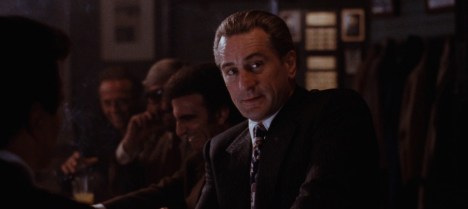
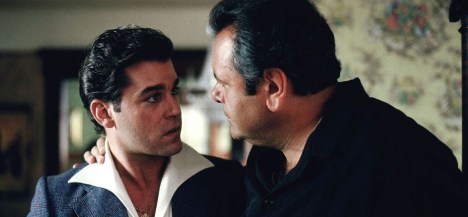
200. Goodfellas – Summer of Scorsese (#17)

Hosted by Andrew Quinn, Jay Coyle and Darren Mooney, and this week with special guest Jenn Gannon, with Andy Melhuish, Jack Hodges and others, The 250 is a (mostly) weekly trip through some of the best (and worst) movies ever made, as voted for by Internet Movie Database Users. New episodes are released every Saturday at 6pm GMT.

This time, continuing our Summer of Scorsese season, Martin Scorsese’s Goodfellas.

Martin Scorsese is one of the defining directors in American cinema, with a host of massively successful (and cult) hits that have shaped and defined cinema across generations: Taxi Driver, Raging Bull, The Colour of Money, The Aviator, The Departed, Hugo, The Wolf of Wall Street. The Summer of Scorsese season offers a trip through his filmography via the IMDb‘s 250.

As far back as he could remember, Henry Hill always wanted to be a gangster. However, the life that Henry leads doesn’t turn out exactly as the young hoodlum might have expected, as he finds himself navigating a web of betrayal and violence involving his closest friends.

At time of recording, it was ranked 17th on the Internet Movie Database‘s list of the best movies of all-time.

Continue reading

“It Had Nothing to Do With Me”: The Moral Sloth of Henry Hill in “Goodfellas”…

The podcast that I co-host, The 250, continued our belated Summer of Scorsese last week with a look at Raging Bull. This week, we’re looking at Goodfellas. It is a fun and broad discussion that is well worth your time, but it spurred some of my own thoughts about Martin Scorsese’s 1990 gangster classic.

There is a long-running debate concerning the films of Martin Scorsese, one that arose most recently around The Wolf of Wall Street.

To his critics, Scorsese is seen as a director who glorifies and venerates a certain form of toxic masculinity. There’s a certain logic to this argument. After all, whatever Scorsese’s intentions may be, there is no denying that his films attract a certain unironic fandom that gets swept up in these stories of tough men who do terrible things. This is reflected in everything from the ubiquity of Goodfellas as a “dorm room poster” to celebrations of its depiction of masculinity to the fact that real-life gangsters reportedly love it.

This criticism largely derives from the fact that Scorsese effectively surrenders control of the film’s narrative to his central characters. His movies are often literally narrated by their central characters: Henry and Karen Hill in Goodfellas, Ace Rothstein and Nicky Santoro in Casino and Jordan Belfort in The Wolf of Wall Street. These characters are given ample room to espouse their worldview and their philosophy, to craft the story that they want to tell.

Scorsese undoubtedly pushes back against his characters in interesting ways – often ironically juxtaposing their conceited monologues with brutal imagery to underscore the dissonance between their narrative of events with the reality of the situation. However, Scorsese largely avoids overtly moralising. He avoids the easy route of having external characters comment too obliquely or too loudly on the moral decadence at play. Indeed, the most interesting thing about Karen Hill is her own complicity in Henry’s immorality rather than any condemnation of it.

To be fair, there’s a lot to recommend this approach. American cinema has come a long way since the days of the Hays Code and the Breen Office, and there is a lot to be said for the importance of treating an audience as mature enough to grapple with complicated ideas or giving them room to reach conclusions on their own terms. Psycho is a classic piece of American cinema, but it suffers greatly from a closing scene where a new character shows up to lecture the cast (and implicitly the audience) on the film that they just watched.

Indeed, this is ultimately the beauty of Scorsese’s approach to these characters. Scorsese gives them all the room that they need, and they still manage to incriminate themselves. Their robust attempts to glorify and mythologise themselves inevitably backfire. Like a good detective or lawyer, Scorsese shrewdly just allows characters like Henry Hill to talk and talk and talk, knowing that they have been given enough rope with which they might hang themselves.

Continue reading

Non-Review Review: The Devil All the Time

The Devil All the Time demonstrates that the adjective “novelistic” isn’t always a compliment.

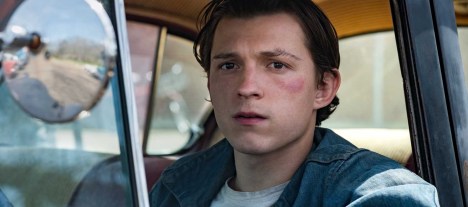
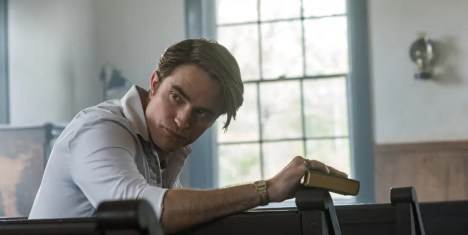
Writer and director Antonio Campos is clearly aiming for an epic sweep to The Devil All the Time. The film unfolds over the course of several decades, following several intersecting lives in rural Ohio in the space between the end of the Second World War and the height of the Vietnam War. This is a tale that spans generations, with an impressive density. Small characters get huge arcs, dramatic twists hinge on chance encounters, and a large amount of the film’s plot is delivered by way of folksy omniscient narration.

Holland of the Free?

It is easier to admire The Devil All the Time than it is to appreciate it. Campos has drawn together a formidable cast to tell a story that explores a host of big ideas about small town life. The Devil All the Time clearly aspires to be a piercing study of religion, sex and violence in the American northeast. The film maintains an impressive atmosphere, in large part due to Campos’ moody direction and the work of Lol Crawley and the rumbling soundtrack from Danny Bensi and Saunder Jurriaans.

However, nothing in The Devil All the Time has room to breath. There are so many elements competing for narrative space that even films two-hours-and-twenty-minute runtime feels overstuffed. Characters are never allowed to stew or develop in a way that a story like this demands, instead reducing the movie to a series of plot points and thematic observations delivered in a rich and moody manner, but without any real substance to bind them all together.

Book ‘im.

Continue reading

199. Raging Bull – Summer of Scorsese (#146)

Hosted by Andrew Quinn, Jay Coyle and Darren Mooney, and this week with special guest Grace Duffy, The 250 is a (mostly) weekly trip through some of the best (and worst) movies ever made, as voted for by Internet Movie Database Users. New episodes are released every Saturday at 6pm GMT.

This time, continuing our Summer of Scorsese season, Martin Scorsese’s Raging Bull.

Martin Scorsese is one of the defining directors in American cinema, with a host of massively successful (and cult) hits that have shaped and defined cinema across generations: Taxi Driver, Goodfellas, CasinoGangs of New York, The Departed, Shutter Island, The Wolf of Wall Street. The Summer of Scorsese season offers a trip through his filmography via the IMDb‘s 250.

Jake LaMotta is a boxer who dreams of a shot at the big time. However, Jake does not play by the rules of the game. Over the course of his life and career, Jake struggles to tame the violence inside himself as he proceeds to push those closest to him further and further away.

At time of recording, it was ranked 146th on the Internet Movie Database‘s list of the best movies of all-time.

Continue reading

198. Taxi Driver – Summer of Scorsese (#107)

Hosted by Andrew Quinn, Jay Coyle and Darren Mooney, and this week with special guests Rioghnach Ní Ghrioghair and Alex Towers, The 250 is a (mostly) weekly trip through some of the best (and worst) movies ever made, as voted for by Internet Movie Database Users. New episodes are released every Saturday at 6pm GMT.

This time, kicking off our Summer of Scorsese season, Martin Scorsese’s Taxi Driver.

Martin Scorsese is one of the defining directors in American cinema, with a host of massively successful (and cult) hits that have shaped and defined cinema across generations: Raging Bull, King of Comedy, The Last Temptation of Christ, Goodfellas, Casino, The Departed, Shutter Island. The Summer of Scorsese season offers a trip through the director’s filmography via the IMDb‘s 250.

Travis Bickle cannot sleep. So he splits his nights between the Times Square porno theatres and his job as a taxi driver. Bickle immerses himself in the nightlife of New York City, finding himself adrift in a world of anomie and urban decay. Thoughts begin to formulate in his head, thought he can’t articulate or express, but thoughts that push him in a horrific and unsettling direction.

At time of recording, it was ranked 107th on the Internet Movie Database‘s list of the best movies of all-time.

Continue reading

196. The Terminator (#245)

Hosted by Andrew Quinn and Darren Mooney, and this week with special guests Joe Griffin and Emmet Kirwan, The 250 is a (mostly) weekly trip through some of the best (and worst) movies ever made, as voted for by Internet Movie Database Users.

This time, James Cameron’s The Terminator.

In 2029, Los Angeles is a burning hellhole. In 1984, it is not much better. In the dead of night, two soldiers from an apocalyptic future escape into the urban landscape. These mysterious veterans of a coming war make their way across the City of Angels, with only one name on their minds: Sarah Connor.

At time of recording, it was ranked 245th on the list of the best movies of all time on the Internet Movie Database.

Continue reading

New Escapist Column! On How “The Dark Knight Rises” Abolished Its Billionaire to Build a Better Batman…

I published a new In the Frame piece at The Escapist this evening. TENET reviews are dropping in under an hour, and DC Fandome is happening this weekend, so it seemed an appropriate time to take a look back at Christopher Nolan’s The Dark Knight Rises.

The Dark Knight Rises is a particularly interesting project in the current climate. It’s become common to criticise the idea of Batman as a billionaire who spends his fortune to dress up as a bat instead of actually using it to help the poor and impoverished of Gotham. In that context, The Dark Knight Rises is a work ahead of its time. It’s a story about how Bruce fails Gotham in his role as a billionaire, how maybe Batman shouldn’t be “a man from privilege” and a story in which Bruce donates his family home to the city’s “orphaned and at-risk youth.”

The Dark Knight Rises is the rare superhero story to posit an actual and meaningful ending for its protagonist, and The Dark Knight Rises argues that the only possible happy ending for Batman is for Bruce to lose his fortune and be declared dead, understanding that maybe the mantle of Batman should go to another person who is more keenly aware of what it means to live in Gotham. It’s a very clever and very insightful commentary on the Batman mythos, and one that has aged remarkably well.

You can read the piece here, or click the picture below.

“Doctor Who?” The Deconstructed Davison Doctor…

This week, I had the privilege of stopping by The Galactic Yo-Yo to talk a little bit about Doctor Who with the wonderful Molly Marsh. In preparation for the episode, I rewatched the bulk of the Peter Davison era for the first time in years. I talked about it on the podcast, which is worth your time. But I also thought it was worth jotting some of the thoughts down in more detail.

Rewatching the Peter Davison era of Doctor Who is a strange experience for a number of reasons, not all of which are good.

The Davison era arguably served as a point of transition. It existed in the negative space between two particularly memorable incarnations of the Time Lord. Tom Baker is justifiably considered the most important and influential actor to play the role. Notably, he was the only lead from the classic series to get a showcase scene in The Day of the Doctor. Despite Colin Baker’s protestations, this made a great deal of sense. For an entire generation of television viewers – not just Doctor Who fans – Tom Baker is the Doctor.
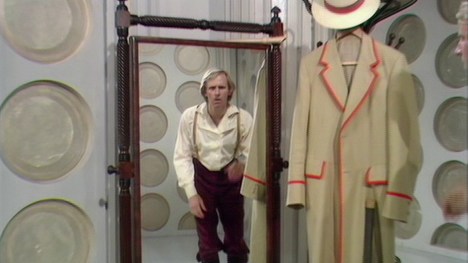
On the other extreme, Peter Davison was succeeded by Colin Baker. Whether rightly or wrongly, Colin Baker occupies a similarly important place in the mythos. With his garish costume and his string of terrible stories, Colin Baker was long the public face of the decline and decay of Doctor Who as a cultural institution. This isn’t entirely fair. The rot had set in considerably earlier than Baker’s arrival, and there’s a sense in which he suffered from terrible timing. Still, Colin Baker wound up serving as the face of the show’s hiatus and the embarrassing Doctor in Distress.

This puts Peter Davison in a strange position. He is caught between these two hugely important moments in the show’s history. However, he also arguably lacks a strong cohesive identity like other iconic iterations of the character. The Fifth Doctor is a markedly different character from the iterations around him, and Davison was subject to criticisms from fans that his interpretation of the title character was “bland” or “boring.” It’s arguable that the Sixth Doctor’s abrasive personality was a direct response to this perceived blandness.

However, in just under three full seasons in the role, Peter Davison left quite a mark on the Time Lord. His final story, The Caves of Androzani, is rightly regarded as one of the finest Doctor Who stories ever made. (Indeed, it is one of the rare stories to have topped polls of fandom.) More to the point, it’s notable that Davison would become a surprisingly strong influence on the revival series. Tom Baker got to occupy centre stage in The Day of the Doctor, but Davison returned first in Time Crash. The short served primarily as a love letter to Davison’s influence on the role.

There’s a lot of very fascinating stuff happening during Davison’s time in the role, most of seemingly happening by accident. The most striking thing about Davison’s tenure in the role is the recurring sense that he doesn’t quite fit. The Fifth Doctor often seems to struggle with the basic narrative conventions of Doctor Who, wrestling with the series’ core concepts and underlying assumptions. Over the course of Davison’s three seasons in the role, Doctor Who seems to ask what might happen if there were an iteration of the Doctor who wasn’t up to the task.

Continue reading

176. Mou Gaan Dou (Infernal Affairs) – World Tour 2020 (#—)

Hosted by Andrew Quinn and Darren Mooney, The 250 is a (mostly) weekly trip through some of the best (and worst) movies ever made, as voted for by Internet Movie Database Users.

This time, Alan Mak and Andrew Lou’s Mou Gaan Dou.

Trouble is brewing in Hong Kong. Crime boss Hon Sam has managed to evade the clutches of Superintendent Wong Chi-shing once too often. There can only be one explanation: Sam has a mole buried within the police department. However, as the police close in around him, Sam becomes convinced that Wong has is own embedded operative. What follows is a tense game of cat-and-mouse as the lines between cop and criminal – and self and other – blur

At time of recording, it was not ranked on the list of the best movies of all time on the Internet Movie Database.

Continue reading

New Escapist Column! On “Mad Max: Fury Road” and Finding Hope Amid the Apocalypse…

I published a new In the Frame piece at Escapist Magazine last week. There’s understandably been a lot of talk about the end of the world lately, understandably, but I thought it was worth unpacking Mad Max: Fury Road.

Fury Road is one of the best blockbusters of the past decade, appearing on countless lists of the best films of the 2010s. However, what distinguishes it from a lot of apocalyptic cinema is that it embraces hope in a very meaningful and practical way. Fury Road is largely about the impulse to retreat from horror and from untenable situations, to abandon a world that appears to be fallen. However, the film argues that such an impulse is ultimately self-destructive, as eventually such a retreat runs out of road. Instead, Fury Road contends that the proper response to a broken world is to turn around and face it head on, to fix it from the inside. It’s a brave and empowering message, and a large part of the film’s appeal.

You can read the piece here, or click the picture below.