• Following Us

  • Categories

  • Check out the Archives


  • Awards & Nominations

New Escapist Column! On the “Just Create New Female Characters” Argument…

I published an In the Frame piece at Escapist Magazine last week, on an interesting and age-old debate.

The question of how best to foster diversity in cinema and wider pop culture is a challenging one. Whenever the suggestion of race- or gender-shifting an existing character like the Doctor or James Bond comes up, the responses are always the same: “just create new characters!” It’s a strong argument conceptually, because it’s rooted in the (entirely correct) moral presumption that women shouldn’t need to repurpose old characters, but instead should have new characters. However, it also glosses over the economic and cultural realities of the current cinematic climate. The debate is more complicated than it might appear.

You can read the piece here, or click the picture below.

Hindsight is 2020: In Defense of the Best Picture Nominations…

It’s a strange position to be in, to mount a radical argument that the Best Picture race is actually fairly solid this year.

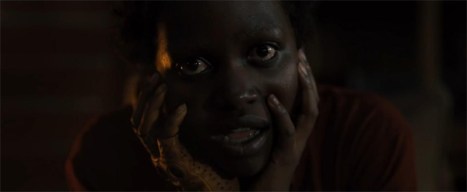
To be fair, there are legitimate grievances to be had. The Academy went with old favourites in several of the acting categories, overlooking amazing work. The Best Actress category would be stronger if the voters opted for Lupita Nyong’o for Us over than Charlize Theron for Bombshell. The Best Supporting Actress race would have been more interesting had Kathy Bates for Richard Jewell been replaced by Jennifer Lopez in Hustlers. The all-male Best Director category is also frustrating, considering the fine work done by directors like Olivia Wilde, Lulu Wang, Céline Sciamma, Lorene Scafaria, and more over the past year.
However, there is also something inevitable about the tone of the debate over the Best Picture race. The Academy Awards is never going to actually please everybody. There are several hundred films released every year that meet the criteria for eligibility. Taste is inherently subjective. Everybody likes different things. More than that, the Academy is a large body comprised of a variety of different voices, especially after recent diversity pushes to modernise the membership. Even if there was a list of (up to) ten films that would satisfy everybody, the Academy would never be the body to produce it. And that is okay.

Instead, the Best Picture nominees this year offer a snapshot of cinema as it was in 2019. They offer a glimpse of the breadth and the depth of mainstream movie-watching, a list of nine very distinct films that offer nine very distinct perspectives on where the medium is and where it might be going. The beauty of the Best Picture nominees this year is that there’s something for everyone, but nobody gets everything. This seems fair, even if the impulse is to want an entire slate that reflects personal taste.

Continue reading

New Escapist Column! On how “Star Trek” has Always Been more about Our Present than Our Future

I published an In the Frame piece at Escapist Magazine this evening, looking at the launch of Star Trek: Picard last week.

One of the minor controversies around Picard has concerned the series’ more cynical and world-weary tone, particularly in contrast to the optimism and enthusiasm of Star Trek: The Next Generation. However, the mythology around Star Trek tends to over-emphasise the franchise’s optimistic outlook, ignoring the extent to which the shows are better reflections of the present than reflections of the future. They offer snapshots of moments in time, rather than a roadmap to a better future. In that regard, Picard is very much a snapshot of this moment in time, grappling with the legacy of The Next Generation.

You can read the piece here, or click the picture below.

New Escapist Column! On the Franchise Revanchism in “Star Wars”, “Doctor Who” and “Star Trek”…

I published an In the Frame piece at Escapist Magazine on Friday, looking at one of the more interesting (and frustrating) trends in modern franchise storytelling.

New ideas in existing franchises have always been controversial. After all, fans were taken aback by the changes made to existing properties in films like Star Trek II: The Wrath of Khan and Star Wars: Episode V – The Empire Strikes Back. So the controversy around things like the first season of Star Trek: Discovery or Star Wars: Episode VIII – The Last Jedi are nothing new. What is new, however, is the way in which these properties now seem to be swayed by fan anxieties, retreating from bold ideas into the safety of familiarity. This leads an emptiness, and runs the risk of letting these properties stagnate.

You can read the piece here, or click the picture below.

New Escapist Column! On Colin Trevorrow’s “Duel of the Fates” and JJ Abrams’ “Rise of Skywalker”…

I published an In the Frame piece at Escapist Magazine yesterday, looking at the leaks around director Colin Trevorrow’s plans for Star Wars: Episode IX – The Rise of Skywalker.

Of course, there are a lot of variables involved. Are the leaks authentic? Even if the leaks are authentic, how much faith do you place in the director of Jurassic World and Book of Henry to realise them? More than that, though, there’s a sense in which the proposed “Duel of the Fates” is so appealing precisely because it will never actually exist. It will never disappoint anybody, because their imagined version of the film will never brush up against harsh reality. It’s interesting in this age of “alternative facts” that we long so strongly for “alternative movies.”

You can read the piece here, or click the picture below.

New Escapist Column! On the Oscar Success of “Joker”…

I published a piece at Escapist Magazine earlier this week, looking at the success of Joker at this week’s Oscar nominations.

Joker is an interesting film, primarily because of the passion and enthusiasm that it generates on both sides of the debate. It is a film with a strong following and a very strong opposition, and it seems that every observer must pledge allegiance to one side or the other. This is ironic, because it’s arguably the most interesting thing about a film that is largely remarkable for how safe it plays most of its creative choices – the irony only enhanced by how that modesty seems almost dignified amid the cacophony around it.

As such, it’s easy to miss how successful Joker has been, and how it has positioned itself as an obvious choice for the Oscar-nominee frontrunner. Of course, the polarisation around the film makes it highly unlikely to actually win the prize, but any sensible assessment of the film – its performance, its influences, its pedigree, its impact – would concede that it is very much the definition of a slam dunk for the Oscar nominations. More than that, the fact that it swept up the Oscar nominations is arguably a good thing for the Academy Awards, a welcome a long overdue reminder that big and popular films can succeed.

You can read the piece here, or click the picture below.

New Escapist Column! On How “Avatar’s” Lack of a Cultural Footprint Might Be Its Best Feature…

I published an In the Frame piece at Escapist Magazine earlier this week, given the release of new concept art for the Avatar sequels.

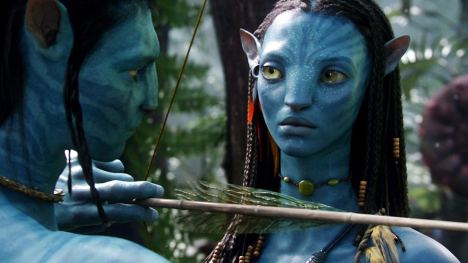
Much as been made of the extent to which Avatar left no tangible pop cultural footprint, despite its massive financial success. It’s a fascinating conundrum, and almost impossible to imagine in this age of fractured fandoms and hot takes. Indeed, that lack of a strong cultural footprint might even be the best thing about it. For better or worse, Avatar was a film that millions and millions of people saw and enjoyed, before getting on with their lives. And in an era where films increasingly feel like religious events, there’s something vaguely comforting in that.

You can read the piece here, or click the picture below.

New Escapist Column! On “Rogue One” as “Star Wars” for the Twenty-First Century…

I published an In the Frame piece at Escapist Magazine a little while ago, looking at Rogue One: A Star Wars Story.

Like most films, the original Star Wars was a product of its time. It spoke to simmering tensions and traumas related to the late seventies, from lingering atomic anxieties to the horrors of the Vietnam War. However, a lot of time has passed since the original trilogy, and our cultural anxieties have changed over the intervening years. Since the purchase of Lucasfilm by Disney, the Star Wars franchise has been fixated and focused on the original trilogy. However, Rogue One: A Star Wars Story is the only film to make an effort to ask what those tropes and conventions mean moved to the present day.

You can read the piece here, or click the picture below.

New Escapist Column! On Servicing the Wrong Fans in “The Rise of Skywalker”…

I published a new In the Frame piece at Escapist Magazine a few weeks back, looking at the ways in which Star Wars: Episode IX – The Rise of Skywalker worked so hard to erase Star Wars: Episode VIII – The Last Jedi, and in doing so played to the worst aspects of fandom. It proved controversial.

It is hard to determine exactly what The Rise of Skywalker is about, beyond the vague hope of parents that their radicalised children might be redeemed. Indeed, The Rise of Skywalker is largely defined by reaction. It exists primarily as a rejection of The Last Jedi, often feeling as though it was written from a beat sheet punctuated by angry replies to Rian Johnson over the past two years. The result is a movie that knows what it isn’t, but desperately unsure of what it actually is.

You can read the piece here, or click the picture below.


New Escapist Column! On the Use of Long Takes in “1917”…

I published a new In the Frame piece at Escapist Magazine a little while ago, looking at the use of long takes within 1917.

The long take is an interesting cinematic technique. Most obviously, it’s a dazzling display of craft and technical proficiency. It’s a power move that exists largely so a director can flex their muscles. However, it also serves a compelling paradoxical purpose. The longer that a director holds a take, the more that the audience drifts away from reality. Cuts allow the audience to ground themselves, to process what they have seen. Removing cuts forces the audience to hold a single long gaze. In 1917, Sam Mendes uses that gaze to collapse time and space. In doing so, he captures some of the insanity of war.

You can read the piece here, or click the picture below.