• Following Us

  • Categories

  • Check out the Archives


  • Awards & Nominations

Doctor Who: Lucky Day (Review)

“At least your special effects are improving.”

To be fair, a pretty solid run had to end at some point, and a Pete McTighe script is as good a place as any.

Lucky Day is an interesting episode. It solidifies the sense of this second Davies era as its own distinct object with its own distinct rhythms and structures. Just as one might pair Space Babies and The Robot Revolution, The Devil’s Chord and Lux, or Boom and The Well, Lucky Day is very obviously designed for the same slot as 73 Yards. This is another Doctor-lite episode built around Ruby Sunday, featuring U.N.I.T., set on contemporary Earth. It even brushes against rural folk horror, invoking The Wicker Man in its discussion of English villages.

Food for thought.

However, the episode takes a sharp and ambitious turn in its second half. As with a lot of recent Doctor WhoLucky Day is an episode engaged with the larger context of the show and its place in the popular discourse. It is obviously structured around things that matter to both Davies and McTighe. It is commendably self-aware and playful. There is, on paper, a lot to appreciate about Lucky Day.

The problem is the execution, as the episode’s themes break like waves against the actual narrative itself. Lucky Day only really makes sense as metatext, but cannot support the weight of its big ideas whether inside or outside the fictional universe. It’s an unlucky break.

Absolutely floored.

Continue reading

Doctor Who: Lux (Review)

“And tell me, how did you enter this world?”

“I’m a two-dimensional character, you can’t expect backstory.”

There has been a lot of discussion about the reduction in the number of episodes of Doctor Who produced within a year. These discussions are often alarmist in nature, and framed in some sort of despairing lament about how the show is not what it once was. However, there is less discussion about how this compression of the show affects its format.

While Davies can be a chaotic writer within individual episodes, particular rushing towards a climactic resolution to a story or a season, he has always had a very vision of the structure of a given season of Doctor Who. Both of Davies’ successors, Steven Moffat and Chris Chibnall, experimented with different season structures.

Ring-a-Ding-Ding…

Moffat’s fifth season was structured identical to the previous four, and then his sixth season was structured as an inversion of that – opening with an epic two-parter, closing with a single run-around episode. His seventh season was all stand-alone episodes, while his ninth season was comprised primarily of two-parters, most of which adopted an interesting approach to the basic structure of a two-parter.

Chibnall’s first season was comprised entirely of standalone and disconnected episodes, with the Stenza serving as recurring antagonists. Chibnall’s second season was much more arc-focused, opening and closing with two big two-part adventures, with The Timeless Children rewriting the show’s lore. Chibnall’s third season was a single narrative spread across six episodes, Doctor Who: Flux.
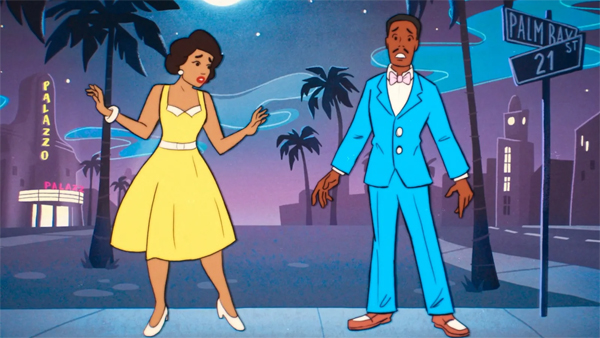
An animated discussion.

However, Davies had a structural formula and he largely stuck to it. Davies’ seasons often opened with triptych of present-past-future stories to orient new viewers in the world of Doctor Who, before leading into a toyetic monster two-parter. This would be followed later in the season by a more high-brow two-parter, and then a two-part season finale that had been seeded through the season to that point. Davies adhered rigidly to that structure.

That structure worked within the confines of thirteen-episode seasons, but obviously cannot be applied to an eight-episode season. After all, just counting through the “obligatory” episodes within that structure eats up nine of the season’s episodes. So Davies has had to come up with a new structure for the show’s seasons. Space Babies and The Robot Revolution effectively compress those opening three episodes into a single story, while The Devil’s Chord and Lux suggest an entirely new narrative archetype.
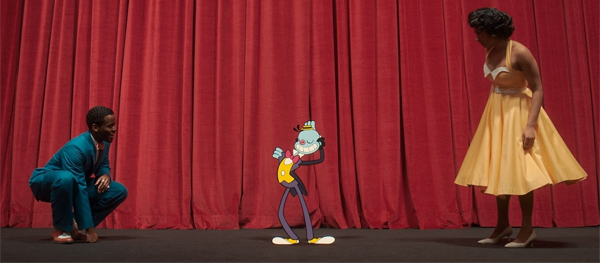
The next stage of the show…

There is some online debate about whether Davies is repeating himself, whether his approach to Doctor Who is meaningfully different now than it was twenty years ago. While it’s easy to focus on the places where Davies’ writing is similar – notably the premieres and the finales – it is also worth acknowledging where it is different. The Devil’s Chord and Lux are two episodes that are of a piece with one another, two episodes as similar to one another as Rise of the Cybermen and The Age of Steel are to The Sontaran Stratagem and The Poison Sky, fitting within Davies’ season structure.

However, they are also new and exciting. They are a type of episode that is fundamentally different from anything that Davies even attempted during his first tenure as showrunner. Indeed, they are fundamentally different from anything that Moffat and Chibnall attempted as well. They are big, bold and self-aware. They represent a clear evolution of what is possible on Doctor Who. If nothing else, they prove the show is still alive – that it is still animated.
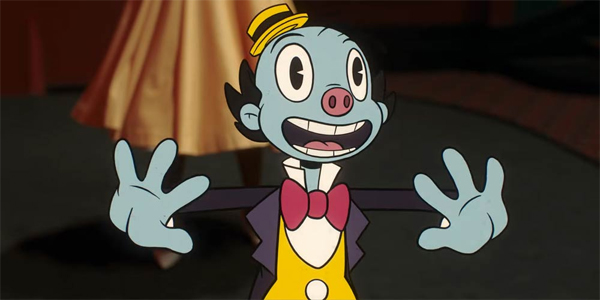
Rave about this episode until you are blue in the face…

Continue reading

368. Monty Python and the Holy Grail (#154)

Hosted by Andrew Quinn and Darren Mooney, and this week with special guest Luke Dunne, The 250 is a weekly trip through some of the best (and worst) movies ever made, as voted for by Internet Movie Database Users. New episodes are released Saturdays at 6pm GMT.

This week, Terry Jones and Terry Gilliam’s Monty Python and the Holy Grail.

The legendary King Arthur sets about assembling a cadre of knights, and embarks on an epic quest to claim the Holy Grail. Hilarity ensues.

At time of recording, it was ranked 154th on the list of the best movies of all time on the Internet Movie Database.

Continue reading

New Escapist Column! On “Black Mirror” as a Movie About the Limits of the Empathy Machine…

We’re launching a new column at The Escapist, called Out of Focus. With the sixth season of Black Mirror releasing on Netflix last week, it seemed like a good opportunity to delve into one of the defining shows of the modern moment.

Black Mirror is often framed as a technophobic show, asking, “what if phones… but too much?” However, this is an inherently reductive way of looking at the series, which is much more about humanity than it is about people. In many ways, the show is about how technology reflects humanity’s worst impulses back at them, and the fear that cinema and television – along with other forms of media – serve as barriers to empathy rather than windows to it.

You can read the piece here, or click the picture below.

New Escapist Column! On “The Flash” as a Two-Hour-Long Shareholders’ Memo…

I published a new In the Frame piece at The Escapist on Friday. With the release of The Flash in cinemas, it seemed like a good opportunity to consider the movie.

What is interesting about The Flash is that it is a movie almost entirely devoid of any artistic sentiment whatsoever. It is a movie that does not exist because anybody working on it had a brilliant idea that needed to be realised. It exists largely because Warner Bros. decided that they needed a Flash movie, and so – against all laws of nature and reality – simply willed that movie into existence.

You can read the piece here, or click the picture below.

New Escapist Column! On the Modesty of “Kaleidoscope”…

I published a new In the Frame piece at The Escapist this evening. This weekend saw the release of Kaleidoscope, Netflix’s big interactive heist drama. The hook is that the viewer’s experience of the show is randomized, with different viewers watching in different orders.

It is a very modest experiment, particularly when compared to something like Bandersnatch from a few years back. Kaleidoscope is much more interesting on paper than it is in execution, a high concept that feels somewhat half-executed. There is something about streaming as a medium that lends itself to experiments like this, to viewing experiences that are truly singular and unique, where each viewer ultimately consumes their own version of the media in their own way, in a way that challenges the idea of mass media as a communal experience. Kaleidoscope isn’t quite that, but it hints at the possibility.

You can read the piece here, or click the picture below.

New Escapist Column! On “The Witcher: Blood Origin”, and What Happens When Television Becomes a Six-Hour Movie…

I published a new piece at The Escapist this week. With the release of The Witcher: Blood Origin on Netflix, it seemed like a good time to discuss an unsettling trend in modern television: the idea that modern shows are really just super-extended movies, and the consequences of that.

Blood Origin demonstrates what happens when a studio treats a television show like a movie. The series was written and filmed as six episodes, but was horrible cut down in the editting bay. Two whole episodes were stripped out of the show, leaving it incoherent and nonsensical. In many ways, this was exactly what happened with Joss Whedon’s cut of Justice League, which was similarly cut down to have a runtime of under two hours. If television shows are just films now, they are subject to the same sort of meddling.

You can read the piece here, or click the picture below.

New Escapist Video! On What the Cancellation of “Batgirl” Means for the Future of Streaming…

We’re thrilled to be launching a fortnightly video companion piece to In the Frame at The Escapist. The video will typically launch every second Monday, and be released on the magazine’s YouTube channel. And the video will be completely separate from the written content. This is kinda cool, because we’re helping relaunch the magazine’s film content – so if you can throw a subscription our way, it would mean a lot.

This week, we took a look at the recent cancellation of Batgirl, following the merger of Warner Bros. and Discovery Media. There has been a lot of noise and shouting about the decision from various angry corners of the internet, but what does it actually mean? And what does that cancellation mean in the context of the larger streaming landscape, which has become an incredibly volatile space within the last six months?

290. Network (#219)

Hosted by Andrew Quinn and Darren Mooney, and this week with special guests Ciara Moloney and Dean Buckley, The 250 is a weekly trip through some of the best (and worst) movies ever made, as voted for by Internet Movie Database Users. New episodes are released Saturdays at 6pm GMT.

So this week, Sidney Lumet and Paddy Chayefsky’s Network.

Howard Beale is a veteran newscaster on a struggling network. When he is given his two weeks’ notice, Beale threatens to shoot himself live on the air as his final broadcast. The television journeyman becomes a media storm and ratings sensation, as the network eagerly seeks to capitalise on what could be a once-in-a-generation phenomenon.

At time of recording, it was ranked 219th on the list of the best movies of all time on the Internet Movie Database.

Continue reading

(—#) TENET .052

.TMG mp6 ta yadrutaS yreve desaeler era sedosipe weN .sresU esabataD eivoM tenretnI yb rof detov sa ,edam reve seivom )tsrow dna( tseb eht fo emos hguorht pirt ylkeew (yltsom) a si 052 ehT yenooM nerraD dna nniuQ werdnA yb detsoH

.TENET s’naloN rehpotsirhC ,edosipe ht052 ruo gnikram ,emit sihT

.sbarg rof pu si swonk eh skniht oreh eht taht gnihtyrevE .degnahc evah selur eht dna ,labolg era sekats eht ,peed nur seiretsym ehT .dlrow wen yleritne na ni pu sekaw evitarepo na ,gnorw ylbirret seog eniarkU ni noissim trevoc a nehW

.esabataD eivoM tenretnI eht no emit lla fo seivom tseb eht fo tsil eht no deknar ton saw ti ,gnidrocer fo emit tA

Continue reading