• Following Us

  • Categories

  • Check out the Archives


  • Awards & Nominations

Doctor Who: Lux (Review)

“And tell me, how did you enter this world?”

“I’m a two-dimensional character, you can’t expect backstory.”

There has been a lot of discussion about the reduction in the number of episodes of Doctor Who produced within a year. These discussions are often alarmist in nature, and framed in some sort of despairing lament about how the show is not what it once was. However, there is less discussion about how this compression of the show affects its format.

While Davies can be a chaotic writer within individual episodes, particular rushing towards a climactic resolution to a story or a season, he has always had a very vision of the structure of a given season of Doctor Who. Both of Davies’ successors, Steven Moffat and Chris Chibnall, experimented with different season structures.

Ring-a-Ding-Ding…

Moffat’s fifth season was structured identical to the previous four, and then his sixth season was structured as an inversion of that – opening with an epic two-parter, closing with a single run-around episode. His seventh season was all stand-alone episodes, while his ninth season was comprised primarily of two-parters, most of which adopted an interesting approach to the basic structure of a two-parter.

Chibnall’s first season was comprised entirely of standalone and disconnected episodes, with the Stenza serving as recurring antagonists. Chibnall’s second season was much more arc-focused, opening and closing with two big two-part adventures, with The Timeless Children rewriting the show’s lore. Chibnall’s third season was a single narrative spread across six episodes, Doctor Who: Flux.
An animated discussion.

However, Davies had a structural formula and he largely stuck to it. Davies’ seasons often opened with triptych of present-past-future stories to orient new viewers in the world of Doctor Who, before leading into a toyetic monster two-parter. This would be followed later in the season by a more high-brow two-parter, and then a two-part season finale that had been seeded through the season to that point. Davies adhered rigidly to that structure.

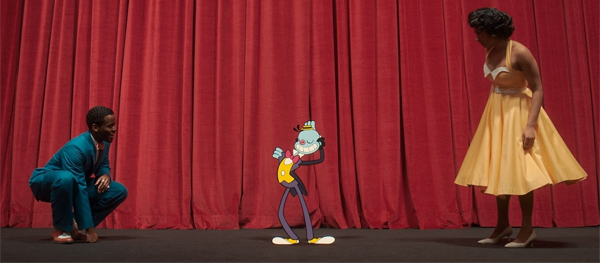
That structure worked within the confines of thirteen-episode seasons, but obviously cannot be applied to an eight-episode season. After all, just counting through the “obligatory” episodes within that structure eats up nine of the season’s episodes. So Davies has had to come up with a new structure for the show’s seasons. Space Babies and The Robot Revolution effectively compress those opening three episodes into a single story, while The Devil’s Chord and Lux suggest an entirely new narrative archetype.
The next stage of the show…

There is some online debate about whether Davies is repeating himself, whether his approach to Doctor Who is meaningfully different now than it was twenty years ago. While it’s easy to focus on the places where Davies’ writing is similar – notably the premieres and the finales – it is also worth acknowledging where it is different. The Devil’s Chord and Lux are two episodes that are of a piece with one another, two episodes as similar to one another as Rise of the Cybermen and The Age of Steel are to The Sontaran Stratagem and The Poison Sky, fitting within Davies’ season structure.

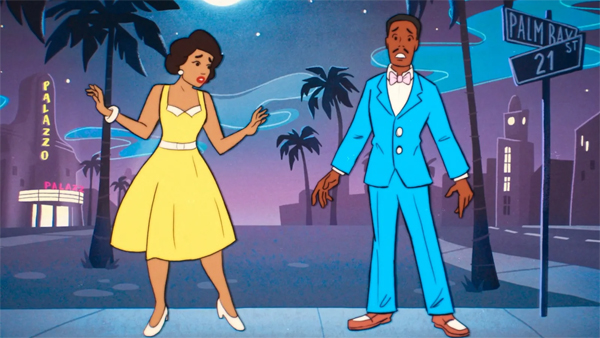
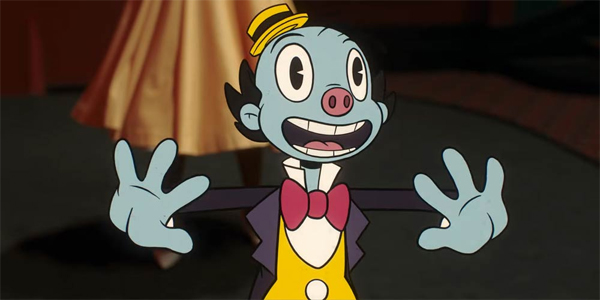
However, they are also new and exciting. They are a type of episode that is fundamentally different from anything that Davies even attempted during his first tenure as showrunner. Indeed, they are fundamentally different from anything that Moffat and Chibnall attempted as well. They are big, bold and self-aware. They represent a clear evolution of what is possible on Doctor Who. If nothing else, they prove the show is still alive – that it is still animated.
Rave about this episode until you are blue in the face…

Continue reading

376. Wall-E – Ani-May 2024 (#59)

Hosted by Andrew Quinn and Darren Mooney, and this week with special guests Graham Day and Deirdre Molumby, The 250 is a weekly trip through some of the best (and worst) movies ever made, as voted for by Internet Movie Database Users. New episodes are released Saturdays at 6pm GMT.

This week, Andrew Stanton’s Wall-E.

In the distant future, Earth has been abandoned. Towers of garbage loom over a toxic landscape consumed by dust storms. The planet is dead, except for Wall-E, a small service robot assigned the task of cleaning Earth in the hope that the planet might be ready to welcome a returning humanity. Alone and forgotten, Wall-E makes a life for itself among the ruins.

At time of recording, it was ranked 59th on the list of the best movies of all time on the Internet Movie Database.

Continue reading

337. Spider-Man: Across the Spider-Verse (#19)

Hosted by Andrew Quinn and Darren Mooney, and with special guests Graham Day and Deirdre Molumby, This Just In is a subset of The 250 podcast, looking at notable new arrivals on the list of the 250 best movies of all-time, as voted for by Internet Movie Database Users.

This time, Joaquim Dos Santos, Kemp Powers and Justin K. Thompson’s Spider-Man: Across the Spider-Verse.

Sixteen months into his career as Brooklyn’s one-and-only Spider-Man, teenager Miles Morales is reunited with his old friend from another universe, Gwen Stacy. However, Gwen brings word of a team of multiversal spider-people headed by the mysterious Miguel O’Hara. Miles quickly discovers that things are not as he expects, and that membership of this team may come at too high a price.

At time of recording, it was ranked the 19th best movie of all time on the Internet Movie Database.

Continue reading

312. The Incredibles – Bird Watching 2022 (#230)

Hosted by Andrew Quinn and Darren Mooney, and this week with special guests Deirdre Molumby and Graham Day, The 250 is a weekly trip through some of the best (and worst) movies ever made, as voted for by Internet Movie Database Users. New episodes are released Saturdays at 6pm GMT.

This week, we’re continuing a season focusing on the work of one particular director: Brad Bird’s The Incredibles.

Bob Parr was living an exciting life as the superhero Mr. Incredible, until a change in public opinion forced him to hang up his tights for good. Settling down to start a family with Helen, Bob still yearns for the adventure and excitement of his youth. Out of nowhere, a mysterious woman appears with an offer that seems too good to be true, drawing Bob back into a life that he never fully abandoned.

At time of recording, it was ranked 230th on the list of the best movies of all time on the Internet Movie Database.

Continue reading

New Escapist Video! “Lightyear is a Solid Sub-Orbital Adventure”

I’m thrilled to be launching movie reviews on The Escapist. Over the coming weeks and months, I will be joining a set of contributors in adding these reviews to the channel. For the moment, I’m honoured to contribute a three-minute film review of Lightyear, which is in theatres on Friday.

New Escapist Column! On the Quiet Revolution of Disney’s Modern Princess Movies…

I published a new In the Frame piece at The Escapist this evening. With the release of Encanto this weekend, it seemed like a good opportunity to talk about the animated “princess” movies being produced by Disney.

Disney has always been associated with these movies, dating back to the breakout success of Snow White and the Seven Dwarves. However, the company has also long had a complicated relationship to them, and in particular the way in which they are perceived as movies aimed at young girls. However, the past decade has seen the studio clever and consistently reinventing this archetypal “fairy tale” sort of story for the twenty-first century, to the point that it’s arguably that the run of movies from Tangled onwards has been the most consistent of the studio’s output.

You can read the piece here, or click the picture below.

New Podcast! Rarely Going – “Star Trek: Prodigy 1×05 – Terror Firma”

Rarely Going is a podcast looking at the animated corner of the Star Trek franchise. I was thrilled to be invited to join guest host Tony Black for a discussion of the fifth episode of Star Trek: Prodigy, the latest animated spin-off.

I had not had a chance to watch Prodigy before Tony invited me on the show, so it was fun to catch up with the series. Tony and I have a broad discussion about animated Star Trek, about the current state of the larger Star Trek franchise, about whether Star Trek could be seen as “children’s television for grown-ups.” We talk about the importance of serving multiple audiences, and the nostalgic affection for Star Trek: Voyager within modern fandom, and what that might mean for the future of modern iterations.

You can listen to the episode here, or click the link below.

251. Up (#123)

Hosted by Andrew Quinn and Darren Mooney, this week with special guests Deirdre Molumby and Brian Lloyd, The 250 is a (mostly) weekly trip through some of the best (and worst) movies ever made, as voted for by Internet Movie Database Users. New episodes are released every Saturday at 6pm GMT.

This time, marking the passing of Ed Asner, Pete Docter’s Up.

Carl Fredricksen is a widower who finds himself facing the end of a modest life in the small house that he once shared with the love of his life. When it looks like what little remains of that life migth be disturbed and destroyed, Carl decides to embark on the one last adventure that he never got to take with his beloved life: a trip to mysterious “Paradise Falls”, without leaving his home.

At time of recording, it was ranked 123rd on the list of the best movies of all time on the Internet Movie Database.

Continue reading

241. Kimetsu no Yaiba: Mugen Ressha-Hen (Demon Slayer – Kimetsu no Yaiba – The Movie: Mugen Train) – This Just In (#238)

Hosted by Andrew Quinn and Darren Mooney, with special guests Graham Day and Bríd Martin, The 250 is a (mostly) weekly trip through some of the best (and worst) movies ever made, as voted for by Internet Movie Database Users. New episodes are released every Saturday at 6pm GMT.

This time, Haruo Sotozaki’s Demon Slayer – The Movie: Mugen Train.

Following a series of mysterious disappearances on a train from Tokyo to Mugen, three young demon slayers are dispatched to investigate possible supernatural influences. The three quickly team up with a veteran soldier in the battle against evil, and discover just how quickly their mission can go off the rails.

At time of recording, it was ranked 238th on the list of the best movies of all time on the Internet Movie Database.

Continue reading

New Escapist Column! On The Underappreciated Appeal of “Superman: The Animated Series”…

I published a new In the Frame piece at The Escapist yesterday evening. With the release of Superman: The Animated Series in high-definition on HBO Max in March, it seemed like an opportunity to take a look back at the underappreciated entry in the DC Animated Universe.

Superman: The Animated Series tends to get overshadowed in discussions of the DCAU by the two shows either side of it, by the earlier Batman: The Animated Series and by the two later Justice League series. However, Superman: The Animated Series is an interesting bridge between the two, eschewing the “villain of the week” structure of Batman: The Animated Series to instead focus on long-form storytelling that developed character and built the world in ways that would pay off in the later spin-offs. It remains one of the best takes on the Man of Steel.

You can read the piece here, or click the picture below.