Posted on January 7, 2023 by Darren
Hosted by Andrew Quinn and Darren Mooney, this week joined by special guest Andy Melhuish, The 250 is a (mostly) weekly trip through some of the best (and worst) movies ever made, as voted for by Internet Movie Database Users. New episodes are released every second Saturday at 6pm GMT, with the occasional bonus episode between them.
This time, a special New Year’s Treat. A discussion of the Star Wars television shows: The Mandalorian, The Book of Boba Fett, Obi-Wan Kenobi and Andor.

Continue reading →
Filed under: The 250 | Tagged: andor, andy melhuish, Boba Fett, fan service, franchises, ip, jon favreau, obi-wan, Obi-Wan Kenobi, stakes, star wars, the book of boba fett, the mandalorian, Tony Gilroy | Leave a comment »
Posted on January 6, 2023 by Darren
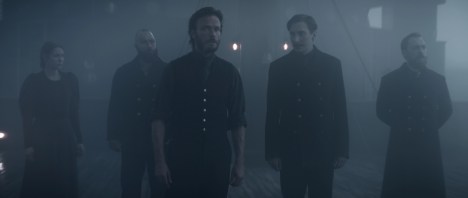
I published a new In the Frame piece at The Escapist this evening. This week, it was revealed that Netflix had cancelled 1899, their prestigious and high-profile mystery drama series. It’s especially notable because the announcement didn’t even come from Netflix, but fits a pattern for streaming services.
Streaming is not like regular television. It adheres to different rules and conventions. In particular, streaming shows don’t operate according the same real-time conveyor belt as conventional broadcast television, where it is possible for a network and a production team to react to audience response in real-time. As a result, the only space that these shows have to grow is in between seasons, and that becomes increasingly difficult in a climate where many streaming companies are cancelling these shows after just a single release.
You can read the piece here, or click the picture below.
Filed under: Television | Tagged: 1899, cancellations, in the frame, netflix, renewal, seasons, shows, streaming, the escapist | Leave a comment »
Posted on January 5, 2023 by Darren
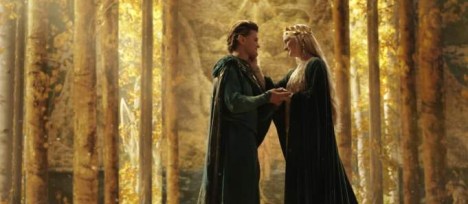
I published a new piece at The Escapist this week. With the recent release of The Witcher: Blood Origin on Netflix and the ongoing arguments about the perceived “faithfulness” around The Rings of Power, it seemed like a good time to explore how the quality of a work relates to its alleged faithfulness.
To put it simply, quality and fidelity are completely different metrics. It is entirely possible for a fiathful adaptation of source material to be terrible, for example the shot-for-shot remake of Psycho. It’s also possible for an adaptation that has nothing to do with even the tone and genre of the original property, such as 21 Jump Street, to be brilliant. Ultimately, The Witcher: Blood Origin and The Rings of Power are adaptations that fail on their own measure.
You can read the piece here, or click the picture below.
Filed under: Television | Tagged: comedy, escapist, faithfulness, fidelity, film, genre, new, Psycho, Television, the escapist, the lion king | Leave a comment »
Posted on January 4, 2023 by Darren
I published a new piece at The Escapist last week. With the release of the second season of The Bad Batch, it seemed like a good opportunity to review the series.
The Bad Batch is an interesting series. It is essentially a spin-off from The Clone Wars, but one that rejects the anthology nature of that show for a fixed central cast and a linear series of episodic adventures. This is somewhat frustrating, as it strips the most compelling part of The Clone Wars in favour of a generic riff on The A-Team or Kung Fu. Still, when the show gets out of its own way, The Bad Batch is a surprisingly compelling and thoughtful addition to the Star Wars universe, a meditation on what happens to soldiers at the end of a Forever War.
You can read the piece here, or click the picture below.

Filed under: Television | Tagged: clone wars, disney, escapist, star wars, streaming, Television, the bad batch, the escapist | Leave a comment »
Posted on January 3, 2023 by Darren
I am doing weekly reviews of Willow at The Escapist. They’ll be dropping every Wednesday evening while the show is on, looking at the legacy sequel as it progresses from one episode to the next.
The sixth episode of the season struggles to recover some of the ground lost during the season’s fifth episode. Wildwood slowed the series to a standstill in order to run through a checklist of serialised streaming television tropes, in a mechanical and unengaging fashion. Prisoners of Skellin has the burden of getting the show moving again, in a way that is often clumsy and inelegant. That said, Prisoners of Skellin is an episode that has some measure of charm to it, in large part due to a winning guest performance from Christian Slater.
You can read the piece here, or click the picture below.

Filed under: Television | Tagged: Christian Slater, divorce, escapist, prisoners of skellin, the escapist, trolls, willow | Leave a comment »
Posted on January 2, 2023 by Darren
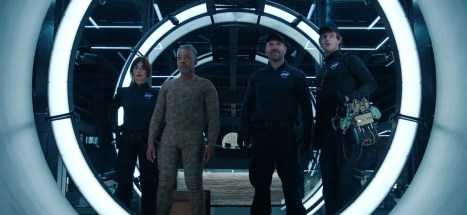
I published a new In the Frame piece at The Escapist this evening. This weekend saw the release of Kaleidoscope, Netflix’s big interactive heist drama. The hook is that the viewer’s experience of the show is randomized, with different viewers watching in different orders.
It is a very modest experiment, particularly when compared to something like Bandersnatch from a few years back. Kaleidoscope is much more interesting on paper than it is in execution, a high concept that feels somewhat half-executed. There is something about streaming as a medium that lends itself to experiments like this, to viewing experiences that are truly singular and unique, where each viewer ultimately consumes their own version of the media in their own way, in a way that challenges the idea of mass media as a communal experience. Kaleidoscope isn’t quite that, but it hints at the possibility.
You can read the piece here, or click the picture below.
Filed under: Television | Tagged: adventure, bandersnatch, choose your own adventure, communal, in the frame, kaliedoscope, mass media, media, netflix, random, streaming | Leave a comment »
Posted on January 1, 2023 by Darren
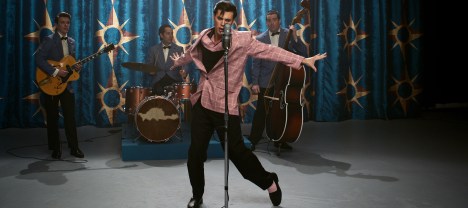
I published a new piece at The Escapist this evening. With the year wrapping up, it seemed like a good opportunity to take a look back at the year in cinema. In particular, one of the big unifying trends in the year’s blockbusters, which balanced a celebration and a fear of spectacle.
This was the year that “movies were back.” Many of the year’s biggest blockbusters were celebrations of blockbuster cinema in its purest form, from the IMAX cinematography of Top Gun: Maverick to the immersive 3D of Avatar: The Way of Water to the breakout international success of RRR. However, there was also an anxiety about the power of spectacle and the toll that it takes, whether on its audience or on its subject. This played out in movies like Nope or Elvis. There was also a clear worry that this might be the end of it all, playing out in movies like Babylon or even Blonde.
You can read the piece here, or click the picture below.
Filed under: Movies | Tagged: avatar: the way of water, babylon, blockbuster, blonde, elvis, escapist, Movies, nope, rrr, spectacle, the escapist, top gun: maverick | Leave a comment »
Posted on December 31, 2022 by Darren
Hosted by Andrew Quinn and Darren Mooney, this week joined by special guest Richard Drumm, The 250 is a (mostly) weekly trip through some of the best (and worst) movies ever made, as voted for by Internet Movie Database Users. New episodes are released every second Saturday at 6pm GMT, with the occasional bonus episode between them.
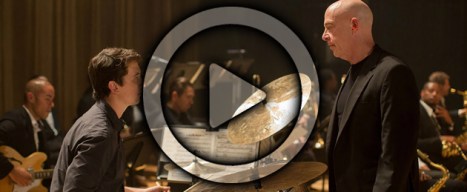
This time, Damian Chazelle’s Whiplash.
Andrew Neiman is a young music student at the prestigious Shaffer Conservatory in New York City. A jazz drummer, Andrew dreams of great things, of becoming a legend like Miles Davis or John Coltrane. However, he falls under the influence of band leader Terence Fletcher. Fletcher sees potential in Andrew, and draws the young musician into his orbit. The two find themselves trapped in a toxic push-and-pull relationship, with the stakes escalating quickly.
At time of recording, it was ranked 42nd on the list of the best movies of all time on the Internet Movie Database.
Continue reading →
Filed under: The 250 | Tagged: abuse, aggression, ambiguity, art, bullying, damien chazelle, films, imdb, jk simmons, masculinity, Miles Teller, Movies, podcast, richard drumm, The 250, training, violence, whiplash | Leave a comment »
Posted on December 30, 2022 by Darren
I published a new In the Frame piece at The Escapist this evening. With the release of White Noise on Netflix, it seemed like a good opportunity to discuss Noah Baumbach’s adaptation of Don DeLillo’s classic postmodern novel.
White Noise has long been considered unadaptable. However, Baumbach zeroes on a consistent throwline that guids his weird and eccentric adaptation through its various shifts and turns. White Noise is fundamentally a story about death. It is about the way in which so much culture – sex, media, consumerism – is designed as an effort to drown out the encroaching and inescapable sense of mortality. Baumbach presents a broad and cartoonish exploration of man’s inability to grapple with that universal certainty. In doing so, he tells a strangely moving story.
You can read the piece here, or click the picture below.

Filed under: Movies | Tagged: adaptation, awards, column, consumerism, death, don delillo, in the frame, netflix, Noah Baumbach, Oscars, sex, white noise | Leave a comment »
Posted on December 29, 2022 by Darren
I published a new piece at The Escapist this week. With the release of The Witcher: Blood Origin on Netflix, it seemed like a good time to discuss an unsettling trend in modern television: the idea that modern shows are really just super-extended movies, and the consequences of that.
Blood Origin demonstrates what happens when a studio treats a television show like a movie. The series was written and filmed as six episodes, but was horrible cut down in the editting bay. Two whole episodes were stripped out of the show, leaving it incoherent and nonsensical. In many ways, this was exactly what happened with Joss Whedon’s cut of Justice League, which was similarly cut down to have a runtime of under two hours. If television shows are just films now, they are subject to the same sort of meddling.
You can read the piece here, or click the picture below.

Filed under: Television | Tagged: blood origin, cutting, executive meddling, films, justice league, media, Movies, structure, studios, Television, the escapist, the witcher, the witcher: blood origin, trimming | Leave a comment »

















