• Following Us

  • Categories

  • Check out the Archives


  • Awards & Nominations

Non-Review Review: Bad Boys For Life

Bad Boys For Life is an extremely stupid and occasionally veering on incoherent film. It is also a lot of fun.

There are any number of obvious problems with Bad Boys For Life. The pacing and plotting is a mess, stopping and starting at random intervals depending on the film’s mood as much as its own internal logic. Characterisation varies wildly from one scene to the next. Bad Boys For Life has even picked up some of the more frustratingly formulaic narrative beats from modern blockbusters, stumbling blindly into overwrought bathos and even attempting to offer a retroactively Freudian origin story for veteran police officer Mike Lowrey. It also understands that modern blockbusters have to be “about” things; in this case, growing old.

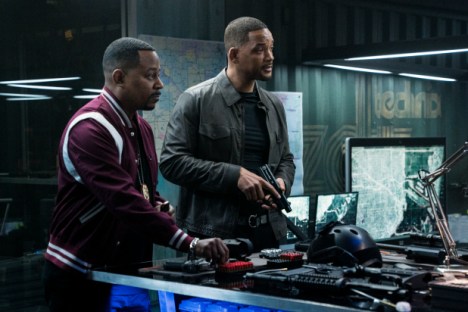
Welcome to Miami.

However, a large part of the charm of Bad Boys For Life is the way in which the film seems to have taken virtually every note that an executive might possibly offer and decided to approach these notes in a way that feels surprisingly fitting for a belated follow-up to Michael Bay’s bombastic duology. Bad Boys For Life is unashamedly and unapologetically its own thing. This results in a cocktail that doesn’t exactly go down smooth, but at least offers a refreshing and distinctive flavour. It helps that Belgian directors Adil El Arbi and Bilall Fallah lean strongly into the series’ sensibility, and invest heavily in its core strengths.

For all its gestures towards the modern age of intellectual-property-driven franchise-building, Bad Boys For Life grasps that the heart and soul of the series has always been the charm in watching Will Smith and Martin Lawrence bounce off one another. That dynamic between Smith and Lawrence, two performers who know how to work an audience and a camera, are arguably what grounded the first two films – keeping a very human perspective amid the ensuing “Bayhem.” In Bad Boys For Life, they does something similar, adding a charismatic star power that is often absent from contemporary blockbuster production.

Police don’t stop.

Continue reading

New Podcast! Primitive Culture #74 – Star Trek: Voyager as a Nineties Time Capsule

Over the Christmas Break, I had the pleasure of sitting down with the wonderful Duncan Barrett and talking about Star Trek: Voyager. Duncan is a historian, and I’ve actually quoted some of his work on the blog in the past. He hosts Primitive Culture, a show wherein the hosts discuss certain historical-related items of interest in the Star Trek canon.

Duncan noticed that I had recently finished a massive rewatch of Voyager, leading me to write around 750,000 words on the show’s seven seasons. With the twenty-fifth anniversary of Voyager coming up, he suggested that it might be fun to talk about the third live-action Star Trek spin-off in a bit of depth, looking at the series as a snapshot of a particular cultural moment. More than any of its sibling series, Voyager perfectly encapsulated the American experience of the nineties, tapping into the decade’s sensibilities and its anxieties.

The result was a fun (and involved) discussion, and you can listen to it below or directly via Primitive Culture‘s homepage on trek.fm.

Continue reading

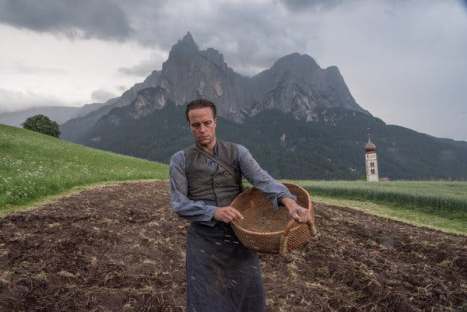
Non-Review Review: A Hidden Life

A Hidden Life is both surprisingly moving and about an hour too long.

Writer and director Terrence Malick bases A Hidden Life around the true story of Austrian farmer Franz Jägerstätter. During the Second World War, Jägerstätter was called up to serve in the armed forces. He refused to swear an oath of loyalty to Hitler, and so was punished for his pacifism. It’s a weighty and important story, and Malick ensures that any contemporary relevance will not be lost on viewers. A Hidden Life grapples with that most fundamental of questions, what it means to be a good person in a fallen world and how the measure of such morality might be taken.

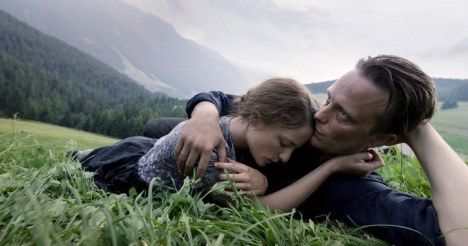
Going to grass…

As one might expect from Malick, A Hidden Life is shot and edited in a rather disjointed and impressionist fashion. The film often feels like a waking dream. Scenes are not always clearly delineated, often beginning in the middle of abstract conversations that then play over atmospheric establishing shots like some sort of historical stream of consciousness. It’s an approach that has defined a lot of Malick’s later work, but is perhaps best seen as an outgrowth from Tree of Life. That sort of emotive and drifting storytelling style works oddly well when applied what is both a linear story and a familiar historical milieu.

The big problem with A Hidden Life is that it feels highly repetitive and redundant, particularly in its final ninety minutes. Rather than advancing or developing his thesis, Malick spends the final ninety minutes of the film just bluntly restating it over and over. It is exhausting, and not necessarily in the way that a film about the virtues of peaceful protest in an unjust world should be.

Peak Malick?

Continue reading

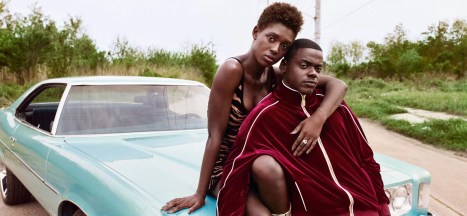
Non-Review Review: Queen & Slim

Queen & Slim is a stylish modern indie that occasionally bites off more than it can chew, but is elevated by a surprising amount of warmth and humour.

It is no surprise that Queen & Slim looks beautiful. It marks the theatrical debut of director Melina Matsoukas, perhaps best known for her work on some of the most striking and memorable music videos of the past decade – including Rihanna’s We Found Love and Beyoncé’s Formation. Matsoukas has a wonderful eye, and she brings that to bear on this story of two unlikely fugitives who watch as their frankly uninspiring first date takes a sharp turn into an outlaw romance that finds them racing desperately for Cuba.

Getting the show on the road.

Queen & Slim is recognisably a modern American indie, drawing from the kind of cinema that Barry Jenkins helped to mainstream with Moonlight and If Beale Street Could Talk. It focuses on two young African Americans, and examines the world from their perspective. It is also dazzling to look at, cinematographer Tat Radcliffe saturating the frame with warm golds and neon purples. It exists in a liminal space, somewhere between a grounded naturalism and heightened dream logic – and all the more effective for that juxtaposition.

Queen & Slim occasionally veers a little bit too heavily into the stylistic clichés of this sort of cinema, leaning a little too heavily on shots studying the contemplative faces of its leads or taking in the breathtaking vistas of the American wilderness at an always perfectly calibrated distance from the eponymous couple’s vehicle of choice. It is to Matsoukas’ credit that Queen & Slim largely avoids indulgence, demonstrating an endearing humanism and humour beneath this carefully crisp and calibrated exterior.

Out(run the)law…

Continue reading

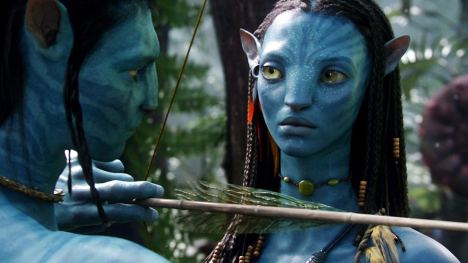
New Escapist Column! On How “Avatar’s” Lack of a Cultural Footprint Might Be Its Best Feature…

I published an In the Frame piece at Escapist Magazine earlier this week, given the release of new concept art for the Avatar sequels.

Much as been made of the extent to which Avatar left no tangible pop cultural footprint, despite its massive financial success. It’s a fascinating conundrum, and almost impossible to imagine in this age of fractured fandoms and hot takes. Indeed, that lack of a strong cultural footprint might even be the best thing about it. For better or worse, Avatar was a film that millions and millions of people saw and enjoyed, before getting on with their lives. And in an era where films increasingly feel like religious events, there’s something vaguely comforting in that.

You can read the piece here, or click the picture below.

New Escapist Column! On “Rogue One” as “Star Wars” for the Twenty-First Century…

I published an In the Frame piece at Escapist Magazine a little while ago, looking at Rogue One: A Star Wars Story.

Like most films, the original Star Wars was a product of its time. It spoke to simmering tensions and traumas related to the late seventies, from lingering atomic anxieties to the horrors of the Vietnam War. However, a lot of time has passed since the original trilogy, and our cultural anxieties have changed over the intervening years. Since the purchase of Lucasfilm by Disney, the Star Wars franchise has been fixated and focused on the original trilogy. However, Rogue One: A Star Wars Story is the only film to make an effort to ask what those tropes and conventions mean moved to the present day.

You can read the piece here, or click the picture below.

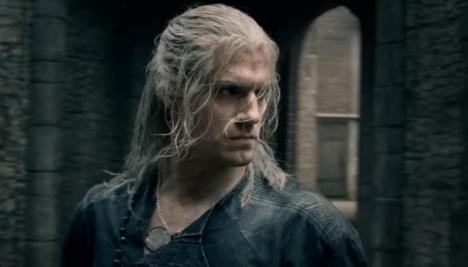
New Escapist Column! On Uncanny Valley of “The Witcher” Between Prestige and Tradition…

I published a new In the Frame piece at Escapist Magazine the week before last, looking at the Netflix streaming show The Witcher.

There are a lot of interesting things about the eight episode introductory season of The Witcher, which is adapted from two books of short stories and which seems to exist largely to set the table for more impressive seasons to follow. However, what is most immediately striking about The Witcher is the way in which it exists in the uncanny valley between modern prestige television and a more traditional model of episodic storytelling, looking like a hybrid of Hercules: The Legendary Journeys and Game of Thrones. To be clear, this is not a bad thing.

You can read the piece here, or click the picture below.

Non-Review Review: Bombshell

Bombshell is a strange and imbalanced piece of awards fare.

On the surface, Bombshell looks like a standard awards season movie. It is a story about sexual harassment, focusing on three women telling three different stories exploring three very distinct facets of that sort of abuse. The movie follows each independently, as their narratives wind and interconnect, offering a holistic perspective on a problem that remains both far too common and very highly charged. Bombshell should be a slam dunk of a story, particularly in the era of #metoo.

Shell shocked.

Unfortunately, Bombshell chooses to construct this triumphant story of virtue defeating villainy within Fox News against the backdrop of the 2016 election. It spoils very little to reveal that the big climactic moments of Bombshell offer a stunning juxtaposition; the deposing of harasser Roger Ailes is set against Donald Trump’s speech to the Republican National Convention. There should be something bittersweet in this, a compelling and complex narrative of culpability and complicity. Instead, Bombshell attempts to sell this as big heroic narrative beat.

Bombshell is wrestling with something thorny and nuanced, but instead seeks to simplify it down to a simple story with clear cut heroes and cardboard antagonists. Bombshell is a movie that asks the audience to cheer for the women of Fox News as the characters head into an election cycle that would be defined by Donald Trump’s admission of sexual assault, his casual misogyny and widely-reported rape allegations. This is – at best – a complicated note on which to conclude a film. Bombshell tries to package it as a feel-good celebration of sisterhood.

Kelly’s a Hero.

Continue reading

Doctor Who: Orphan 55 (Review)

“He’s moving at thirty-seven klicks an hour.”

“That doesn’t sound like my Benni.”

Like It Takes You Away in the previous season, Orphan 55 provides a something close to a workable model for the Chibnall era as a whole. Unfortunately, Orphan 55 doesn’t quite get there.

One of the strange paradoxes of the Chibnall era is that it often seems like the guest writers have a stronger grasp on its core themes than the showrunner. After all, Demons of the Punjab was perhaps the best single argument for Chibnall’s passive and observational characterisation of the Thirteenth Doctor, a far stronger argument than that articulated in Rosa or Arachnids in the U.K. or any of the episodes with Chibnall’s name on the credits.
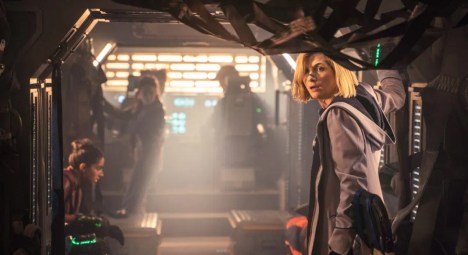
“Game over, Doc.”

Orphan 55 draws from an impressive array of influences across the history of Doctor Who, providing a fascinating intersection between “holiday camp gone wrong” episodes like The Macra Terror and Delta and the Bannermen and “future of Earth” episodes like The Ark in Space or The End of the World. Indeed, the positioning of Orphan 55 as the first standalone episode after the premiere is quite canny; it fills what would be the “New Earth” slot on a Russell T. Davies season. However, it offers a much grimmer prognosis. This is appropriate for a much grimmer age.

Like so much of the Chibnall era, Orphan 55 is built around the general impotence of the Doctor. The Doctor is a fictional character, and so cannot save the world. The Moffat era dealt with this question in a more abstract and metaphorical sense in episodes like Extremis, demonstrating the importance of Doctor Who as a story and the Doctor as an idea. The Chibnall era tends to respond to this challenge with dull literalism. The Thirteenth Doctor spends an inordinate amount of her run confronting systemic or societal problems with which she refuses to engage.
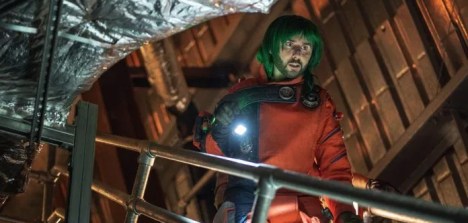
A green message.

The Thirteenth Doctor’s passiveness when confronted with monstrosity is one of the more horrifying aspects of the Chibnall era as a whole. In The Ghost Monument, the Doctor refused to hold Ilan to account for the horrors he inflicted on the participants in his race. In Arachnids in the U.K., Jack Robertson just walked away from liability for mass murder in his hotel. In Rosa, the Doctor stage managed the oppression of Rosa Parks, even forcing her companion to be actively complicit in systemic racism.

While the Chibnall era is clearly trying to make a larger point about how the Doctor cannot save the world because she doesn’t exist, this often becomes a bleak and depressing study of how the public imagination can no longer conjure better worlds into being. Demons of the Punjab managed to make the best argument for this approach through careful construction, tying its historical injustices to Yaz’s personal history. Orphan 55 pulls off something similar, primarily by setting the action long after the world has failed to be saved.
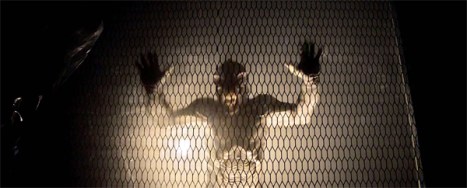
Shattering expectations.

Continue reading

164. Cats – This Just In (-#34)

Hosted by Andrew Quinn and Darren Mooney, and this week with special guests Phil Bagnall, Jenn Gannon and Luke Dunne, The 250 is a (mostly) weekly trip through some of the best (and worst) movies ever made, as voted for by Internet Movie Database Users.

This time, Tom Hooper’s Cats.

Abandoned by her owner in a surreal wasteland of early twentieth century London, the young cat Victoria finds herself drawn towards the neighbourhood’s feline inhabitants on the night of a most special and peculiar celebration.

At time of recording, it was ranked 34th on the list of the worst movies of all time on the Internet Movie Database.

Continue reading