• Following Us

  • Categories

  • Check out the Archives


  • Awards & Nominations

424. Maharaja (#218)

Hosted by Andrew Quinn, Darren Mooney, The 250 is a (mostly) weekly trip through some of the best (and worst) movies ever made, as voted for by Internet Movie Database Users. New episodes are released every second Saturday at 6pm GMT, with the occasional bonus episode between them.

This week, Nithilan Saminathan’s Maharaja.

In Chennai, a barber stumbles into a police station with an unbelievable story. His home has been burglarised, but the only thing of value that the thieves stole was a trash can of huge importance to the man and his daughter. It quickly becomes clear that there is something more afoot, a more complicated narrative of revenge and betrayal spanning decades and culminating in an act of unimaginable evil.

At time of recording, it was ranked 218th on the list of the best movies of all time on the Internet Movie Database.

Continue reading

412. Kolejne 365 Dni (The Next 365 Days) – Valentine’s Day 2025 (-#68)

Hosted by Andrew Quinn and Darren Mooney, this week with special guest Billie Jean Doheny, The 250 is a (mostly) weekly trip through some of the best (and worst) movies ever made, as voted for by Internet Movie Database Users. New episodes are released every second Saturday at 6pm GMT, with the occasional bonus episode between them.

This week, Barbara Białowąs and Tomasz Mandes’ The Next 365 Days.

It has been one year since Laura had her fateful encounter with the Italian gangster Massimo. In that year, Laura’s life has been turned upside down by sex and violence, passion and revenge. Recovering from her latest trauma, Laura finds herself questioning her relationship to the possessive and temperamental crime lord, drawn to the more sensitive gardener, Nacho. Laura finds herself confronted with a choice, one that will define far more than the next 365 days.

At time of recording, it was ranked 68th on the list of the worst movies of all time on the Internet Movie Database.

Continue reading

New Escapist Column! On “I Think You Should Leave” as Peak Internet Comedy…

We’re launching a new column at The Escapist, called Out of Focus. It will publish every Wednesday, and the plan is to use it to look at some film and television that would maybe fall outside the remit of In the Frame, more marginal titles or objects of cult interest. With the release of the third season of I Think You Should Leave this week, it seemed like a good opportunity to take a look the show.

It is ultimately reductive to try to boil a sketch comedy show down to a single thematic idea. However, there is something fascinating in how I Think You Should Leave operates as a sketch show that isn’t just perfectly suited to internet distribution – short clips, memes, absurdist gags – but also how it feels like a show that is in some ways about the internet. Obviously, not in a literal sense, in that I Think You Should Leave is about awkward social situations. However, it captures the sense in which online spaces can truly break social interactions.

You can read the piece here, or click the picture below.

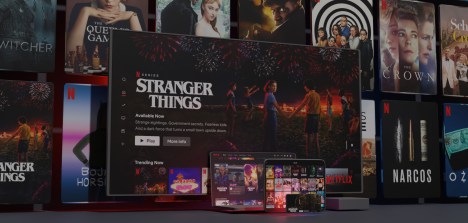
New Escapist Column! On Netflix’s Password-Sharing Clampdown…

I published a new In the Frame piece at The Escapist this week. This week saw some controversy with Netflix announcing – and then swiftly walking back – plans to cut down on password-sharing among users.

This gets at something fascinating about the challenges facing the company going forward in an attempt to maximise profitability. The urge to monetise shared accounts makes sense, but it also risks alienating users at a time when the company is trying to transition into a more traditional ad-supported model. Cutting off access to Netflix for users – especially the younger users disporportionate affected by such a clampdown – would be a very risky move for the company.

You can read the piece here, or click the picture below.

New Escapist Column! On the Recursive Nostalgia of “That ’90s Show”…

I published a new piece at The Escapist yesterday. With the recent release of That ’90s Show on streaming, it seemed like a good opportunity to delve into the show’s very interesting nostalgia.

Part of what is so fascinating about That ’90s Show is that layers of nostalgia that permeate it. It is not simply a show nostalgic for the nineties. It is a show that is itself nostalgic for the nostalgia of the nineties. It’s a conscious effort to resurrect the multi-camera sitcom, a classic institution of American television that has become something of a cultural artifact. It’s also a show that is less interested in its own nineties setting than it is in indirectly channelling the nostalgia that that show felt for the seventies. It’s a hall of mirrors.

You can read the piece here, or click the picture below.

New Escapist Column! On “Luther” as a Superhero Show Without Superheroes…

I published a new In the Frame piece at The Escapist this evening. With the looming release of Luther: The Fallen Sun, it seemed like a good opportunity to talk about the show. In particular, the interesting space that it occupies as a police procedural that arguably owes more to comic books than anything else.

Luther is a fascinating show. It is ostensibly something similiar to Law & Order or CSI, the story of a detective who works grim and sensationalist crimes to their conclusions. In practice, however, Luther is something altogether more heightened. It occasionally veers over into outright horror, and Luther himself often seems to face characters more like comic book supervillains than ordinary criminals. The result is fascinating, a show that arguably feels closer to a certain strand of comic book storytelling than any of the actual comic book shows out there.

You can read the piece here, or click the picture below.

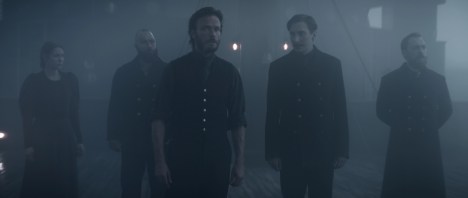
New Escapist Column! On Netflix’s Cancellation of “1899”…

I published a new In the Frame piece at The Escapist this evening. This week, it was revealed that Netflix had cancelled 1899, their prestigious and high-profile mystery drama series. It’s especially notable because the announcement didn’t even come from Netflix, but fits a pattern for streaming services.

Streaming is not like regular television. It adheres to different rules and conventions. In particular, streaming shows don’t operate according the same real-time conveyor belt as conventional broadcast television, where it is possible for a network and a production team to react to audience response in real-time. As a result, the only space that these shows have to grow is in between seasons, and that becomes increasingly difficult in a climate where many streaming companies are cancelling these shows after just a single release.

You can read the piece here, or click the picture below.

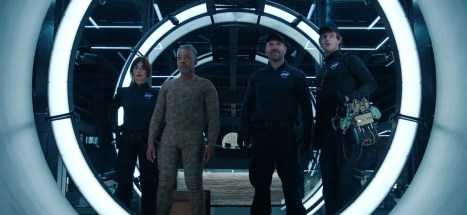
New Escapist Column! On the Modesty of “Kaleidoscope”…

I published a new In the Frame piece at The Escapist this evening. This weekend saw the release of Kaleidoscope, Netflix’s big interactive heist drama. The hook is that the viewer’s experience of the show is randomized, with different viewers watching in different orders.

It is a very modest experiment, particularly when compared to something like Bandersnatch from a few years back. Kaleidoscope is much more interesting on paper than it is in execution, a high concept that feels somewhat half-executed. There is something about streaming as a medium that lends itself to experiments like this, to viewing experiences that are truly singular and unique, where each viewer ultimately consumes their own version of the media in their own way, in a way that challenges the idea of mass media as a communal experience. Kaleidoscope isn’t quite that, but it hints at the possibility.

You can read the piece here, or click the picture below.

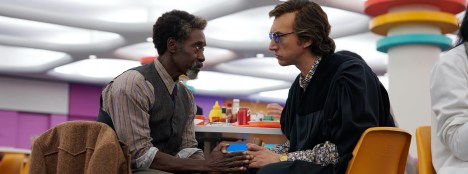
New Escapist Column! On “White Noise” and the Human Death Drive…

I published a new In the Frame piece at The Escapist this evening. With the release of White Noise on Netflix, it seemed like a good opportunity to discuss Noah Baumbach’s adaptation of Don DeLillo’s classic postmodern novel.

White Noise has long been considered unadaptable. However, Baumbach zeroes on a consistent throwline that guids his weird and eccentric adaptation through its various shifts and turns. White Noise is fundamentally a story about death. It is about the way in which so much culture – sex, media, consumerism – is designed as an effort to drown out the encroaching and inescapable sense of mortality. Baumbach presents a broad and cartoonish exploration of man’s inability to grapple with that universal certainty. In doing so, he tells a strangely moving story.

You can read the piece here, or click the picture below.

New Escapist Column! On How “Glass Onion” Disrupts the Disruptors…

I published a new In the Frame piece at The Escapist this evening. With the release of Glass Onion on Netflix, it seemed like a good opportunity to look at Rian Johnson’s latest murder mystery.

There is a sly and self-aware gag buried at the heart of Glass Onion, one of the two Knives Out sequels that Netflix paid almost half-a-billion dollars for. Johnson’s latest film is a satire of tech disruptors, focusing on fictional visionary Miles Bron and his company Alpha. However, the movie’s social satire has a particularly pointed edge. Johnson is parodying precisely the sort of reckless tech disruptors that upended the cinematic landscape. In its own weird way, Netflix is perhaps the villain of Glass Onion.

You can read the piece here, or click the picture below.