• Following Us

  • Categories

  • Check out the Archives


  • Awards & Nominations

New Podcast! The Recap – “Succession and Barry Are Masterclasses in Series Finales…”

We’re thrilled to be launching a weekly multimedia podcast at The Escapist, called The Recap. I’m hoping to be a regular fixture of it, stremaing live every Tuesday evening. This is kinda cool, because we’re helping relaunch the magazine’s film content – so if you can throw a subscription our way, it would mean a lot.

This week, with the ending of Succession, Barry and Ted Lasso, it seemed like a good opportunity to ruminate on what it means to actually end a long-running series. What is is that makes a finale compelling and effective?

New Escapist Column! On “TÁR” as a Gothic Ghost Story About Cancel Culture…

We’re launching a new column at The Escapist, called Out of Focus. It will publish every second Wednesday, and the plan is to use it to look at some film and television that would maybe fall outside the remit of In the Frame, more marginal titles or objects of cult interest. This week, we took a look at Todd Field’s TÁR.

TÁR is an interesting film, and one that embraces an unsettling ambiguity in its exploration of its subject, classical conductor Lydia Tár. Field constructs a fascinating study of a woman literally and metaphorically haunted by the sins of her past, a movie that is very modern in its language but classical in its themes and tones. Tár is a gothic horror story for the digital age, a ghost story about cancel culture, and a nightmare about how conscience is often just the voices of the past refusing to be silenced.

You can read the piece here, or click the picture below.

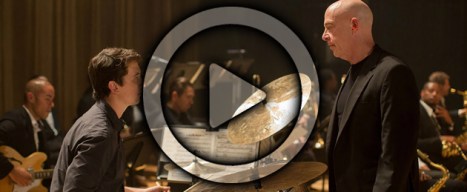
319. Whiplash (#42)

Hosted by Andrew Quinn and Darren Mooney, this week joined by special guest Richard Drumm, The 250 is a (mostly) weekly trip through some of the best (and worst) movies ever made, as voted for by Internet Movie Database Users. New episodes are released every second Saturday at 6pm GMT, with the occasional bonus episode between them.

This time, Damian Chazelle’s Whiplash.

Andrew Neiman is a young music student at the prestigious Shaffer Conservatory in New York City. A jazz drummer, Andrew dreams of great things, of becoming a legend like Miles Davis or John Coltrane. However, he falls under the influence of band leader Terence Fletcher. Fletcher sees potential in Andrew, and draws the young musician into his orbit. The two find themselves trapped in a toxic push-and-pull relationship, with the stakes escalating quickly.

At time of recording, it was ranked 42nd on the list of the best movies of all time on the Internet Movie Database.

Continue reading

New Escapist Column! On “The Rings of Power” and Post-Golden Age Television…

I published a new In the Frame piece at The Escapist this evening. With the release of The Rings of Power this weekend, it seemed like a good opportunity to take a look at what is effectively the biggest television show in the world, and what it says about the current state of television.

For the past twenty years, American television has gone through an era described as “the Golden Age”, one rooted in moral ambiguity and uncertainty in shows like The Sopranos, Breaking Bad and The Shield. These were morally complex stories about difficult protagonists that invited the audience into murky liminal spaces. As such, it is interesting that The Rings of Power exists in marked contrast to that paradigm. Instead, it offers a very clear-cut black-and-white worldview.

You can read the piece here, or click the picture below.

New Escapist Column! On The Lingering Ambiguity of “The Sopranos”…

I published a new In the Frame piece at The Escapist this evening. With the rapidly approaching premiere of The Many Saints of Newark, it seemed like as good a time as any to take a look back to The Sopranos.

The Sopranos remains a towering accomplishment in modern television. It is a show that ushered in what has been described as “the Golden Age of Television.” It is a show that has endured, recruiting new fans in the years since it went off the air. It is a show that is still hotly contested and debated, with fans still arguing over what particular scenes or episodes mean. This is particularly true of the show’s famous ending scene, but the truth is that The Sopranos was always deliberately ambiguous, trusting its audience to reach their own conclusions about these characters and how they operate.

You can read the piece here, or click the picture below.

“We Will Change You, Doctor Jones”: “Indiana Jones and the Kingdom of the Crystal Skull” and a Unified Theory of Indiana Jones…

Indiana Jones and the Kingdom of the Crystal Skull is a movie with very real and very tangible problems.

Part of the problem is one of simple aesthetics. The original trilogy were products of a very particular moment in the history of American cinema, spanning the eighties. Raiders of the Lost Ark was very much a rollercoaster of a movie, a showcase for practical effects and impressive stunt work. Indiana Jones and the Temple of Doom was built around impressive physical sets, model work and location work. Even Indiana Jones and the Last Crusade took a great deal of pride in how tactile this world felt.
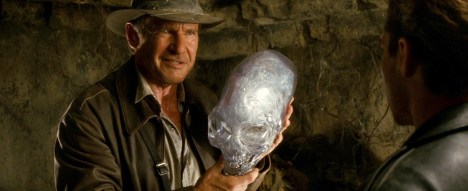
Crystal clear.

In contrast, Indiana Jones and the Kingdom of the Crystal Skull was a product of a transitional decade for Hollywood. It is no coincidence that the film opened in the same summer as blockbusters like Iron Man and The Dark Knight, which heralded a new future for crowdpleasing spectacle. While The Dark Knight made a conscious effort to ground its storytelling in practical effects, Iron Man signaled that the digital effects revolution was going to be the cornerstone of the superhero genre.

As such, Indiana Jones and the Kingdom of the Crystal Skull feels like a deliberate and conscious step into the uncanny valley. Many of the movie’s most decried action sequences are driven by green screen and computer-generated special effects, standing in start contrast to the weight and mass that defined the earlier set pieces. It’s unsettling and uncomfortable. The chase sequence in the Amazon is perhaps the most egregious example, but this detachment from reality is obvious from the early scenes inside the warehouse, as pixels guide our hero and his captors to their destination.
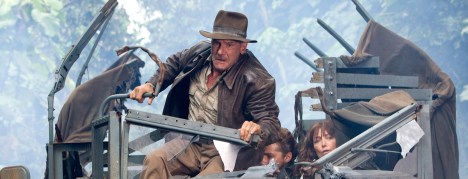
Blowing the roof off.

Indiana Jones and the Kingdom of the Crystal Skull exists in another uncanny space, most obviously through the introduction of the character of Mutt Williams. Part of this problem is undoubtedly Shia LeBeouf himself, who has been candid about his work on the film to the point of alienating director Steven Spielberg. Much like it’s easier to recognise the “pre-sequel” of Indiana Jones and the Temple of Doom as a prequel with the benefit of hindsight, it’s easier now to see Indiana Jones and the Kingdom of the Crystal Skull as a rough draft of a “legacyquel”, like Creed or Star Wars: Episode VII – The Force Awakens.

Of course, Indiana Jones and the Kingdom of the Crystal Skull is too clumsy to really work in that way. The film’s closing moments dare to tease the idea of Mutt Williams succeeding Indiana Jones, the wind blowing Jones’ iconic hat into Williams’ clutches. However, Indiana Jones and the Kingdom of the Crystal Skull lacks the courage of its commitment. Jones snatches the hat away at the last minute, prefiguring the way in which Star Wars: Episode IX – The Rise of Skywalker would retreat from the idea of passing Star Wars to a new generation.
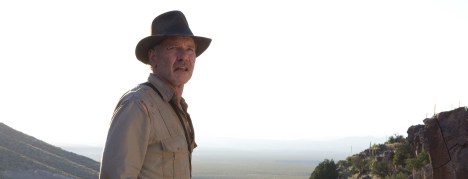
It’s not the years, it’s the mileage.

There are other ways in which Indiana Jones and the Kingdom of the Crystal Skull feels like it is caught between two eras. The film’s structure arguably suffers from the production team’s famed attempts to preserve the secrecy of the plot, which even extended to a sting operation and a high-profile lawsuit. The publicity around the film reportedly considered keeping Karen Allen’s return a secret, and the film’s structure conceals the presence of Marion Ravenwood for an hour. It’s a choice that muddies the film’s handling of its themes, denying it the clarity of how Indiana Jones and the Last Crusade handled Henry Jones.

Still, accepting these issues as problems, there is a lot of interesting stuff happening beneath the surface of Indiana Jones and the Kingdom of the Crystal Skull. In particular, Indiana Jones and the Kingdom of the Crystal Skull feels like a very sincere and genuine effort on the part of everybody involved to figure out some grand unified theory of Indiana Jones, separated from the original three films by decades. What does it mean to look back on the trilogy? How has the world changed? How would the character wrap it all up?
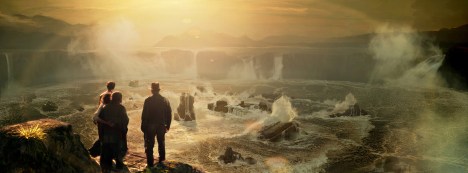
It was admittedly a bit of a wash…

Continue reading

249. Indiana Jones and the Kingdom of the Crystal Skull – Indiana Summer 2021 (#—)

Hosted by Andrew Quinn, Tony Black and Darren Mooney, The 250 is a (mostly) weekly trip through some of the best (and worst) movies ever made, as voted for by Internet Movie Database Users. New episodes are released every Saturday at 6pm GMT.

This time, wrapping up our Indiana Summer, Steven Spielberg’s Indiana Jones and the Kingdom of the Crystal Skull.

In the midst of the Red Scare, veteran archeologist Indiana Jones finds himself embroiled in a Communist plot involving Area 51. The mystery inevitably spirals outwards, the explorer finds himself roped into another adventure that reunites him with his lost love Marion Ravenwood and offers surprising revelations about the adventurer’s family.

At time of recording, it was not ranked on the list of the best movies of all time on the Internet Movie Database.

Continue reading

“Stay Out of the Light”: The Black-and-White Morality of “Raiders of the Lost Ark”…

This August, the podcast that I co-host, The 250, is doing a season looking at all four Indiana Jones films as part of our “Indiana Summer.” Last week, we looked at Raiders of the Lost Ark, and I had some thoughts on the film.

Raiders of the Lost Ark is a film of stark contrasts.

This is true in a very literal sense. Director Steven Spielberg and producer George Lucas had envisaged the film as a loving homage to classic black-and-white film serials, so it only makes sense that cinematographer Douglas Slocombe would populate the film with shadows and silhouettes. Spielberg has talked about wanting “a much moodier, almost neo-Brechtian style of light and shadow for this film”, and it’s notable that the lead character’s costume design was intended to be “immediately recognisable in silhouette.”

While Raiders of the Lost Ark is a visually rich film saturated in deep colours and strong images, it is also a movie obsessed with light and shadow. Indiana Jones is first introduced literally stepping out of the shadows. “Stay out of the light,” he warns a companion during the film’s opening scenes. Many of the film’s most striking images – like Jones visiting an old flame or workers toiling in the desert – are shot to make use of shadow and silhouette.

After all, much has been made of Steven Soderbergh’s Raiders, an experimental edit of the movie that strips out all sound and colour to repurpose Raiders of the Lost Ark as a black-and-white silent film. Soderbergh did this in an effort to force the audience to “watch this movie and think only about staging”, drawing attention to how carefully constructed Raiders of the Lost Ark was as a piece of film. After all, the movie is arguably as pure a cinematic rollercoaster as ever existed, a triumph of pure filmmaking.

However, there’s something revealing in this sharp contrast – in the clear boundaries that Raiders of the Lost Ark draws between light and darkness in its cinematic storytelling. At its core, Raiders of the Lost Ark is a movie about good and evil at work in the world, and the movie is anchored in the belief that good will prevail and evil will be judged. It’s a fascinating film, one that provides an interesting contrast with Steven Spielberg’s later work at the turn of the millennium on projects like A.I. Artificial Intelligence, Minority Report, Munich and even Indiana Jones and the Kingdom of the Crystal Skull.

Raiders of the Lost Ark is a striking piece of cinematic mythmaking, one that feels very true to its time and one firmly anchored in its director’s sensibility.

Continue reading

New Escapist Video! On “WandaVision” and the Death of Ambiguity…

So, as I have mentioned before, I am launching a new video series as a companion piece to In the Frame at The Escapist. The video will typically launch with every second Monday article, and be released on the magazine’s YouTube channel the following week. This is kinda cool, because we’re helping relaunch the magazine’s film channel – so if you can throw a subscription our way, it would mean a lot.

This week, following the end of WandaVision, it seemed like an appropriate time to take a look at what the show said about contemporary pop culture, in particular the show’s approach to its “mystery box” format and its insistence on explaining every ambiguity without any willingness to leave space for interpretation. It’s a big, ambitious video essay that looks at everything from Lost to Twin Peaks to The X-Files to Doctor Who, and I hope you enjoy.

143. Once Upon a Time… in Hollywood – This Just In (#127)

Hosted by Andrew Quinn and Darren Mooney, and this week with special guest Phil Bagnall, The 250 is a (mostly) weekly trip through some of the best (and worst) movies ever made, as voted for by Internet Movie Database Users. New episodes are released every Saturday at 6pm GMT.

This time, Quentin Tarantino’s Once Upon a Time… in Hollywood.

It’s February 1969. Everything is changing. Hollywood itself seems to be facing an inevitable collision with the turmoil that has engulfed the rest of the world. Against this backdrop, lives intersect and collide. Returning from the United Kingdom, Sharon Tate moves in next door to washed up fifties western star Rick Dalton, both completely unaware of how profoundly their lives will impact one another.

At time of recording, it was ranked 127th on the Internet Movie Database’s list of the best movies of all-time.

Continue reading