• Following Us

  • Categories

  • Check out the Archives


  • Awards & Nominations

Non-Review Review: The Many Saints of Newark

The Sopranos was a groundbreaking piece of television that completely changed the rules of television as a medium, with a mob epic that was singularly suited to the opportunities and the constraints of its given medium. Perhaps the best thing that can be said about The Many Saints of Newark is that it at least reinforces how much of the success of The Sopranos was down to its existence of a television show. The Many Saints of Newark demonstrates that so many of the tricks that made The Sopranos so compelling when watched in thirteen-hour seasons become deeply frustrating when condensed to a two-hout movie.

The Many Saints of Newark is a fundamentally flawed film. The most charitable interpretation of the film is that it feels like an attempt to condense an entire season of television down to a cinematic narrative that clocks in at just under two hours. The Many Saints of Newark is a sprawling film, one that spans from the late sixties into the early seventies. It often doesn’t seem to have a singular driving plot, but instead a set of competing subplots that swirl and occasionally cohere around the lead character of Dickie Moltisanti. They gesture broadly at compelling thematic concerns, but without any real clarity or focus.

Clever Dickie.

The Many Saints of Newark hinges on the narrative trickery that made The Sopranos such a compelling watch. It has an expansive cast. There’s a recurring ambiguity about what any of this actually means and what parts of it will be actively important to the resolution of the story. The film is willing to spend extended periods focusing on vignettes involving tertiary supporting cast members, away from the nominal lead. The film’s ending is a very deliberate and pointed anticlimax, one that is very deliberately set up over the film’s runtime, but which still feels designed to confound audience expectations.

All of these elements worked on The Sopranos because the production team had enough room to explore and develop them. The show was dense enough and had enough narrative real estate that credited leads like Lorraine Bracco or Dominic Chianese could disappear for multiple episodes at a time, only to return at pivotal junctures. The show spent enough time developing its narrative threads that sudden curve balls that seemed to derail certain plots instead felt like satisfying and unexpected pay-offs from others. The Many Saints of Newark doesn’t have this luxury. It doesn’t seem expansive, just messy.

Family ties.

Continue reading

New Escapist Video! On “Shang-Chi” and “Blade” as Homages to Hong Kong Action Cinema…

So, as I have mentioned before, I am launching a new video series as a companion piece to In the Frame at The Escapist. The video will typically launch with every second Monday’s article, and be released on the magazine’s YouTube channel the following week. This is kinda cool, because we’re helping relaunch the magazine’s film content – so if you can throw a subscription our way, it would mean a lot.

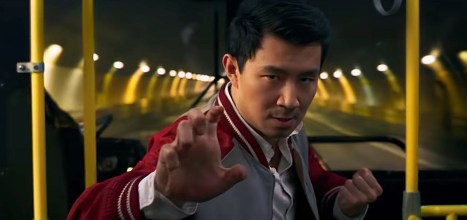
With the release of Shang-Chi and the Legend of Ten Rings, it seemed like a good opportunity to take a look at the latest Marvel Studios film. Shang-Chi and the Legend of the Ten Rings is loosely adapted from the seventies title Master of Kung Fu, and so it seems interesting to discuss the film in the context of another adaptation of a cult non-superhero seventies comic book: Blade.

New Escapist Column! On The Lingering Ambiguity of “The Sopranos”…

I published a new In the Frame piece at The Escapist this evening. With the rapidly approaching premiere of The Many Saints of Newark, it seemed like as good a time as any to take a look back to The Sopranos.

The Sopranos remains a towering accomplishment in modern television. It is a show that ushered in what has been described as “the Golden Age of Television.” It is a show that has endured, recruiting new fans in the years since it went off the air. It is a show that is still hotly contested and debated, with fans still arguing over what particular scenes or episodes mean. This is particularly true of the show’s famous ending scene, but the truth is that The Sopranos was always deliberately ambiguous, trusting its audience to reach their own conclusions about these characters and how they operate.

You can read the piece here, or click the picture below.

New Podcast! The X-Cast – Season 7, Episode 11 (“Closure”)

The X-Cast is covering the seventh season of The X-Files. It’s an interesting and divisive season of the show, a season that seems to have been intended to serve as the end of the show’s run, but is now closer to the middle of the series’ run. Although the sixth season had wrapped up a lot of the mythology in Two Fathers and One Son, the seventh season still had some tidying up to do. I was thrilled to join Carl Sweeney and Chris Knowles for an episode doing some of that tidying up: Closure.

Samantha Mulder had haunted the show since the very beginning. In The Pilot and Conduit, Samantha’s mysterious disappearance was positioned as the reason for Mulder’s quest. Over the years, in episodes like Colony and End Game or Redux II, Samantha remained pivotal to the show’s central mythology. She was perhaps the biggest remaining plot thread as the show entered its seventh season. Closure is an attempt to wrap up that dangling plot thread, and to provide a satisfying answer once and for all to one of the show’s biggest remaining mysteries.

You can listen to the episode here, or click the link below.

Continue reading

New Escapist Column! On The Enduring Appeal of “Marvel Zombies”…

I published a new In the Frame piece at The Escapist on Friday. With the release of What If… Zombies!?, What If…? finally brought the Marvel Zombies into the larger continuity of the Marvel Cinematic Universe.

The Marvel Zombies are an interesting piece of Marvel Comics lore, essentially imagining a world where all the superheroes have been transformed into flesh-eating monsters. While these sorts of alternate universe stories are common enough in comic books, Marvel Zombies have endured much longer than the zombie movie revival that likely inspired them. So why did the Marvel Zombies catch on? Why do they endure? Why are audiences so compelled by them?

You can read the piece here, or click the picture below.

252. Platoon (#222)

Hosted by Andrew Quinn and Darren Mooney, with special guest Joe Griffin, The 250 is a (mostly) weekly trip through some of the best (and worst) movies ever made, as voted for by Internet Movie Database Users. New episodes are released every Saturday at 6pm GMT.

This time, Oliver Stone’s Platoon.

In late 1967, Chris Taylor volunteers for service in Vietnam. Arriving in country, Taylor quickly discovers that the war is not what he expected. As the platoon descends into civil war, Taylor finds himself torn between the two sergeants: the monstrous Barnes and the philosophical Elias. Taylor discovers that he might not just be fighting for his life, but for his very soul.

At time of recording, it was ranked 222nd on the list of the best movies of all time on the Internet Movie Database.

Continue reading

New Escapist Column! On how “Blade” is a More Loving Tribute to Hong Kong Action Cinema Than “Shang-Chi and the Legend of the Ten Rings”…

I published a new In the Frame piece at The Escapist this evening. With the release of Shang-Chi and the Legend of the Ten Rings, it seemed like a good opportunity to discuss the film.

In particular, Shang-Chi and the Legend of the Ten Rings has been packaged and sold as a love letter and tribute to classic Hong Kong action cinema. However, that seems somewhat unconvincing. As with virtually every film the Marvel Cinematic Universe, the house style exerts an inescapable gravity that warps the movie back around it and forces it to adhere to a familiar template. There’s a sad but revealing irony in the fact that Blade, the movie that quietly launched the modern superhero movie boom, feels like a more sincere and loving tribute to Hong Kong cinema than Shang-Chi and the Legend of the Ten Rings.

You can read the piece here, or click the picture below.

New Escapist Video! “A Marvelous Escape” – What If – “… Zombies!?”

With a slew of Marvel Studios productions coming to Disney+ over the next six months, The Escapist has launched a weekly show discussing these series

This week, I join KC Nwosu and Amy Campbell to talk about the fifth episode of What If…?, streaming on Disney+.

251. Up (#123)

Hosted by Andrew Quinn and Darren Mooney, this week with special guests Deirdre Molumby and Brian Lloyd, The 250 is a (mostly) weekly trip through some of the best (and worst) movies ever made, as voted for by Internet Movie Database Users. New episodes are released every Saturday at 6pm GMT.

This time, marking the passing of Ed Asner, Pete Docter’s Up.

Carl Fredricksen is a widower who finds himself facing the end of a modest life in the small house that he once shared with the love of his life. When it looks like what little remains of that life migth be disturbed and destroyed, Carl decides to embark on the one last adventure that he never got to take with his beloved life: a trip to mysterious “Paradise Falls”, without leaving his home.

At time of recording, it was ranked 123rd on the list of the best movies of all time on the Internet Movie Database.

Continue reading

New Escapist Column! On How the Summer of 2011 Changed Blockbuster Cinema, Forever…

I published a new In the Frame piece at The Escapist this evening. Because it was Labour Day on Monday, officially marking the end of summer, it seemed like an appropriate opportunity to take a look back on the summer from a decade ago. The summer of 2011 was arguably the blockbuster movie season that defined the modern cinematic landscape.

Many observers would trace the root of the modern blockbuster era to the summers of 2008 and 2012 with epoch-defining smash hits like Iron Man and The Dark Knight or The Avengers and The Dark Knight Rises. However, these movies were exceptional. They were seismic. Doing something like that was an innovation and a miracle. However, the key for Hollywood is to find a way to make these sorts of models sustainable and reproduceable. That is why 2011 was such a big year, because it marked the season that Hollywood found a way to mass produce movies like Iron Man and The Dark Knight.

You can read the piece here, or click the picture below.