• Following Us

  • Categories

  • Check out the Archives


  • Awards & Nominations

New Podcast! The X-Cast – Topps Comics #1 (“Not to Be Opened Until X-Mas” / “A Dismemberance of Things Past”)

I’ve been thrilled to guest on The X-Cast over the past few years, and have really enjoyed digging into The X-Files with the guests and hosts. However, this is particularly thrilling, because it’s particularly geeky. The wonderful Tony Black asked me join him for a discussion of the first two stories published by Topps comics, Not to Be Opened Until X-Mas and A Dismemberance of Things Past, written by Stefan Petrucha and illustrated by Charlie Adlard.

I have made no secret of my long-standing affection for these comics. I think that they are probably among the very best licensed comic books ever published. So it was a delight to be asked to talk about them, and to get to geek out with Tony about these stories. There’s a lot of fun stuff here, including context about the comics industry in the nineties and the question of what was possible in a monthly tie-in to a weekly television series.

You can listen to the episode here, or click the link below.

Continue reading

New Escapist Column! On How the “Chucky” Franchise Is About Being Both Mass Produced and Remaining One of a Kind…

I published a new In the Frame piece at The Escapist this evening. I’ve been watching the Child’s Play and Chucky franchise, and so it seemed like a good opportunity to delve into one of the more distinctive major horror franchises.

There’s an interesting tension to the Chucky franchise, one that plays out across the various entries. This is a horror series about a mass-produced piece of children’s entertainment, controlled by the demented soul of a monstrous serial killer. Much of the franchise is about the contrast between those two ideas: the factory-assembled doll and the distinctive spirit inside of it. It works well as a metaphor for the larger Chucky franchise as a whole, which has changed form repeatedly across its various incarnations, but somehow managed to retain a unique and consistent identity.

You can read the piece here, or click the picture below.

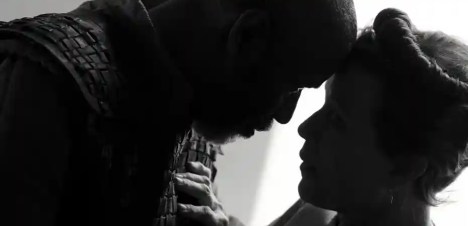
Non-Review Review: The Tragedy of Macbeth (2021)

There is something inherently cinematic about Macbeth.

More than the other three of Shakespeare’s “big four” tragedies, Macbeth is a movie that lends itself to bold cinematic adaptations. To be fair, there are great cinematic adaptations of Hamlet and King Lear, but there don’t seem to be quite as many of them that linger in the consciousness. It’s interesting to wonder why cinema seems to be such a perfect form for this Jacobean tragecy. Maybe it’s the overt supernatural elements, or the grim setting, the intersection of stark morality and brutal violence. It might even be uncanny imagery suggested by the dialogue. Perhaps it’s all of these. Perhaps it is none of them.

Black and white morality.

Whatever the reason, from straight adaptations like those of Orson Welles through to Justin Kurzel and more abstract interpretations like Kurosawa’s Throne of Blood, Shakespeare’s historical tragedy is one that really pops within these heightened and formalist adaptations. It helps that the play works in any number of registers: as tragedy, as horror, as drama, as morality play. Indeed, in the context of The Tragedy of Macbeth, it’s tempting to argue that Macbeth fits surprisingly well within the Coen Brothers’ larger filmography of inept and over-confident criminals undermined by their own incompetence.

The Tragedy of Macbeth is a worth addition to both this list of impressive adaptations and the filmography of director Joel Coen.

A doorway to madness…

Continue reading

New Escapist Column! On How “Peacemaker” Juxtaposes Eighties Nostalgia and Modern Masculinity…

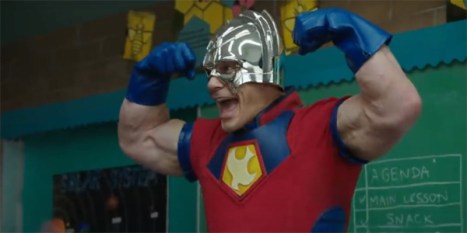
I published a new piece at The Escapist this evening. We’re hopefully doing a series of recaps and reviews of James Gunn’s Peacemaker, which is streaming weekly on HBO Max. The first three episodes of the show released today, and it seemed like a good opportunity to take a look at the series.

Gunn’s filmography is saturated with an affectionate nostalgia for the eighties. It comes to the fore in Peacemaker, down to the casting of John Cena. Cena is a lead actor in the style of classic eighties “hard body” action heroes like Sylvester Stallone and Arnold Schwarzenegger. However, that nostalgia does not exist purely for its own sake. Peacemaker is a show engaged with modern masculinity, in particular deconstructing the sort of eighties masculinity embodied by its central character. Peacemaker is a story about whether its lead character can change and evolve, emerging from a cocoon as he investigates “Project: Butterfly.”

You can read the piece here, or click the picture below.

268. Incendies (#110)

Hosted by Andrew Quinn and Darren Mooney, The 250 is a (mostly) weekly trip through some of the best (and worst) movies ever made, as voted for by Internet Movie Database Users. New episodes are released every Saturday at 6pm GMT.

This time, Denis Villeneuve’s Incendies.

Following the death of their mother Nawal, twins Jeanne and Simon find themselves dealing with dark family secrets bubbling to the surface. Nawal’s will includes two instructions for her children, to find both their father and their long-lost sibling. While Simon dismisses this last request as another manipulation from an emotionally-distant mother, Jeanne embarks on an epic journey to trace her family’s history and perhaps change its future.

At time of recording, it was ranked 110th on the list of the best movies of all time on the Internet Movie Database.

Continue reading

New Escapist Column! On How “Star Trek: Deep Space Nine” Challenged “The Next Generation”…

I published a new In the Frame piece at The Escapist on Friday. This week marked the 29th anniversary of Star Trek: Deep Space Nine, so it seemed like a good opportunity to take a look back at the show. In particular, the show’s relationship to its elder sibling, Star Trek: The Next Generation.

Deep Space Nine had a surprisingly contentious relationship with The Next Generation, often positioning itself as directly adversarial to the more popular and more beloved Star Trek spin-off. There were points at which Deep Space Nine seemed positively iconoclastic, particularly in its establishing of a fraught relationship between Sisko and Picard. This approach would be controversial today, if it were even allowed within the framework of a modern franchise, but it allowed Deep Space Nine to boldly push itself in striking new directions.

You can read the piece here, or click the picture below.

Doctor Who: Eve of the Daleks (Review)

“Here we are again.”

“Yeah, here we are again.”

In hindsight, it’s surprising that it has taken Doctor Who this long to do a proper time-loop episode. After all, this is a show about a literal time machine.

Time-loop stories are inherently fun. As Dan points out, Groundhog Day codified a narrative template that is easy to replicate while also being fun to play with. As recently as last year in the United Kingdom and the previous year in the United States, Palm Springs demonstrated how such a story could resonate in this era of a global pandemic, when the feeling of being stuck in an unending loop living the same day over and over again tapped into a fairly widespread feeling.

Shelf storage, am I right?

On a more basic level, these sorts of stories are fun for writers, directors and audiences. It has become increasingly common for television shows to have timeloop episodes. Star Trek: The Next Generation had Cause and Effect, which perhaps remains the gold standard. Stargate: SG-1 had the charming Window of Opportunity. The X-Files had Monday. Even Star Trek: Discovery had Magic to Make the Sanest Man Go Mad. These sorts of stories are that rare blend of a simple high concept with an incredible range of narrative opportunities; they can be funny or tragic, straightforward or complicated, character- or plot-driven.

So it is strange that it has taken Doctor Who so long to attempt something like this, even if the results are depressingly familiar within the larger context of the Chris Chibnall era. It feels very much like a repetition of the era’s most glaring flaws, squandering a fun supporting cast and playful concept on a script that seems completely disinterested in capitalising on either. Instead, it just plays the clichés of these sorts of stories over and over again.
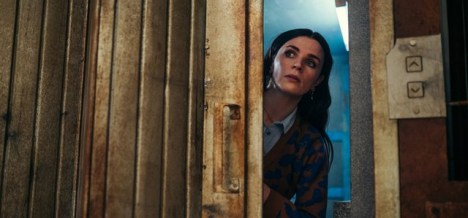
Lifting the holiday spirits.

Continue reading

New Escapist Column! On How “The Matrix Resurrections” Utilises Franchise Nostalgia…

I published a new In the Frame piece at The Escapist on Friday. With the release of The Matrix Resurrections on HBO Max and in theatres, it seemed like a good opportunity to take a look at the film and its themes, in particular its relationship with the earlier films in the franchise.

The Matrix Resurrections exists as part of a larger wave of long-delayed nostalgic sequels to older franchises, from Space Jam: A New Legacy to Ghostbusters: Afterlife to Spider-Man: No Way Home. However, what distinguishes The Matrix Resurrections from these other examples is the way in which it uses nostalgia to a very specific purpose. It’s a film that is aware of both the passage of time since the original film and very engaged with the debate over the reason for its own existence. The result is a movie that has something meaningful to say about the modern movie landscape… and much beyond.

You can read the piece here, or click the picture below.

New Escapist Column! On “The Matrix Resurrections” and the Rejection of False Binaries…

I published a new In the Frame piece at The Escapist this evening. With the release of The Matrix Resurrections on HBO Max and in theatres, it seemed like a good opportunity to take a look at the film and its themes, in particular its relationship with the earlier films in the franchise.

The Matrix Resurrections is a movie that exists very much in conversations with the previous films in the series, expanding and developing the core themes that made the original such a hit. In some cases, director Lana Wachowski has taken the opportunity to expand upon and develop the big ideas in the previous films. In particular, The Matrix Resurrections is a film that rejects the idea of rigid boundaries – the red and blue pills, the black-and-white green-tinted filter, “us and them”, even Neo and Trinity. It’s a very thoughtful and considered update of the ideas that underpin the larger franchises.

You can read the piece here, or click the picture below.

New Podcast! Your Feature Presentation – “What Worked and Didn’t Work in Spider-Man: No Way Home”

The Escapist have launched a new pop culture podcast, and I was thrilled to join Jack Packard and KC Nwosu or the first episode. With the recent release of Spider-Man: No Way Home and Hawkeye, it seemed like a good opportunity to talk about the recent Marvel Studios productions.