• Following Us

  • Categories

  • Check out the Archives


  • Awards & Nominations

Star Trek: Voyager – Spirit Folk (Review)

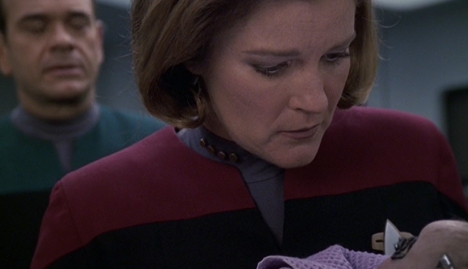
The holodeck is horrifying.

This is nothing new. It has been this way since Star Trek: The Next Generation. The holodeck has been an unsettling concept from almost the very beginning, not least because of the kinds of stories that the holodeck suggests. From the moment that the Enterprise updated the holodeck in The Big Goodbye, there has been a creeping sense that the holographic creations are capable of comprehending the nature of their existence; in fact, that episode ends with the horrifying notion of McNary wondering what would happen to him when Picard turned off the program.
It’s the poster for the least exciting action movie of the late nineties.

This anxiety simmered in the background of the next few holodeck-centric episode, albeit less directly. Both Minuet in 11001001 and the Comic in The Outrageous Okona seemed to grasp their nature as computer constructs designed to serve specific purposes. They lacked the existential angst that McNary expressed in his final moments, but there was still something lurking just beneath the surface. If these entities were self-aware, could their creation and destruction be ethical? In Elementary, Dear Data, Moriarty brought the question to the fore; a hologram who wished to escape his captivity.

Star Trek: Deep Space Nine largely stayed away from the holodeck (or the holosuite) for most of its run, barring small recurring gags about the crew’s recreational use of the facilities. Our Man Bashir cleverly side-stepped the issue of holographic self-awareness by casting the lead actors in the role of holographic supporting players. Nevertheless, the introduction of Vic Fontaine in His Way introduced yet another self-aware holographic character, his self-awareness taken for granted and only really articulated in episodes like It’s Only a Paper Moon.
A public (house) meeting.

In contrast, Star Trek: Voyager has only doubled-down on this idea that holographic characters are self-aware. This is most obvious with the EMH, the holographic doctor who struggled for recognition as a person in early episodes like Eye of the Needle and who made a long and gradual journey towards self-actualisation in episodes like Lifesigns and Real Life. However the show engaged with the idea of holographic self-awareness even outside of the EMH, with characters like Dejaran in Revulsion, Leonardo DaVinci in Concerning Flight, the aliens in Bride of Chaotica! and the town in Fair Haven.

To be fair, some of the arguments made by Voyager have been treated with the weight which they deserve. The EMH consciously asserts his personhood in Author, Author, a clumsy but well-intentioned final-season homage to The Measure of a Man. There is a sense that Voyager is capable of treating holograms with the same dignity that The Next Generation afforded Data on his own journey towards self-actualisation. There is something genuinely moving, for example, in the way that the degradation of his program in The Swarm is treated with the same gravity as the neurological decline of a flesh-and-blood character.
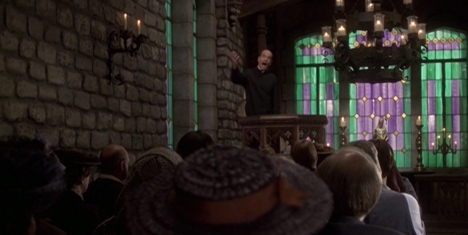
Mass appeal.

However, this also creates a strange dissonance in the episodes that don’t use the holodeck for high drama, and instead treat it as the setting for a romp or an adventure. Voyager seems to argue that every hologram is capable of reaching self-awareness, which means that every use of the holodeck to create new characters should be a momentous occasion. In the world of Voyager, every holodeck program, with the right combination of time and experience, can become a sentient being. This means that use of the holodeck should be something treated with weight and respect.

Fair Haven and Spirit Folk are nowhere near as charming as the production team seem to think that they are, but in the broader context of how Voyager approaches holographic characters, they are downright horrifying.
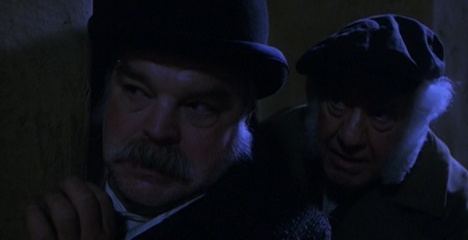
High spirits.

Continue reading →

Star Trek: Voyager – Collective (Review)

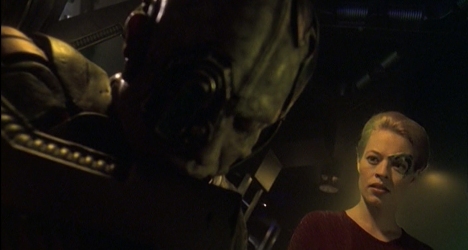
Watching Collective, it’s strange to imagine a time when the Borg were considered a credible threat to the larger Star Trek universe.

Collective alludes to this palpable sense of menace in its opening scene. Several members of the crew are playing poker in the Delta Flyer. They are playing in the cockpit, for some reason, rather than in the aft section that would seem to lend itself to such recreational activities. The reason for this storytelling decision comes at the end of the teaser, when something catches Paris’ eye in the middle of one hand. The other members of the away mission follow his gaze, spotting a Borg Cube in the shuttle’s path. Panic ensues. The crew rush to their stations. This, Collective seems to scream, is a big deal.

Baby on Borg.

Of course, this is not actually a big deal. Collective focuses on a Borg Cube that has effectively run aground, a ship that has been disabled. The crew are dead, the result of “a space-borne virus that adapted to Borg physiology” that Child’s Play would reveal to be a form of biological warfare. It should be noted that “the crew discover a disabled Borg Cube” is something of a recurring trope on Star Trek: Voyager, with a similar plot beat employed in both Unity and Scorpion, Part I during the third season. When Kim talks about “bad memories” while skulking through the Cube, it initially seems like he might be referencing the latter.

(Ultimately, Kim is not referring to his traumatic experiences in Scorpion, Part I, which left the character on the verge of death after being attacked by a member of Species 8472. Although the Borg Cube in Collective evokes such memories for the audience, Kim is insulated by Voyager‘s stubborn refusal to acknowledge its own internal continuity. As a result, the memories stoked by the trip to the Borg Cube are generic in nature, of “a haunted house [his] parents took me to when [he] was six.” This is never referenced again. This reveals nothing of Harry Kim. It is just empty filler.)

Dead circuits.

There are plenty of reasons why Voyager keeps stumbling across damaged and derelict Borg Cubes. From a narrative perspective, it allows Voyager to tells stories featuring the Borg without have the crew overwhelmed. Voyager has allowed its characters major victories over the Borg in episodes like Drone or Dark Frontier, Part I and Dark Frontier, Part II, but understands that having a lone lost ship triumph repeatedly over the Borg Collective would strain credulity. So having the ship repeatedly encounter broken-down Borg Cubes allows the series to involve the Borg in these stories while nominally preserving their menace.

However, there is also a sense that there might just be something more at work here, that the sad and story state of the Borg Collective across the seven-season run of Voyager might reflect more than just the demands of the production team. It would seem to hint at a broader sense of social anxieties.

“For the promo!”

Continue reading →

79. Mandariinid (Tangerines) – This Just In (#247)

Hosted by Andrew Quinn and Darren Mooney and with special guests Jason Coyle and Ronan Doyle, This Just In is a subset of The 250 podcast, looking at notable new arrivals on the list of the 250 best movies of all-time, as voted for by Internet Movie Database Users.

This time, Zaza Urushadze’s Mandariinid.

At time of recording, it was ranked the 247th best movie of all time on the Internet Movie Database.

Continue reading →

Non-Review Review: Citizen Lane

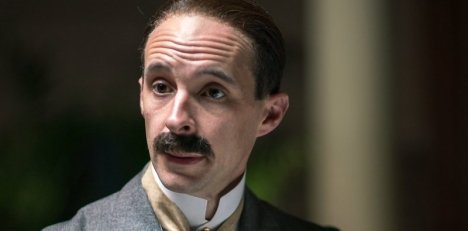
Citizen Lane is the latest documentary from director Thaddeus O’Sullivan, following the life and times of Hugh Lane.

Essentially combining documentary discussion of the central character with dramatic reconstructions of moments both key and incidental, Citizen Lane sketches an intriguing portrait of a fascinating figure. Lane is perhaps best known as an art collector and dealer, whose name adorns one of the more prestigious art galleries in the city centre. However, Lane is something of a mysterious figure to all but the most devoted of Irish cultural historians, lurking at the edge of the frame in stories about artists like Yeats or Synge.

Turn of the Century City.

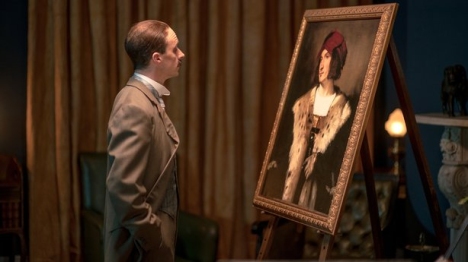
Citizen Lane pulls back the curtain a little bit, illuminating both its subject and the world around him. Citizen Lane closes on an imagined image of Lane wandering through the gallery named in his honour, unassumingly travelling through a series of interlocked rooms, largely unnoticed by those in attendance. This image captures what Citizen Lane suggests is the most compelling facet of its central figure, the manner in which he seems to move through early twentieth-century Dublin intersecting with the grand sweep of Irish (and eventually global) history.

Citizen Lane is an enlightening and entertaining piece of work, and a compelling argument for how works of art (and even those who engage with art) seem to turn a mirror back on the culture around them.

Painting a picture of life in twentieth century Dublin.

Continue reading →

Star Trek: Voyager – Tsunkatse (Review)

Tsunkatse is the crossover between Star Trek: Voyager and WWF that you didn’t know you needed. Mostly because you didn’t actually need it.

Tsunkatse is a delightfully bizarre piece of television, and perhaps the most cynical piece of Star Trek ever produced. That is saying something, considering that the franchise also includes Star Trek V: The Final Frontier, an episode that literalises William Shatner’s paranoid delusions about his fellow cast members. Separated from the episode by almost two decades, it is still hard to believe that Tsunkatse actually exists, even allowing for other “out there” premises for Voyager episodes like Threshold or Concerning Flight.

Somehow, the production team couldn’t secure Jean-Claude Van Damme as a guest star.

To be fair, Tsunkatse isn’t awful. It isn’t especially good either, but it never develops into the trainwreck suggested by the premise of making a Star Trek episode designed to cash-in on the popularity of wrestling. That might sound like damning with faint praise, but there is something to be said for the fact that Tsunkatse manages to be a truly memorable episode of Voyager based around a highly dubious premise, without ever collapsing into itself. Tsunkatse is better than it has any right to be, and that might just be enough.

Might.

Rock your world.

Continue reading →

New Podcast! Set the Tape Rewind – Episode 10

Thrilled to be invited to to guest on the latest episode of the new podcast from Set the Tape, discussing the week in popular culture with Owen Hughes and Steve Norman.

Set the Tape Rewind half-hour jump into the world of film, television and… well, everything else. This week, we’re discussing whether Avengers: Infinity War broke the Marvel Cinematic Universe, the mass cancellation of shows at Fox and NBC followed by the resurrection of Brooklyn 99, and our competing attitudes towards tie-in fiction. It was a huge pleasure to be invited on for a fun discussion.

You can listen to the episode here, or click the link below.

Non-Review Review: Solo – A Star Wars Story

Solo: A Star Wars Story is perhaps remarkable in how it is unremarkable.

That is not exactly fair. Most obviously, despite being the tenth theatrical release with a Star Wars brand, Solo: A Star Wars Story is still something relatively novel for a franchise; it is a big-screen outing that consciously and overtly marginalises a lot of what audiences have come to expect from the franchise. There are a host of familiar elements here, but often in minuscule amounts; either token gestures or sly continuity nods. Without confirming any of these elements are present, Solo certainly has fewer Jedi, Death Stars, representatives of the Empire, officially designated rebels, or lightsabers than most Star Wars films.

The Wookie and the Rookie.

More than that, the film’s production was notably troubled, which is striking for a production company as efficient as Disney and Lucasfilm. Original directors Phil Lord and Chris Miller finished shooting their version of the film, and were fired during the editing process. Reportedly, seventy percent of Solowas reshot by Ron Howard. Given the schedule demands of the actors involved, the complicated mechanics of the set pieces, and the budget of the film, this was no small undertaking. On paper, Solo would appear to have more in common with a film like Justice League or Suicide Squad than even the troubled Rogue One.

With all of that in mind, it is a credit to Howard that Solo turns out as well as it did. Howard is an efficient and often underrated director, one with a clean eye and with a clear storytelling style. Howard’s films tend to be unfussy and uncomplicated, a director who never gets in the way of the story being told. This is something of an underappreciated virtue, with Howard’s films often maintaining a firm grasp on the fundamentals of storytelling. Howard’s characters tend to have clear arcs and tangible motivations, with very little getting lost in the shuffle. Howard’s direction is unobtrusive, which likely made him such a good fit for this particular film in these particular circumstances.

On the cards…

Watching the film, there is little sense of competing tones or contrasting visions. There are moments over the course of the film when the cast are noticeably more playful, their banter a little more conversational and the comic rhythms a little more pronounced. However, Solo never misses a beat, never turns to sharply, never transitions too jarringly. There is a strange sense, watching Solo, that absolutely everything has ended up right where it was supposed to be with a minimum amount of fuss. There is absolutely nothing about the finished product screams “troubled production.”

At the same time, nothing about Solo screams anything at all.

Going Solo.

Continue reading →

Non-Review Review: Deadpool 2

Like the original, Deadpool 2 is being talked about as a deconstruction or comedy. It’s not really. At least, not primarily.

Deadpool 2 is most effective as a very simple and straightforward superhero narrative with a shade more violence and a dash more awareness. There are laughs in Deadpool 2. And a few truly great jokes. There are even occasionally moments where Deadpool 2 will take a montage or a couple of scenes specifically to set up a later pay-off. However, these are the exception rather than the rule. And it’s no coincidence that this set-up leads to the biggest laugh in the film.

Not basic Cable.

More to the point, Deadpool 2 never opts for a joke over an efficient plot beat. Deadpool 2 never even distorts its plot in order to cram a few more laughs into the runtime. The gags are largely there to decorate the plot, not to direct it. They’re fun, but they aren’t especially brutal or pointed. There’s never a sense that Deadpool 2 exists as a deconstruction or critique of superhero movies, that it has anything especially insightful to say about the genre beyond accepting that modern audiences are genre-literate.

To be clear, this is not an issue with Deadpool 2. In fact, what’s most remarkable about Deadpool 2, particularly in the age of superhero bloat and franchising, is the relative efficiency with which it tells a simple story. For all the jokes about genitalia and all the pop culture references that crowd the narrative, there is more genuine emotion in Deadpool 2 than there is in Avengers: Infinity War. The characters are better defined, their arcs and motivations clearer, their agency repeatedly affirmed. There is an endearing and infectious earnestness beneath the dick jokes.

Just Joshing.

Continue reading →

New Podcast! Scannain Podcast (2018) #17!

A busy Scannain podcast, covering the week in film and other news.

This week, I’m joined by Grace Duffy, Jason Coyle, Ronan Doyle, and Alex Towers to discuss the week in film – both Irish and international. The news includes coverage of Cannes, of Irish success at other international film festivals, and the upcoming release dates of notable Irish films. As usual, we also talk about what we watched, what is being released next week and what is currently in the top ten.

Check it out here, or give it a listen below.

Star Trek: Voyager – Memorial (Review)

Memorial is a great example of Star Trek: Voyager doing a generic Star Trek story.

The episode has a very basic premise that allows for the construction of a science-fiction allegory, the kind of storytelling associated with the franchise dating back to early adventures like The Devil in the Dark or Errand of Mercy. Despite its unique premise and set-up, Voyager had largely embraced the archetypal mode of Star Trek storytelling in its third season. A lot of Voyager episodes feel very broad and very generic, and could easily be adapted for another series – whether inside or outside the franchise.

The real devil in the dark.
Spoiler: It’s us.

There any number of episodes that are not rooted in the specific premise of Voyager, that could easily have been reworked or reinvented for another crew at another point. The Chute was a harrowing story about the horrors of mass incarceration and its capacity to turn people into animals. Nemesis was a meditation on killology, in the way that militaries turn soldiers into killing machines. Scientific Method was a treatise on the horrors of animal testing. Random Thoughts was paranoia about “political correctness gone mad” translated into forty minutes of television.

Memorial belongs to a very specific subset of these episodes, something of a bridge between the more generic Star Trek storytelling to which Voyager aspires and a slightly more specific area of thematic interest. Voyager is a series very much engaged with the idea of memory and history, perhaps befitting the Star Trek series that straddles the twentieth and twenty-first century. Episodes like Remember, Distant Origin and Living Witness are all archetypal Star Trek stories, but they are built around ideas of particular interest to Voyager.

The past never remains buried.

As the title implies, Memorial belongs to that very specific subset of episodes. It is easy to imagine a version of Memorial starring James Tiberius Kirk, Jean-Luc Picard, Benjamin Lafayette Sisko or Jonathan Beckett Archer. It is a generic Star Trek episode that could work with any crew, perhaps meaning something slightly different in each context. (On Star Trek: Deep Space Nine, it would be an “O’Brien must suffer!” episode. In fact, Hard Time is quite close.) However, it is an episode that engages overtly with ideas that are of great interest to Voyager.

Memorial is about the importance of memory and history, even in a world where time seems to have lost all meaning.

Standing watch over history.

Continue reading →