• Following Us

  • Categories

  • Check out the Archives


  • Awards & Nominations

New Escapist Column! On the Complicated Seventies Nostalgia of “Poker Face”…

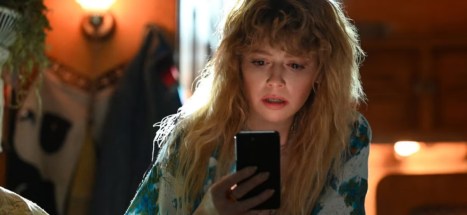
We’re launching a new column at The Escapist, called Out of Focus. It will publish every Wednesday, and the plan is to use it to look at some film and television that would maybe fall outside the remit of In the Frame, more marginal titles or objects of cult interest. With the end of the first season of Poker Face last week, it seemed like a good opportunity to take a look back at the show.

Poker Face is obviously designed as something of a seventies throwback. The show is very obviously a hybrid of classic seventies television like Columbo and Kung-Fu. However, there’s more than simple nostalgia at play within the series. Poker Face is a show about grappling with the memory and legacy of the seventies, of understanding why these stories resonate in the modern world. It has a nuanced and complicated relationship with the era from which it draws, which makes for compelling television.

You can read the piece here, or click the picture below.
New Escapist Column! On “Poker Face” as a Show About Empathy and Action…

I published a new piece at The Escapist during the week. With the recent release of the first four episodes of Poker Face on Peacock, it seemed like a good opportunity to discuss the show’s central thematic and narrative preoccupations: the importance of both empathy and action in response to injustice.

Poker Face exists as part of Rian Johnson’s filmography, and is an obvious companion piece to Knives Out and Glass Onion. However, it fits alongside those stories in more than just its genre. Johnson is a filmmaker fascinated by the power of empathy, and the importance of understanding other human beings on a personal level. Poker Face is the story of a character so good at listening that she can instinctively spot a lie. However, in this world, empathy is not enough of itself. Poker Face is a show about the need for action in support of empathy.

You can read the piece here, or click the picture below.


New Escapist Column! On “Poker Face” as Must-See Mystery Television…

I published a new piece at The Escapist this week. With the release of Poker Face on Peacock this week, I got to review the first six episodes of the show.

From director Rian Johnson and actor Natasha Lyonne, Poker Face is a love letter to seventies television. It’s obviously indebted to shows like Columbo or The Rockford Files, but it owes just as much to classic wandering hero narratives like Kung Fu and The Incredible Hulk. It’s a glorious and thrilling piece of television, that is both a love letter and an update to the medium’s rich history.

You can read the piece here, or click the picture below.

New Escapist Column! On How “Glass Onion” Disrupts the Disruptors…

I published a new In the Frame piece at The Escapist this evening. With the release of Glass Onion on Netflix, it seemed like a good opportunity to look at Rian Johnson’s latest murder mystery.

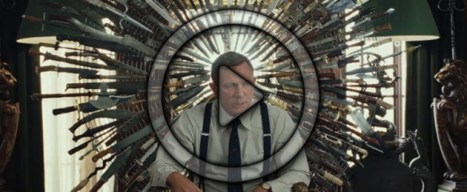
There is a sly and self-aware gag buried at the heart of Glass Onion, one of the two Knives Out sequels that Netflix paid almost half-a-billion dollars for. Johnson’s latest film is a satire of tech disruptors, focusing on fictional visionary Miles Bron and his company Alpha. However, the movie’s social satire has a particularly pointed edge. Johnson is parodying precisely the sort of reckless tech disruptors that upended the cinematic landscape. In its own weird way, Netflix is perhaps the villain of Glass Onion.

You can read the piece here, or click the picture below.

New Escapist Column! On “The Last Jedi” as a Movie About Optimism in a Cynical Time…

I published a new piece at The Escapist over the weekend. Given that Star Wars: The Last Jedi just turned five years old, it seemed like a good opportunity to reflect on one of the most ambitious franchise films of the twenty-first century.

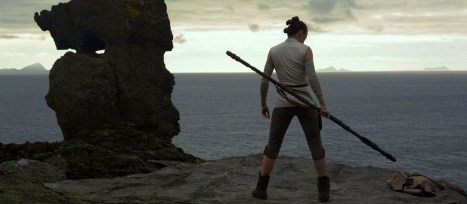
In the years since its release, a certain narrative has settled around The Last Jedi, arguing that the film is a subversion or deconstruction of the larger franchise. However, this seems unfair. At its core, The Last Jedi is a fundamentally optimistic movie, a celebration of the importance of standing against tyranny and a rejection of moral relativism in the face of oppression. It is an unabashedly earnest and sincere movie that believes that some things are worth fighting for, even when the situation seems grim and odds are stacked in opposition. It is an unapologetic love letter to the romance of Star Wars.

You can read the piece here, or click the picture below.

New Escapist Column! On the Radical Empathy of “Knives Out” and “Glass Onion”…

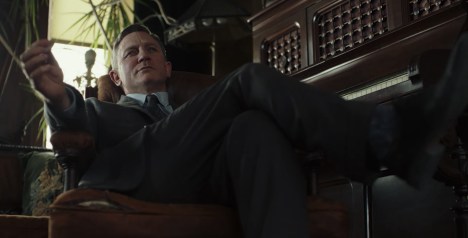
I published a new In the Frame piece at The Escapist on Friday. With the release of Glass Onion in theatres, it seemed like a good opportunity to talk about Benoit Blanc, the film’s protagonist.

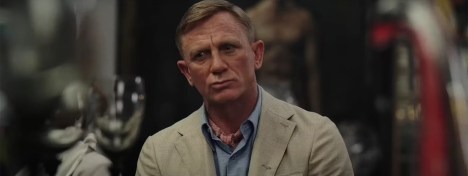
Glass Onion is built around the idea of murder mysteries and puzzleboxes. However, like Knives Out before it, the film is something of a criticism of a rigidly rationalist approach to detective fiction, of the idea that solving a crime is a strictly mechanical process. Instead, both Knives Out and Glass Onions are movies about the importance of empathy and humanism in understanding the true moral nature of crime. This is most obvious in Benoit Blanc, who is introduced as an outside observer of these crimes, but cannot escape their gravity.

You can read the piece here, or click the picture below.

264. Star Wars: Episode VIII – The Last Jedi (#—)

Hosted by Andrew Quinn and Darren Mooney, this week joined by special guests Luke Dunne, Alex Towers, Alexandra Harvey and Andy Melhuish, The 250 is a (mostly) weekly trip through some of the best (and worst) movies ever made, as voted for by Internet Movie Database Users. New episodes are released every second Saturday at 6pm GMT, with the occasional bonus episode between them.

This time, Rian Johnson’s Star Wars: Episode VIII – The Last Jedi.

A long time ago in a galaxy far away, the First Order and the Resistance struggle for control of the cosmos. Things are looking particularly grim, as the heroes find themselves divided; Rey is on a mission to recruit the lost Jedi master Luke Skywalker, Poe finds himself trying to hold the remnants of the fleet together, and Finn embarks on a journey to a wretched hive of scum and villainy.

At time of recording, it was not ranked on the list of the best movies of all time on the Internet Movie Database.

Continue reading

New Escapist Video! On How the “Star Wars” Sequels Didn’t Need a Plan, “The Rise of Skywalker” Needed a Vision…

So, as I have mentioned before, I am launching a new video series as a companion piece to In the Frame at The Escapist. The video will typically launch with the Monday article, and be released on the magazine’s YouTube channel the following week.

With that in mind, here is last week’s episode, covering the frequent argument that Disney needed a “plan” for the sequel trilogy, when in fact Star Wars: Episode IX – The Rise of Skywalker just needed a vision. You can watch the pilot video here, and read the companion article here.


171. Knives Out – This Just In (#—)

Hosted by Andrew Quinn and Darren Mooney, and this week with guests Alex Towers and Luke Dunne, The 250 is a fortnightly trip through some of the best (and worst) movies ever made, as voted for by Internet Movie Database Users.

This time, Rian Johnson’s Knives Out.

The apparent suicide of noted mystery author Harlan Thrombley attracts the attention of consulting gentleman detective Benoit Blanc. Interviewing the deceased man’s family, Blanc finds a nest of vipers hiding in plain sight and comes to suspect that Harlan has been victim of murder most foul.

At time of recording, it was not ranked on the list of the best movies of all time on the Internet Movie Database.

Continue reading

New Escapist Column! On the Inevitability of a “Knives Out” Sequel…

I published an In the Frame piece at Escapist Magazine on Monday, to mark the news that Knives Out would officially be getting a sequel.

To be fair, this news was hardly a surprise given the box office success of the film. With a tiny budget, Knives Out managed to gross over three hundred million dollars worldwide. Even before the sequel was officially announced, it seemed inevitable. And it will most likely be another great time at the cinema. At the same time, though, it’s hard not to feel like the proper way to celebrate the success of Knives Out might not be to start producing Knives Out sequels en masse, but instead to simply make more movies like Knives Out.

You can read the piece here, or click the picture below.