• Following Us

  • Categories

  • Check out the Archives


  • Awards & Nominations

Doctor Who: Lucky Day (Review)

“At least your special effects are improving.”

To be fair, a pretty solid run had to end at some point, and a Pete McTighe script is as good a place as any.

Lucky Day is an interesting episode. It solidifies the sense of this second Davies era as its own distinct object with its own distinct rhythms and structures. Just as one might pair Space Babies and The Robot Revolution, The Devil’s Chord and Lux, or Boom and The Well, Lucky Day is very obviously designed for the same slot as 73 Yards. This is another Doctor-lite episode built around Ruby Sunday, featuring U.N.I.T., set on contemporary Earth. It even brushes against rural folk horror, invoking The Wicker Man in its discussion of English villages.

Food for thought.

However, the episode takes a sharp and ambitious turn in its second half. As with a lot of recent Doctor WhoLucky Day is an episode engaged with the larger context of the show and its place in the popular discourse. It is obviously structured around things that matter to both Davies and McTighe. It is commendably self-aware and playful. There is, on paper, a lot to appreciate about Lucky Day.

The problem is the execution, as the episode’s themes break like waves against the actual narrative itself. Lucky Day only really makes sense as metatext, but cannot support the weight of its big ideas whether inside or outside the fictional universe. It’s an unlucky break.
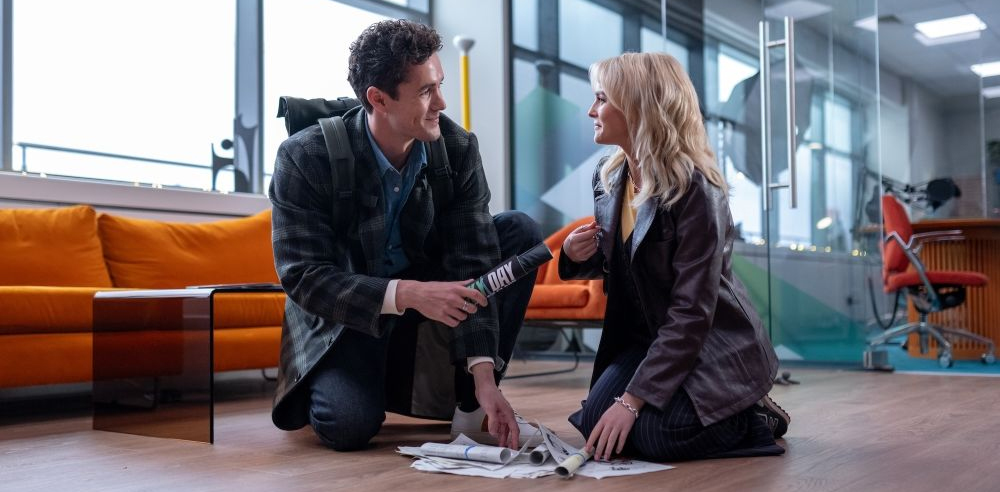
Absolutely floored.

Continue reading

New Escapist Column! On “I Think You Should Leave” as Peak Internet Comedy…

We’re launching a new column at The Escapist, called Out of Focus. It will publish every Wednesday, and the plan is to use it to look at some film and television that would maybe fall outside the remit of In the Frame, more marginal titles or objects of cult interest. With the release of the third season of I Think You Should Leave this week, it seemed like a good opportunity to take a look the show.

It is ultimately reductive to try to boil a sketch comedy show down to a single thematic idea. However, there is something fascinating in how I Think You Should Leave operates as a sketch show that isn’t just perfectly suited to internet distribution – short clips, memes, absurdist gags – but also how it feels like a show that is in some ways about the internet. Obviously, not in a literal sense, in that I Think You Should Leave is about awkward social situations. However, it captures the sense in which online spaces can truly break social interactions.

You can read the piece here, or click the picture below.

New Escapist Column! On How Film Culture Became Online Culture…

I published a new In the Frame piece at The Escapist this evening. With the publication of the once-in-a-decade Sight & Sound poll last week, it seemed like a good opportunity to dig into the results and consider what they say about modern film culture.

The list has provoked some response online for being too modern and too recent, including films like Portrait of a Lady on Fire, Get Out, Moonlight and Parasite. However, it’s part of a rich tradition of updating and modernising the cinematic canon. The most interesting aspect of the list is the way in which it demonstrates how film culture is online, how so many of the films to appear and climb on the list did so by becoming more readily and available, and by being embraced by an internet-literate generation of film critics.

You can read the piece here, or click the picture below.

264. Star Wars: Episode VIII – The Last Jedi (#—)

Hosted by Andrew Quinn and Darren Mooney, this week joined by special guests Luke Dunne, Alex Towers, Alexandra Harvey and Andy Melhuish, The 250 is a (mostly) weekly trip through some of the best (and worst) movies ever made, as voted for by Internet Movie Database Users. New episodes are released every second Saturday at 6pm GMT, with the occasional bonus episode between them.

This time, Rian Johnson’s Star Wars: Episode VIII – The Last Jedi.

A long time ago in a galaxy far away, the First Order and the Resistance struggle for control of the cosmos. Things are looking particularly grim, as the heroes find themselves divided; Rey is on a mission to recruit the lost Jedi master Luke Skywalker, Poe finds himself trying to hold the remnants of the fleet together, and Finn embarks on a journey to a wretched hive of scum and villainy.

At time of recording, it was not ranked on the list of the best movies of all time on the Internet Movie Database.

Continue reading

Non-Review Review: Profile

Profile is the latest entry in the so-called “Screen Life” series, produced by Timur Bekmambetov. It is also notable as the first entry in the series to be directed by Bekmambetov himself.

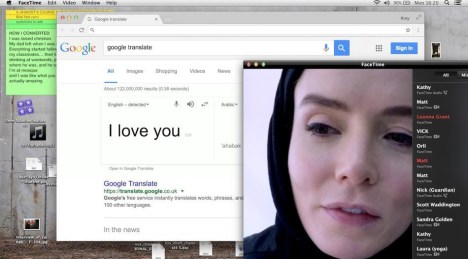
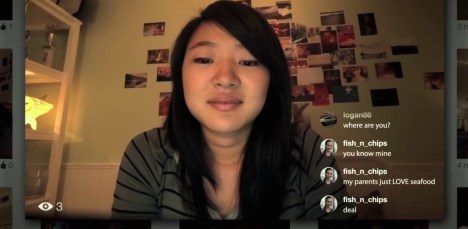
The “Screen Life” series is effectively a set of heightened genre movies that unfold through the screen of a laptop, narratives that unfold through chat boxes, Skype chats, playlists and file transfers. It’s an innovative and experimental approach to storytelling. While the results – Unfriended, Searching… and Unfriended: Dark Web – have varied in quality, the hook has always been fascinating. So much of modern life is navigated through screens that it is fascinating to see movies try to reflect that. Indeed, there’s an argument that movies like Unfriended play better on computer screens than they do in theatres or on televisions.

Translating the story to screen.

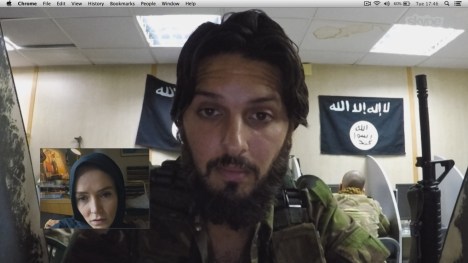
Profile adheres to the cinematic conventions of these sorts of stories, but it feels unnecessarily constrained in other ways. Each of the three previous films has been a genre exercise told through a computer screen. Unfriended and Dark Web are teenage horror movies, while Searching… is a delightfully schlocky nineties thriller reimagined through a web camera. In contrast, the subject matter of Profile is decidedly weighter. The film is based on the non-fiction book In the Skin of a Jihadist by Anna Ereklle, looking at online recruitment of young British girls by Islamic extremists.

This is an appreciably more grounded and more serious piece of subject matter than something like Unfriended or Searching…, and it’s interesting to see this cinematic language applied to this subject matter. After all, this is a digitally native story and a tale about the process of mediating the world through computer screens. However, Profiles suffers slightly from the need to frame this subject matter not through the lens of a web camera, but through the prism of genre, to transform something very real and very threatening into a heightened cartoonish thriller.

A new Skype of thriller…

Continue reading

Non-Review Review: Searching…

Searching… is an interesting fusion. It blends the innovative narrative style of Unfriended with the more convention cinematic language of thrillers like Kiss the Girls.

This cocktail is at once welcome and overdue. Unfriended was one of those rare genuinely innovative pieces of mainstream cinema; in form, if not necessarily in function. Unfriended built from a premise that was both incredibly simple and also formally daring, telling a fairly standard supernatural teenage revenge story entirely through a computer desktop. As with Searching…, all of Unfriended unfolded within a computer screen.

Windows ’95 into the soul…

In hindsight, it is surprising that it has taken other genres so long to embrace that formal experiment. Cinema has a long history of eagerly coopting the language and experiments of horror for more prestigious and high-brow fare. Consider, for example, how quickly other genres coopted the “found footage” revolution of the early twenty-first century for action movies, thrillers, comedies, and even monster movies and superhero films. (Then again, that embrace of the “found footage” aesthetic may have caught on for reasons beyond the success of The Blair Witch Project.)

Searching… takes the basic formal conceit of Unfriended and applies it to a more conventional genre film. The result is an abduction thriller told exclusively through screens, through video streams, search histories, web cameras and screenshots. It’s a provocative premise, effectively turning the bigger screen into a smaller one and changing the rules of how the audience processes the imagery in front of them. However, Searching… clearly aspires to bridge the gap between screens big and small.

She needs to screen her fans better.

Continue reading

Star Trek – Balance of Terror (Review)

To celebrate the release of Star Trek: Into Darkness this month, we’ll be running through the first season of the classic Star Trek all this month. Check back daily to get ready to boldly go. It’s only logical.

I’ve talked about it about it quite a bit in my earlier reviews, so I won’t dwell on it too much here, but Star Trek got really good really quickly. Balance of Terror is only the ninth ever episode of Star Trek ever produced, but it stands as one of the finest entries in the original series, and perhaps even the franchise. It also represents the moment where the model of what Star Trek would be really sort of solidified. The first eight episodes had contained any number of classic Star Trek tropes.

The Cage and Charlie X gave us old and immeasurably powerful alien civilisations, while Where No Man Has Gone Before gave us a god-like being. The Man Trap gave us space monsters. Mudd’s Women gave us awkward gender politics. The Enemy Within created the whole “transporter malfunction” and “evil duplicate” subgenres. However, Balance of Terror is the first episode to suggest outer space might be more than the place where crazy stuff happens and our heroes bump into monsters or ancient civilisations. The universe might have its own politics, its own history, its own civilisations that will emerge, contrasted with mankind’s expansion into space.

The Klingons are undoubtedly the most recognisable and iconic of the classic Star Trek races, but the Romulans are the first of the franchise mainstays to appear, and Balance of Terror is the first episode to devote considerable effort to world-building the Star Trek universe.

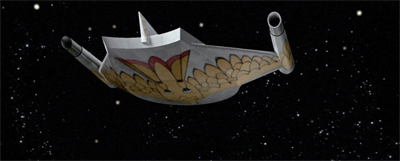
The not-so-great bird of the galaxy...

The not-so-great bird of the galaxy…

Continue reading

Non-Review Review: Harry Potter and the Order of the Phoenix

Truth be told, Harry Potter and the Order of the Phoenix has a lot of problems. It’s structurally the weakest of the films, existing as a bridge between what came before and what follows – but ultimately feels like treading water. One gets the sense that the ruthless editing that made Harry Potter and the Goblet of Fire work so well was sorely missing here. It literally feels more like a collection of subplots rather than a movie in its own right. And then there’s the ending, which is ridiculously weak, but also somewhat undermines the threat the last film spent so long building up.

It's not a knock-out success...

Continue reading