• Following Us

  • Categories

  • Check out the Archives


  • Awards & Nominations

435. Star Trek Into Darkness (#—)

Hosted by Andrew Quinn and Darren Mooney The 250 is a weekly trip through some of the best (and worst) movies ever made, as voted for by Internet Movie Database Users.

This week, JJ Abrams’ Star Trek Into Darkness.

Captain James T. Kirk has been in command of the USS Enterprise for a year. In that time, he has not lost a single service man. Kirk is angling for the hottest new assignment – a five year mission of exploration into uncharted territory – when a terrorist attack masterminded by a rogue Starfleet Security Officer throws everything that Kirk thinks he knows into doubt.

At time of recording, it was not ranked on the list of the best movies of all time on the Internet Movie Database.

Continue reading

425. Kill Bill, Vol. 1 (#151)

Hosted by Andrew Quinn and Darren Mooney, this week with special guest Darcie Faccio, The 250 is a (mostly) weekly trip through some of the best (and worst) movies ever made, as voted for by Internet Movie Database Users. New episodes are released every second Saturday at 6pm GMT, with the occasional bonus episode between them.

This week, Quentin Tarantino’s Kill Bill, Vol. 1.

A brutal mass murder at a wedding in El Paso, Texas, leaves a sole survivor: an anonymous pregnant woman, a former assassin who tried to escape her life of murder and mayhem for something more tranquil and serene. However, her old life was not finished with her. Four years later, the would-be bride wakes up and embarks on a roaring rampage of revenge driven by a single objective. She is going to Kill Bill.

At time of recording, it was ranked 151st on the list of the best movies of all time on the Internet Movie Database.

Continue reading

334. John Wick: Chapter 4 (#181)

Hosted by Andrew Quinn and Darren Mooney, The 250 is a (mostly) weekly trip through some of the best (and worst) movies ever made, as voted for by Internet Movie Database Users. New episodes are released every second Saturday at 6pm GMT, with the occasional bonus episode between them.

This time, Chad Stahelski’s John Wick: Chapter 4.

Still exiled and alone, John Wick wanders through the global criminal underworld. As his friends fall around him and the knives of the High Table close in around him, the assassin finds himself contemplating an uncomfortable question. What does he actually want? What can he actually accomplish?

At time of recording, it was ranked 181st on the list of the best movies of all time on the Internet Movie Database.

Continue reading

New Escapist Column! On The Finale of “The Last of Us”…

I am doing weekly reviews of The Last of Us at The Escapist. They’ll be dropping every Sunday evening while the show is on, looking at the video game adaptation as the show progresses. This week, the show’s finale.

The Last of Us wraps up a phenomenal season with a decidedly small-scale season finale. Look for the Light is one of the shortest episodes of the season, and is remarkable for its tight focus and narrative efficiency. The series remains tightly focused on Joel and Ellie, building to a climax that is at once tragic and inevitable. The result is a very satisfying wrap-up to a very impressive debut season.

You can read the piece here, or click the picture below.

New Escapist Column! On the Radical Empathy of “Knives Out” and “Glass Onion”…

I published a new In the Frame piece at The Escapist on Friday. With the release of Glass Onion in theatres, it seemed like a good opportunity to talk about Benoit Blanc, the film’s protagonist.

Glass Onion is built around the idea of murder mysteries and puzzleboxes. However, like Knives Out before it, the film is something of a criticism of a rigidly rationalist approach to detective fiction, of the idea that solving a crime is a strictly mechanical process. Instead, both Knives Out and Glass Onions are movies about the importance of empathy and humanism in understanding the true moral nature of crime. This is most obvious in Benoit Blanc, who is introduced as an outside observer of these crimes, but cannot escape their gravity.

You can read the piece here, or click the picture below.

“Stay Out of the Light”: The Black-and-White Morality of “Raiders of the Lost Ark”…

This August, the podcast that I co-host, The 250, is doing a season looking at all four Indiana Jones films as part of our “Indiana Summer.” Last week, we looked at Raiders of the Lost Ark, and I had some thoughts on the film.

Raiders of the Lost Ark is a film of stark contrasts.

This is true in a very literal sense. Director Steven Spielberg and producer George Lucas had envisaged the film as a loving homage to classic black-and-white film serials, so it only makes sense that cinematographer Douglas Slocombe would populate the film with shadows and silhouettes. Spielberg has talked about wanting “a much moodier, almost neo-Brechtian style of light and shadow for this film”, and it’s notable that the lead character’s costume design was intended to be “immediately recognisable in silhouette.”

While Raiders of the Lost Ark is a visually rich film saturated in deep colours and strong images, it is also a movie obsessed with light and shadow. Indiana Jones is first introduced literally stepping out of the shadows. “Stay out of the light,” he warns a companion during the film’s opening scenes. Many of the film’s most striking images – like Jones visiting an old flame or workers toiling in the desert – are shot to make use of shadow and silhouette.

After all, much has been made of Steven Soderbergh’s Raiders, an experimental edit of the movie that strips out all sound and colour to repurpose Raiders of the Lost Ark as a black-and-white silent film. Soderbergh did this in an effort to force the audience to “watch this movie and think only about staging”, drawing attention to how carefully constructed Raiders of the Lost Ark was as a piece of film. After all, the movie is arguably as pure a cinematic rollercoaster as ever existed, a triumph of pure filmmaking.

However, there’s something revealing in this sharp contrast – in the clear boundaries that Raiders of the Lost Ark draws between light and darkness in its cinematic storytelling. At its core, Raiders of the Lost Ark is a movie about good and evil at work in the world, and the movie is anchored in the belief that good will prevail and evil will be judged. It’s a fascinating film, one that provides an interesting contrast with Steven Spielberg’s later work at the turn of the millennium on projects like A.I. Artificial Intelligence, Minority Report, Munich and even Indiana Jones and the Kingdom of the Crystal Skull.

Raiders of the Lost Ark is a striking piece of cinematic mythmaking, one that feels very true to its time and one firmly anchored in its director’s sensibility.

Continue reading

New Escapist Column! On How the “Saw” Franchise Has Always Played With Its Audience…

I published a new In the Frame piece at The Escapist this evening. With the release of Spiral: From the Book of Saw this weekend, it seemed like a good excuse to take a look back at the larger Saw franchise.

For good and for ill, the Saw movies are inexorably tied to the George W. Bush era, with their meditations on torture and their emphasis on moral hypocrisy. However, discussions of the franchise tend to overlook the way in which the films intersect with another millennial trend: reality television. The Saw franchise is the rare horror movie franchise that is actively engaged with the idea of watching horror movies. In particular, in the relationship that exists between horror movies and their audiences – and whether those watching at home are observers or participants in the carnage.

You can read the piece here, or click the picture below.

220. Pulp Fiction (#8)

Hosted by Andrew Quinn and Darren Mooney and with special guest Scott Mendelson, The 250 is a weekly journey through the list of the 250 best movies of all-time, as voted for by Internet Movie Database Users.

This time, Quentin Tarantino’s Pulp Fiction.

Three stories unfold across Los Angeles over the course of three days, featuring an interlocking set of criminal characters who find their lives on an unexpected collision course. Is there any rhyme or reason to the course that these characters chart, or is it all arbitrary chaos? That’s ultimately up to the viewer to determine for themselves.

At time of recording, it was ranked the 8th best movie of all time on the Internet Movie Database.

Continue reading

“He’s Smart, You’re Dumb!” The Cynical Idiocy of “The Wolf of Wall Street”…

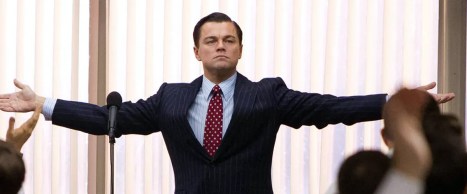
The podcast that I co-host, The 250, just finished a season of coverage of director Martin Scorsese. The weekend before last, we discussed Scorsese’s The Wolf of Wall Street. It’s a fun, broad discussion that digs into the movie in a lot of depth. However, watching the film and talking about the film got me thinking about the film’s portrayal of Jordan Belfort.

Martin Scorsese was seventy-one years old when The Wolf of Wall Street was released, and had a filmography that stretched across six decades.

As such, it is heartening that Scorsese had a film like The Wolf of Wall Street in him. The film runs three hours, but moves with an impressive and exhausting energy. Critic Robbie Collin described The Wolf of Wall Street as “a picture that would have exhausted a director half his age.” Indeed, it seems fair to say that the film exhausted quite a few of its audience. The Wolf of Wall Street was the highest-grossing movie of Scorsese’s career, but there is some evidence it was divisive with audiences – earning a controversial “C” CinemaScore.
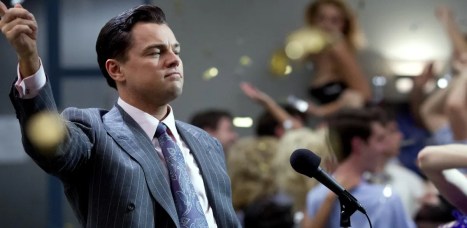
Indeed, the film earned no shortage of outrage. Scorsese himself was reportedly accosted at a screening for the Academy of Motion Picture Arts and Sciences by veterans chanting “shame on you!” The film’s portrayal of greed and excess prompted something of a moral panic. There legitimate concerns raised about where the money to fund the movie came from. There was also the reasonable observation that Scorsese had constructed The Wolf of Wall Street in such a way as to obscure the victims of Jordan Belfort.

Of course, this is something Scorsese’s films have always done, and a way in which they have consistently made the audience uncomfortable by effective immersing them in a world governed by characters who are hostile and dangerous. Taxi Driver seldom allowed itself to step outside Travis Bickle’s head, with the audience forced to confront “god’s loneliest man.” Raging Bull refused to pathologise or explain Jake LaMotta, declining to reduce his psychology to trite cause and effect. Henry Hill took centre stage in Goodfellas, but the film itself suggested he was not to be trusted.
Scorsese’s output is often framed in religious terms, and there is a strong spirituality that runs through his work. It is obviously most apparent in films like The Last Temptation of Christ, Kundun or Silence, but it is a constant throw line – even where religious authority is defined by its absence, with Casino feeling like a story about what happens when man believes that God is not watching. However, Scorsese’s films also trade in doubt, challenging the audience with the fear that there may be no external arbitrator to balance the scales.

The Wolf of Wall Street offers little in the way of emotional catharsis, little by way of reassurance that people like Belfort will be punished for their crimes or that the victims will be compensated. After all, even by 2013, it was obvious that nobody actually responsible for the financial crisis would be held to account. Scorsese stated in interviews that the anger that The Wolf of Wall Street generated was part of the film’s point. “It should touch a nerve!” he insisted in interviews around the film’s release, explaining why he declined to offer a more moralistic movie.

Of course, like Taxi Driver and Raging Bull and Goodfellas before it, The Wolf of Wall Street does condemn its subjects. Of course there are plenty of reports of stockbrokers on Wall Street loving the movie, just as many gangsters loved The Godfather. However, it seems highly unlikely that any reasonable person leaving The Wolf of Wall Street could feel any sympathy or warmth for Jordan Belfort, or that anybody paying attention to the film could imagine that his lifestyle would lead to anything other than disaster and betrayal, even if he avoided jail or bankruptcy.

More than that, The Wolf of Wall Street is notable for its refusal to glamourise Belfort himself. The film consistently portrays its subject as a moron defined only by his ravenous id, all impulse and no control. Indeed, some of that Scorsese spirituality shines through. Belfort often seems less than human, incapable of the reasoning, self-control and empathy that elevates a human being. Indeed, to frame the portrayal in Catholic terms, the elements that suggest the existence of a soul. The Wolf of Wall Street is about an animal more than a man.

Continue reading