• Following Us

  • Categories

  • Check out the Archives


  • Awards & Nominations

New Escapist Column! On How M. Night Shyamalan Proves Bigger Isn’t Always Better…

I published a new piece at The Escapist this evening. With the looming release of Knock at the Cabin in theatres, it seemed like a good time to consider the films of director M. Night Shyamalan, and the director’s interesting redemption arc following his descent into a laughing stock during the 2000s and 2010s.

Since the turn of the millennium, the assumption has always been that directors scale upwards, that filmmakers tend to movie from low-budget projects to big-budget blockbusters, a career arc typified by directors like Christopher Nolan or Ryan Coogler. Part of what is so fascinating about Shyamalan is that his career rejects this logic. Shyamalan had that arc, launching with a series of impressive low- and mid-budget films like The Sixth Sense and Unbreakable, but floundering with bigger projects like The Last Airbender or After Earth. He’s instead found redemption working at a smaller scale on movies like The Visitors or Old.

You can read the piece here, or click the picture below.

New Escapist Column! On “Babylon” As the Evil Twin of “Once Upon a Time… in Hollywood”…

I published a new In the Frame piece at The Escapist earlier this week. With the release of Babylon over Christmas, it seemed like a good opportunity to take a look at Damien Chazelle’s latest feature film.

Babylon is a movie that obviously exists in the context of great Hollywood movies about Hollywood. In particular, Chazelle draws overtly and heavily from Singin’ in the Rain in this parable about Hollywood’s migration from silent films to talkies. However, Chazelle does something interesting, stripping out a lot of the romance of these narratives in favour of something approaching brutal honesty. Chazelle rejects a lot of the romantic nostalgia of these sorts of films, instead offering a much grittier take. At times Babylon feels like the coke-addled evil twin of something like Once Upon a Time… in Hollywood.

You can read the piece here, or click the picture below.

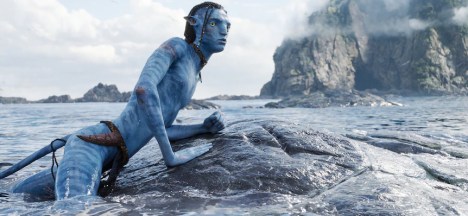
New Escapist Column! “Avatar: The Way of Water” and the Failed 3D Revolution…

I published a new In the Frame piece at The Escapist this evening. With the release of Avatar: The Way of Water, which is being rightly praised for its use of 3D, it seemed like a good opportunity to discuss the failed 3D revolution sparked (in part) by the original Avatar.

The standard narrative is that 3D was never going to work as a format, and that its death was inevitable. However, there were quite a few successful and well-received 3D movies released around the time of the original Avatar: Coraline, Gravity, The Adventures of Tintin, Hugo, The Life of Pi, The Great Gatsby, Holes. These were all movies with directors willing to play with the format in fun and creative ways, that leaned into the technical possibilities. The problem that arose was similar to a wider problem in the industry at that time, the rejection of filmmaking at that scale as a craft that relied on strong creative vision.

You can read the piece here, or click the picture below.

New Escapist Column! On “Black Adam” as a Superhero Vanity Project…

I published a new In the Frame piece at The Escapist on Friday. The big release of the week was Black Adam, the superhero blockbuster starring Dwayne Johnson as the eponymous antihero.

Part of what makes Black Adam so fascinating is the sense in which it exists between two very different styles of big budget Hollywood production. Most obviously, it’s a big and bombastic superhero blockbuster, albeit one built around a less well-known character. However, it also feels like an old style of blockbuster. It feels very much like a superhero vanity project for Dwayne Johnson, an effort to tie his star power into its own high-profile intellectual property.

You can read the piece here, or click the picture below.

296. Jaws: The Revenge (Jaws ’87) – Shark Week 2022 (-#27)

Hosted by Andrew Quinn, Darren Mooney and Emma Kiely, and this time with special guest Jason Coyle, The 250 is a weekly trip through some of the best (and worst) movies ever made, as voted for by Internet Movie Database Users. New episodes are released Saturdays at 6pm GMT.

This week, we’re doing something a bit unusual. To line up with Shark Week, we are covering the Jaws franchise. So today, rounding out the week with Joseph Sergeant’s Jaws: The Revenge.

Following the death of her son Sean in a freak shark attack, Ellen Brody becomes convinced that her family has become a supernatural magnet for sharks. Her surviving son Michael convinces Ellen to travel to the Bahamas, where she meets a mysterious sea plane pilot named Hoagie. As a relationship begins to blossom between Ellen and Hoagie, Ellen discovers that perhaps there are some secrets that can’t be escaped.

At time of recording, it was ranked 27th on the lists of either the worst movies of all time on the Internet Movie Database.

Continue reading

New Escapist Column! On How “Jurassic World Dominion” Encapsulates Everything Wrong With Modern Blockbusters…

I published a new piece at The Escapist on Friday evening. With the release of Jurassic World Dominion, it seemed like a good opportunity to take a look at the film.

Dominion is a bad film. It is a terrible film. It is barely functional as a film, a collection of post-it notes held together by nostalgia and muscle memory. However, what is perhaps most depressing about Dominion is the fact that it doesn’t feel particularly novel in its badness. Dominion is bad in the way that so many modern franchise films are bad: Ghostbusters: Afterlife, Jurassic World, Joss Whedon’s Justice League, Terminator: Genisys. It’s a collection of nostalgic iconography stapled together, and served up to audiences in dull grey goop.

You can read the piece here, or click the picture below.

New Escapist Column! On the MCU’s CGI Problems…

I published a new In the Frame piece at The Escapist this evening. With the release of the trailer for She-Hulk last week, it seemed like a good opportunity to take a look at the raging debate over the very questionable use of computer-generated imagery.

The Marvel Cinematic Universe is the biggest multimedia franchise in the world, and its projects enjoy some of the biggest budgets. So why do so many of their special effects look so terrible? There are a number of reasons for this, tied to both larger cultural trends, the visual effects sector as a whole, and the peculiarities of Marvel Studios’ production methodology. The result of all this comes together to explain why some of the most expensive movies on the planet look so cheap.

You can read the piece here, or click the picture below.

278. The Godfather: Part III/Mario Puzo’s The Godfather, Coda: The Death of Michael Corleone (#—)

Hosted by Andrew Quinn and Darren Mooney, and this week with special guests Jenn Gannon and Jason Coyle, The 250 is a weekly trip through some of the best (and worst) movies ever made, as voted for by Internet Movie Database Users. New episodes are released Saturdays at 6pm GMT.

So this week, both Francis Ford Coppola’s The Godfather: Part III and Mario Puzo’s The Godfather, Coda: The Death of Michael Corleone.

It is 1979. Michael Corleone has solidified control of the Corleone crime family, and hopes to take the family business completely legitimate by striking a deal with the Vatican Bank. Trying desperately to reunited his fractured and divided family, Michael quickly discovers that organised crime isn’t the only place where criminals are lurking, ready to strike.

At time of recording, neither movie was ranked on the list of the best movies of all time on the Internet Movie Database.

Continue reading

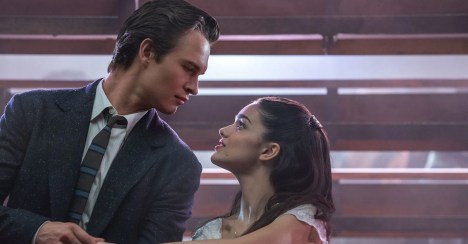
Non-Review Review: West Side Story

In some ways, Steven Spielberg’s adaptation of West Side Story is a match made in heaven, a union that feels as perfect as the story’s central romance.

After all, West Side Story is one of the quintessential American texts. In its review of the classic Robert Wise and Jerome Robbins adaptation, The Hollywood Reporter described the film musical as “the one dramatic form that is purely American and purely Hollywood”, and West Side Story is a musical that takes that idea to its extreme, with a show-stopping number literally titled In America. More than that, the previous cinematic adaptation stands as one of the virtuoso examples of classic Hollywood studio filmmaking, with its beautiful production design, large cast, and beautiful backlot.

“Do you want to dance or do you want to fight?”

Steven Spielberg is perhaps the most purely American and most purely Hollywood director of his generation. He is just as much a monolyth of American popular culture as West Side Story or even the cinemative musical. Writer Arthur Ryel-Lindsey might have sarcastically declared that “Steven Spielberg is American culture”, but there’s a great deal of truth in it. Depending on who you ask, Spielberg is “the defining American populist of his generation”, “possibly the greatest American director”, or even simply “synonymous with cinema.” So West Side Story feels like a wonderful synthesis of material and director.

Plus, you know, Spielberg knows how to direct sharks.

“Maria, you gotta see her…”

Continue reading

262. Sunrise: A Song of Two Humans (#250)

Hosted by Andrew Quinn and Darren Mooney, The 250 is a (mostly) weekly trip through some of the best (and worst) movies ever made, as voted for by Internet Movie Database Users. New episodes are released every Saturday at 6pm GMT.

This time, F.W. Murnau’s Sunrise: A Song of Two Humans.

In the countryside, a married man finds himself tempted by a visitor from the city. Deciding to murder his wife and escape from his mundane life, the man has a last minute change of heart. Their passion reignited, the married couple embark on an adventure to the big city, where they might get lost in the crowds and perhaps find each other once again.

At time of recording, it was ranked 250th on the list of the best movies of all time on the Internet Movie Database.

Continue reading