• Following Us

  • Categories

  • Check out the Archives


  • Awards & Nominations

“This Was Supposed to Be a Spiritual Experience”: The Mid-Nineties Ennui of “Texas Chainsaw Massacre: The Next Generation”…

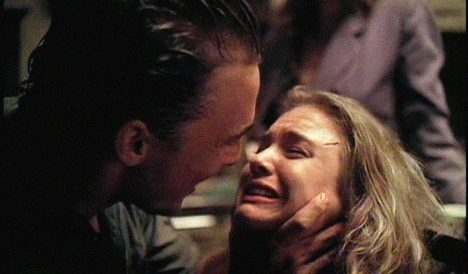
This Saturday, I’ll be discussing Texas Chainsaw Massacre: The Next Generation on The 250, the weekly podcast that I co-host discussing the IMDb’s Top 250 Movies of All-Time. However, I had some thoughts on the film that I wanted to jot down first.

I’ve never been able to watch it with any kind of perspective. To me it just looks like some crude backyard movie a bunch of kids slapped together. There seems to me to be, on one hand, a group of people who were strictly horror fans who venerated it. Only over time has it come to occupy a very peculiar position, and I still don’t have any concept of what that is. I think we just wanted to hang a bunch of people on meat hooks, chop ’em up, and sell tickets at the theatre.

– Kim Henkel discusses The Texas Chain Saw Massacre

Texas Chainsaw Massacre: The Next Generation is a very nineties film, speaking to a very unique set of nineties anxieties.

There is something very revealing and candid about certain kinds of bad movies. Of course, many bad movies are just bad, hacky executions of well-worn concepts without any insight or skill to anchor them. However, there are some bad movies that seem driven by a strange source of passion and energy, which makes them bizarre snapshots of a particular time and place. It is almost a sort of candour, an unguarded bluntness, that allows them to articulate their perspective without any of the consideration or care of a better film.

The Next Generation is one of those films. It is, to be entirely clear, a terrible film. It is sloppily constructed. It is terribly framed. It is incoherently plotted. Its characters are drawn in the crudest of terms. Most damningly, it combines two particularly awful subgenres of the “bad movie” archetype. It is both a horror movie that is not scary and a black comedy that is not funny. It is, by all accounts, a disaster. Watching the film, the question isn’t how the release was delayed for three years. Instead, the question becomes how the film was ever released at all.

However, whether in spite of because of all of this, The Next Generation feels like a weird snapshot of a particular mid-nineties mood. Somehow, while groping around in the darkness, it accidentally puts its finger on the pulse.
Continue reading

126. Kaze no tani no Naushika (Nausicaä of the Valley of the Wind) – Anime April 2019 (#216)

Hosted by Andrew Quinn and Darren Mooney and with special guests Graham Day and Marianne Cassidy, The 250 is a (mostly) weekly trip through some of the best (and worst) movies ever made, as voted for by Internet Movie Database Users. New episodes are released every second Saturday at 6pm GMT, with the occasional bonus episode between them.

This year, we are proud to continue the tradition of Anime April, a fortnight looking at two of the animated Japanese films on the list. This year, we watched a double feature of Hayao Miyazaki’s Kaze no tani no Naushika and Katsuhiro Ôtomo’s Akira.

This week, the first part of the double bill, Kaze no tani no Naushika, celebrating its thirty-fifth anniversary.

Unofficially and retroactively folded into the Studio Ghibli canon, Nausicaä of the Valley of the Wind was only Hayao Miyazaki’s second film. Nevertheless, it demonstrated remarkable confidence. It also signalled a lot of the director’s interests, with its tale of a strong young woman navigating the aftermath of a horrific environmental disaster and trying to prevent a new war from breaking out.

At time of recording, it was ranked the 216th best movie of all time on the Internet Movie Database.

Continue reading

122. Room – St. Patrick’s Day 2019, w/ When Irish Eyes Are Watching (#151)

Hosted by Andrew Quinn and Darren Mooney, The 250 is a fortnightly trip through some of the best (and worst) movies ever made, as voted for by Internet Movie Database Users. New episodes are released Saturdays at 6pm GMT.

This week, a special crossover episode with When Irish Eyes Are Watching, an Irish film podcast wherein Alex, Clíona and Séan take at a look at films connected to the Emerald Isle.

The 250 and When Irish Eyes Are Watching are crossing over for a St. Patrick’s Day treat. Lenny Abrahamson’s Room.

Jack has spent his entire life within the confines of “Room”, the space which comprises the totality of his world. He knows every inch of the ten-by-ten space in which he was raised, in which he lives day-by-day with Ma between visits from Old Nick. However, as Jack turns five, he is forced to confront some uncomfortable realities about the world within which he lives and the world beyond “Room.”

At time of recording, it was ranked the 151st best movie of all time on the Internet Movie Database.

Continue reading

Non-Review Review: What Men Want

What Men Want is probably as solid an execution as the title premise could expect.

To be clear, What Men Want is very trite and straightforward. It is a movie that is largely defined by cliché. As the title implies, it’s essentially an exercise in broad gender stereotypes. There is very little novel and exciting in What Men Want. In fact, the most frustrating aspect of the whole film is the consistent refusal to work for a joke when the opportunity for a cheap lay-up presents itself. What Men Want is in no way an exceptional piece of work.

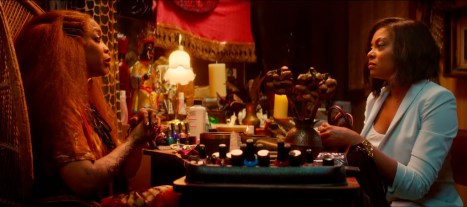
“Are you psychic?”
“No, I’ve just seen a rom-com before.”

At the same time, there is a certain charm to all of this. What Men Want is effectively an exercise in familiar formulas. Audience members will recognise all the stock romantic clichés employed here: the absurd lie that spirals into a brutal personal betrayal, the gay supporting character and sounding board, the third act separation and reunion, the protagonist’s journey towards realising that they need other people. However, there is something to be said for hitting those marks in a manner more effective than many modern films in the same subgenre.

It also helps that What Men Want is driven by a powerhouse central performance from Taraji P. Henson, who demonstrates a commitment and energy that the film can seldom match.

Catching up.

Continue reading

“Too Emotional”: “Interstellar”, “Star Trek: Discovery”, “Captain Marvel” and the Re-Gendering of Science-Fiction…

Women have very obviously had a huge impact on shaping and defining science-fiction as a genre.

Many of the key figures in the genre’s history have been female, across all forms of media. Ursula Le Guin is one of the defining science-fiction authors. The first showrunner of Doctor Who was a young woman by the name of Verity Lambert. Among many of the key figures overshadowed by Gene Roddenberry in developing Star Trek was Dorothy “D.C.” Fontana, who was responsible for defining and shaping a lot of what fans know about the iconic character of Spock and of Vulcan. Indeed, modern science-fiction fandom owes a lot to early female enthusiasts. Spockanalia was one of the earliest professional-quality fanzines, dedicated to the idea of Spock as a cultural icon and sex symbol. The “Save Star Trek” campaign was organised by Bjo Trimble.

However, this aspect of the genre’s history and development is largely ignored and overlooked. Modern science-fiction is largely defined as a masculine genre. MIT Technology Review’s Top Ten Hard Science Fiction Books of All Time includes one female author, while Forbidden Planet’s 50 Science Fiction Books You Must Read includes only three women. The recent forays of directors like Ava DuVernay, Patty Jenkins and Claire Denis into big-screen science-fiction only underscored the degree to which the genre has historically been dominated by male directors. Even the public perception of science-fiction fandom is gendered. Despite the formative role that women played in defining fandom, the stereotypical image of a fan is white, middle-class, male, heterosexual.

As with many issues in fandom, this has been pushed to the fore in recent years, a long-simmering culture war over ownership of these conceptual spaces has spilled over into the mainstream. Fandoms traditionally considered as white, heterosexual and masculine have begun lashing out at what they perceive to be invaders who do not conform to their expectations. These attacks are gendered. GamerGate was an organised attack on women within the gaming community, beginning with a smear campaign from a jilted boyfriend. In terms of science-fiction, the Sad Puppies and Rabid Puppies attempted to game the Hugo nominations to target women and minorities. This is to say nothing of organised vote-brigading of female- and minority-led films.

Against this context, one of the more interesting pushes in contemporary mainstream big-budget science-fiction is a firm attempt to recontextualise and re-gender science-fiction storytelling, to push the genre away from these more reactionary elements and these more conventional definitions of masculine interest. Some of these examples are generated no shortage of attention and blowback, most obviously through the casting of more diverse leads in projects like Star Wars: Episode VII – The Force Awakens and Star Wars: Episode VIII – The Last Jedi, which led to an online explosion of targeted misogyny and vitriol at the female actors involved.

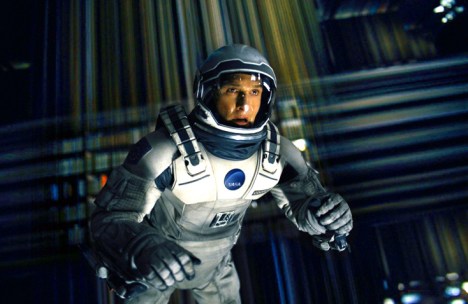
However, some of this reinvention has been more subtle and nuanced, such as the conscious rejection of hard science-fiction in big-budget mass-audience science-fiction projects as high-profile and diverse as Interstellar, Star Trek: Discovery and Captain Marvel.

Continue reading

Non-Review Review: Mary, Queen of Scots

Mary, Queen of Scots is unfocused and unmoored.

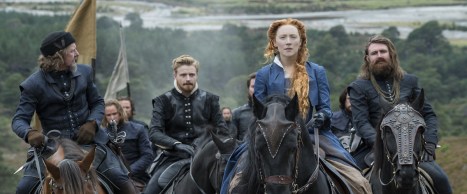
Mary, Queen of Scots feels like it should be a star vehicle for Saoirse Ronan. This makes sense. Ronan is a star in ascent. She has three Oscar nominations, and has recently headlined films with broad appeal like Brooklyn and Lady Bird. The concept of building a star vehicle for Ronan from the life and times of Mary Stuart seems like a good idea. Ronan experimented with larger-scale films in her teens like The Lovely Bones or The Host, but it seems perfectly reasonable to have her approach a large scale period drama as a genuine movie star.

Beth left unsaid.

However, Mary, Queen of Scots suffers from what feels like a crisis of confidence. The film’s second-billed lead is Margot Robbie, a successful Oscar-winning actor with similar star wattage to Ronan. Despite the fact that Mary Stuart retained the title of the film, Mary, Queen of Scots has largely been sold and marketed as a film with two leads; consider the misguided #dearsister hashtag publicity campaign, or the misguided branding on the character-focused profiles. It often seems like Mary, Queen of Scots clumsily aspires to be a biography of Queen Elizabeth I.

Mary, Queen of Scots is never entirely sure whether it wants to be a character-driven story focused on one woman’s life or a two-hander about lives in parallel. Watching the film, it feels like the decision was repeatedly taken and revised at various points during production, never committing to one approach for fear that it might preclude the other. The result is uneven and disjointed. Mary, Queen of Scots devotes enough time to Queen Elizabeth I that she feels like a major player, but only managed to get Ronan and Robbie together on set for a single day.

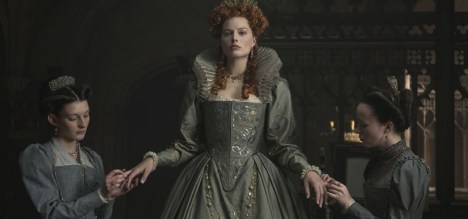
Queen of hearts.

Continue reading

106. Fifty Shades of Grey (#-91)

Hosted by Andrew Quinn and Darren Mooney, and this week with Marianne Cassidy and Grace Duffy, The Bottom 100 is a subset of the fortnightly The 250 podcast, a trip through some of the worst movies ever made, as voted for by Internet Movie Database Users.

This time, Sam Taylor Johnson’s Fifty Shades of Grey.

Continue reading

102. Silence of the Lambs (#23) – Halloween 2018

Hosted by Andrew Quinn and Darren Mooney, and this week with Doctor Bernice Murphy, The 250 is a (mostly) weekly trip through some of the best (and worst) movies ever made, as voted for by Internet Movie Database Users.

This time, a Halloween treat. Jonathan Demme’s The Silence of the Lambs.

At time of recording, it was ranked the 23rd best movie of all time on the Internet Movie Database.

Continue reading

90. Incredibles 2 – This Just In (#183)

Hosted by Andrew Quinn and Darren Mooney, and with special guests Graham Day and Marianne Cassidy, This Just In is a subset of The 250 podcast, looking at notable new arrivals on the list of the 250 best movies of all-time, as voted for by Internet Movie Database Users.

This time, Brad Bird’s Incredibles 2.

At time of recording, it was ranked the 183rd best movie of all time on the Internet Movie Database.

Continue reading

Non-Review Review: Ocean’s 8

Ocean’s 8 is mostly a charming and inoffensive heist movie that coasts off the charisma of its central cast.

This isn’t necessarily a criticism of itself. There’s nothing wrong in watching an ensemble including Cate Blanchett and Sandra Bullock bounce off one another, performers who are both talented screen and genuine old-fashioned movie stars. As with the series of films that obviously inspired (and named) Ocean’s 8, the cast have an easy chemistry with one another. Star power goes a long way, and there’s something almost refreshing in seeing a movie that runs almost exclusively on it in this age where these sorts of high-profile movies are largely driven franchising, high concepts and intellectual property.

Properly trained for this.

Of course, there’s some small complication in that in that Ocean’s 8 feels at times like an effort to split the difference between being a star-driven caper movie and also the latest installment in a larger recognisable franchise. Indeed, some of the movie’s weakest moment lean most heavily on nods and winks to the trilogy of Steven Soderbergh movies that provided a launching pad for this female-star-driven caper. The title character is Debbie Ocean, revealed to be the sister of Danny Ocean; that is the least of it. (Even the choice of “8” in the title seems designed to leave room for two more installments making a trilogy.)

Still movie stars are a dying breed, so it’s a novelty to see so many of them congregating in the same place and to see a movie that understands the appeal of watching confident performers playing competent characters who are constantly in motion. Ocean’s 8 lacks some of the more undervalued elements of the earlier films, the problems created by their absence here underscoring their importance, but it mostly succeeds as a light and breeze caper movie without a clear antagonist, without a strong directorial vision and with an over-extended third act.

Getting the gang together.

Continue reading