• Following Us

  • Categories

  • Check out the Archives


  • Awards & Nominations

Doctor Who: Lux (Review)

“And tell me, how did you enter this world?”

“I’m a two-dimensional character, you can’t expect backstory.”

There has been a lot of discussion about the reduction in the number of episodes of Doctor Who produced within a year. These discussions are often alarmist in nature, and framed in some sort of despairing lament about how the show is not what it once was. However, there is less discussion about how this compression of the show affects its format.

While Davies can be a chaotic writer within individual episodes, particular rushing towards a climactic resolution to a story or a season, he has always had a very vision of the structure of a given season of Doctor Who. Both of Davies’ successors, Steven Moffat and Chris Chibnall, experimented with different season structures.

Ring-a-Ding-Ding…

Moffat’s fifth season was structured identical to the previous four, and then his sixth season was structured as an inversion of that – opening with an epic two-parter, closing with a single run-around episode. His seventh season was all stand-alone episodes, while his ninth season was comprised primarily of two-parters, most of which adopted an interesting approach to the basic structure of a two-parter.

Chibnall’s first season was comprised entirely of standalone and disconnected episodes, with the Stenza serving as recurring antagonists. Chibnall’s second season was much more arc-focused, opening and closing with two big two-part adventures, with The Timeless Children rewriting the show’s lore. Chibnall’s third season was a single narrative spread across six episodes, Doctor Who: Flux.
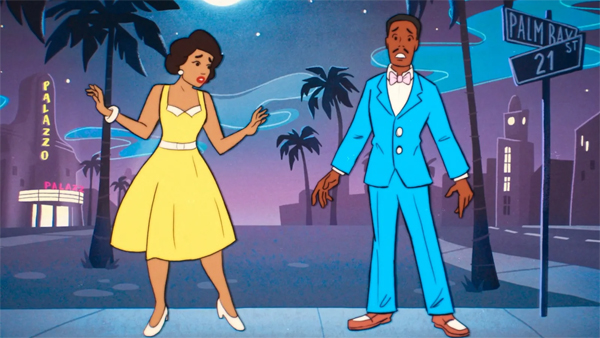
An animated discussion.

However, Davies had a structural formula and he largely stuck to it. Davies’ seasons often opened with triptych of present-past-future stories to orient new viewers in the world of Doctor Who, before leading into a toyetic monster two-parter. This would be followed later in the season by a more high-brow two-parter, and then a two-part season finale that had been seeded through the season to that point. Davies adhered rigidly to that structure.

That structure worked within the confines of thirteen-episode seasons, but obviously cannot be applied to an eight-episode season. After all, just counting through the “obligatory” episodes within that structure eats up nine of the season’s episodes. So Davies has had to come up with a new structure for the show’s seasons. Space Babies and The Robot Revolution effectively compress those opening three episodes into a single story, while The Devil’s Chord and Lux suggest an entirely new narrative archetype.
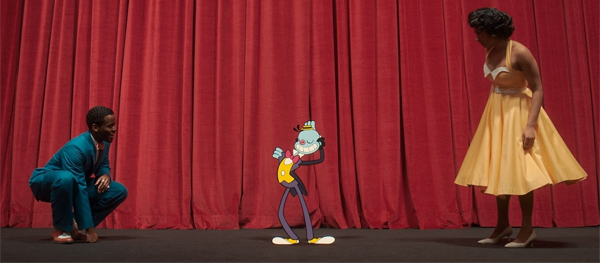
The next stage of the show…

There is some online debate about whether Davies is repeating himself, whether his approach to Doctor Who is meaningfully different now than it was twenty years ago. While it’s easy to focus on the places where Davies’ writing is similar – notably the premieres and the finales – it is also worth acknowledging where it is different. The Devil’s Chord and Lux are two episodes that are of a piece with one another, two episodes as similar to one another as Rise of the Cybermen and The Age of Steel are to The Sontaran Stratagem and The Poison Sky, fitting within Davies’ season structure.

However, they are also new and exciting. They are a type of episode that is fundamentally different from anything that Davies even attempted during his first tenure as showrunner. Indeed, they are fundamentally different from anything that Moffat and Chibnall attempted as well. They are big, bold and self-aware. They represent a clear evolution of what is possible on Doctor Who. If nothing else, they prove the show is still alive – that it is still animated.
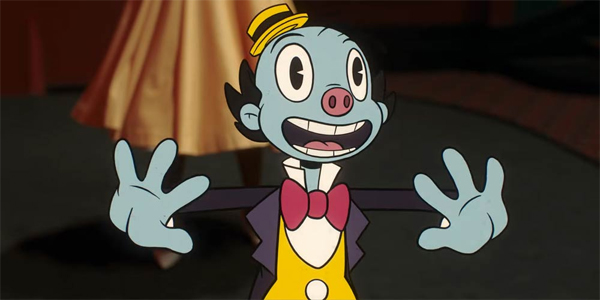
Rave about this episode until you are blue in the face…

Continue reading

New Escapist Video! On Kevin Conroy as the Definitive Batman…

We’re thrilled to be launching a fortnightly video companion piece to In the Frame at The Escapist. The video will typically launch every second Monday, and be released on the magazine’s YouTube channel. And the video will typically be separate from the written content. This is kinda cool, because we’re helping relaunch the magazine’s film content – so if you can throw a subscription our way, it would mean a lot.

This week, with the recent passing of Kevin Conroy, it seemed like a good opportunity to take a look back at his work with the character of Batman, from Batman: The Animated Series through Justice League and beyond. What was it that made Conroy such a definitive and iconic take on the character? Why has he endured? What is that makes him unique?

312. The Incredibles – Bird Watching 2022 (#230)

Hosted by Andrew Quinn and Darren Mooney, and this week with special guests Deirdre Molumby and Graham Day, The 250 is a weekly trip through some of the best (and worst) movies ever made, as voted for by Internet Movie Database Users. New episodes are released Saturdays at 6pm GMT.

This week, we’re continuing a season focusing on the work of one particular director: Brad Bird’s The Incredibles.

Bob Parr was living an exciting life as the superhero Mr. Incredible, until a change in public opinion forced him to hang up his tights for good. Settling down to start a family with Helen, Bob still yearns for the adventure and excitement of his youth. Out of nowhere, a mysterious woman appears with an offer that seems too good to be true, drawing Bob back into a life that he never fully abandoned.

At time of recording, it was ranked 230th on the list of the best movies of all time on the Internet Movie Database.

Continue reading

234. Mononoke-hime (Princess Mononoke) – Ani-May 2021 (#69)

Hosted by Andrew Quinn and Darren Mooney and with special guests Deirdre Molumby, Graham Day and Bríd Martin, The 250 is a (mostly) weekly trip through some of the best (and worst) movies ever made, as voted for by Internet Movie Database Users. New episodes are released every Saturday at 6pm GMT.

This year, we are proud to continue the tradition of Anime May, a fortnight looking at two of the animated Japanese films on the list. This year, we watched a double feature of the last two anime movies on the list, Hayao Miyazaki’s Mononoke-hime and Sen to Chihiro no Kamikakushi.

This week, the first part of the double bill, Mononoke-hime, the last film before Miyazaki’s first announced retirement.

A freak demon attack disturbs the peace of a remote village, and places a curse on a young prince. The hero must venture into the larger world in search of a cure, and quickly finds himself embroiled in a struggle between industrialisation and nature, between city and forest, between man and god.

At time of recording, it was ranked 69th on the list of the best movies of all time on the Internet Movie Database.

Continue reading

166. Aladdin (#246)

Hosted by Andrew Quinn and Darren Mooney, this week joined by special guest Graham Day, The 250 is a (mostly) weekly trip through some of the best (and worst) movies ever made, as voted for by Internet Movie Database Users. New episodes are released every Saturday at 6pm GMT.

This time, Ron Clements & John Musker’s Aladdin.

A thief in ancient Agrabah finds his fortunes changing for the better when he is recruited to recover a precious treasure. With fame and fortune at his fingertips, Aladdin sets about trying to seduce the beautiful Jasmine, but soon discovers that there’s more to love than power and wealth.

At time of recording, it was ranked the 246th best movie of all time on the Internet Movie Database.

Continue reading

163. Klaus – This Just In/Christmas 2020 (#176)

Hosted by Andrew Quinn and Darren Mooney, The 250 is a fortnightly trip through some of the best (and worst) movies ever made, as voted for by Internet Movie Database Users.

This time, a belated Christmas treat. Sergio Pablos and Carlos Martínez López’s Klaus.

Exiled to the remote island of Smeerensberg, postal employee Jesper comes up with an elaborate plan to inspire the locals to write the six thousand letters that he’ll need to earn back his life of luxury. However, Jesper doesn’t count on the ways in which he’ll change the lives of the island’s inhabitants, including a lonely and isolated woodsman named Klaus who makes children’s toys.

At time of recording, it was ranked the 176th best movie of all time on the Internet Movie Database.

Continue reading

Non-Review Review: Klaus

Around midway through Klaus, the film’s title character has an introspective moment. The film’s protagonist, a wiry and self-interested postman named Jesper, has decided that Klaus need not settle for delivering the toys that he has already handcrafted. Instead, Klaus could fashion new toys for all the boys and girls of the local community. Klaus’ mood darkens. He stares off into middle distance. “I don’t make toys,” he tells Jesper, in an understated manner. After a beat, he clarifies, “Not anymore.”

It is a very strange moment for a family-friendly animated movie that promises a glimpse at the origin story of Christmas. It obviously hints at a dark and traumatic back story for the muscular woodsman. Klaus has experienced things. It is the children’s movie equivalent of the shell-shocked combat veteran, of Sylvester Stallone retreating from his failure at the start of Cliffhanger or Sergeant Powell having sworn off the use of his sidearm in Die Hard. What horrors could Klaus have experienced that would have made him stop designing adorable handcrafted toys for children?

Snow bad ideas.

It’s a very weird beat, one that feels all the weird for the way in which it tonally clashes with the more openly absurd slapstick elements of the plot or the occasional nods to contemporary pop culture. Klaus is a very odd film, which seems to have little idea of what it actually wants to be. It is a mishmash of themes and influences, awkwardly bouncing between various extremes and never settling on any one long enough to find a grove. It’s a film that really needed more time on the original story break and scripting phases, requiring a stronger vision of what exactly Klaus is supposed to be.

This is a shame, because Klaus looks absolutely gorgeous.

Making a play for the animation market.

Continue reading

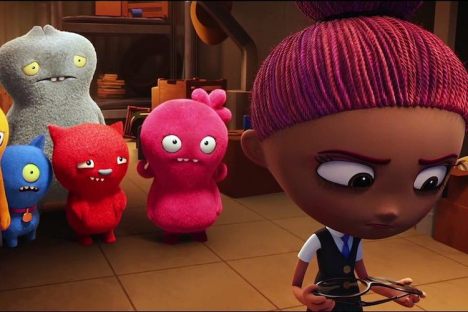
Non-Review Review: UglyDolls

UglyDolls exists in the “uncanny valley” of modern children’s animated films.

Films like UglyDolls are a reminder of how profoundly Pixar has altered the cinematic landscape, and shifted expectations in terms of what audiences – young and old – expect from these sorts of films. Most obviously, the basic premise of UglyDolls echoes that of Toy Story; in much the same way that, say, The Emoji Movie mirrors Inside Out. This is a film about sentient toys trying to find an existential justification for their existence, often defined in terms of their relationship to a child. UglyDolls is a movie aout misfit toys cast out from the factory assembly line, wondering if they will ever be worth of love.

All dolled up with nowhere to go.

To be fair to UglyDolls, it is much better than The Emoji Movie. At the very least, UglyDolls understands that the film needs to be ordered around a strong central theme. UglyDolls has a solid conceptual basis, a familiar children’s movie allegory, and a very straightforward narrative structure. That said, although somewhat less crass in its materialist ambitions than The Emoji Movie, the film feels cynically calculated in other ways. The casting of performers like Kelly Clarkson, Nick Jonas, Janelle Monáe and Blake Sheldon seems designed to move the film’s soundtrack album. And the premise is obviously toyetic.

Still, UglyDolls comes closer than most of these sorts of films to working, largely failing because it ultimately underestimates the maturity and intelligence of its target audience.

A glass apart.

Continue reading

137. Toy Story 4 – This Just In (#116)

Hosted by Andrew Quinn and Darren Mooney, This Just In is a subset of The 250 podcast, looking at notable new arrivals on the list of the 250 best movies of all-time, as voted for by Internet Movie Database Users.

This time, Josh Cooley’s Toy Story 4.

At time of recording, it was ranked 116th on the list of the best movies of all time on the Internet Movie Database.

Continue reading

Non-Review Review: Cinderella (2015)

This film was seen as part of the Jameson Dublin International Film Festival 2015.

Kenneth Branagh’s Cinderella is probably the safest and most down-the-middle live action remake of a classic Disney cartoon. It is not as heavily stylised or esoteric as Tim Burton’s Alice in Wonderland, but it is also not as deeply flawed as Maleficent. If anything, Cinderella suffers from a lack of its own identity or energy. It is a well-made and functional film that avoids any truly significant problems, but it also lacks any real edge that might help it stand out.

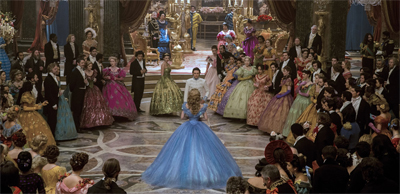
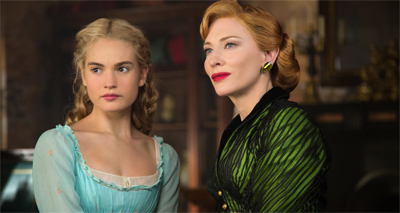
Cinderella looks lovely. Dante Ferretti’s production design and Sandy Powell’s costume designs are breathtakingly beautiful. Branagh’s direction is clean and crispy, avoiding excessive clutter and trusting the story to tell itself. The cast are great – with Cate Blanchett and Helena Bonham Carter doing wonderful work. Even the script does exactly what it needs to do, walking the line between traditional and self-aware with considerable grace. Cinderella does pretty much everything that you would expect a live action adaptation to do.

cinderella2

At the same time, it lacks any real sense of cinematic ambition. It is nowhere near as iconoclastic as Alice in Wonderland or as ambitious as Maleficent. This isn’t necessarily a bad thing – Alice in Wonderland attracted a lot of criticism for playing more as a Tim Burton movie than an Alice in Wonderland film, while Maleficent tripped over itself in its attempts to re-write the classing story of Sleeping Beauty as a feminist parable. Cinderella‘s problems are much less severe, but its accomplishments are also less noteworthy.

The result is probably the most solid and reliable live adaptation of a classic Disney cartoon, albeit one that never seems to have any real ambition or verve.

cinderella

Continue reading