• Following Us

  • Categories

  • Check out the Archives


  • Awards & Nominations

358. Halloween II (2009) – All-o’-Ween (#—)

Hosted by Andrew Quinn, Darren Mooney and Joey Keogh, this week with special guest Doctor Bernice Murphy, The 250 is a weekly trip through some of the best (and worst) movies ever made, as voted for by Internet Movie Database Users. New episodes are released Saturdays at 6pm GMT.

This year, we are running a season looking at the films in the Halloween franchise. So this week, Rob Zombie’s Halloween II.

A year after Michael Myers’ brutal rampage through Haddenfield, the survivors are still trying to put the pieces back together. Laurie Strode is haunted by nightmares of the attack, while Doctor Samuel Loomis’ book tour brings him back to town just as a lone figure stalks through the darkness. Michael Myers has returned to Haddenfield, and is tearing at wounds that have not had a chance to heal.

At time of recording, it was not ranked on the list of the best movies of all time on the Internet Movie Database.

Continue reading

New Escapist Column! On What Makes a Great Series Finale…

We’re launching a new column at The Escapist, called Out of Focus. It will publish every Wednesday, and the plan is to use it to look at some film and television that would maybe fall outside the remit of In the Frame, more marginal titles or objects of cult interest. With the recent wrap-up of shows like Barry and Succession, it seemed like a good opportunity to take a look at what makes a great television finale.

Interestingly, from The Sopranos to The Leftovers, one of the hallmarks of a truly impressive television finale is the way that it leaves room for the audiece. After all, television shows involve considerable investment from viewers, and offer a chance for the audience to really get to know and understand the characters and the themes of this world. The best of these finales are clear endings to the story being told, but which leave room for the viewer to reach their own conclusion about these characters and their journey.

You can read the piece here, or click the picture below.

New Escapist Column! On “Black Panther: Wakanda Forever” and How the MCU Grew Up With Its Audience…

I published a new piece at The Escapist earlier this week. With the release of Black Panther: Wakanda Forever, and the end of Phase 4, it seemed like a good opportunity to take a look at one of the more interesting trends within the modern Marvel Cinematic Universe: the way that it has grown up with its audience.

The audience that went to see Iron Man fourteen years ago are no longer teenagers, or even young adults. They are now adults, many of whom will have settled down and started families. It is entirely possible that a couple who went to see The Incredible Hulk on their first date ended up taking their child to Thor: Love and Thunder. One of the more interesting aspects of the modern MCU has been the way that its plotting and themes have evolved to reflect that, with many of its once roguish heroes becoming biological or surrogate parents.

You can read the piece here, or click the picture below.

New Escapist Video! On “The Rings of Power” and the Limits of the Franchise-Era Mystery Box…

We’re thrilled to be launching a fortnightly video companion piece to In the Frame at The Escapist. The video will typically launch every second Monday, and be released on the magazine’s YouTube channel. And the video will typically be separate from the written content. This is kinda cool, because we’re helping relaunch the magazine’s film content – so if you can throw a subscription our way, it would mean a lot.

This week, we took a look at The Rings of Power, the prequel series to The Lord of the Rings. In particular, the way that it is built around so many mystery boxes. It’s a problem facing a lot of modern franchise media, where these shows attempt to keep audiences hooked by building elaborate mystery boxes around established lore. The mystery box was a problem for early serialized television at the turn of the millennium, and it is a shame to see it return in the streaming age of franchise media, where the answer is always nostalgia.

New Escapist Column! On How “She-Hulk” Relates To Its Audience…

I published a new In the Frame piece at The Escapist yesterday. With the show wrapping up its first season this week, it seemed like a good opportunity to talk about She-Hulk, and the show’s interesting and provocative relationship with its audience.

Setting aside the fact that big villains of She-Hulk are arguably a bunch of internet trolls, She-Hulk is engaged in a literal and constant ongoing conversation with its audience. However, what’s fascinating about that dynamic is the tone of it. Jen often seems to feel trapped by the expectations of the audience for fan service and continuity references, and the need to shape her show in such a way as to hit all of the beats expected of a Marvel Studios project.

You can read the piece here, or click the picture below.

New Escapist Video! “A Marvelous Escape” – Falcon and the Winter Soldier – “One World, One People” Discussion…

With a slew of Marvel Studios productions coming to Disney+ over the next six months, The Escapist has launched a weekly show discussing these series. I’ll be joining the wonderful Jack Packard and the fantastic KC Nwosu to break down WandaVision, Falcon and the Winter Soldier and Loki as they come out.

This week, we take a look at the final episode of Falcon and the Winter Soldier, which has a lot to wrap up. Can the show stick the landing?

New Escapist Column! On How “Promising Young Woman” Gazes Back…

I published a new In the Frame piece at The Escapist this evening. Because Promising Young Woman is garnering some awards attention, I figured it was worth a look.

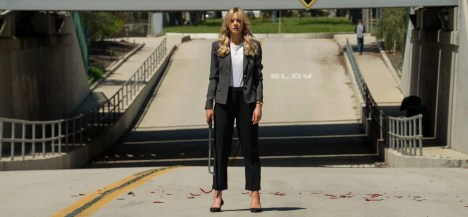
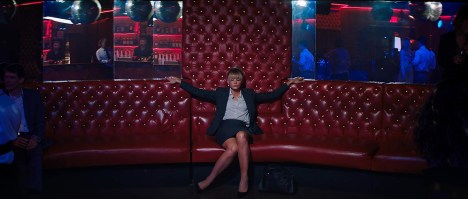
Promising Young Woman is a remarkably well-constructed film. It’s a film that is very actively engaged with the idea of watching and looking – what characters choose to see, and what they choose to ignore. However, the film is also very much aware of how audiences will see the film. It is cleverly constructed in such a way as to play with the audience’s gaze, and to challenge the way that they look at the film – the way the viewer looks at its actors, its characters, and the kind of story that it is telling. It stares its audience right in the eye, and it never blinks.

You can read the piece here, or click the picture below.

“It Had Nothing to Do With Me”: The Moral Sloth of Henry Hill in “Goodfellas”…

The podcast that I co-host, The 250, continued our belated Summer of Scorsese last week with a look at Raging Bull. This week, we’re looking at Goodfellas. It is a fun and broad discussion that is well worth your time, but it spurred some of my own thoughts about Martin Scorsese’s 1990 gangster classic.

There is a long-running debate concerning the films of Martin Scorsese, one that arose most recently around The Wolf of Wall Street.

To his critics, Scorsese is seen as a director who glorifies and venerates a certain form of toxic masculinity. There’s a certain logic to this argument. After all, whatever Scorsese’s intentions may be, there is no denying that his films attract a certain unironic fandom that gets swept up in these stories of tough men who do terrible things. This is reflected in everything from the ubiquity of Goodfellas as a “dorm room poster” to celebrations of its depiction of masculinity to the fact that real-life gangsters reportedly love it.

This criticism largely derives from the fact that Scorsese effectively surrenders control of the film’s narrative to his central characters. His movies are often literally narrated by their central characters: Henry and Karen Hill in Goodfellas, Ace Rothstein and Nicky Santoro in Casino and Jordan Belfort in The Wolf of Wall Street. These characters are given ample room to espouse their worldview and their philosophy, to craft the story that they want to tell.

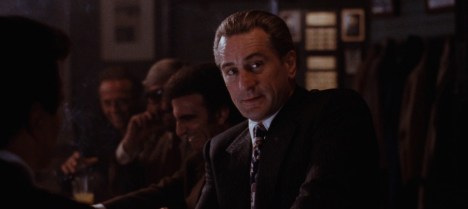
Scorsese undoubtedly pushes back against his characters in interesting ways – often ironically juxtaposing their conceited monologues with brutal imagery to underscore the dissonance between their narrative of events with the reality of the situation. However, Scorsese largely avoids overtly moralising. He avoids the easy route of having external characters comment too obliquely or too loudly on the moral decadence at play. Indeed, the most interesting thing about Karen Hill is her own complicity in Henry’s immorality rather than any condemnation of it.
To be fair, there’s a lot to recommend this approach. American cinema has come a long way since the days of the Hays Code and the Breen Office, and there is a lot to be said for the importance of treating an audience as mature enough to grapple with complicated ideas or giving them room to reach conclusions on their own terms. Psycho is a classic piece of American cinema, but it suffers greatly from a closing scene where a new character shows up to lecture the cast (and implicitly the audience) on the film that they just watched.

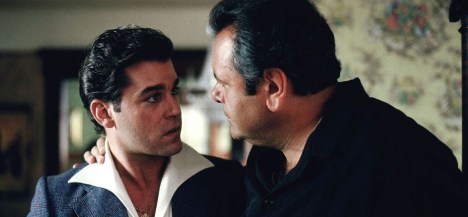
Indeed, this is ultimately the beauty of Scorsese’s approach to these characters. Scorsese gives them all the room that they need, and they still manage to incriminate themselves. Their robust attempts to glorify and mythologise themselves inevitably backfire. Like a good detective or lawyer, Scorsese shrewdly just allows characters like Henry Hill to talk and talk and talk, knowing that they have been given enough rope with which they might hang themselves.
Continue reading

New Escapist Column! On the Understated Power of Pierce Brosan’s Bond…

I published a new In the Frame piece at Escapist Magazine last week. With the release of No Time To Die pushed out, and St. Patrick’s Day relatively understated, I thought it was worth taking a look at Pierce Brosnan’s tenure playing James Bond.

Brosnan is often overlooked in assessments of the James Bond franchise, largely overshadowed by the (deserved) reappraisal of Timothy Dalton’s vulnerability in the role and the (deserved) celebration of the emotional complexity that Daniel Craig brought to the icon. This is a shame, because there’s a lot to like about Pierce Brosnan’s interpretation of the superspy. Most obviously, there’s a sense in which Brosnan’s interpretation of the character refused to be tormented and tortured by the work that he did. Brosnan played Bond as a man uniquely attuned to the demands of his job, an unchanging man in a rapidly changing world. The result is a character who seems unflinchingly brutal, but who also collapsed his patriotism into satisfaction of his more personal vices.

Whether intentional or not, Brosnan’s interpretation of the character makes the audience uncomfortable, particularly the joy that he takes in violence and the sense in which little really matters to him beyond satisfying his own urges. It’s a provocative approach to the character, one that stands in marked contrast to the more considered introspection of the the two performers either side of him. Brosnan’s Bond often seems to be challenging the audience, asking whether we enjoy the callous violence and detached brutality as much as the protagonist does, without offering us the “get out of jail free” card that Dalton and Craig’s more solemn portrayals afford viewers.

You can read the piece here, or click the picture below.

Non-Review Review: Promising Young Woman

This film was seen as part of the Virgin Media Dublin International Film Festival 2020. Given the high volumes of films being shown and the number of reviews to be written, these may end up being a bit shorter than usual reviews.

Promising Young Woman is a deeply uncomfortable watch. As it should be.

The basic premise of Emerald Fennell’s theatrical debut is decidedly thorny. Cassandra is a thirty-year-old woman who spends her weekends going to bars and acting so drunk that she can barely stand. Inevitably, a “nice guy” arrives to volunteer to help. He usually bundles her into the back of a taxi and takes her back to his place. Then, things get very uncomfortable – particularly when they realise that Cassandra is nowhere near as incapacitated as she appears to be. It’s a hell of a hook.

Promising Young Woman is the kind of film that is going to generate lots and lots of “discourse.” It will stoke strong opinions. It will spark uncomfortable conversations. It is an incredibly loaded film. All of this makes Fennell’s accomplishment all the more impressive. Promising Young Woman is a remarkably confident and assured debut feature, a film which navigates an almost impossibly fraught subject with a surprising amount of charm and wit. Promising Young Woman is heartbreaking and hilarious, raw and riotous, often pivoting between extremes in the space of a single scene. It’s a deft balancing act.

However, the most remarkable thing about Promising Young Woman isn’t just the way that Fennell manages all these tensions within the film. Promising Young Woman manages to create a palpable and compelling tension with the audience – a perfectly calibrated push-and-pull that knows exactly which buttons to push and when, for maximum effect. Promising Young Woman is a film that challenges its audience as much as its characters, and that is what makes it such a striking piece of film-making.

Note: It is probably best to see Promising Young Woman as blind as possible, without any real foreknowledge of what the film is doing or how it does it. This review will not go into too much depth, but discussing the film means discussing some of those mechanics. Consider this a light spoiler warning, and an unqualified recommendation.

Continue reading