• Following Us

  • Categories

  • Check out the Archives


  • Awards & Nominations

New Escapist Column! On “Ghostbusters”, and How Irreverence Became a Source of Reverence…

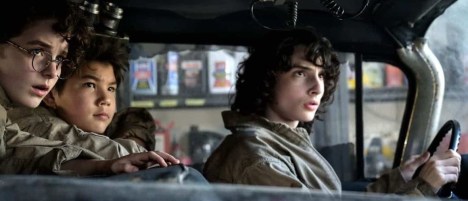
I published a new In the Frame piece at The Escapist this evening. With the release of Ghostbusters: Afterlife this weekend, it seemed like a good opportunity to take a look back at the original Ghostbusters.

The original Ghostbusters was a wry and cynical movie about three academics who find themselves forced to work in the public sector, and so start a business busting ghosts in a run-down and decaying New York City. The film was very self-aware and very glib, essentially built around the idea that three men who would be con artists in any other situation were able to come out on top in eighties America. However, in the years since, Ghostbusters has become an institution. What was once irreverent is now venerated, without any of the self-awareness that made the first film so compelling.

You can read the piece here, or click the picture below.

Doctor Who: Flux – Chapter Three: Once, Upon Time (Review)

“Love is the only mission.”

Once, Upon Time is equal parts ambitious and frustrating.

It feels like an attempt to adopt the approach that Chris Chibnall took to The Halloween Apocalypse and apply it to a mid-season episode. Allowing for the tertiary plot involving Yaz, War of the Sontarans was recognisable as a fairly straightforward Chibnall era episode, albeit one tied to the season arc. It was a historical epic about a marginalised female hero like Rosa or Spyfall, Part II and it was also a modern-day invasion story like Arachnids in the U.K. or Revolution of the Daleks. Sure, the plot mechanics where governed by the larger concerns of Doctor Who: Flux, but it was recognisable as an episode of Doctor Who.

Blaster from the… future?

In contrast, Once, Upon Time is a radically different approach to Doctor Who on television, one that feels like an extension of the style of The Halloween Apocalypse. On some level, it recalls another of the bolder scripts of the Chibnall era, The Timeless Children, in that it really feels like Chris Chibnall is driving Doctor Who like he stole it. He is trying to do something new with a nearly sixty-year-old franchise. That is genuinely admirable, particularly given how traditionalist the rest of the era around it can feel. For Doctor Who to grow and evolve, it needs to be able to try new things.

However, that’s a very qualified comparison. Like The Timeless Children before it, Once, Upon Time is an episode that doesn’t necessarily work on its own terms. It demonstrates that an episode like The Halloween Apocalypse – an episode with multiple seemingly disconnected threads constantly pushing the narrative forward – only really worked as a season premiere. The Halloween Apocalypse worked because it started with a bang. The audience were oriented coming into the episode, which made the chaos somewhat compelling.

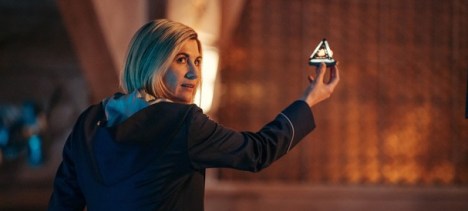
Time, pyramided.

In contrast, Once, Upon Time is too disjointed. It never provides the audience with enough to hold on to as it jumps from one concept to another. It is an episode that should theoretically have a set of clear emotional hearts – Dan and Diane, Vinder and Bel, the Doctor and her past – but gets too tied up in scale and speed to really ground anything that is happening. Once, Upon Time feels like a more dynamic version of The Timeless Children, a lot of exposition in place of what should be a compelling and engaging emotional narrative.

Once, Upon Time feels like it is trying for something new, but it isn’t quite succeeding.

Back up.

Continue reading

260. El laberinto del fauno (Pan’s Labyrinth) (#146)

Hosted by Andrew Quinn and Darren Mooney, with special guest Jack Packard, The 250 is a (mostly) weekly trip through some of the best (and worst) movies ever made, as voted for by Internet Movie Database Users. New episodes are released every Saturday at 6pm GMT.

This time, Guillermo Del Toro’s El laberinto del fauno.

In the aftermath of the Spanish Civil War, a young girl named Ofelia moves to her new stepfather’s house. As Captain Vidal ruthlessly hunts down the remaining rebels, Ofelia discovers that there is something enchanted lurking in the nearby woods. A mysterious faun promises to secret Ofelia away to a magical realm, if she can complete three tasks. As Ofelia finds herself caught between fantasy and reality, she discovers the sometimes the worst monsters are the human kind.

At time of recording, it was ranked 146th on the list of the best movies of all time on the Internet Movie Database.

Continue reading

New Escapist Video! “Ghostbusters: Afterlife is a Lifeless Franchise Resurrection”

I’m thrilled to be launching movie reviews on The Escapist. Over the coming weeks and months, I will be joining a set of contributors in adding these reviews to the channel. For the moment, I’m honoured to contribute a three-minute film review of Ghostbusters: Afterlife, which will release in theatres next weekend.

New Escapist Column! On “The Lord of the Rings” as a Blockbuster for the Post-Ironic Age…

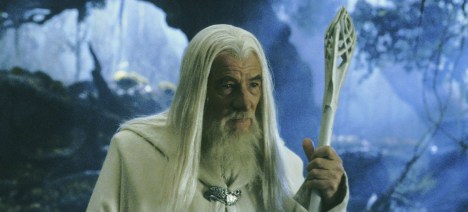
I published a new In the Frame piece at The Escapist this evening. With the twentieth anniversary of Peter Jackson’s The Lord of the Rings fast approaching, it seemed like a good opportunity to place the films in the context of their times.

Obviously, every work reflects the time in which it is produced – it speaks to a variety of factors (consciously or unconsciously) acting on the creative talent as it evolves into its final form. However, audiences also can’t help but engage with a work in the context of the time in which it is released. Peter Jackson shot most of his Lord of the Rings trilogy before 9/11, even if The Lord of the Rings: The Fellowship of the Rings was released in theatres three months after the attack. Still, it’s not to feel like the films’ earnestness and sincerity resonated with an audience looking for meaning in seemingly chaotic and arbitrary time.

You can read the piece here, or click the picture below.

New Podcast! Podcast 616 – “Eternals”

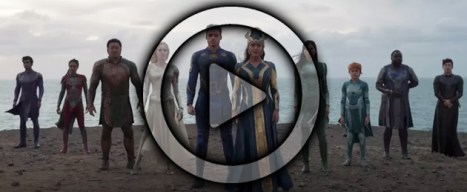
Podcast 616 is a podcast looking at the Marvel Cinematic Universe. I was thrilled to be invited to join Dan Owen for a discussion of Chloé Zhao’s Eternals, which is a movie I enjoyed considerably more than most.

It’s a fun and broad discussion, which delves into questions around auteurship within the Marvel Cinematic Universe, the paradox of superheroes, the question of power, and the challenges in adapting concepts like the Deviants for the big screen. It was really fun to roll up my sleeves and delve into this discussion with Dan, which allowed me to chat about everything from my blind spots with certain characters to the way in which the plot and themes of Eternals feels true to the spirit – if not necessarily the art – of Jack Kirby.

You can listen to the episode here, or click the link below.

New Escapist Column! On “The Wrath of Khan” and “The Voyage Home”, and the Soul of “Star Trek” in “First Contact”…

I published a new In the Frame piece at The Escapist this evening. Given that this month marks the 35th anniversary of Star Trek IV: The Voyage Home and the 25th anniversary of Star Trek: First Contact, it seemed like a good opportunity to take a look at their relationship within the Star Trek franchise – and how they connect to Star Trek II: The Wrath of Khan.

For many Star Trek fans, The Wrath of Khan remains the most beloved and most brilliant entire in the franchise’s cinematic canon. However, it’s notable that The Voyage Home was a much more populist hit, resonating with general audiences. For a decade following the release of The Voyage Home, it provided a template for the franchise for a decade. However, with the release of First Contact, the balance of power shifted. Suddenly, the franchise found itself caught in the gravity of The Wrath of Khan, which exerted a powerful gravity on the franchise’s direction and development.

You can read the piece here, or click the picture below.

Doctor Who: Flux – Chapter Two: War of the Sontarans (Review)

“I have Queen and Country on my side. That is all that I need.”

“She here with you right now, the Queen?”

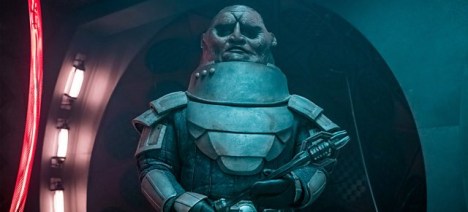
War of the Sontarans is a basically functional episode of Doctor Who, even if it feels like a rough draft of a more interesting premise that moves quickly enough to dance over the more obvious cracks.

In some ways, War of the Sontarans feels very much like a proof of concept for Doctor Who: Flux, a demonstration of how exactly Chibnall is going to turn that frantic season-opener into a sustainable six-episode miniseries. War of the Sontarans settles down, severely trimming down the number of plot threads in play at the end of The Halloween Apocalypse. Diane and Claire are nowhere to be found. The Weeping Angels are entirely absent. Joseph Williamson only makes a minor appearance, serving primarily to remind audience members that he still exists.

“Queuing for petrol,
Queuing for petrol.
Queuing for petrol.
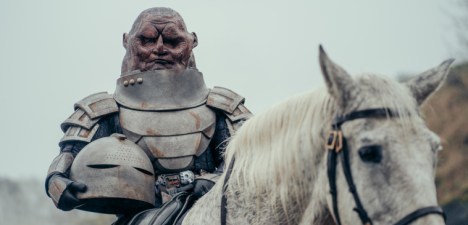
And I’m on a horse.”

So War of the Sontarans feels very much like a conventional episode of Doctor Who, albeit with considerably more plot crammed into comparatively less space, and with a secondary subplot that more directly ties into the larger arc. It’s not the most elegant way of structuring an event story like this, but it is a more workable model for six weeks of Doctor Who. This is an episode of television that will be easy enough for casual audience members to follow, even if they haven’t seen The Halloween Apocalypse. Indeed, it’s possible to argue that this is easier to follow than The Halloween Apocalypse.

For all the plot and narrative hijinks at work in War of the Sontarans, the episode is remarkably straightforward. This is both its greatest strength and its greatest weakness. War of the Sontarans touches on a variety of interesting ideas, but never lingering on any of them or pushing them too far into their more compelling implications.

Sontaring into battle.

Continue reading

258. Dune – This Just In (#127)

Hosted by Andrew Quinn and Darren Mooney, and this week with special guests Jenn Gannon and Deirdre Molumby, The 250 is a weekly trip through some of the best (and worst) movies ever made, as voted for by Internet Movie Database Users. New episodes are released Saturdays at 6pm GMT.

So this week, Denis Villeneuve’s Dune.

The galaxy is in turmoil. Rumours swirl of a plot against House Atreides. As Duke Leto Atreides takes control of the desert planet of Dune, he tries to track down the traitors in his midst. Meanwhile, his son Paul finds himself on the verge of an awakening that will have a profound impact on the future of mankind.

At time of recording, it was ranked 127th on the list of the best movies of all time on the Internet Movie Database.

Continue reading

New Escapist Column! On the Coolness of Boba Fett…

I published a new In the Frame piece at The Escapist this evening. With the recent trailer for the upcoming Book of Boba Fett, it seemed like a good opportunity to reflect on the character of Boba Fett.

Boba Fett is an interesting character, in large part because there has always been a huge dissonance between how cool he looks and how cool he acts. This is the more compelling facet of the character, the dissonance between the characters as a cool action figure and his general uselessness within the larger narrative of the saga. George Lucas seemed to play with this idea very pointedly and purposefully, and it’s a nuance that many subsequent takes on the character have tended to ignore or overlook.

You can read the piece here, or click the picture below.