• Following Us

  • Categories

  • Check out the Archives


  • Awards & Nominations

Non-Review Review: Wreck It Ralph

Wreck It Ralph is a charming animated film, and one with all manner of interesting ideas. It teases a fascinating take on the archetypal children’s movie narrative – the notion that perhaps roles in stories cannot be so easily devolved into “good guy” and “bad guy” stereotypes. It raises all manner of insightful possibilities, drawing on a diverse cast of characters to offer us what amounts to the story of two outcasts dealing with the fact that they don’t necessarily get to be part of narratives that might make them a hero.

Unfortunately, there’s only so far you can bend this sort of hero’s journey before it breaks – or snaps back in your face, if you’re watching a slapstick cartoon. Wreck It Ralph compromises a bit too much in its final act, undermining a lot of what had been its appeal in order to offer a staggeringly conventional ending. It’s a shame, because it’s willingness to subvert so many narrative norms is a large part of the appeal of the film.

Sometimes life isn't two-dimensional...

Sometimes life isn’t two-dimensional…

Continue reading

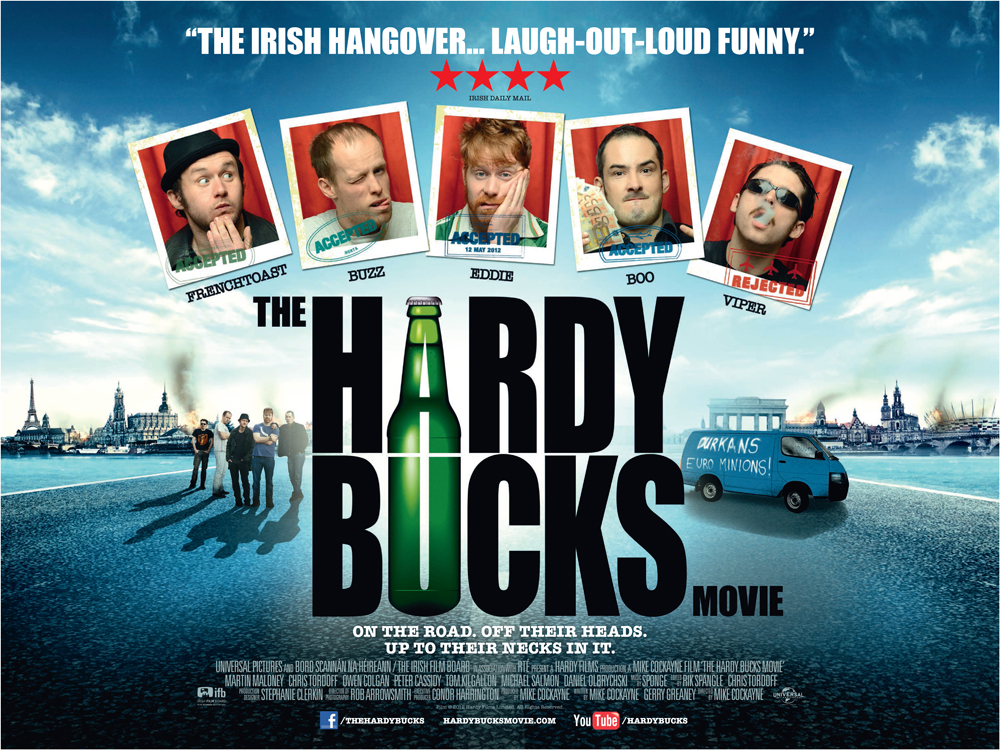
Hardy Bucks Poster…

Universal Pictures Ireland just sent over this latest poster for the Hardy Bucks movie. A big-screen adaptation of the hit RTÉ comedy show, the film sees the boys taking their adventures on the road, to Europe. The film is being released here on February 22nd. Click the poster below to enlarge.

hardybucks

Non-Review Review: Lincoln

Steven Spielberg’s Lincoln might just be the most fascinating exploration of the overlap between legal, moral and democratic power ever produced. Abraham Lincoln’s name might brand the film, and Daniel Day-Lewis’ sensational performance might hold it together, but there’s a very clear sense in watching Lincoln that the film is more preoccupied with lofty philosophical questions about the role of a ruler in a democracy. The Civil War and the 13th Amendment provide a backdrop, but Lincoln seems more concerned with how those elected must wield the mandate given from the people. Must they always represent the views of the people who elected them, or is their job to lead?

Note: Not a Vampire Hunter...

Note: Not a Vampire Hunter…

Continue reading

“It’s None of Your Damn Business What I Think About That”: Tarantino and the Limits of Film Directors…

It’s a clip that’s gone viral. Tarantino lashing out at Channel 4 interviewer Krishnan Guru-Murthy has become something of in internet touchstone. “I’m shutting your butt down,” the director protests after getting another of those inevitable questions about the link between movie violence and real-life violence. It’s cringeworthy and awkward, and it plays into Guru-Murthy’s hands better than a straight answer would have, but I can’t help but empathise with Tarantino’s position.

Incidents like the shooting in Aurora or Connecticut shooting are truly horrifying and very hard for us to contextualise. I can understand Tarantino not wanting to get into that debate, because it’s really not the place of anybody involved in cinema to talk about it. It’s arrogant for anybody with any film background to try to relate their work to it, and it’s negligent of any journalist to try to sensationalise a link between film violence and real violence when the real questions are tougher, more uncompromising and more uncomfortable than a quick jab at Tarantino.

Continue reading

Non-Review Review: Les Misérables

It’s hard not to admire Les Misérables. It’s the first honest-to-goodness entirely sincere and mostly unironic big budget musical that we’ve seen released in quite some time. While song and dance will always be a part of the movies (The Muppets, for example, carrying many a dainty tune last year), there’s something quite impressive about seeing a music as epic and as iconic as Les Misérables carried across to the big screen. The stage musical became something of a cultural phenomenon on the West End, and Tom Hooper does an effective job of transitioning from stage to screen – even if he doesn’t consistently capitalise on the format shift.

There are some fundamental problems. The second half is a little too awkwardly paced and too disjointed to come together as well as it should, and Hooper seems to have a great deal pitching the right amount of camp (and humour) for an Oscar-bait musical about the aftermath of the French revolution. However, if you can look past those problems, the opening half is a superbly staged musical and the performances are impressive. Including the much maligned Russell Crowe, who might – hear me out – be the best thing about the film.

Sing when you're winning... or at least nominated...

Sing when you’re winning… or at least nominated…

Continue reading

Doctor Who: The Eleventh Hour (Review)

To celebrate the fiftieth anniversary of the longest-running science-fiction show in the world, I’ll be taking weekly looks at some of my own personal favourite stories and arcs, from the old and new series, with a view to encapsulating the sublime, the clever and the fiendishly odd of the BBC’s Doctor Who.

The Eleventh Hour originally aired in 2010.

So, coming?

No.

You wanted to come fourteen years ago.

I grew up.

Don’t worry. I’ll soon fix that.

– the Doctor and Amy

The arrival of a new producer on Doctor Who always represents a shift in some way shape or form. The change from Barry Letts to Philip Hinchcliffe must have seemed radical, even at the time. Graham Williams following Hinchcliffe represented a similarly strange departure. The departure of Russell T. Davies, the producer who had brought Doctor Who back to television after over a decade, was always going be a pretty significant change for those watching. Steven Moffat’s first episode as producer might not seem like it’s a shocking departure from what came before, but it also quite efficiently and effectively distinguishes Moffat’s tenure from that of his direct predecessor.

While by no means as radical a shift as Spearhead from Space, there is a very clear feeling that The Eleventh Hour brings with it significant tonal and thematic changes to the tale of the Doctor.

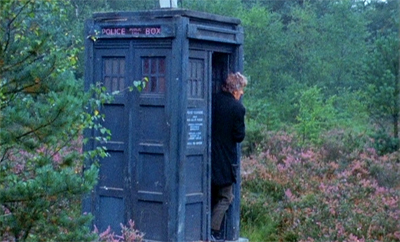
A mad man with a box...

A mad man with a box…

Continue reading

Doctor Who: Rose (Review)

To celebrate the fiftieth anniversary of the longest-running science-fiction show in the world, I’ll be taking weekly looks at some of my own personal favourite stories and arcs, from the old and new series, with a view to encapsulating the sublime, the clever and the fiendishly odd of the BBC’s Doctor Who.

Rose originally aired in 2005.

So, I’m going to go up there and blow them up, and I might well die in the process, but don’t worry about me. No, you go home. Go on. Go and have your lovely beans on toast. Don’t tell anyone about this, because if you do, you’ll get them killed.

(beat)

I’m the Doctor, by the way. What’s your name?

Rose.

Nice to meet you, Rose. Run for your life!

– the Doctor and Rose

It’s amazing to think of the pressure weighing down on Rose. Sure, Doctor Who has gone from strength-to-strength since its revival in 2005, but there was a time when its resurrection seemed unlikely, to say the least. Although fans had kept the show alive in various media, it must have seemed highly unlikely that they show would ever return to television, let alone as a massive success. Producer Russell T. Davies might have seemed like an unlikely choice. Although he had written some spin-off material, like other British television writers including Steven Moffat and Paul Cornell, Davies was best known for producing shows like Queer as Folk and The Second Coming. Nevertheless, he had been campaigning to bring the show back for quite some time, notably in 1998 and 2002, before finally bringing the revived show to screen in late March 2005.

Although the edges are still a bit rough in places, Rose serves as an effective introduction to the Russell T. Davies, and contains the seeds of what would become the show’s success. Borrowing (and reinventing) heavily from perhaps the last seismic re-tooling of the series in Spearhead from Space, the show presents a version of Doctor Who for a new generation.

Run!

Run!

Continue reading

Non-Review Review: Gangster Squad

To suggest that Gangster Squad favours style over substance feels like an understatement. Although the prologue claims that Gangster Squad was “inspired” by the true story of Mickey Cohen, it seems to favour mythic figures and sweeping action over real characters and nuanced drama. That’s not necessarily a bad thing. For most of its runtime, Gangster Squad feels like a trashy and update of a forties or fifties B-movie, cheap and nasty far executed with enough speed and charm to entertain. Occasionally the movie seems to falter – it clumsily attempts to shoehorn in some social commentary into this bright and colourful vigilante tale – but director Ruben Fleischer works well to keep things balanced. The wheels come off a bit towards the end, as Fleischer demonstrates he handles atmosphere better than action, but for most of its runtime Gangster Squad is a diverting piece of cheesy nostalgia.

This new plan is working gangbusters!

This new plan is working gangbusters!

Continue reading

Non-Review Review: Hitchcock

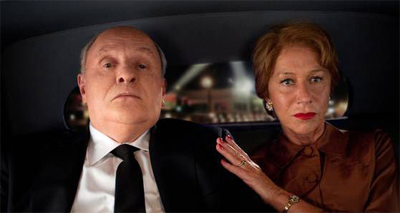
As a bit of a film fan (and a bit of a Hitchcock fan), Hitchcock had me interested. After all, Hitchcock’s Psycho is arguably among the most important films ever made, both creating an entire subgenre (“the slasher”) and imbuing it with artistic credibility at the same time. The production of Psycho was not only a huge gambit for Hitchcock, but it was also an incredibly difficult task for the auteur to accomplish. Hitchcock was sixty when Psycho was eventually released. It’s easy to imagine a director at that age resting on his laurels, and Hitchcock really works when it explores the drives of the talented film maker, willing to look at the implications of those drives and how the same things that made him one of the world’s greatest directors may also have made him a less-than-nice person.

Hitchcock occasionally gets a bit too cluttered with domestic drama, but it features two strong performances and a fascinating true story. It might not be as exceptional as it could have been, but it’s still a damn fine exploration of movie history.

Alma matters?

Alma matters?

Continue reading

Doctor Who: Spearhead From Space (Review)

To celebrate the fiftieth anniversary of the longest-running science-fiction show in the world, I’ll be taking weekly looks at some of my own personal favourite stories and arcs, from the old and new series, with a view to encapsulating the sublime, the clever and the fiendishly odd of the BBC’s Doctor Who.

Spearhead from Space originally aired in 1970.

Oh well, at least he won’t get very far.

You mean, before your men shoot him again?

I don’t find that funny.

– The Brigadier and Liz discuss the Doctor’s (second) escape

Looking back now, it’s hard to believe that Spearhead from Space had so much riding on it, if only because of the deft combination of Robert Holmes’ sharp script and Derek Martinus’ confident direction. Indeed, the serial served as something of a second pilot for the show, demonstrating that the survival of the series during the transition between William Hatnell and Patrick Troughton had not been a fluke, broadcasting in colour for the first time, and setting up an entirely new status quo set primarily on present-day Earth. It’s a miracle that it all works so well, let alone that fact that it remains one of the most accessible adventures featuring the character.

We need a Doctor in the TARDIS!

Continue reading