• Following Us

  • Categories

  • Check out the Archives


  • Awards & Nominations

Non-Review Review: The Impossible

The Impossible looks and sounds fantastic. It is very well put together by J.A. Bayona. Cleverly opting to use practical effects wherever possible, and shooting on a gigantic water tank, Bayona provides a visceral experience worthy of any blockbuster disaster movie. Indeed, were The Impossible based on fictitious events, it might be enough to make it a powerful and emotional film. Unfortunately, as the film is so desperate to let you know (placing “true story” captions at the beginning and the end of the movie), The Impossible is based on the true story of a tsunami that caused untold damage to Thailand displacing up to 60,000 residents.

Without spoiling anything, The Impossible ends with the shot of a plane crossing the ocean, a voyage home. There’s no real sense of any of the lasting consequences of the truly horrific disaster that befell the countries in the Indian Ocean.

It's a washout...

It’s a washout…

Continue reading

Non-Review Review: Die Hard

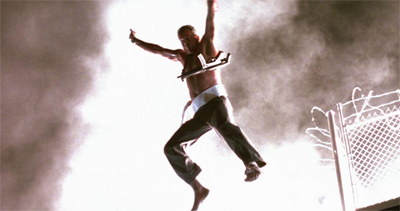
I know it’s a bit cliché at this point, but Die Hard really is my family’s ultimate Christmas movie. The season hasn’t truly started (or, if we’re delayed, truly ended) until all of us have sat down on the couch and indulged in the seasonal spectacular. Even if you don’t quite buy into the “Die Hard as Christmas movie” argument, it’s still impressive how tall John McTiernan’s action movie stands when compared to the bulk of eighties action films. Like Nakatomi Plaza itself, it towers over the competition – and it’s not because it does anything especially or novel or innovative in a genre that has always been fairly conservative. Instead, I’d argue, Die Hard succeeds because it executes all the conventional action movie beats exceedingly well, and because it doesn’t treat any of its plot points as necessary items on a check list.

Jump-starting Bruce Willis' action career...

Jump-starting Bruce Willis’ action career…

Continue reading

Non-Review Review: Flight

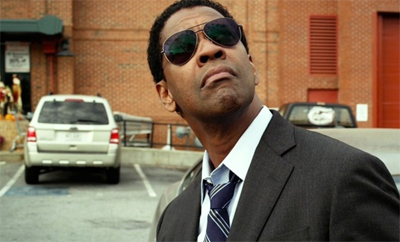
Flight has a lot to recommend it. It has an interesting subject, a fantastic central performance and wonderful supporting cast. As a result, it’s a shame that the movie makes such a mess of all these things. Flight is never less than interesting and Washington is always watchable, but it isn’t quite as compelling as a two-hour drama film needs to be. Director Robert Zemeckis struggles a bit with the tone of the piece, and Flight seems to be a bit all over the place, making it quite difficult to enjoy and hard to engage with.

Things are looking up...

Things are looking up…

Continue reading

Doctor Who: The Sensorites (Review)

To celebrate the fiftieth anniversary of the longest-running science-fiction show in the world, I’ll be taking weekly looks at some of my own personal favourite stories and arcs, from the old and new series, with a view to encapsulating the sublime, the clever and the fiendishly odd of the BBC’s Doctor Who.

The Sensorites originally aired in 1964.

There’s one thing about it, Doctor. We’re certainly different from when we started out with you.

That’s funny. Grandfather and I were talking about that just before you came in. How you’ve both changed.

Well we’ve all changed.

Have I?

Yes.

Yes, it all started out as a mild curiosity in a junkyard, and now it’s turned out to be quite a, quite a great spirit of adventure, don’t you think?

Yes. We’ve had some pretty rough times and even that doesn’t stop us. It’s a wonderful thing, this ship of yours, Doctor. Taken us back to prehistoric times, the Daleks.

Marco Polo, Marinus.

And the Aztecs.

Yes, and that extraordinary quarrel I had with that English king, Henry the Eighth. You know, he threw a parson’s nose at me.

What did you do?

Threw it back, of course.

– Ian, Susan, Barbara and the Doctor discuss character development

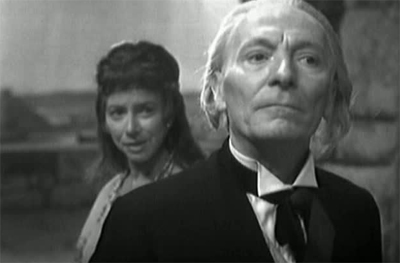
The Sensorites feels like a bit of a mess of an episode. It’s a six-part adventure, but one that feels quite a bit longer than it should be. The trip to Skaro in The Daleks ran for seven episodes, but it never felt quite as padded as this. There are some decent ideas and some nice character moments to be found in The Sensorites, if you’re willing to look hard enough, but there’s also quite a lot of padding, quite a lot of nonsense, and some plot developments that feel just a little bit convenient or contrived. This isn’t Doctor Who at anything approaching its best, but there’s still some measure of potential here.

Using your head...

Using your head…

Continue reading

Doctor Who: The Aztecs (Review)

To celebrate the fiftieth anniversary of the longest-running science-fiction show in the world, I’ll be taking weekly looks at some of my own personal favourite stories and arcs, from the old and new series, with a view to encapsulating the sublime, the clever and the fiendishly odd of the BBC’s Doctor Who.

The Aztecs originally aired in 1964.

Don’t you see? If I could start the destruction of everything that’s evil here, then everything that is good would survive when Cortes lands.

But you can’t rewrite history! Not one line!

– Barbara and the Doctor discuss time travel

The Aztecs is generally considered one of the show’s very best historicals, so I think it’s absolutely wonderful that the adventure has managed to survive the purges that wiped out a significant portion of the Hartnell era and a huge chunk of Patrick Troughton’s work.

A low-tec culture?

Continue reading

Doctor Who: The Keys of Marinus (Review)

To celebrate the fiftieth anniversary of the longest-running science-fiction show in the world, I’ll be taking weekly looks at some of my own personal favourite stories and arcs, from the old and new series, with a view to encapsulating the sublime, the clever and the fiendishly odd of the BBC’s Doctor Who.

The Keys of Marinus originally aired in 1964.

While the initial thirteen-episode block helped established Doctor Who, it was the follow-up stories that built on those initial blue-prints. Marco Polo was a historical adventure in the style of An Unearthly Child, paying homage to the original educational aim of the series, designed to teach kids about history and science. However, the real breakout of the initial run had been The Daleks, with those adorable psychotic pepper pots. Keen to capitalise on the success of the futuristic adventure, another adventure serial was commissioned to take place on an alien world, with Terry Nation’s The Keys of Marinus helping to establish science fantasy as a concrete part of the show’s identity.

All a-Voord!

Continue reading

Doctor Who: The Edge of Destruction (Review)

To celebrate the fiftieth anniversary of the longest-running science-fiction show in the world, I’ll be taking weekly looks at some of my own personal favourite stories and arcs, from the old and new series, with a view to encapsulating the sublime, the clever and the fiendishly odd of the BBC’s Doctor Who.

The Edge of Destruction originally aired in 1964.

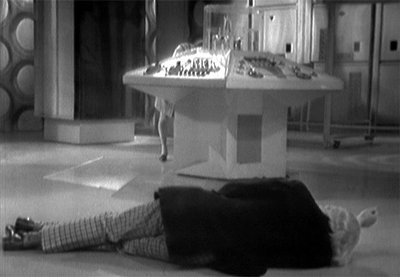
The Edge of Destruction is an interesting little two-parter. Basically created to fill out a two-episode gap in the end of the initial run of episodes following the four-part An Unearthly Child and the seven-part The Daleks. It wasn’t possible to bring Marco Polo forward into this production block, as it was too long, and there wasn’t any budget provided for a guest cast or for new sets. So, as seemed to happen quite a lot on the show, the production team’s ingenuity forced their creativity. The Edge of Destruction (or Inside the Spaceship) ended up being a two-part “bottle” episode, featuring only the four members of the lead cast.

After seven episodes of The Daleks, I can’t blame the Doctor for wanting a nap…

Continue reading

Birthing Hips Sink Ships: Dark Shadows & Improbable Feminism…

I will concede that I am fonder of Dark Shadows than most. I’ve been disappointed with a lot of Tim Burton’s recent output, but something about his revival of the seventies soap opera worked strangely well. I’ll be the first to concede that it’s pretty esoteric. After all, like Casa de mi Padre, it’s effectively one single joke stretched across a film’s runtime. However, I couldn’t help but warm to it, at least because it seemed like Burton was enjoying himself a lot more than head been with films like Alice in Wonderland. There was something quite cheeky about it, from the way that it portrayed its central character as ridiculously unheroic through to the fact that it was perhaps the year’s most subversive feminist film.

Indeed, watching the film again this weekend, it struck me just how feminist the narrative actually was, despite the somewhat superficial distractions from that.

darkshadows10

Continue reading

Doctor Who: The Daleks (Review)

To celebrate the fiftieth anniversary of the longest-running science-fiction show in the world, I’ll be taking weekly looks at some of my own personal favourite stories and arcs, from the old and new series, with a view to encapsulating the sublime, the clever and the fiendishly odd of the BBC’s Doctor Who.

The Daleks originally aired in 1963-4.

Make! no! attempt! to! capture! them! they! are! to! be! exterminated! you! understand! exterminated!

– four episodes in, the Daleks have a catchphrase

Because of the somewhat confusing naming conventions for the Hartnell era, where each individual episode had its own title, this one goes by a variety of names: The Mutants, The Dead Planet, or The Daleks. Still, if you’re reading this, you probably know the serial I’m talking about. It’s the one that introduced everyone’s favourite psychotic little pepper pots.

Taking the plunger…

Continue reading

Doctor Who: An Unearthly Child (Review)

To celebrate the fiftieth anniversary of the longest-running science-fiction show in the world, I’ll be taking weekly looks at some of my own personal favourite stories and arcs, from the old and new series, with a view to encapsulating the sublime, the clever and the fiendishly odd of the BBC’s Doctor Who.

An Unearthly Child originally aired in 1963.

“Just open the doors, Doctor Foreman.”

“Eh? Doctor who? What’s he talking about?”

– Ian and the Doctor drop the title

And so, it begins…

There from the beginning…

Continue reading