• Following Us

  • Categories

  • Check out the Archives


  • Awards & Nominations

House of Cards (US, 2013): Chapter 1 (Review)

House of Cards is a classic piece of BBC television, the story of a Chief Whip in the House of Parliament who is so slighted by the incoming Prime Minister’s refusal to promote him that he decides to bring the whole Conservative Party crashing down around him. If you’re at all interested in political drama, British wit or even great television, I can’t recommend it highly enough.

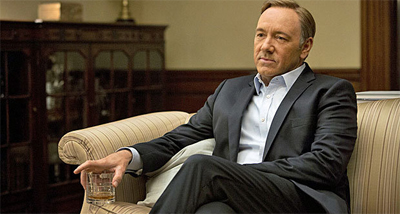
Still, I suppose that an American adaptation was inevitable. And, to be fair, you couldn’t have asked for greater talent. Kevin Spacey stars as Francis Underwood, the Majority Whip in the House of Representatives. David Fincher is producing and directing the two first episodes. It’s written by Beau Willimon, who wrote both The Ides of March and the stage play Farragut North, upon which it was based. That’s a very talented bunch of people.

And yet, one episode in, it feels a little uneven. It’s not so much the sense that the new House of Cards seems to have a bit of bother figuring out what made the original so great, nor is it the fact that changes have to be made in translating the story from London to Washington. It’s more a sense that show is really trying to figure out what it wants to be.

Let's be Frank...

Let’s be Frank…

Continue reading

Doctor Who: The Talons of Weng-Chiang (Review)

To celebrate the fiftieth anniversary of the longest-running science-fiction show in the world, I’ll be taking weekly looks at some of my own personal favourite stories and arcs, from the old and new series, with a view to encapsulating the sublime, the clever and the fiendishly odd of the BBC’s Doctor Who.

The Talons of Weng-Chiang originally aired in 1977.

Ah! Eureka! Do you know what that is?

You ask me so that you can tell me.

That’s right. It’s a trionic lattice, an integral part of a time cabinet. It’s impossible to open it without it.

You mean it’s a key.

Yes. He’s not only a scientific fool, he’s an absent-minded one.

Perhaps he has another eureka.

No, eureka’s Greek for “this bath is too hot.”

– the Doctor and Leela

The Talons of Weng-Chiang is generally agreed to be one of the (if not the) greatest Doctor Who adventures ever produced. It tends to hover around the top of various official polls, with only Caves of Androzani and City of Death coming close to it in public opinion. As such, I feel a little bit guilty when I confess that it doesn’t rank as one of my absolute favourite adventures. I like it a great deal, I think it embodies a great deal of what works about the Philip Hinchcliffe era of the show. However, if I’m looking for a dark pseudo-historical adventure, I am more likely to pick either The Pyramids of Mars or The Horror of Fang Rock.

I can see why a lot of people respond to The Talons of Weng-Chiang, and it has a lot to recommend it, but there are a number of minor problems that hold the serial back from the cusp of perfection, in my opinion.

Read it at your (Yellow) Peril...

Read it at your (Yellow) Peril…

Continue reading

Doctor Who: The Parting of the Ways (Review)

To celebrate the fiftieth anniversary of the longest-running science-fiction show in the world, I’ll be taking weekly looks at some of my own personal favourite stories and arcs, from the old and new series, with a view to encapsulating the sublime, the clever and the fiendishly odd of the BBC’s Doctor Who.

The Parting of the Ways originally aired in 2005.

Everything must come to dust. All things. Everything dies. The Time War ends.

– Rose

And so the first season of Russell T. Davies’ revived Doctor Who comes to a close. If you asked me, it’s the best season of the show that Davies has produced. The year contains a few clunkers, and it doesn’t contain the highest concentration of enjoyable episodes, but I think the first year has a much clearer direction and purpose than any of the years that followed. Although apparently Christopher Eccleston’s departure was only decided after the show went into production, the first season seems like it is constantly building to the death of the Doctor. The entire first season seems to build, logically and rationally, towards that moment.

He's not all there...

He’s not all there…

Continue reading

Doctor Who: Bad Wolf (Review)

To celebrate the fiftieth anniversary of the longest-running science-fiction show in the world, I’ll be taking weekly looks at some of my own personal favourite stories and arcs, from the old and new series, with a view to encapsulating the sublime, the clever and the fiendishly odd of the BBC’s Doctor Who.

Bad Wolf originally aired in 2005.

The Dalek stratagem nears completion. The fleet is almost ready. You will not intervene.

Oh, really? Why’s that, then?

We have your associate. You will obey or she will be exterminated.

No.

Explain yourself.

I said no.

What is the meaning of this negative?

It means no.

But she will be destroyed.

No! Because this is what I’m going to do. I’m going to rescue her. I’m going to save Rose Tyler from the middle of the Dalek fleet and then I’m going to save the Earth, and then, just to finish off, I’m going to wipe every last stinking Dalek out of the sky!

But you have no weapons, no defences, no plan.

Yeah. And doesn’t that scare you to death. Rose?

Yes, Doctor?

I’m coming to get you.

– the Daleks, the Doctor and Rose give the Ninth Doctor perhaps his best moment

Looking back at the first season, I’d argue that it’s the most cohesive run of episodes that Russell T. Davies produced on the dhow. Now because of the whole “bad wolf” thing, as that feels a bit like a clumsy link randomly inserted. Instead, as we watch the final episode, it becomes quite clear what Davies was trying to do with his first year on the show. The patterns, the themes, the subtext, the references – it all becomes quite clear. More than any other season of Davies’ tenure, the first season is really one gigantic story – and not just because the show never leaves Earth or the finalé returns to the setting of The Long Game.

The first season is a bridge. It’s a link between the last years of the classic series into the new and revived show as written by Davies. It’s a moment to gather up the dead, tidy away the loose ends and basically manage the stage so that the show can really come into its own. One of the things I loved about Davies’ Doctor Who was how accessible it all was, but it still had all this continuity ticking away in the background.

This first season finalé feels like it isn’t only a conclusion to Christopher Eccleston’s time in the lead role, it’s also closing the last of the dangling threads from the eras of Colin Baker and Sylvester McCoy in the eighties. As soon as David Tennant steps into the lead role, it seems the show is entirely and utterly free of everything that came before. It’s a testament to Davies’ skill that we’re not even sure that he’s doing it.

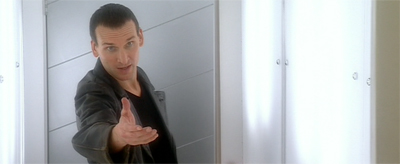
Come with me if you want to live...

Come with me if you want to live…

Continue reading

Jameson Dublin International Film Festival 2013: Highlights!

The Jameson Dublin International Film Festival launched the programme for its eleventh year today. There’s some great stuff in here. There’s a variety of films, from European to American to Asian, from big budget blockbusters to intimate documentaries to more personal films. It’s a great selection of films, and festival director Grainne Humphreys should be proud. After all, if your biggest complaint is having to choose between L.A. Confidential and Bernie, then you must be doing something right.

I’ve picked out some of my own most anticipated events of the schedule below, in rough chronological order, so if you are looking for something to do on a particular day, feel free to see if there’s anything of interest. Unfortunately, some of the events overlap, so you can’t attend everything – something that’s a massive shame given some of the films on display here. With that in mind, the list is below.

JDIFF Brand 2011 (Landscape) copy

Continue reading

Doctor Who: The Caves of Androzani (Review)

To celebrate the fiftieth anniversary of the longest-running science-fiction show in the world, I’ll be taking weekly looks at some of my own personal favourite stories and arcs, from the old and new series, with a view to encapsulating the sublime, the clever and the fiendishly odd of the BBC’s Doctor Who.

The Caves of Androzani originally aired in 1984.

Androzani Major was becoming quite developed the last time I passed this way.

When was that?

I don’t remember. I’m pretty sure it wasn’t the future.

You’re a very confusing person to be with, Doctor, you know that?

I tried keeping a diary once. Not chronological, of course, but the trouble with time travel is one never seems to find the time.

– The Doctor and Peri reflect on travel in the TARDIS

At the risk of succumbing to cliché, The Caves of Androzani is my favourite Doctor Who serial from the classic series. A perfect encapsulation of Peter Davison’s tenure, a fitting farewell story that incarnation of the Doctor, and arguably the perfect regeneration adventure, The Caves of Androzani is one of the very few DVDs that I happen to own twice. And that’s quite a ringing endorsement.

Five outta five?

Continue reading

Doctor Who: Robot (Review)

To celebrate the fiftieth anniversary of the longest-running science-fiction show in the world, I’ll be taking weekly looks at some of my own personal favourite stories and arcs, from the old and new series, with a view to encapsulating the sublime, the clever and the fiendishly odd of the BBC’s Doctor Who.

Robot originally aired in 1974 and 1975.

There you are. Now come along, Doctor, you’re supposed to be in the sick bay.

Am I? Don’t you mean the infirmary?

No, I do not mean the infirmary. I mean the sick bay. You’re not fit yet.

Not fit? I’m the Doctor.

No, Doctor, I’m the doctor and I say that you’re not fit.

You may be a doctor, but I’m the Doctor. The definite article, you might say.

– Harry meets the Doctor

Robot feels a bit like trying to fit a round peg into a square hole, or a Tom-Baker-shaped peg into a Jon-Pertwee-shaped hole. At the time that Baker assumed the role as everybody’s favourite time-travelling phone-booth dweller, Pertwee had just finished the longest stint as the character, portraying the Doctor for five years. Of course, Baker himself would go on to break that record, playing the part for seven years, but it gives you a sense of just how big of a transition it was. As such, it’s easy to understand why outgoing producer Barry Letts felt the need to essentially cast Tom Baker in what feels distinctly like a Jon Pertwee story. As a concept, the central character aside, Robot feels like it would have fit in quite well as part of Pertwee’s last season, which is – I think – part of the problem here.

Tom Baker is a lot of things, but he’s not Jon Pertwee. As a result, Robot feels a little clunkier than it really should, as if the show is actively working against the character who should be driving it.

The Doctor will see you now...

The Doctor will see you now…

Continue reading

Non-Review Review: The Last Stand

In theory, The Expendables demonstrated that age was no real impairment when it came to the task of kicking ass and taking names, even if you might need to put your reading glasses on first. So, you could argue that the issue of Arnold Schwarzenegger’s age doesn’t really need to come up during The Last Stand. We know that he is 65 years of age, and we also know that he’s probably a great deal fitter than most of us will be at that age. (Being honest, I wouldn’t be surprised to discover that a hexagenarian Arnie could trump most people in their prime.) As a result, the fixation of The Last Stand on the age of its leading man feels a little strange.

It feels especially strange because it eats into a lot of the film. The Last Stand is mostly functional, but its pacing suffers greatly. We’re going to see an Arnold Schwarzenegger vehicle, so it’s safe to assume that (a.) we’re okay with his advancing age, and (b.) we want to see him kick some whippersnapper ass. Unfortunately, The Last Stand seems to misjudge the audience’s interest in an Arnie film, and as a result our leading man spends most of the first three-quarters of the film doing very little.

The Last Stand is clearly intended to demonstrate the viability of its leading man in this modern age, but it seems to lack the confidence to just dive into the action that this sort of film is meant to provide. The result is a strange mish-mash of a film that winds up wasting a lot of good will long before it reaches its climax.

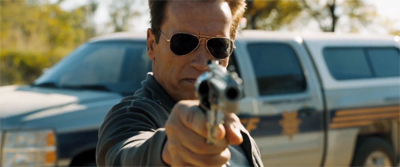
He's back!

He’s back!

Continue reading

Doctor Who: The War Games (Review)

To celebrate the fiftieth anniversary of the longest-running science-fiction show in the world, I’ll be taking weekly looks at some of my own personal favourite stories and arcs, from the old and new series, with a view to encapsulating the sublime, the clever and the fiendishly odd of the BBC’s Doctor Who.

The War Games originally aired in 1969.

Well, what was happening? Why was it so difficult to move?

It was the Time Lords.

But they’re your own people, aren’t they, Doctor?

Yes, that’s right.

Why did you run away from them in the first place?

What? Well, I was bored.

What do you mean, you were bored?

Well, the Time Lords are an immensely civilised race. We can control our own environment, we can live forever, barring accidents, and we have the secret of space time travel.

Well what’s so wrong in all that?

Well we hardly ever use our great powers. We consent simply to observe and to gather knowledge.

And that wasn’t enough for you?

No, of course not. With a whole galaxy to explore? Millions of planets, eons of time, countless civilisations to meet?

Well, why do they object to you doing all that?

Well, it is a fact, Jamie, that I do tend to get involved with things.

– Jamie, the Doctor and Zoe

The War Games represents the end of the era. It is the last appearance of Jamie as a regular companion. It is the last show featuring Patrick Troughton as the Doctor, although he would return for the occasional guest spot, celebration or charity episode. It was also the last of the series to be shot in black and white. The transition from Troughton to Pertwee would arguably be one of the most dramatic shifts in the history of the show. Not only would the show suddenly be broadcast in colour, and not only would it feature a new lead actor, but it would also have a new focus, grounded on Earth, and with that a new status quo and new rules. The show was only six years old at the time, but the change must have seemed radical to those watching.

The War Games isn’t the perfect episode – it’s too long and too plodding – but it is a lot more entertaining than some of the longer adventures, and it serves as a fond farewell to the “cosmic hobo” interpretation of the Doctor. Indeed, the episode probably seems a great deal harsher than it did in hindsight, with the specifics of regeneration not quite codified, the Doctor’s forced transformation seemed less like a formal execution than it does to modern audiences who watched the Tenth Doctor plead for more time.

The War Games is an effective and fond farewell to not only a particular iteration of the title character, but also a version of the show as a whole.

Run!

Run!

Continue reading

Who We Are In The Dark: Zero Dark Thirty & Torture…

That Zero Dark Thirty should come under fire for its use and portrayal of torture is not surprising. The film deserves to spark debate about how we respond to these sorts of threats, and critically examine our claim to the moral high ground. However, the debate seems overly simplistic. It has been suggested that the controversy over torture cost director Kathryn Bigelow a Best Director nomination, and that’s a shame. The fact she’s felt to the need to respond to these relatively shallow commentaries is less than heartening.

Zero Dark Thirty has a lot to say about torture. It’s a lot of thoughtful and insightful and nuanced stuff, and Zero Dark Thirty actually gets to the nub of the issue, very clearly condemning the culture of “enhanced interrogation”, in a way that is much more effective than any of the commentators seem to realise.

zerodarkthirty4

Continue reading