I published a new piece at The Escapist over the weekend. With the recent reaction to the news that Henry Cavill was no longer the DCEU’s Superman, there was public outpouring support for the actor. This is interesting, particularly given the contested nature of those films among online fandom.
It’s an interesting thing to contemplate, how Cavill has cultivated such popularity, despite never really breaking out as an actor. People seem to genuinely and unequivocally love Cavill, and the news of his departure generate a very public display of sympathy that is not always extended to creative talent in that position. So why does the internet love Henry Cavill? What is about Cavill that makes him more deserving of empathy than many of his colleagues and collaborators?
You can read the piece here, or click the picture below.
Hosted by Andrew Quinn and Darren Mooney, this week joined by special guests Grace Duffy and Charlene Lydon, The 250 is a (mostly) weekly trip through some of the best (and worst) movies ever made, as voted for by Internet Movie Database Users. New episodes are released every second Saturday at 6pm GMT, with the occasional bonus episode between them.
This time, to mark the 20th anniversary of its release, Peter Jackson’s The Lord of the Rings: The Two Towers.
The Fellowship of the Ring has been shattered. Its membership has fragmented into three smaller groups. Each of these parties – and many more beside – will find themselves playing a major role in the War of the Ring. The battle for Middle Earth has truly begun, and flames threaten to consume the continent, and any innocent caught in their path.
At time of recording, it was ranked 13th on the list of the best movies of all time on the Internet Movie Database.
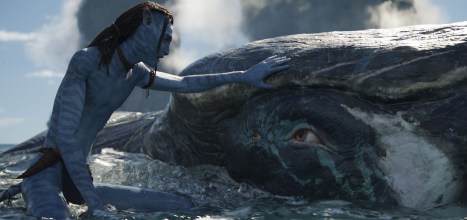
I published a new In the Frame piece at The Escapist this evening. With the looming release of Avatar: The Way of Water, it seemed like a good time to take a look at Cameron’s aquatic, which might be his most personal and intimate movie ever.
Cameron’s filmography is interesting and varied, working in a number of genres and registers across his career. However, he has a set of familiar preoccupations: water, industrialisation, militarism, environmentalist, parenthood, feminism and so on. However, it’s fascinating that one of the most consistent threads across Cameron’s filmography is an evolving idea of family. Cameron’s epics are often stories of families pulling themselves together in the face of crisis. The Way of Water is no different.
You can read the piece here, or click the picture below.
I published a new piece at The Escapist earlier in the week, a review of the upcoming Netflix show, The Witcher: Blood Origin. It is a live action four-episode miniseries spinning directly out from the streaming service’s fantasy hit, The Witcher.
Blood Origin has had a famously troubled production, with the show being cut down from six episodes to four in the editing bay, and undergoing fairly involved reshoots to work around this truncation. The results are as muddling and disheartening as this back story suggests. Blood Origin is a show that is filled with lore and backstory, but with no interest in its characters or their motivations. It’s a frustrating mess, a show that has clearly been hacked apart and reconstructed to hit a pre-determined runtime.
You can read the piece here, or click the picture below.
I am doing weekly reviews of Willow at The Escapist. They’ll be dropping every Wednesday evening while the show is on, looking at the legacy sequel as it progresses from one episode to the next.
It is too much to call Willow a deconstruction or a subversion of classic fantasy tropes. Certainly, the show is often a celebration of the trappings of high fantasy, and a much more old-fashioned take on the genre than contemporary shows like The Lord of the Rings: The Rings of Power or House of the Dragon. At the same time, the series is written with an understanding of the tropes and conventions of the genre, and a willingness to play with those ideas in a way that deepens and explores its own themes. Given that this is a show about divorce, Willow eagerly dives into familiar fantasy tropes about blood and lineage.
You can read the piece here, or click the picture below.
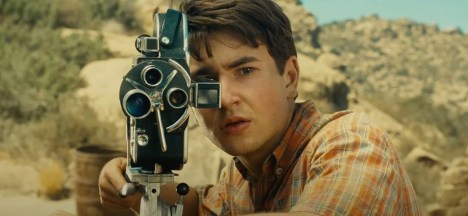
I published a new In the Frame piece at The Escapist yesterday evening. With the release of The Fabelmans on streaming today, it seemed like a good opportunity to explore Steven Spielberg’s loosely autobiographical family drama.
Spielberg’s recent films are preoccupied with his legacy, and the way in which his work has altered the cultural landscape. The Fabelmans is a much more personal movie, one that is more preoccupied with the art of filmmaking. The Fabelmans is a story about the power of the camera, and its ability to see things that are hidden from the human eye. The camera captures dreams, but it also reveals truths. The Fabelmans doesn’t romanticise this, but approaches with a palpable fear and dread.
You can read the piece here, or click the picture below.
We’re thrilled to be launching a fortnightly video companion piece to In the Frame at The Escapist. The video will typically launch every second Monday, and be released on the magazine’s YouTube channel. And the video will typically be separate from the written content. This is kinda cool, because we’re helping relaunch the magazine’s film content – so if you can throw a subscription our way, it would mean a lot.
This week, with cinemas in something of a fallow period between with releases of Black Panther: Wakanda Forever and Avatar: The Way of Water, it seemed like a good time to take a look at the complicated relationship within Hollywood, between streaming and theatrical releases. It has become increasing clear in recent years that streaming is not a viable replacement for the theatrical release model, but is instead largely dependent on it.
Hosted by Andrew Quinn and Darren Mooney, and this week with special guest Luke Dunne, The 250 is a weekly trip through some of the best (and worst) movies ever made, as voted for by Internet Movie Database Users. New episodes are released Saturdays at 6pm GMT.
This week, we’re continuing a seasonal tradition of talking about Star Wars movies: Ron Howard’s Solo: A Star Wars Story.
Growing up on the rough streets of Corellia, young and reckless orphan Han learned the hard way that he has to fend for himself. Escaping to a life in the Imperial Navy, Han stumbles into a daring heist. Joining a team of galactic outlaws, the young man finally finds his place in the universe. Crossing paths with new friends and old lovers, the dashing young rogue finds himself on course to become the man that he must be.
At time of recording, it was not ranked on the list of the best movies of all time on the Internet Movie Database.
I published a new piece at The Irish Independent this evening. With the looming release of Avatar: The Way of Water, it seemed worth taking a look at James Cameron’s approach to the sequel.
Over the past few years, it has become quite common for critics to argue that Avatar has no cultural footprint, that nobody can remember the names of its leads or it villains. This is interesting, because it offers a very modern conception of a “cultural footprint”, one that makes sense after decades of comic book movies have imprinted characters like Thanos and Doctor Strange on the public consciousness. Cameron isn’t releasing a blockbuster to compete with these films. Instead, he’s hoping that his sequel can make money by appealing to an older ideal of the cinematic experience.
You can read the piece here, or click the picture below.
I published a new In the Frame piece at The Escapist this evening. The year’s awards season has a whiff of decadence about it. Movies seem to be getting longer. Directors are making autobiographical movies about their own childhoods. There’s a fascination with tearing down old Hollywood myths.
Perhaps the most obvious example of this is the re-emergence of water tank movies, of expensive blockbusters set in and around water. After all, water is expensive and dangerous. More than that, there’s no real evidence that audiences are particularly enthused or excited by water, it’s simply something that costs a lot of money to do. Throughout Hollywood’s history, whenever the blockbuster industry drives itself into a heated frenzy, movies embrace the water. James Cameron has always been riding te crest of that particular wave.
You can read the piece here, or click the picture below.