Earthquake Bird certainly embraces its late eighties setting, providing a hearty intersection of two largely forgotten eighties genres: the erotic thriller and the familiar story of westerners lost in Japan.
To its credit, Earthquake Bird wears its influences on its sleeve. The film is executive produced by Ridley Scott under his own Scott Free production company, and the opening credits include a quick glimpse of Lucy Fly working as a translator on Scott’s own Black Rain. After all, that film was part of a larger cinematic movement in the late eighties and early nineties reflecting western anxieties over the expanding economic and cultural reach of Japan; Blade Runner, Die Hard, Rising Sun.
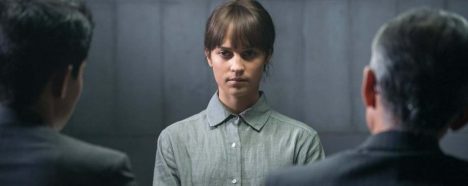
So far things are going interro-great!
Similarly, the basic premise of Earthquake Bird owes a lot to the simmering erotic thrillers that emerged at around the same time; films like Basic Instinct, Fatal Attraction, even Disclosure. In hindsight, it is surprising that Earthquake Bird can’t work in a small supporting role for Michael Douglas as an acknowledgement of these influences. Still, Earthquake Bird feels very much like a throwback in more than just its late eighties setting. It is a surprisingly nostalgic thriller. In its own way, it affirms the idea that Netflix exists as a home for the kind of films that don’t really make it to cinemas anymore.
The only problem with Earthquake Bird is that it all feels a little too familiar and a little too rote. Earthquake Bird hits all of the marks and rhythms of these sorts of films in a dutiful manner, but without any real energy or ingenuity. It seems content to serve as a straightforward example of these tropes and beats, rather than as a celebration or examination of them.

The life of Riley.
Filed under: Non-Review Reviews | Leave a comment »