• Following Us

  • Categories

  • Check out the Archives


  • Awards & Nominations

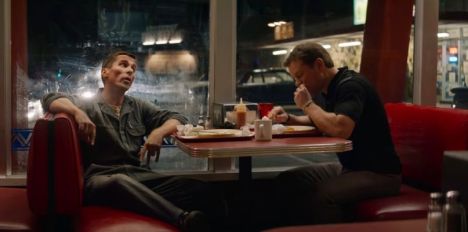
Non-Review Review: The Last Right

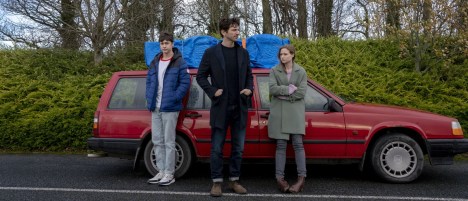
The Last Right is perhaps a little too driven by cliché and a little too heavy handed in its emotional beats, but it’s genuinely charming and benefits from a clever concept and an endearing cast.

To be fair, The Last Right runs into its problems in its first and third acts, in setting up and resolving its central dynamics. These problems flow largely from the fact that so many of details around the edge of the central premise of the film feel lifted from a collection of stock eighties American dramedies. Certain key elements of The Last Right feel like they came packed in an IKEA box ready for assembly, and so the movie’s introduction of and conclusion for those elements tends to feel rather rote.

Carry on…

However, The Last Right really kicks into gear once it has done that initial set-up, allowing its characters room to breath and interact with one another within the relatively safe but also free-form template of the classic road movies. Road movies largely live or die based on the chemistry of the cast and strength of the humour, and The Last Right works well on both counts. There’s a relaxed ease to The Last Right, a willingness to trust the actors and the characters to carry the bulk of the film.

The result of a trip with a few bumps along the way, particularly at either end of the journey. However, for most of the adventure, The Last Right is a pretty enjoyable ride.
Death drive.

Continue reading

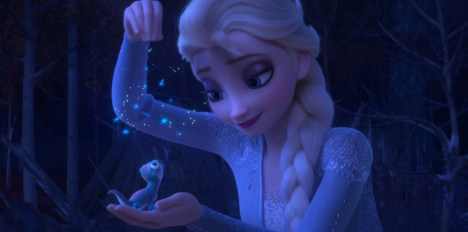
Non-Review Review: Frozen II

Frozen II is solid.

In fact, it might even be a little stronger than Frozen, on the whole. Of course, Frozen was the breakout Disney animated hit of the decade, crossing the one billion mark and turning Let It Go into a genuine pop phenomenon. However, Frozen always felt a little rough around the edges when compared to Disney’s other animated princess-centric movies of the decade; The Princess and the Frog, Tangled, Moana and maybe even Brave.

Pretty cool.

Frozen II arrives with a lot of the familiar problems of sequels. The original film was populated by characters who filled a story function, whereas sequels often have to create story functions to accommodate characters who are surplus to requirement. Kristof felt largely unnecessary in Frozen, but he feels particularly unnecessary in Frozen II. Similarly, the success of the original film often encourages sequels to dive deep into a conjured mythology, to over-explain something that requires no explanation. Frozen II does this with Elsa herself, trying too hard to explain her.

As a result, Frozen II suffers from some awkward pacing. It stutters and starts. It often gets slowed down checking in on familiar characters, or delivering reams of exposition for unnecessary back story. However, the irony of all this is that Frozen II has much more interesting things to say than Frozen, and is much more confident about saying them. Frozen II retreats from the logical conclusions of its strongest arguments, but it is still a surprisingly bold film for a sequel to one of the most successful children’s films ever made.

Lighten up.

Continue reading

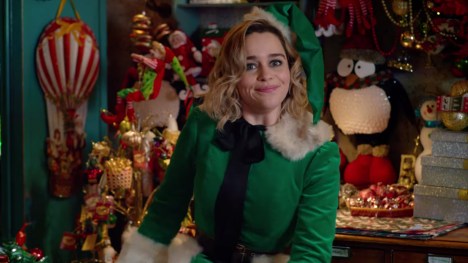
Non-Review Review: Last Christmas

Last Christmas certainly has its heart in the right place.

On paper, there’s a lot to recommend Last Christmas. Paul Feig is one of the most reliable comedic directors working today, and his work on films like Spy and A Simple Favour deserve consideration among the best comedies of the decade. Emilia Clarke is coming off an extended run as one of the two primary stars of genuine cultural phenomenon Game of Thrones, and has proven herself a likable romantic lead even in solid-if-unremarkable projects like Me Before You. Tony Golding has charisma to burn, as demonstrated by his supporting turn in Crazy Rich Asians.

Things are looking up.

Unfortunately, none of this really coheres as well as it should. Given the talent involved, this comedy should go down a festive treat. While it’s hardly a lump of coal, it is decidedly underwhelming. The problem isn’t a lack of surprises. After all, Last Christmas aspires to comfort rather than novelty. The problem is that Last Christmas is built around the assumption that it has the perfect festive surprise waiting for its eager and bright-eyed audience members to unwrap. Unfortunately, it vastly over-estimates how much some wrapping paper and bow can disguise a familiar outline.

Last Christmas feels far too pedestrian and far too predictable for what it is trying to do. There’s a potentially interesting premise here, but Last Christmas never really tries. It gives up the ghost too early.

Elf help.

Continue reading

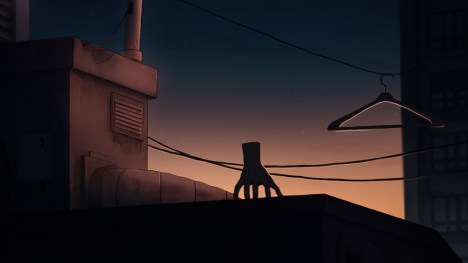
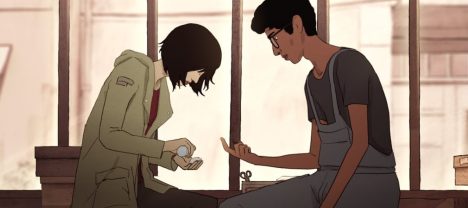
Non-Review Review: I Lost My Body

I Lost My Body is a stunning piece of animation.

In a Parisien hospital, a dismembered hand comes to life. Distracted and disoriented by memories of its previous life, it scrambles out of the fridge and out into the world. Making a daring escape from the inevitable fate of medical waste, this detached hand embarks on a journey across Paris. This adventure takes the body part from the roofs to the underground, through the gutters and into the air vents. It confronts rats and pigeons, but also encounters rare beauty and intimate insight. All of this is part of a primal urge to return to the body from which it was so cruelly severed.

Taking the matter in hand…

It is certainly an interesting and intriguing premise, and I Lost My Body lives up to the absurdity of that set-up. Jérémy Clapin’s animated film runs a tight eighty-one minutes, which means that it never overstays its welcome and that the central hook never has the opportunity to become distracting. I Lost My Body uses this absurd premise as a prism through which it might explore ideas of human connection, of the unlikely ways in which lives intersect and collide within the modern world. Some of its choices are inelegant and clumsy, but it never lacks ambition or insight.

I Lost My Body is a moving tale of what it’s like to feel truly disconnected.

Naofel me.

Continue reading

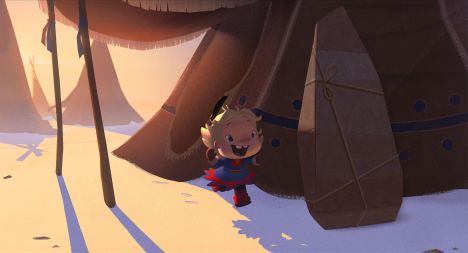
Non-Review Review: Klaus

Around midway through Klaus, the film’s title character has an introspective moment. The film’s protagonist, a wiry and self-interested postman named Jesper, has decided that Klaus need not settle for delivering the toys that he has already handcrafted. Instead, Klaus could fashion new toys for all the boys and girls of the local community. Klaus’ mood darkens. He stares off into middle distance. “I don’t make toys,” he tells Jesper, in an understated manner. After a beat, he clarifies, “Not anymore.”

It is a very strange moment for a family-friendly animated movie that promises a glimpse at the origin story of Christmas. It obviously hints at a dark and traumatic back story for the muscular woodsman. Klaus has experienced things. It is the children’s movie equivalent of the shell-shocked combat veteran, of Sylvester Stallone retreating from his failure at the start of Cliffhanger or Sergeant Powell having sworn off the use of his sidearm in Die Hard. What horrors could Klaus have experienced that would have made him stop designing adorable handcrafted toys for children?

Snow bad ideas.

It’s a very weird beat, one that feels all the weird for the way in which it tonally clashes with the more openly absurd slapstick elements of the plot or the occasional nods to contemporary pop culture. Klaus is a very odd film, which seems to have little idea of what it actually wants to be. It is a mishmash of themes and influences, awkwardly bouncing between various extremes and never settling on any one long enough to find a grove. It’s a film that really needed more time on the original story break and scripting phases, requiring a stronger vision of what exactly Klaus is supposed to be.

This is a shame, because Klaus looks absolutely gorgeous.

Making a play for the animation market.

Continue reading

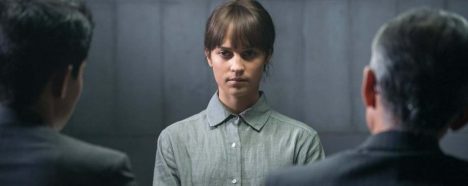
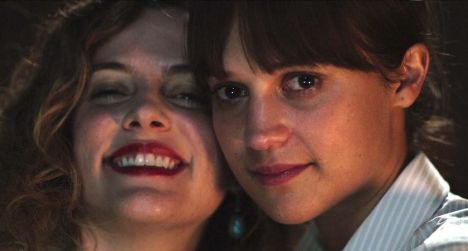
Non-Review Review: Earthquake Bird

Earthquake Bird certainly embraces its late eighties setting, providing a hearty intersection of two largely forgotten eighties genres: the erotic thriller and the familiar story of westerners lost in Japan.

To its credit, Earthquake Bird wears its influences on its sleeve. The film is executive produced by Ridley Scott under his own Scott Free production company, and the opening credits include a quick glimpse of Lucy Fly working as a translator on Scott’s own Black Rain. After all, that film was part of a larger cinematic movement in the late eighties and early nineties reflecting western anxieties over the expanding economic and cultural reach of Japan; Blade Runner, Die Hard, Rising Sun.

So far things are going interro-great!

Similarly, the basic premise of Earthquake Bird owes a lot to the simmering erotic thrillers that emerged at around the same time; films like Basic Instinct, Fatal Attraction, even Disclosure. In hindsight, it is surprising that Earthquake Bird can’t work in a small supporting role for Michael Douglas as an acknowledgement of these influences. Still, Earthquake Bird feels very much like a throwback in more than just its late eighties setting. It is a surprisingly nostalgic thriller. In its own way, it affirms the idea that Netflix exists as a home for the kind of films that don’t really make it to cinemas anymore.

The only problem with Earthquake Bird is that it all feels a little too familiar and a little too rote. Earthquake Bird hits all of the marks and rhythms of these sorts of films in a dutiful manner, but without any real energy or ingenuity. It seems content to serve as a straightforward example of these tropes and beats, rather than as a celebration or examination of them.

The life of Riley.

Continue reading

New Escapist Column! Rorschach, White Supremacy and “Watchmen”…

I published a new In the Frame piece at Escapist Magazine last Friday. One of the more interesting aspects of Watchmen has been the controversy that the series has demonstrated by looking at white supremacy head-on.

In particular, the show’s treatment of the legacy of Rorschach has been controversial to some fans, who have objected to the idea that his iconography would be adopted by a white supremacy group like the Seventh Kavalry. However, these concerns suggest a misreading of the graphic novel, which offers a very start view of Rorschach’s politics. Indeed, any close reading of Watchmen suggests it is almost inevitable that Rorschach would become a beacon for the sort of reactionary views that power the modern alt-right.

You can read the piece here, or click the picture below.

New Escapist Column! “The Shining” and the Perfect Haunted House…

I published a new In the Frame piece at Escapist Magazine last Friday. Because it was Halloween and because of the release of Doctor Sleep, it seemed like the perfect opportunity to take a look about at The Shining.

The Shining is my favourite horror movie ever. It is one of my favourite films ever. It is the rare piece of work that offers something new every single time I sit down to watch it. As I’ve thought more and more about it over the years, I’ve been drawn to the way in which the power of the Overlook is one of scale. It is big enough that it can serve as a fun house mirror to the anxieties of America itself, but also intimate enough that the familial anxieties of the Torrance family can play out within it. It is both large enough and small enough to work as the perfect haunted house.

You can read the piece here, or click the picture below.

Amazing.

Non-Review Review: Ford v. Ferrari (Le Mans ’66)

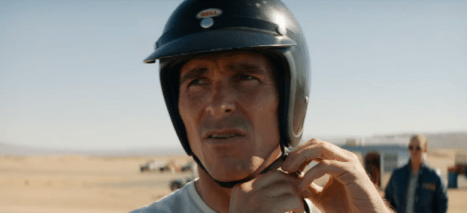
Ford v. Ferrari very much the Ford model of mid-budget adult-skewing awards fare.

It’s sturdy and reliable. It handles well. It also doesn’t have too many surprises under the hood. Ford v. Ferrari knows exactly what the audience wants from a film like this, and it often delivers right down to the shot. The camera is exactly where it needs to be, when it needs to be there – whether capturing the concerned expressions on a family nervously leaning in close to a radio or flying by the team manager as he watches his car cross the finish line on one of the last laps.

Food for thought.

It is easy to be cynical about all of this. Were somebody to approach Ford v. Ferrari cynically, they could argue that it is the product of a factory floor that is just as much a conveyor belt as those operated by Ford. However, there is a reason that this model of awards fare became an industry standard. Ford v. Ferrari constantly reminds its audience of the appeal underpinning this factory-built American craftsmanship. This sort of film was a staple of awards seasons for decades, and Ford v. Ferrari demonstrates just why that was.

Ford v. Ferrari is good, old-fashioned, crowd-pleasing awards fare.

Miles to go.

Continue reading

New Escapist Column! The Real Paradox at the Heart of the Post-“Judgment Day” Terminator Sequels…

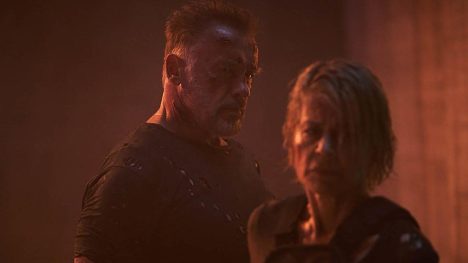
I published a new In the Frame piece at Escapist Magazine on Monday. This one is taking a look at Terminator: Dark Fate, the latest effort to produce a faithful and worthy sequel to Terminator 2: Judgment Day.

However, there’s an abiding irony to the four attempted sequels to James Cameron’s blockbuster classic. The four films all hope to position themselves as worthy successors to Judgment Day, while their very existence serves as a repudiation of its core themes. There is an inherent contradiction there, in that any attempt to honour or homage Judgment Day must – by its mere existence – invalidate the central thematic point. None of the four attempts to produce a workable sequel to Judgment Day have managed to square that particular circle.

You can read the piece here, or click the picture below.