• Following Us

  • Categories

  • Check out the Archives


  • Awards & Nominations

Non-Review Review: Klaus

Around midway through Klaus, the film’s title character has an introspective moment. The film’s protagonist, a wiry and self-interested postman named Jesper, has decided that Klaus need not settle for delivering the toys that he has already handcrafted. Instead, Klaus could fashion new toys for all the boys and girls of the local community. Klaus’ mood darkens. He stares off into middle distance. “I don’t make toys,” he tells Jesper, in an understated manner. After a beat, he clarifies, “Not anymore.”

It is a very strange moment for a family-friendly animated movie that promises a glimpse at the origin story of Christmas. It obviously hints at a dark and traumatic back story for the muscular woodsman. Klaus has experienced things. It is the children’s movie equivalent of the shell-shocked combat veteran, of Sylvester Stallone retreating from his failure at the start of Cliffhanger or Sergeant Powell having sworn off the use of his sidearm in Die Hard. What horrors could Klaus have experienced that would have made him stop designing adorable handcrafted toys for children?

Snow bad ideas.

It’s a very weird beat, one that feels all the weird for the way in which it tonally clashes with the more openly absurd slapstick elements of the plot or the occasional nods to contemporary pop culture. Klaus is a very odd film, which seems to have little idea of what it actually wants to be. It is a mishmash of themes and influences, awkwardly bouncing between various extremes and never settling on any one long enough to find a grove. It’s a film that really needed more time on the original story break and scripting phases, requiring a stronger vision of what exactly Klaus is supposed to be.

This is a shame, because Klaus looks absolutely gorgeous.
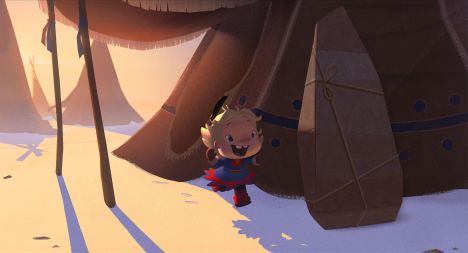
Making a play for the animation market.

Continue reading

New Escapist Column! “His Dark Materials” Could Only Exist in a Post-“Game of Thrones” World…

I published a new In the Frame piece at Escapist Magazine yesterday evening. This one took a look at the new BBC/HBO co-production of His Dark Materials, adapting Phillip Pullman’s fantasy epic for a new generation.

It feels appropriate that somebody should take another crack at Pullman’s novels now. New Line Cinema attempted to adapt The Golden Compass back in 2007, using the same model that they applied to The Lord of the Rings. However, that was never going to work; Pullman’s work was too subversive and too radical to ever fit the traditional cinematic narrative template. In contrast, this feels like the perfect moment for another adaptation, as Game of Thrones has pushed the boundaries in terms of television fantasy, both in what is possible and what audiences will accept.

You can read the piece here, or click the picture below.

Non-Review Review: Earthquake Bird

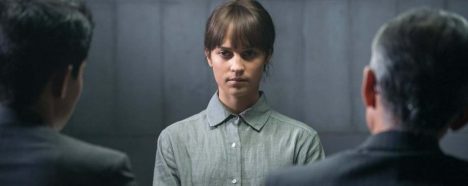
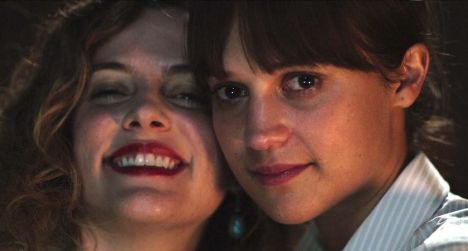
Earthquake Bird certainly embraces its late eighties setting, providing a hearty intersection of two largely forgotten eighties genres: the erotic thriller and the familiar story of westerners lost in Japan.

To its credit, Earthquake Bird wears its influences on its sleeve. The film is executive produced by Ridley Scott under his own Scott Free production company, and the opening credits include a quick glimpse of Lucy Fly working as a translator on Scott’s own Black Rain. After all, that film was part of a larger cinematic movement in the late eighties and early nineties reflecting western anxieties over the expanding economic and cultural reach of Japan; Blade Runner, Die Hard, Rising Sun.

So far things are going interro-great!

Similarly, the basic premise of Earthquake Bird owes a lot to the simmering erotic thrillers that emerged at around the same time; films like Basic Instinct, Fatal Attraction, even Disclosure. In hindsight, it is surprising that Earthquake Bird can’t work in a small supporting role for Michael Douglas as an acknowledgement of these influences. Still, Earthquake Bird feels very much like a throwback in more than just its late eighties setting. It is a surprisingly nostalgic thriller. In its own way, it affirms the idea that Netflix exists as a home for the kind of films that don’t really make it to cinemas anymore.

The only problem with Earthquake Bird is that it all feels a little too familiar and a little too rote. Earthquake Bird hits all of the marks and rhythms of these sorts of films in a dutiful manner, but without any real energy or ingenuity. It seems content to serve as a straightforward example of these tropes and beats, rather than as a celebration or examination of them.

The life of Riley.

Continue reading

155. The 250 Anniversary Special 2019

Hosted by Andrew Quinn and Darren Mooney, The 250 is a (mostly) weekly trip through some of the best (and worst) movies ever made, as voted for by Internet Movie Database Users.

This week, to mark the podcast’s three-year anniversary and passing the one-hundred-and-fifty-episode threshold, we decided to bring back as many of the guests from the third year as possible. So, joining Andrew and Darren on this podcast are:

We thought we’d take the opportunity to have a talk about the best and worst of this list, both in general and over the past year, and also take a nostalgic look back at the year 1999.

Continue reading

New Escapist Column! Rorschach, White Supremacy and “Watchmen”…

I published a new In the Frame piece at Escapist Magazine last Friday. One of the more interesting aspects of Watchmen has been the controversy that the series has demonstrated by looking at white supremacy head-on.

In particular, the show’s treatment of the legacy of Rorschach has been controversial to some fans, who have objected to the idea that his iconography would be adopted by a white supremacy group like the Seventh Kavalry. However, these concerns suggest a misreading of the graphic novel, which offers a very start view of Rorschach’s politics. Indeed, any close reading of Watchmen suggests it is almost inevitable that Rorschach would become a beacon for the sort of reactionary views that power the modern alt-right.

You can read the piece here, or click the picture below.

New Escapist Column! “The Shining” and the Perfect Haunted House…

I published a new In the Frame piece at Escapist Magazine last Friday. Because it was Halloween and because of the release of Doctor Sleep, it seemed like the perfect opportunity to take a look about at The Shining.

The Shining is my favourite horror movie ever. It is one of my favourite films ever. It is the rare piece of work that offers something new every single time I sit down to watch it. As I’ve thought more and more about it over the years, I’ve been drawn to the way in which the power of the Overlook is one of scale. It is big enough that it can serve as a fun house mirror to the anxieties of America itself, but also intimate enough that the familial anxieties of the Torrance family can play out within it. It is both large enough and small enough to work as the perfect haunted house.

You can read the piece here, or click the picture below.

Amazing.

Non-Review Review: Ford v. Ferrari (Le Mans ’66)

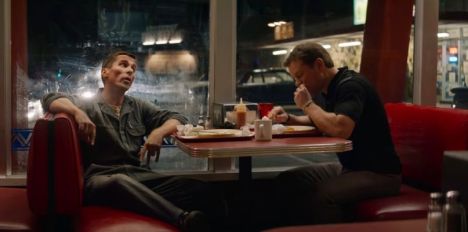
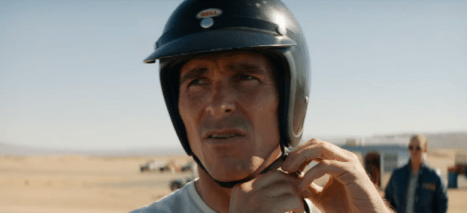
Ford v. Ferrari very much the Ford model of mid-budget adult-skewing awards fare.

It’s sturdy and reliable. It handles well. It also doesn’t have too many surprises under the hood. Ford v. Ferrari knows exactly what the audience wants from a film like this, and it often delivers right down to the shot. The camera is exactly where it needs to be, when it needs to be there – whether capturing the concerned expressions on a family nervously leaning in close to a radio or flying by the team manager as he watches his car cross the finish line on one of the last laps.

Food for thought.

It is easy to be cynical about all of this. Were somebody to approach Ford v. Ferrari cynically, they could argue that it is the product of a factory floor that is just as much a conveyor belt as those operated by Ford. However, there is a reason that this model of awards fare became an industry standard. Ford v. Ferrari constantly reminds its audience of the appeal underpinning this factory-built American craftsmanship. This sort of film was a staple of awards seasons for decades, and Ford v. Ferrari demonstrates just why that was.

Ford v. Ferrari is good, old-fashioned, crowd-pleasing awards fare.

Miles to go.

Continue reading

New Escapist Column! The Real Paradox at the Heart of the Post-“Judgment Day” Terminator Sequels…

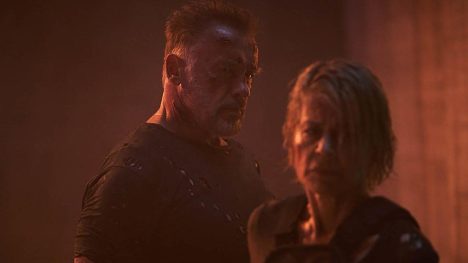
I published a new In the Frame piece at Escapist Magazine on Monday. This one is taking a look at Terminator: Dark Fate, the latest effort to produce a faithful and worthy sequel to Terminator 2: Judgment Day.

However, there’s an abiding irony to the four attempted sequels to James Cameron’s blockbuster classic. The four films all hope to position themselves as worthy successors to Judgment Day, while their very existence serves as a repudiation of its core themes. There is an inherent contradiction there, in that any attempt to honour or homage Judgment Day must – by its mere existence – invalidate the central thematic point. None of the four attempts to produce a workable sequel to Judgment Day have managed to square that particular circle.

You can read the piece here, or click the picture below.

Non-Review Review: The Nightingale

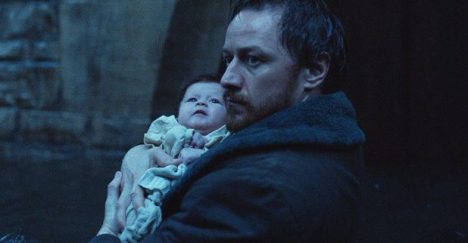
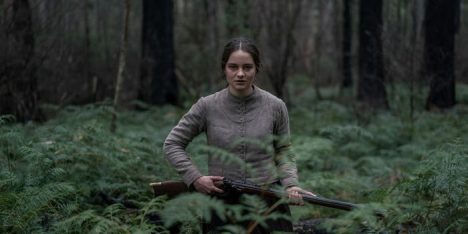
The Nightingale arrives as Jennifer Kent’s follow-up to The Babadook, and represents a slightly different sort of horror.

The Babadook was one of the best horror films of the decade, a creeping and unsettling look at a mother’s depression as she tried to work through her complicated feelings towards her own son. The Nightingale is something quite different, essentially a frontier western about a woman who sets out to avenge herself upon the British soldiers who inflicted a terrible suffering upon her and her family. As Clare tracks these men through the wilderness with an aboriginal guide named Billy, she finds herself confronted with the true nightmares of colonial Australia.

Eyes frontier.

The Nightingale belongs to a rich tradition of Australian westerns including modern classics like The Proposal, stories that play on the frontier myth and explore the country’s deeply troubled and unsettled history. Kent’s direction is tense and claustrophobic, refusing to ever let the audience look away from the horrors inflicted upon the continent by the European settlers who presumed to claim it as their own. The Nightingale is a bleak and cynical piece of film, one that is occasionally suffocating and dizzying in its portrayal of man’s capacity for inhumanity.

However, perhaps the most striking aspect of The Nightingale is how – for all its unflinching brutality and refusal to offer trite sentimentality – the film advances an argument for intersectionalism. As Clare journeys deeper and deeper into the heart of darkness, she discovers that the suffering inflicted upon her and her family is just one expression of a more primal and insidious violence, and that perhaps she has more in common with Billy than she might originally think.

Not so hot to trot.

Continue reading

New Escapist Column! How Disney Have Monetised Spoiler Culture…

I published a new piece at Escapist Magazine over the weekend. I’ve been thinking about this for a little while, since the release of Avengers: Infinity War and Avengers: Endgame, and it came bubbling to the surface with the announcement that the first episode of The Mandalorian would include “a dramatic Star Wars-universe spoiler in the first episode.”

This got me thinking about the way in which, more than any other mass media company, Disney have weaponised spoiler culture as a selling point, to create urgency among consumers and to use that to drive the market. They have also used it to shape the conversation, to control what can or cannot be said about their films and at what point. Spoiler culture has grant Disney a surprisingly strong control of the fandom-driven market. It’s an incredibly canny move from the company, one which has exploited a core part of current nerd culture.

You can read the piece here, or click the picture below.