• Following Us

  • Categories

  • Check out the Archives


  • Awards & Nominations

Star Trek: Voyager – Projections (Review)

This September and October, we’re taking a look at the jam-packed 1994 to 1995 season of Star Trek, including Star Trek: Deep Space Nine and Star Trek: Voyager. Check back daily for the latest review.

Projections is really the first episode of Star Trek: Voyager that feels like it is the right script coming from the right staff writer. At the start of the show’s first season, it seemed like writing assignments were handed out almost at random, with no real acknowledgement of the relative strength of any of the writers involved.

Brannon Braga is one of the best science-fiction high-concept writers in the history of franchise, but he was assigned the character-driven second episode Parallax and the issue-driven Emanations; Michael Piller’s personal strengths were always more firmly aligned with character development, so it felt strange to see him writing the time travel adventure Time and Again and the anomaly of the week in The Cloud.

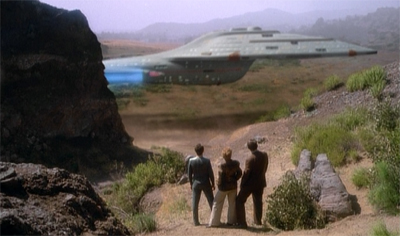
All by myself...

All by myself…

Pushing the boundaries of a writing staff is something worth doing – forcing various members of the team to ease themselves out of their comfort zone – but it felt counter-productive to do this during the first season of a new Star Trek show. After all, the first season is about putting the best foot forward, and many of the early scripts for the show feel like they were handed to the wrong writers during the development process.

With Projections, it feels like Brannon Braga finally has a Voyager script that plays entirely to his strengths as a writer. It is arguably his most character-driven script on the franchise to date, but it also anchored in a pretty fascinating existential dilemma. In many respects, it is a spiritual companion to Frame of Mind, a sixth season episode of Star Trek: The Next Generationpreoccupied with questions about what reality actually might be.
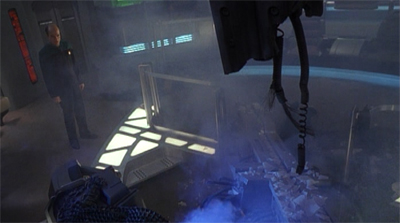
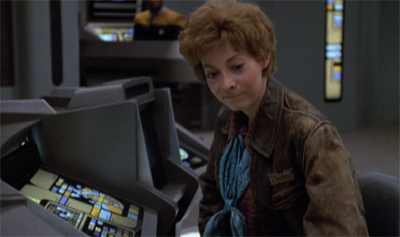
Everything falls apart...

Everything falls apart…

Following on from Heroes and Demons, Projections is only the second episode of Voyager to focus on the character of the Doctor. However, much like Heroes and Demons, it demonstrates the versatility of the character and the range of the actor. Projections is a very clever script that relies on its central character to really carry it across the line. At this point in Voyager‘s run, Robert Picardo seems to be one of the few members of the ensemble who could really pull it off.

The result is one of the (if not the) strongest episode of the show’s first two seasons – somewhat appropriate, given the way the show straddles the gap between the first and second seasons.
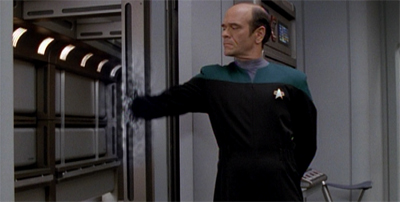
He's not all there...

He’s not all there…

Continue reading

Star Trek: Voyager – Initiations (Review)

This September and October, we’re taking a look at the jam-packed 1994 to 1995 season of Star Trek, including Star Trek: Deep Space Nine and Star Trek: Voyager. Check back daily for the latest review.

Broadcast as the second episode of the second season, Initiations was the first episode produced as part of the second season of Star Trek: Voyager. As three of the four shows carried over from the first season – Projections, Elogium and Twisted – were essentially budget-saving bottle shows, the plan was to shuffle some location-heavy episodes into the broadcast order to offer something a bit more exciting and engaging.

Initiations also marked the return of producer Michael Piller to the fold. Piller had left Voyager mid-way through the first season to work on another science-fiction show for UPN. After Legend was cancelled, Piller returned to work on Voyager and found himself presiding over a very troubled second season. The second season of Voyager would be the last time that Piller was actively involved in a season of Star Trek, and so it feels like a pretty momentous occasion for the franchise.

While not spectacular, and suffering from some lingering Kazon-related problems, Initiations is still an effective forty-five minutes of television.

Stargazing...

Stargazing…

Continue reading

Star Trek: Voyager – The 37’s (Review)

This September and October, we’re taking a look at the jam-packed 1994 to 1995 season of Star Trek, including Star Trek: Deep Space Nine and Star Trek: Voyager. Check back daily for the latest review.

The 37’s did not close out the first broadcast season of Star Trek: Voyager, as the producers had intended. The last episode produced in the first season run, it was held back in the schedule into the second season – a decision made by UPN to allow Voyager to get an early start the following autumn. Still, the decision to reposition The 37‘s as the premiere of the broadcast season is quite telling.

Airing ahead of the three episodes produced before it, and ahead of any episodes produced specifically for the second season, there’s a sense that the production team intend The 37’s to be an important episode. After all, the season premiere is just as important as the season finalé in the basic structure of a broadcast season. The finalé serves as a capstone for what has come before, while (hopefully) indicating what might follow. The premiere is a way of setting up what is yet to come.

We have lift-off...

We have lift-off…

So the positioning on The 37’s is interesting, because it indicates just how much the production team had invested in the episode. This is a big episode of Voyager, this is an important episode of Star Trek. As such, it makes for a completely unsatisfying experience. The 37’s isn’t a bad episode by any measure – it has a few interesting ideas and a few memorable elements – but it’s not ambitious. It doesn’t radically change Voyager, but it also doesn’t distil it. It doesn’t offer the sense of purpose lacking for morst of the first season.

The 37’s just sort of is. It’s an episode that would be functional shuffled into the middle of a season – a few episodes earlier or later than broadcast. However, it simply doesn’t work when scheduled into a high-profile slot, particular when it has been moved so consciously and so purposefully.

A second pilot?

A second pilot?

Continue reading

Star Trek: Deep Space Nine – Season 3 (Review)

This September and October, we’re taking a look at the jam-packed 1994 to 1995 season of Star Trek, including Star Trek: Deep Space Nine and Star Trek: Voyager. Check back daily for the latest review.

The third season of Star Trek: Deep Space Nine was a turning point for many reasons. The most obvious was that Star Trek: The Next Generation had gone off the air, meaning the first half of the third season was broadcast during a window where Star Trek: Deep Space Nine was the only Star Trek show on the air. The show was no longer the goofy kid brother to a much beloved mainstream television show. It was out in the syndication market place by itself.

More than that, though, Star Trek: Deep Space Nine was no longer the child of the franchise. With Star Trek: Voyager on the way, launched as the flagship of UPN, Deep Space Nine was left to its own devices for the first time since it was created. Voyager was the high-profile standard-bearer for the franchise, serving as the cornerstone of a new network. In contrast, Deep Space Nine chugged along in syndication, with the powers that be working overtime to bring Voyager to screen.

ds9-thesearchpart1a

In some respects, this was a tough time for Deep Space Nine. It was no longer the newest and freshest Star Trek. It was no longer the bright promising future of the Star Trek franchise. The novelty of having a second Star Trek show on the air had worn off. (Indeed, the decision to treat Voyager as the eighth season of The Next Generation was largely a response to how Deep Space Nine was not filling the niche.)

At the same time, the fact that Michael Piller and Rick Berman were focused on other projects meant that Deep Space Nine really came into its own during the third season. Ira Steven Behr had helped run the writers’ room towards the end of the third season of The Next Generation, and was the logical choice to take the reigns on Deep Space Nine. His influence on the show had been obvious since the beginning, becoming more pronounced after The Maquis.

ds9-defiant19

However, the third season saw Behr becoming the driving creative force on Deep Space Nine, a changing of the creative guard. Ronald D. Moore and Rene Echevarria joined the show from the staff of The Next Generation. Given all this drama behind the scenes, the third season was as chaotic as you might expect. There were all manner of production problems that haunted the third season, with a sense that Deep Space Nine was being produced by the seat of the producers’ pants.

Episodes tended to get shifted around in production order. Various scripts ended up produced under time constraints so tight that there was no opportunity to properly polish them before putting them in front of the camera. There were rumours that Colm Meaney might have been considering leaving;. Episodes had to be extended into two-parters at the last minute. The show had great ideas, but difficulty realising them. The season as a whole was rather oddly paced, plotted haphazardly. And yet, despite all this, the chaos felt necessary.

ds9-explorers28

Continue reading

Star Trek: Deep Space Nine – The Adversary (Review)

This September and October, we’re taking a look at the jam-packed 1994 to 1995 season of Star Trek, including Star Trek: Deep Space Nine and Star Trek: Voyager. Check back daily for the latest review.

The Adversary is a strange little episode. In many respects, barring the last line, it really doesn’t feel like a season finalé. While Star Trek: Deep Space Nine typically eschewed the season-ending cliff-hangers that came to define Star Trek: The Next Generation and Star Trek: Voyager, the last episode of a given year typically ended with a major shake-up to the status quo. They may not have ended with the promise “to be continued…”, but they usually carried a great deal of weight.

In contrast, The Adversary feels like a fairly standard episode of Deep Space Nine. It doesn’t radically alter anything. Although Odo’s last line hints at the shape of things to come, it’s not much more than what Lovok assured us in The Die is Cast. The episode is well-executed, well-constructed and it’s distinct enough from a standard Star Trek episode that it works, but The Adversary feels like it’s not really positioned to close out the year.

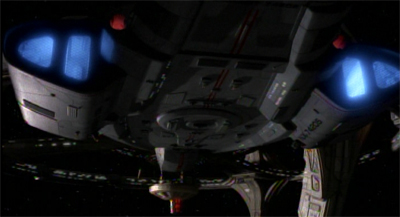
There's blood on the Defiant's floor...

There’s blood on the Defiant’s floor…

This is, of course, because it wasn’t intended to close out the year. The third season of Deep Space Nine was quite troubled. While not anywhere near as troubled as the third season of The Next Generation, it was a year where plans were constantly changing and scripts were frequently written on the fly. It seemed like the writers were constantly struggling against deadlines while trying to keep track of all the moving pieces.

Second Skin was filmed from little more than a first draft; Improbable Cause was extended into a two-parter at short notice. Scripts like The Abandoned looked like they needed a bit more work before being put in front of the camera. Shows like Meridian, Facets and Life Support seemed stitched together out of desperation. Indeed, The Adversary was produced at only a week’s notice. It’s to the credit of the episode – like Second Skin before it – that it holds up remarkably well.

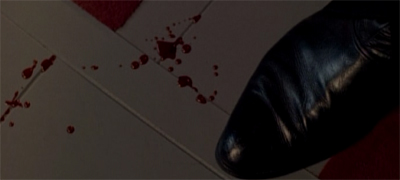
There won't be blood...

There won’t be blood…

Continue reading

Doctor Who: In the Forest of the Night (Review)

There are some things I have not seen. That’s usually because I’ve chosen not to see them. Even my incredibly long life is too short for Les Misérables.

On paper, In the Forest of the Night should be a highlight of the season. Frank Cottrell-Boyce is quite a sizeable “get” for the show, one of the most significant guest writers to work on Doctor Who in quite some time. Cottrell-Boyce is on the same level as Richard Curtis or Neil Gaiman, as far as “special guest writers” go. Coupled with the fact that this is the first time that the Twelfth Doctor has wandered into the “fairy tale” aesthetic that defined his predecessor, In the Forest of the Night should be a classic waiting to happen.

However, In the Forest of the Night never quite comes together as well as it should. At its best, it riffs on concepts already very thoroughly and thoughtfully explored in Kill the Moon. At its worst, it feels ill-judged and an awkward fit for the characters in the show. In the Forest of the Night comes at the end of a highly successful stretch of late-season episodes all credited to writers working on Doctor Who for the first time; it is quite endearing that In the Forest of the Night is the only stumbling block; ironically arriving at the latest possible moment.

Tyger, Tyger...

Tyger, Tyger…

Still, there is some interesting material here. It is also a sly and affectionate homage to the work of William Blake. Blake was famed author, illustrator and poet. In the Forest of the Night takes its title from a line in Blake’s most famous poem Fearful Symmetry. There are points where the episode goes out of its way to reference that work. The Doctor makes a reference to the year of its most popular publication, assuring the assembled audience that “a tiny little bit of 1795 still alive inside of it.” There is a tiger; there is burning bright.

However, these allusions towards Blake ultimately lead In the Forest of the Night into some very questionable ideas. William Blake was haunted throughout his life by visions and hallucinations. He saw things that were not real, but which informed and inspired his work. In the Forest of the Night tries to borrow from this aspect of Blake’s life in its characterisation of Maebh, a young girl with visions. It is a story that falls right back on the rather clichéd narrative about how medicating people suffering with mental illness is in effect destroying what makes them special or unique.

... burning bright.

… burning bright.

Continue reading

The Flash – Some Things You Can’t Outrun (Review)

So, I’m considering reviewing this season of The Flash, because the pilot looks interesting and I’ve always had a soft spot for the Scarlet Speedster. I’m also considering taking a storyline-by-storyline trek through the 1987-2009 Flash on-going series as a companion piece. If you are interested in reading either of these, please let me know in the comments.

The Flash is a show that can withstand a certain amount of cheese. After all, it is a television series about a character dressed in a red jumpsuit who can run faster than the speed of sound. There is going to be a certain amount of cheesiness baked into the premise by default. City of Heroes and Fastest Man Alive managed to skirt along the edge of the show’s threshold of cheesiness. Some Things You Can’t Outrun just jumps right on over that threshold.

Some Things You Can’t Outrun is the show’s first misfire. It’s the first time that the show has been written by anybody other than Andrew Kreisberg & Geoff Johns, and the first time it has been directed by anybody other than David Nutter. It feels like there’s something of a learning curve here, as Some Things You Can’t Outrun doesn’t work on multiple levels. The show seems to take forever to get going, is hampered by a fairly weak guest star, and weighed down by cringe-inducing dialogue.

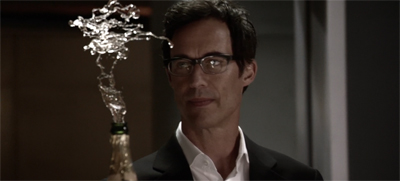
Let's not pop the champagne that fast...

Let’s not pop the champagne that fast…

Balancing cheesiness and earnestness will by one of the biggest challenges to The Flash, as the show has to figure out how to strike the best balance between the inherent goofiness of the character and the demands of a prime-time network drama show. City of Heroes and Fastest Man Alive seemed to suggest that the show had already got a good grip on this delicate equilibrium. Unfortunately, Some Things You Can’t Outrun struggles to be light-hearted without being cheesy, and earnest without being angsty.

There is a sense that the show has hit its first speed bump.

A gas time...

A gas time…

Continue reading

The Flash (1987-2009) #5-6 – Speed McGee/Super Nature (Review)

So, I’m considering reviewing this season of The Flash, because the pilot looks interesting and I’ve always had a soft spot for the Scarlet Speedster. I’m also considering taking a storyline-by-storyline trek through the 1987-2009 Flash on-going series as a companion piece. If you are interested in reading either of these, please let me know in the comments.

Half-way through its first year, The Flash is still a mess.

It’s easy enough to see what writer Mike Baron is trying to do, but nothing is really gelling together. In theory, The Flash is the story of a twenty-year-old kid who is trying to fill his mentor’s shoes. It’s about a hero who has only just passed from his teenage years into adulthood, and trying to navigate all the problems that come with that. The intent is quite obvious here – to draw in readers who had been alienated by the somewhat generic (and perhaps even “dull”) perception of Barry Allen.

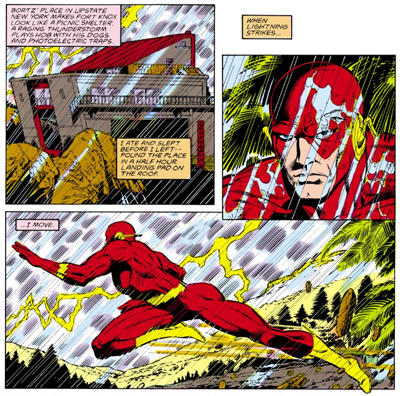
"Hm. This is always much more atmospheric when Batman does it."

“Hm. This is always much more atmospheric when Batman does it.”

This is an approach that clearly owes a lot to Marvel’s reinvention of the superhero genre, and it’s fairly easy to read Mike Baron’s Wally West as an attempt to update the superhero archetype established by Peter Parker for the eighties. Wally is a bit more grounded and real than his predecessor, with a bit of an edge. He finds himself navigating issues and personal problems that Barry Allen never had to worry about.

Unfortunately, the series can’t quite make this work. For every step forwards, there is an awkward step backwards. Every time it seems like The Flash might have a good personal hook into the world of Wally West, it falls back on generic superhero clichés that seem to have been ad-libbed into the script.

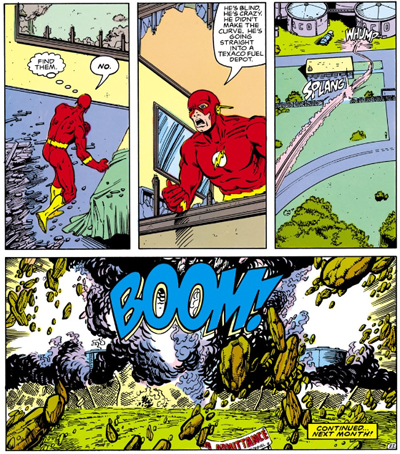
"Talk about an explosive relationship."

“Talk about an explosive relationship.”

Continue reading

Jameson Cult Film Club: Friday the 13th, Part II

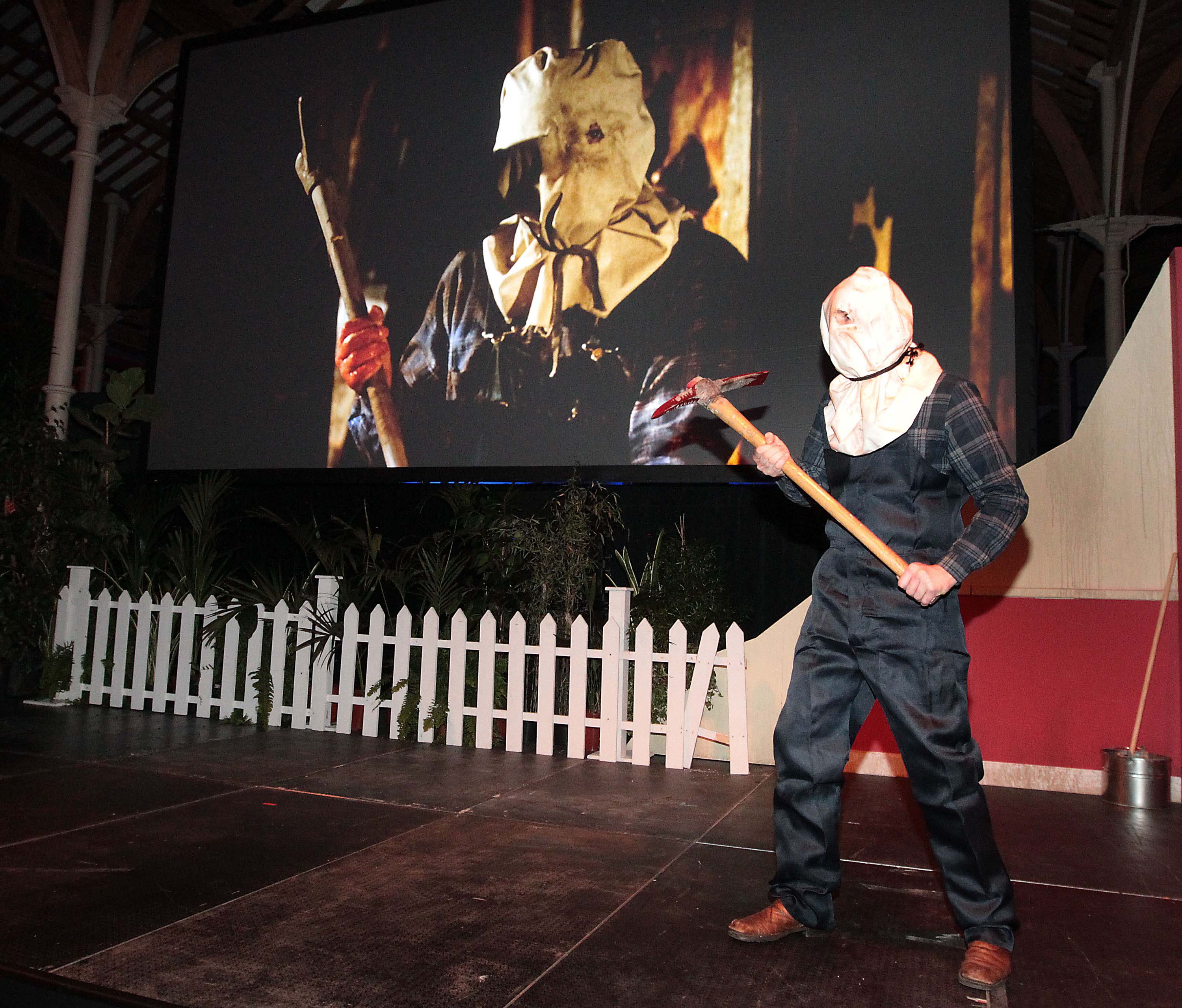
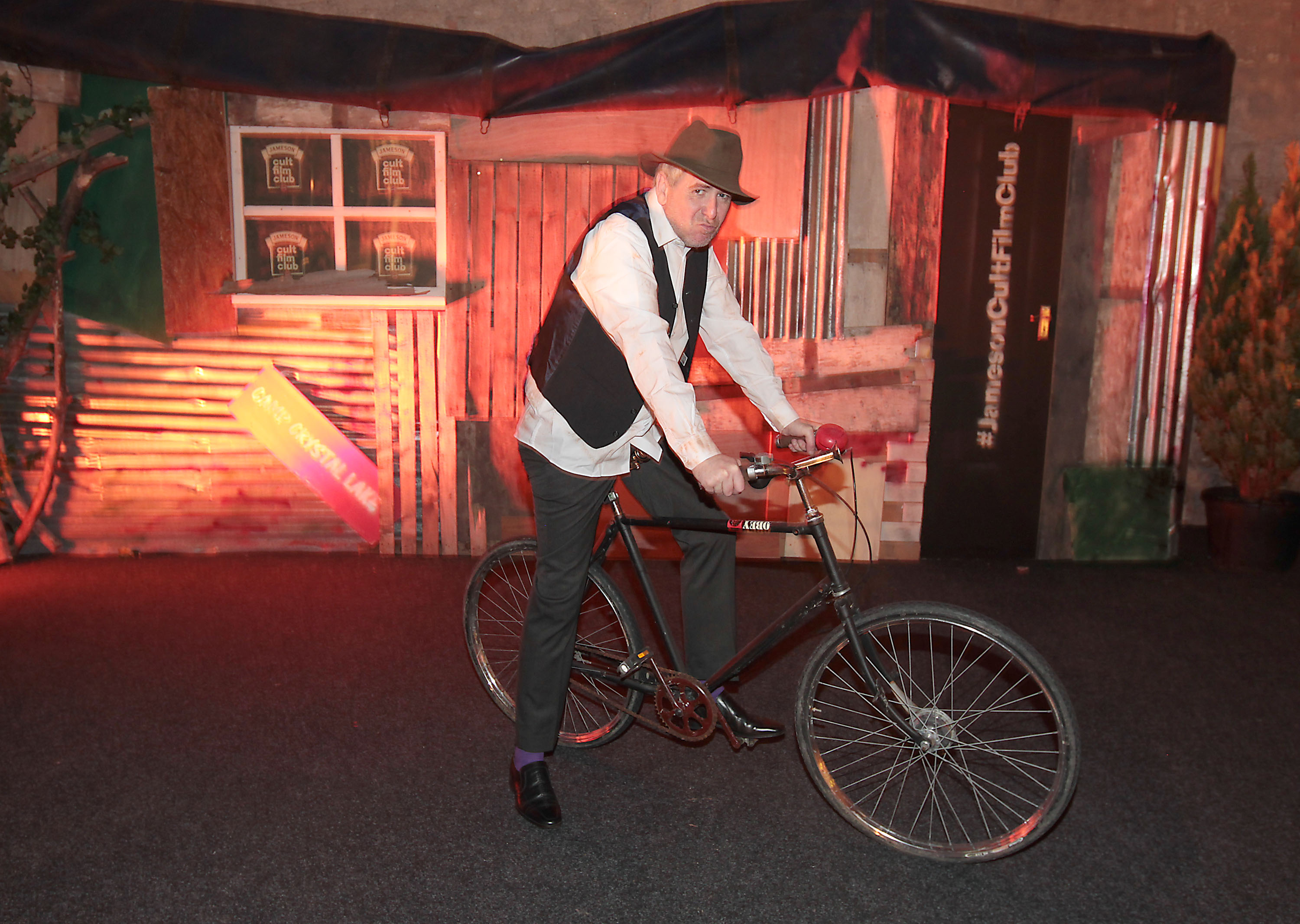
In many ways, Friday the 13th, Part II is an interesting choice for a Jameson Cult Film Club event. Traditionally, these special screenings have tended to focus on films that are broadly agreed to be popular classics – films as diverse as Jaws, Alien, Fight Club, The Blues Brothers and Die Hard. There is a very solid argument to be made that Friday the 13th, Part II is the odd film out here.

It is an early eighties slasher film, one with very few nuances. It is a grimy, gritty horror thrown together very quickly to cash in on the success of the of the original film – it is very much channelling better and more successful horrors like Psycho or Halloween. The movie’s defining feature is a ruthless pragmatism, a willingness to do anything to get a jolt from the audience.

Jameson Cult Film Club 78 (1)

As such, Friday the 13th, Part II is a controversial choice. It is a film that is even subject to considerable debate within the fandom of Friday the 13th. Is it one of the weaker films in the series? Is it one of the stronger? There is a sense that Friday the 13th, Part II is more open to debate and discussion than many of the films screened as part of the Jameson Cult Film Club cycle.

However, the fact that Friday the 13th, Part II is such an off-centre choice is refreshing. It affords the event a considerable freedom With Halloween approaching, the goal seems to have been to do a slasher movie in the Jameson Cult Film Club style, and Friday the 13th, Part II works very well in that context.

Jameson Cult Film Club 58

Continue reading

Star Trek: Deep Space Nine – Facets (Review)

This September and October, we’re taking a look at the jam-packed 1994 to 1995 season of Star Trek, including Star Trek: Deep Space Nine and Star Trek: Voyager. Check back daily for the latest review.

Facets in more than a little muddled. It’s an episode that is all over the place. It’s a script that doesn’t seem to know what it wants to be, leaning in one direction and then another. The episode’s big plot point isn’t dropped until half-way through, and there are any number of points where the script offers a feint towards a plot that never quite develops. As befitting a story called Facets, this is an episode with quite a few different (and often conflicting) sides.

It’s a disjointed little story, and perhaps an effective demonstration of just how much trouble the producers were having with Dax as a character. And yet, despite all this, Facets works surprisingly well. This is likely down to the fact that – like Playing God and arguably Blood Oath before it – it feels like a Dax story that is as interested in the character as it is in the concept.

A little piece of herself...

A little piece of herself…

Continue reading