• Following Us

  • Categories

  • Check out the Archives


  • Awards & Nominations

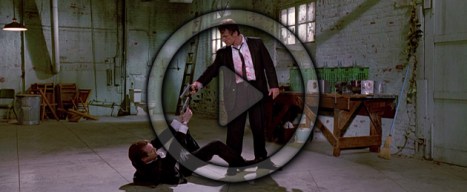
93. Reservoir Dogs (#76)

Hosted by Andrew Quinn and Darren Mooney, The 250 is a (mostly) weekly trip through some of the best (and worst) movies ever made, as voted for by Internet Movie Database Users. New episodes are released every Saturday at 6pm GMT, with the occasional bonus episode thrown in.

This time, Quentin Tarantino’s Reservoir Dogs.

Following a disastrous botched jewellery heist, what remains of a criminal gang meets at an abandoned warehouse. Unsure of who to trust and unable to determine what went wrong, these violent men quickly turn on one another while navigating a complex web of shifting loyalties.

At time of recording, it was ranked the 76th best movie of all-time on the Internet Movie Database.

Continue reading

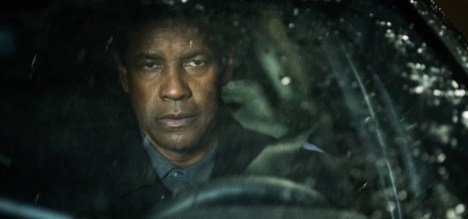
Non-Review Review: The Equaliser 2

At one point in The Equaliser 2, Robert McCall is listening to a radio forecast of a storm front sweeping through the north east of the United States.

“It’s coming in slow,” the meteorologist explains. “It’s taking it’s time.” In theory, so is The Equaliser 2. The storm is itself a metaphor for both the film and its protagonist, a force of nature descending upon the characters with a slow and steady certainty. The Equaliser 2 is a film that is very consciously taking its time, the script structured in such a way as to prioritise mood and ambiance over plot and pacing. The Equaliser 2 is meant to seem a stately and poetic meditation on violence and the men who commit it. At least in theory.

Yeah, we don’t know why it isn’t called The Sequeliser either.

It is clear what writer Richard Wenk and director Antoine Fuqua are trying to do over the course of the film’s two-hour-and-nine-minute runtime, building a mounting sense of dread towards a cathartic release. However, there is something deadly unsatisfying in this. The Equaliser 2 is not nearly clever enough nor intricate enough to sustain that more relaxed pace. What should be profound is instead belaboured, what should be considered is instead clumsy. Plot threads are broached and disappear. The one that reach their conclusion arrive long after the audience.

The Equaliser 2 forsakes the grotty do-it-yourself brutality of its predecessor, aspiring towards something moving and insightful. Unfortunately, all of that gets lost in a haze. The storm passes overhead, and it seems unlikely that anybody would even notice.

A storm is coming.

Continue reading

Luke Cage – I Get Physical (Review)

Luke Cage is engaged with the idea of celebrity.

To be fair, it is perhaps the only Marvel Netflix series that could explore this particular theme. After all, Daredevil is about a vigilante who trades in fear and operates primarily at night. Jessica Jones is about a self-hating alcoholic who is constantly on the verge of imploding. Iron Fist is so mired in cultural appropriation that it is impossible to imagine the series pulling off the theme in a manner that wouldn’t make the show worse. The Punisher is afraid to acknowledge what its hero actually is.

In contrast, Luke Cage is anchored in a central character who is essentially a neighbourhood celebrity. Soul Brother #1 demonstrates how Luke has imposed himself on Harlem, his actions tracked through an application, his merchandise sold in the barbershop, his image graffitied on walls. In Straighten It Out, he hands out his contact details, with instructions to call him if there is an emergency. In Can’t Front On Me, it is made clear that the local community know that they can reach out to him in person at the barbershop in case of emergency.

However, what is most striking about the handling of celebrity within Luke Cage is not just that it deals with the idea of Luke as a celebrity, but that it then uses Luke in order to interrogate how society treats its celebrities and how popular culture hungers for the fall just as excitedly as they cheered for the rise.

Continue reading

Luke Cage – Wig Out (Review)

The second season of Luke Cage engages with the idea of masculinity in a number of interesting ways.

This is an interesting choice on a number of levels. Most obviously, the idea of exploring masculinity within the framework of a Marvel Netflix show should (in theory) belong to Jessica Jones. With the character of Kilgrave, it was the streaming service’s first female-led superhero series that marked out the idea of masculinity as a concept worth exploring within the framework of a superhero narrative. However, the second season of Jessica Jones is very engaged with the idea of female relationships, whether friendly or familial.

In doing so, Jessica Jones may have passed the theme on to the second season of Luke Cage. This makes sense on a number of levels. Most superficially, Luke Cage was actually introduced as a recurring guest star on the first season of Jessica Jones, and so ideas about masculinity are clearly woven into the character’s core identity. Beyond that, there is some value in Luke Cage in exploring the idea from a different perspective. After all, Luke Cage is a series with a male heroic lead. Its approach to the theme of masculine identity would be radically different.

As such, the second season of Luke Cage is perfectly positioned to explore notions of masculine identity.

Continue reading

Star Trek: Voyager – Memorial (Review)

Memorial is a great example of Star Trek: Voyager doing a generic Star Trek story.

The episode has a very basic premise that allows for the construction of a science-fiction allegory, the kind of storytelling associated with the franchise dating back to early adventures like The Devil in the Dark or Errand of Mercy. Despite its unique premise and set-up, Voyager had largely embraced the archetypal mode of Star Trek storytelling in its third season. A lot of Voyager episodes feel very broad and very generic, and could easily be adapted for another series – whether inside or outside the franchise.

The real devil in the dark.
Spoiler: It’s us.

There any number of episodes that are not rooted in the specific premise of Voyager, that could easily have been reworked or reinvented for another crew at another point. The Chute was a harrowing story about the horrors of mass incarceration and its capacity to turn people into animals. Nemesis was a meditation on killology, in the way that militaries turn soldiers into killing machines. Scientific Method was a treatise on the horrors of animal testing. Random Thoughts was paranoia about “political correctness gone mad” translated into forty minutes of television.

Memorial belongs to a very specific subset of these episodes, something of a bridge between the more generic Star Trek storytelling to which Voyager aspires and a slightly more specific area of thematic interest. Voyager is a series very much engaged with the idea of memory and history, perhaps befitting the Star Trek series that straddles the twentieth and twenty-first century. Episodes like Remember, Distant Origin and Living Witness are all archetypal Star Trek stories, but they are built around ideas of particular interest to Voyager.

The past never remains buried.

As the title implies, Memorial belongs to that very specific subset of episodes. It is easy to imagine a version of Memorial starring James Tiberius Kirk, Jean-Luc Picard, Benjamin Lafayette Sisko or Jonathan Beckett Archer. It is a generic Star Trek episode that could work with any crew, perhaps meaning something slightly different in each context. (On Star Trek: Deep Space Nine, it would be an “O’Brien must suffer!” episode. In fact, Hard Time is quite close.) However, it is an episode that engages overtly with ideas that are of great interest to Voyager.

Memorial is about the importance of memory and history, even in a world where time seems to have lost all meaning.

Standing watch over history.

Continue reading

Non-Review Review: Maze Runner – The Death Cure

Maze Runner: The Death Cure feels like a movie that has arrived several years too late, a belated epilogue to the young adult boom.

The Death Cure is the last in the trilogy, the culmination of a journey that began with The Maze Runner in 2014. By that point, the young adult adaptation boom was already winding down. The Twilight Saga – Breaking Dawn, Part II had been released two years earlier, and Harry Potter and the Deathly Hallows, Part II had been released the year before that. There was a clear sense that The Maze Runner was starting when everybody else was ending.

“So, it turns out that the Death Cure is… not dying. Whudda thunk it?”

Of course, there were still faint signs of life in the genre when the series began, but those sparks have largely been extinguished. The Hunger Games: Mockingjay, Part II was released the year after The Maze Runner. One year later, The Divergent Series: Allegiant underperformed to such a degree that it has been suggested that the series might be resolved on television. Even in the context of The Death Cure, there is a sense that the production team understand the fatigue; there is no over-extended duology to bring the series to a close; no lingering Part II.

The Death Cure is mostly an efficient film, one that keeps moving well enough for the bulk of its two-hour-and-twenty-two-minute runtime, although the bloat eventually becomes too much in the final act. There is something very functional about The Death Cure, a sense that everybody involved the film – and every character within the film – has adopted a “let’s get stuff done” attitude towards the production. There is all the expected angst, betrayal, insecurity and hesitation expected of a young adult novel, but surprisingly little wallowing in those emotions.

After initial trials proved unsuccessful and disappointing third quarter returns, WCKD moved on to producing “The Death Treatment.”

The result is something of a mixed blessing. Very few young adult adaptations had the benefits and strengths that defined the Harry Potter or Hunger Games franchises. Those two heavy-weight franchises had the luxury of several built-in advantages denied to many of their imitators; the strong ensemble cast, the compelling source material and the distinctive-within-limits voice. The Death Cure seems cognisant of its limitations, and so structures itself in a way to avoid exposing them too readily and too often.

However, this efficiency hinders The Death Cure. The film only rarely stumbles, and never falls flat on its face. However, it never manages to soar either.

Runner, runner.

Continue reading

46. Ah-ga-ssi (The Handmaiden) – This Just In (#247)

Hosted by Andrew Quinn and Darren Mooney, and this week with special guests Grace Duffy and Graham Day, This Just In is a subset of The 250 podcast, looking at notable new arrivals on the list of the 250 best movies of all-time, as voted for by Internet Movie Database Users.

This time, Park Chan-Wook’s Ah-ga-ssi.

Continue reading

Iron Fist – The Mistress of All Agonies (Review)

Inevitably, being a street-level superhero show that owes a huge stylistic debt to Daredevil, Iron Fist inevitably wades into the whole “thou shalt not kill” side of superheroics.

Matt Murdock has spent the better part of two seasons wrestling with that same question. In the first season, he agonised over the question of whether he should kill Wilson Fisk, a criminal who was otherwise above the law. This angst informed episodes like Nelson v. Murdock and The Path of the Righteous. It was a reasonably solid plot line that worked as well as could be expected because it was rooted as much in Charlie Cox’s performance and Matt Murdock’s Catholicism as in any large moral or legal framework.

Knife to see you…

However, Matt Murdock revisited the question with less success during the second season. Confronted with Frank Castle’s lethal methods of crime fighting and an undead ninja cult, Matt found everything was up for debate. The series did not handle the dilemma with any real sense of grace. Frank Castle constructed a ridiculously elaborate moral dilemma in New York’s Finest, while Matt Murdock seemed to confess that the Punisher’s methods worked in .380. One of the most tone deaf sequences in the series had Frank Castle kill a bad guy so Matt would be spared.

Iron Fist puts it own spin on the age-old debate of vigilante morality. In keeping with the general tone of the series, the debate is lazy and clumsy, ultimately resolved through the same sort of tidy deus ex machina that got Danny proof of identity in Rolling Cannon Thunder Punch and control of his company in Eight Diagram Dragon Palm. It is not satisfying storytelling.

Supervillains understandably have fewer moral qualms about killing.

Continue reading

Star Trek: Voyager – Meld (Review)

This September and October, we’re taking a look at the 1995 to 1996 season of Star Trek, including Star Trek: Deep Space Nine and Star Trek: Voyager. Check back daily for the latest review.

Meld is a masterpiece. It is the best episode of Star Trek: Voyager to date. There is perhaps a reasonable argument to be made that it is one of the best episodes that the series ever produced. It is, in many respects, one of the strongest and most compelling exploration of themes that have been bubbling around in the background since Caretaker, offering a more thoughtful and insightful exploration of the nineties culture of fear and anxiety than anything involving the Kazon. It is certainly the best use of Tuvok that the show managed in its seven year run.

Meld is an episode about violence, in its many forms. It is a story about the horrors and arbitrariness of unprovoked violence, but also about the cycles of violence that such actions can create. In many respects, Meld is a more scathing criticism of the death penalty than Repentance, the seventh season episode explicitly written as a death penalty allegory. Unlike many of the surrounding episodes, Meld actually manages to make good use of the show’s Delta Quadrant setting to heighten the dramatic stakes.
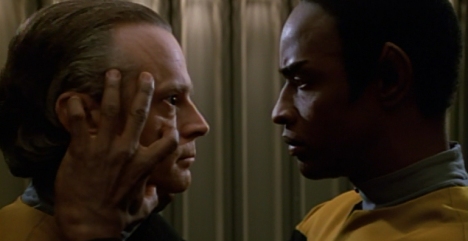
"Where's your head at?"

“Where’s your head at?”

In a way, Meld represents a collision of the franchise’s past and future. Meld may be the last truly great Star Trek script written by Michael Piller, the writer who helped to define the modern iteration of the franchise with his work on the third season of Star Trek: The Next Generation. At the same time, it is also Mike Sussman’s first story credit on the franchise; Sussman would go on to join the show’s writing staff in its final season and would be one of the few writers to serve a full four seasons on Star Trek: Enterprise.

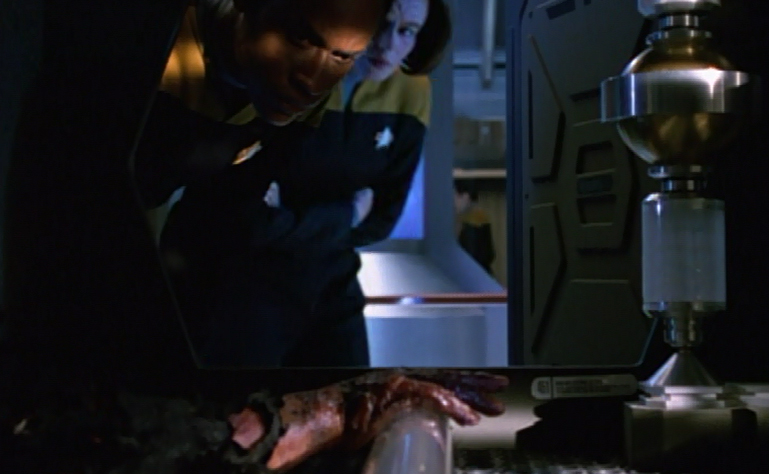
While the script for Meld is exceptionally well-written, the episode is elevated by a combination of factors. Cliff Bole does great work in bringing a very unconventional Star Trek episode to life. Meld could be seen as a continuation of the second season’s b-movie charms. Following on from the robot wars of Prototype and the body horror of Threshold, Meld plays like a Star Trek serial killer thriller. Bole’s directorial choices are consciously stylised, with delightful little touches like the band of light across Tuvok’s eyes when the body is discovered.
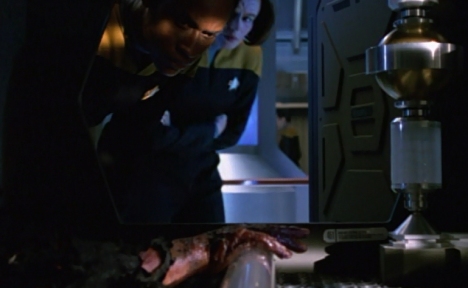
"Funny. I though Braga murdered Darwin last week."

“Funny. I thought Braga murdered Darwin last week.”

The episode also benefits from two mesmerising central performances from guest star Brad Dourif and Tim Russ. Russ was always one of the more under-utilised members of the Voyager ensemble, particularly when his “obligatory emotionally detached character” role was usurped by Seven of Nine in the fourth season. It is a shame, as Russ has a great deal of fun channeling Nimoy in his portrayal of the franchise’s first full-blooded Vulcan regular. Tuvok (and Russ) deserved more attention than the show afforded him.

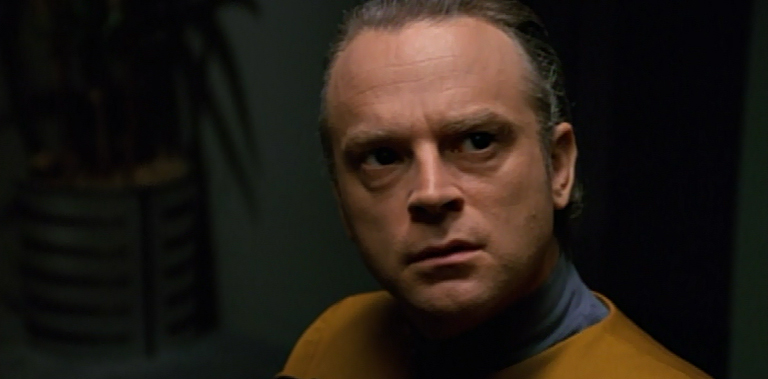
That said, it is Brad Dourif who steals the show here. Lon Suder is one of the most fascinating guest characters in the history of the Star Trek franchise, and perhaps the only recurring character member of the Voyager crew who made any impression. A lot of that is down to the novelty of a fundamentally violent character in a Starfleet uniform, but Dourif is absolutely brilliant in the part. Dourif might just be the best guest star ever to appear in Voyager, and one of the franchise’s all-time greats.

Beta(zoid) male.

Beta(zoid) male.

However, perhaps the most striking aspect of Meld is the way that it feels very much of its time; it is an episode that firmly engages with a cultural context around Voyager. So much of Voyager seems lost in some sort of weird science-fiction neverland where the fifties and sixties never ended that a well-produced episode that feels of its time is a rarity. Meld is an episode that would feel strange ten years earlier or ten years later, but one which aligns perfectly with the wider context of 1996.

It is a overdue triumph from the Voyager team.

Smile!

Smile!

Continue reading

Night Stalker – The Five People You Meet in Hell (Review)

This January, to prepare for the release of the new six-part season of The X-Files, we’re wrapping up our coverage of the show, particularly handling the various odds and ends between the show’s last episode and the launch of the revival.

The Five People You Meet in Hell makes it quite clear that Night Stalker is not going to have an easy life. (As it turned out, the show was not to have a particularly long one, either.)

The Five People You Meet in Hell was not originally intended to be the second episode of the show. The original plan had been to broadcast Into Night as the second episode of the season. However, the network shifted the broadcast order, opting to air The Five People You Meet in Hell in second place and bury Into Night much later in the season. In fact, Into Night would not be among the six episodes of Night Stalker to air on ABC; the show would be cancelled before the production team would get a chance to broadcast the show.

Eye see...

Eye see…

The reason for the shift is quite obvious. Into Night is not a great episode of television, but it is one that aligns quite neatly with what Night Stalker is supposed to be; it opens the mummification of two office workers and goes from there. In contrast, The Five People You Meet in Hell is much more generic. Sure, it involves mind control and psychic projection, but it is a much blander piece of television. The Five People You Meet in Hell is very much Night Stalker as a forensic procedural with paranormal elements than an accurate representation of the show.

Shifting the broadcast order around in order to prioritise The Five People You Meet in Hell suggests that the network is not entirely comfortable with the show they have commissioned. Two episodes into the first season, that is not an ideal signal to be sending.

A stab in the dark...

A stab in the dark…

Continue reading