• Following Us

  • Categories

  • Check out the Archives


  • Awards & Nominations

356. Ghost (#—)

Hosted by Andrew Quinn and Darren Mooney, and this week with special guests Jenn Gannon and Jason Coyle, The 250 is a weekly trip through some of the best (and worst) movies ever made, as voted for by Internet Movie Database Users. New episodes are released Saturdays at 6pm GMT.

So this week, Jerry Zucker’s Ghost.

Sam and Molly live a seemingly idyllic existence in New York city. Sam is an investment banker, Molly is a sculptor. However, a freak accident disrupts their seemingly perfect lives, leaving the pair separated across the mortal plane. Can the two find a way to reconnect across the void and can Sam finally telly Molly what she truly means to him before it’s too late?

At time of recording, it was not was ranked on the list of the best movies of all time on the Internet Movie Database.

Continue reading

353. Halloween: The Curse of Michael Myers – All-o’-Ween (#—)

Hosted by Andrew Quinn, Darren Mooney and Joey Keogh, this week with special guest Luke Dunne, The 250 is a weekly trip through some of the best (and worst) movies ever made, as voted for by Internet Movie Database Users. New episodes are released Saturdays at 6pm GMT.

This year, we are running a season looking at the films in the Halloween franchise. So this week, Joe Chappelle’s Halloween: The Curse of Michael Myers.

It has been years since Michael Myers mysteriously disappeared from police custody with his niece, Jamie Lloyd. In that time, both have found themselves in the custody of a mysterious cult. When Jamie escapes with her newborn son, Michael is unleashed as well. Haddenfield is unprepared for the madness coming towards it. The town’s fate lies in the hands of Michael’s psychologist Samuel Loomis, Loomis’ superior Terrence Wynn and one of Michael’s survivors, Tommy Doyle.

At time of recording, it was not ranked on the list of the best movies of all time on the Internet Movie Database.

Continue reading

New Escapist Column! On How “Scream 4” Took the Franchise’s Self-Awareness to Its Logical Endpoint…

We’re launching a new column at The Escapist, called Out of Focus. It will publish every Wednesday, and the plan is to use it to look at some film and television that would maybe fall outside the remit of In the Frame, more marginal titles or objects of cult interest. With the upcoming release of Scream VI, it seemed like a good opportunity to take a look back at the criminally underrated Scream 4.

The last film in the franchise to be written by Kevin Williamson or directed by Wes Craven, Scream 4 exists in a weird space. It is separated from the two film either side of it by more than a decade, the only point in time where the franchise wasn’t coming out on a regular basis. However, it’s a movie that feels very firmly ahead of its time. It was released years before Star Wars: Episode VII – The Force Awakens and David Gordon Green’s Halloween, but it feels in conversation with a wider culture caught in a feedback loop of Gen X nostalgia.

You can read the piece here, or click the picture below.

New Escapist Column! On the Recursive Nostalgia of “That ’90s Show”…

I published a new piece at The Escapist yesterday. With the recent release of That ’90s Show on streaming, it seemed like a good opportunity to delve into the show’s very interesting nostalgia.

Part of what is so fascinating about That ’90s Show is that layers of nostalgia that permeate it. It is not simply a show nostalgic for the nineties. It is a show that is itself nostalgic for the nostalgia of the nineties. It’s a conscious effort to resurrect the multi-camera sitcom, a classic institution of American television that has become something of a cultural artifact. It’s also a show that is less interested in its own nineties setting than it is in indirectly channelling the nostalgia that that show felt for the seventies. It’s a hall of mirrors.

You can read the piece here, or click the picture below.

311. The Iron Giant – Bird Watching 2022 (#250)

Hosted by Andrew Quinn and Darren Mooney, and this week with special guests Deirdre Molumby and Graham Day, The 250 is a weekly trip through some of the best (and worst) movies ever made, as voted for by Internet Movie Database Users. New episodes are released Saturdays at 6pm GMT.

This week, we’re kicking off a season focusing on the work of one particular director: Brad Bird’s The Iron Giant.

Hogarth Hughes is a lonely kid coming of age in fifties Maine, when he comes across a very strange creature living in the local wilderness: a gigantic metal man who has crashed on this planet from another world. The two strike up a deep and abiding bond. However, Hogarth very quickly discovers that other forces are also trying to track down his new friend.

At time of recording, it was ranked 250th on the list of the best movies of all time on the Internet Movie Database.

Continue reading

285. Trainspotting (#173)

Hosted by Andrew Quinn and Darren Mooney, and this week with special guest Emma Kiely, The 250 is a weekly trip through some of the best (and worst) movies ever made, as voted for by Internet Movie Database Users. New episodes are released Saturdays at 6pm GMT.

So this week, Danny Boyle’s Trainspotting.

Using heroin to numb the pain of simply existing, Mark Renton drifts through a series of episodic adventures in nineties Edinburgh. Renton and his friends find themselves caught up in a web of sex, violence, drug abuse and existential malaise, grappling with challenges both large and small as they struggle to make it out the other side of their experiences.

At time of recording, it was ranked 173rd on the list of the best movies of all time on the Internet Movie Database.

Continue reading

188. The Truman Show (#177)

Hosted by Andrew Quinn and Darren Mooney, and this week with special guest Kurt North, The 250 is a (mostly) weekly trip through some of the best (and worst) movies ever made, as voted for by Internet Movie Database Users.

This time, Peter Weir’s The Truman Show.

Truman Burbank has the perfect life. He has a good job, a loving wife, a charming best friend. He lives an idylised existence, one where he wants for nothing. However, a series of freak occurences jolt Truman out of his blissful world and force him to confront a potentially horrifying reality: what if everything that he knows is just an elaborate lie?

At time of recording, it was ranked 177th on the list of the best movies of all time on the Internet Movie Database.

Continue reading

New Podcast! Primitive Culture #74 – Star Trek: Voyager as a Nineties Time Capsule

Over the Christmas Break, I had the pleasure of sitting down with the wonderful Duncan Barrett and talking about Star Trek: Voyager. Duncan is a historian, and I’ve actually quoted some of his work on the blog in the past. He hosts Primitive Culture, a show wherein the hosts discuss certain historical-related items of interest in the Star Trek canon.

Duncan noticed that I had recently finished a massive rewatch of Voyager, leading me to write around 750,000 words on the show’s seven seasons. With the twenty-fifth anniversary of Voyager coming up, he suggested that it might be fun to talk about the third live-action Star Trek spin-off in a bit of depth, looking at the series as a snapshot of a particular cultural moment. More than any of its sibling series, Voyager perfectly encapsulated the American experience of the nineties, tapping into the decade’s sensibilities and its anxieties.

The result was a fun (and involved) discussion, and you can listen to it below or directly via Primitive Culture‘s homepage on trek.fm.

Continue reading

Non-Review Review: Gemini Man

Gemini Man is a weird and unashamed nineties action movie throwback, for both better and worse.

This is baked into the film. The poster capitalises on the star power that drives the film. Alluding to the clone drama that drives so much of the plot, the poster to Gemini Man credits lead actor Will Smith twice above the line. In an era where the very concept of the movie star is trapped in a seemingly terminal decline, Gemini Man literally doubles down on its star branding. More than that, there is something surreal in the choice of Will Smith as that leading man, an actor whose career is largely defined by nineties hits like Enemy of the State, Men in Black or Bad Boys and whose career has floundered in recent years.

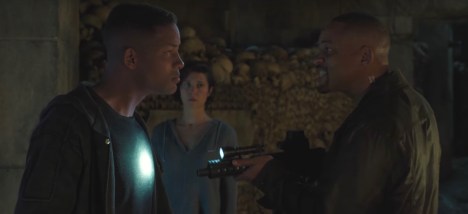
Face to Face/Off.

Gemini Man leans into this nostalgia. The film’s central hook lies in confronting Will Smith with a younger version of himself. Will Smith plays retiring assassin Henry Brogen, who finds himself hunted by a much younger version of himself. De-aged into the uncanny valley, the younger version of Will Smith consciously evokes the actor’s golden age. The film is set in 2019, but the computer-augmented action star feels lost in time; even his hairstyle and facial hair recall the actor’s appearance in The Fresh Prince of Bel Air rather than anything that might suggest a young man growing up in the twenty-first century.

While there’s a lot to unpack in the film, there’s also something disappointingly lifeless about Gemini Man. One of the film’s big action beats take place in a creepy catacomb, in what feels like an encapsulation of the film. Gemini Man never seems truly alive, instead feeling like a facsimile of another, older style of blockbuster.

Out of scope.

Continue reading

“I’m Ready to Communicate With You Now”: The Millennial Anxieties of “The Sixth Sense”, and Feeling Alone in the City of Brotherly Love…

This Saturday, I’ll be discussing The Sixth Sense on The 250, the weekly podcast that I co-host discussing the IMDb’s Top 250 Movies of All-Time. However, I had some thoughts on the film that I wanted to jot down first.

What do you think these ghosts want when they talk to you? I want you to think about it, Cole. I want you to think about it really carefully. What do you think they want?

Just help.

That’s right. That’s what I think too. They just want help, even the scary ones. I think I might know a way to make them go away.

How?

Listen to them.

The Sixth Sense is a remarkable film, for many reasons.

These days, The Sixth Sense is perhaps best known for its central twist. The film’s powerhouse emotional ending has become a pop cultural touchstone, anchoring jokes in everything from Fifty First Dates to the viral video sensation Jizz in my Pants. Of course, this also complicates the legacy of The Sixth Sense by serving as ground zero for director M. Night Shyamalan’s subsequent dependence upon these sorts of twists in movies like The Village or The Happening. Nevertheless, The Sixth Sense has endured in the popular memory as one of the rare twist-driven films that stands up to repeat viewings.
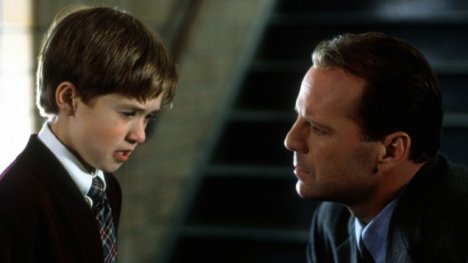
A Cole’d open.

However, it is much more than that. Even beyond that, The Sixth Sense is a lavish production that looks beautiful. Of course, Shyamalan’s ego has done his reputations few favours, from his own cameo as a writer-messiah in The Lady in the Water to his role in a Sci-Fi Channel documentary The Buried Secret of M. Night Shyamalan to the famous Newsweek cover crowning him “the next Spielberg.” Still, The Sixth Sense is visually stunning. Although it is tempting to think of The Sixth Sense as a “small” movie by modern standards, it was actually produced on a budget of $40m.

Rewatching The Sixth Sense twenty years later, it is amazing how much of the film’s visual storytelling lingers. Shyamalan might not have been the next Spielberg, but he had a wonderful eye for composition; that shot of a red balloon drifting up the inside of a spiral staircase, those eerie sequences of Malcolm and Cole wandering through a surprisingly quiet Philadelphia, even the conversations at that church with Cole towering over Malcolm from the balcony as he plays with his toy soldiers.
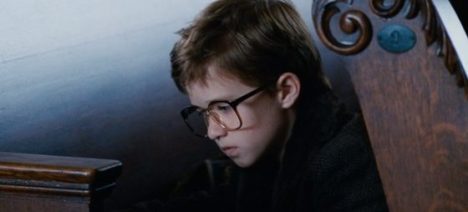
Pew pew!

However, even more than all of that, The Sixth Sense remains the rare film that is both specifically rooted in its cultural moment and profoundly universal. The story that drives The Sixth Sense is surprisingly straightforward – helpfully encapsulated in Cole’s trailer-friendly assertion that he sees “dead people.” However, Shyamalan understands that ghost stories are about more than just the recently deceased. Ghost stories translate a sense of longing and regret, of disconnect and isolation. The Sixth Sense is fundamentally a story about how difficult it is to meaningfully communicate in the modern world, with or without a pulse.

The Sixth Sense is a story of existential ennui, wrapped up in a set of late nineties anxieties.
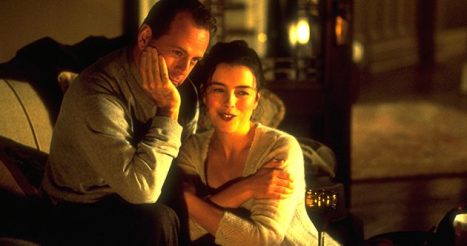
M. Night Shyamalan had to eat Crowe on his next few films.

Continue reading