• Following Us

  • Categories

  • Check out the Archives


  • Awards & Nominations

Dublin Film Critics Circle Awards, 2017

It’s the most wonderful time of the year!

Snow! Christmas! Terrible but enjoyable music! End of year “best of” lists!

I’m a member of a couple of critics’ organisations, so we’ll be releasing a couple of these lists upon which I voted. I’ll also hopefully be releasing my own top ten as part of a Scannain end-of-year podcast some time next week.

In the meantime, the Dublin Film Critics Circle have released their end of year awards. Thrilled to be a part of the group, who are voting on films released in Ireland during the calendar year of 2017. As such, it will be a different pool of films than the Online Film Critics Society awards.

A massive thanks to the wonderful Tara Brady for organising the awards this year, balloting members and collating results.

Anyway, without further ado…

Continue reading

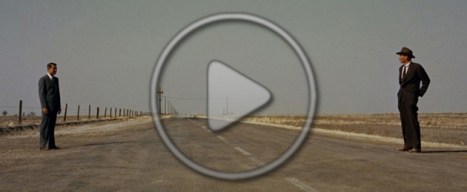
55. North by Northwest (#74)

Hosted by Andrew Quinn and Darren Mooney and this week with special guest Niall Murphy, The 250 is a (mostly) weekly trip through some of the best (and worst) movies ever made, as voted for by Internet Movie Database Users. New episodes are released every second Saturday at 6pm GMT, with the occasional bonus episode between them.

This time, Alfred Hitchcock’s North by Northwest.

Alfred Hitchcock’s espionage caper finds Madison Avenue advertising executive Roger Thornhill caught up in a series of unlikely events involving the assassination of a prominent official and the attempt to recover some precious microfilm. Over his head and out of time, Roger ill have to think on his feet to stay one step ahead.

At time of recording, it was ranked the 74th best movie of all time on the Internet Movie Database.

Continue reading

Characters in Search of an Ending: Prestige Television and Literary Adaptation

The possibilities of prestige television seem limitless.

This is obvious just looking at the creative talent embracing the opportunities of the medium. Director Jane Campion observed, “The really clever people used to do film. Now, the really clever people do television.” It seems fair. Woody Allen has a television series at Amazon. Nicole Kidman and Reese Witherspoon headlined Big Little Lies. Cary Fukunaga directed all eight episodes of the first season of True Detective, starring Woody Harrelson and Matthew McConaughey. Quentin Tarantino reflected, “If ever there’s been a chance for somebody to truly do a filmed novel, it’s in this area.”

There is a sense that prestige television has come to occupy the space that used to be given to mid-tier mid-range movies, thrillers and character studies that were too small to compete with the blockbusters but also weren’t an easy fit for the traditional Oscar season. Television is arguably the place to go for smart character-driven narratives telling adult stories in a restrained and considered manner. It is an interesting shift that has in some ways redefined the relationship between film and television.

Part of this has seen an increased emphasis on book-to-television adaptations. In the past, the default path for audio-visual adaptations of successful novels has been from the page to the silver screen, cinematic takes on iconic and memorable pieces of fiction. After all, countless Best Picture winners have been adaptations of popular novels or short stories; No Country for Old Men, Million Dollar Baby, The Lord of the Rings: Return of the King, The English Patient, Forrest Gump, Silence of the Lambs. A lot of blockbusters are inspired by comic books or young adult novels.

However, as televisual storytelling has grown more complex and ambitious, producers and writers have increasingly looked to the storytelling opportunities afforded by the smaller screen. Television offers more space for writers and directors to tell their stories, to expand out novels with complex mythologies or epic scope. The gaps that had existed between film and television, in terms of budget and talent, are rapidly closing. It is entirely possible for a televisual adaptation of a beloved novel to have a list of credible writers and directors, and recognisable on-screen talent.

Still, as much as this shift might represent an important step forward in the development of television as an artform, it also illustrates some of the problems that still exist in how producers approach the medium. While television shows can do a lot of things that novels can do, they still struggle in one respect. Television shows have yet to truly embrace the power of brevity and the weight of a proper ending.

Continue reading

Dunkirk and Issue of Genre Legitimacy

The release of Dunkirk has been interesting in many ways.

Most obviously, it seems to confirm Christopher Nolan as a brand name unto himself, managing to open a blockbuster war movie with no stars to speak of to impressive box office results in the middle of July. The film has been widely acclaimed, both by critics and by movie-goers; it scores well on Rotten Tomatoes, Metacritic, IMDb and CinemaScore. There is already talk of a massive Oscar push for the film, with reports of Academy screenings being so packed that additional screenings had to be scheduled.

However, beneath all of this success, there is an interesting narrative forming. There is a recurring suggestion that Dunkirk is not just a great piece of cinema from an incredibly talented director, but that it in some way represents a maturing of Nolan’s talent. Some of the critical narrative of Dunkirk has been framed almost as a cinematic “coming of age” story for Christopher Nolan, as if the veteran forty-six-year-old film maker is finally delivering on potential that has been teased over the past seventeen years.

In a not-untypical comment, David Fear at Rolling Stone reflected, “Everyone knew he had a mastery of the medium. Dunkirk proves he knows how to use it say something.” At The Guardian, Andrew Pulliver suggested that Nolan had finally earned one of the stock comparisons that had been (misguidedly) following him for most of his career, “With Dunkirk, Nolan may at last be able to walk the Kubrick walk.” The implication seems to be that Nolan’s previous nine films were all creative dry runs, cinematic confectionery suggesting (but never delivering on) true artistic talent.

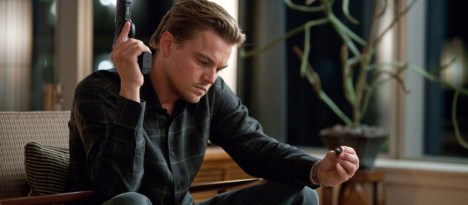
This is, of course, complete nonsense. Nolan arguably established himself as a bona fides film maker with Memento, which was an impressive theatrical debut. Memento was structurally ambitious, thematically rich, and exceptionally clever. Nolan followed that up with Insomnia, a remake of a Scandinavian thriller. He then segued into a big-budget reimagining of the Batman mythos with Batman Begins, The Dark Knight and The Dark Knight Rises, interspacing them with his own projects of interest, The Prestige, Inception and Interstellar.

Whatever an audience member might make of individual films on that resume, and some are undoubtedly better than others, it seems quite clear that Nolan has been doing good work for a long time. Dunkirk is not a break in the pattern. It is in many ways a continuation and extrapolation of his earlier work. It is not so much a quantum leap forward in terms of technique, but simply a nudge in a different direction. So, why is Dunkirk being treated as a vital moment in Nolan’s career? It seems likely because Dunkirk belongs to a much more respectable genre than its Nolan stablemates.

Continue reading

No, Christopher Nolan is not “the Next Stanley Kubrick”

Another Christopher Nolan film, another round of stock comparisons.

To his credit, Nolan sparks genuine critical debate and discussion online, even if there’s an uncomfortable whiff of sensationalism to the coverage. Is Christopher Nolan responsible for everything that is wrong with Hollywood right now? (Spoiler: No. Not at all. Not even slightly.) Is Christopher Nolan a pompous and privileged douchebag for wanting audiences to see his film in the format that he has intended? (Spoiler: While he could probably be a bit more mindful that one size doesn’t always fit all, dude has a right to have a preference about how his work is consumed.)

To be fair, these provocative and confrontational articles at least provide a nice reprieve from the listacles and fan service that define so much of the discourse about modern summer movies. How does [minor character] set up the future of [major franchise]? How many easter eggs did you identify from in [franchise blockbuster]? One of the advantages of Hollywood’s modern franchise-driven mindset is that it makes ranking [entire franchise] articles popular and recyclable. It is exhausting. At least a new Nolan film tends to mean new director-centric debates.

That said, there is one comparison that tends to get rehashed quite a bit. Almost every time that Christopher Nolan releases a feature film, film writers who really should know better stop to ask whether Christopher Nolan is the next Stanley Kubrick. Andrew Pulver addressed the comparison in The Guardian, providing a nice piece of symmetry to an article he wrote almost a decade ago. Christopher Priest, author of The Prestige, made the case only a few years ago.

It is a fairly obvious argument. Both Nolan and Kubrick are directors who worked at a remove from the press, tending to live and work outside the studio system while developing their ideas. They both seem to straddle the Atlantic, both having spent a lot of time living in England and working in America. Neither director ever seemed entirely comfortable talking to the press or doing the publicity circuit. Both produce films that are very stylishly produced, often tending to keep the audience at a slight remove from their characters that some may consider “cold.”

However obvious the comparison might be, it relies on a fundamental misunderstanding of both directors.

Continue reading

Non-Review Review: War for the Planet of the Apes

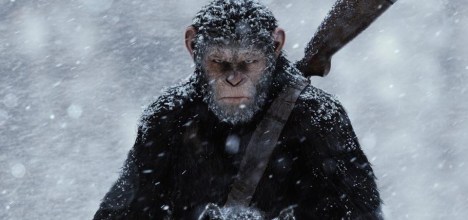
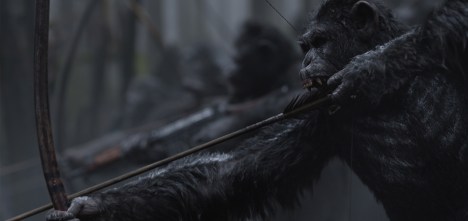
The most evocative image in War for the Planet of the Apes is the United States flag, with an alpha and an omega scrawled across it.

This thematic juxtaposition is repeated throughout the film. The antagonistic human forces at the heart of War for the Planet of the Apes use the symbols as a logo. When they recruit apes into their ranks, they brand them with the symbol. When the audience is invited into their camp around half-way through the film, an oil tanker is marked the graffiti “the end and the beginning.” In some ways, this is a reflection on War for the Planet of the Apes as the final movie in a prequel trilogy, but it is also a much stronger thematic statement.

Cool customer.

At the heart of War for the Planet of the Apes is the idea that the apocalypse is not scary because it represents the end of something, but that the collapse of civilisation is so unnerving because it represents a clear slip backwards. The apocalypse threatens mankind with the idea that people are nothing more than animals, no better than their ancestors when push comes to shove. The apocalypse suggests that everything that has been accomplished can be lost in an instant. In the end, people retreat back to what they truly were, and it is horrifying.

War for the Planet of the Apes is not so much a movie about the collapse of a civilisation as a grim argument that the very idea of civilisation is transient and illusory.

Take a bow.

Continue reading

No Country For Old Man Logan: The Apocalyptic New West…

The American frontier is a formative myth, one that permeates popular culture.

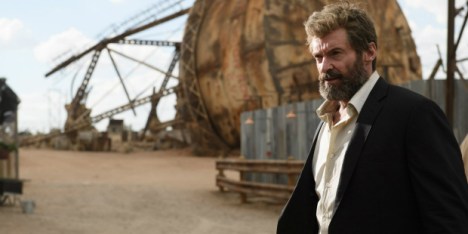
The cowboy is an American icon, as much as the gangster or the superhero. The archetype embodies a set of ideals that inform the country’s perception of itself. Indeed, part of the charm of Logan is seeing that archetype evolution rendered explicit. If The Wolverine posited its central character as a lost samurai who had evolved into a superhero, then James Mangold’s follow-up positions the character as a lost cowboy in a western wasteland. The third and final film in this series has been described as “Unforgiven, with claws.” It is a label that fits. A brand that sticks.

Logan even offers its closing judgment on the character by quoting directly from Shane, a very literal example of the superhero genre quoting from westerns. Mutants are not just an evolution of mankind, they also represent a storytelling evolution. Of course, the western has been evolving for quite some time. Many prognosticators announced the death of the western some time in the seventies, perhaps coinciding with the loss of faith in American institutions (and perhaps mythology) coinciding with the twin blows of Watergate and Vietnam.

Of course, the western film never really went away. There were always westerns lurking in the background, even after Heaven’s Gate was erected as gigantic tombstone to the genre in 1980. Pale RiderSilveradoDances with Wolves, Unforgiven, Tombstone. However, the many of the more successful (and impactful) westerns of the era tended to have a very mournful and funeral tone to them. There is also something to be said about the success of playful or deconstructed westerns, from Young Guns to The Three Amigos to City Slickers.

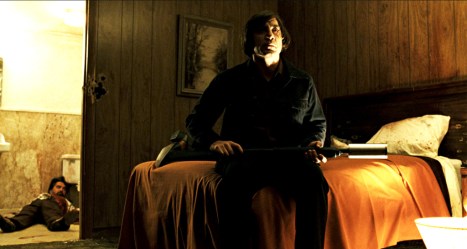
Many prognosticators would argue that superhero films came to take the ideological place of the western, accessible entertainment for large audiences built on an American archetype. However, the twenty-first century found the western creeping back into cultural awareness. This took many forms; the neo-westerns of films like No Country for Old Men or Hell or High Water; the self-aware Tarantino scripts for Django Unchained or The Hateful Eight; the prestige picture charm of The Revenant; the cultural smash of Westworld.

There were any number of interesting observations that might be made about these films. Most obviously, there was a recurring sense of horror to these reimaginings of the American west, whether reflected in the human-like form of Anton Chigurh or the zombie movie aesthetic of Ira Glass’ journey back to civilisation. However, there was also a very strong apocalyptic vibe to these modern westerns. Many classic westerns lamented the death of wilderness crushed beneath the heel of advancing civilisation. Modern westerns seem to fear the opposite.

Continue reading

21. John Wick: Chapter 2 – This Just In (#243)

People keep asking us if we’re going to be covering John Wick. I’m thinking, yeah, we’re going to be covering John Wick.

Hosted by Andrew Quinn and Darren Mooney and this week with special guest Graham Day, This Just In is a subset of the fortnightly The 250 podcast, looking at notable new arrivals on the list of the 250 best movies of all-time, as voted for by Internet Movie Database Users.

This time, Chad Stahelski’s John Wick: Chapter 2.

podcast-johnwick

Continue reading

Seventies Heaven – The Shifting Gaze of Cultural Nostalgia

Nostalgia is a funny thing.

It is infinitely more complex than most people will allow. By its very nature, it is highly fungible, intertwined with concepts like memory and politics in a way that does not always make it easy to parse. Nostalgia hits in waves, but those waves do not always hit at the same time with the same intensity. Nostalgia is not a single monolithic concept, it pulls and pushes from moment to moment. What is the nostalgia of the moment? The eighties nostalgia of Stranger Things? The nineties nostalgia of Independence Day: Resurgence?

theniceguys2

Trying to define a pattern in pop culture’s nostalgia is like trying to read the tea leaves, falling somewhere between a conversational art and outright hucksterism.  Still, one of the more interesting – and least discussed – aspects of the grand nostalgia industrial complex is the state of transition. Big waves become little waves, emphasis shifts, focus goes elsewhere. One of the more interesting shifts in nostalgia over the past couple of years has been a transition from a strong sixties nostalgia into something altogether more seventies.

It is a rather weird sight to behold, as if watching the popular image of one decade fade into the popular image of the other.

elvisandnixon8

Continue reading

Non-Review Review: Independence Day – Resurgence

Independence Day: Resurgence is the very limit case of nineties nostalgia.

This is true in a very real sense. The film is released two decades after the massive success of the original film, which came to theatres in 1996 offering unprecedented and awe-inspiring destruction on a previously unimaginable scale. Independence Day changed the public’s expectations for blockbusters, reworking the scale of apocalyptic destruction that could populate big summer releases. However, as much fun (and as well loved) as the film was, nobody was really clamouring for a sequel.
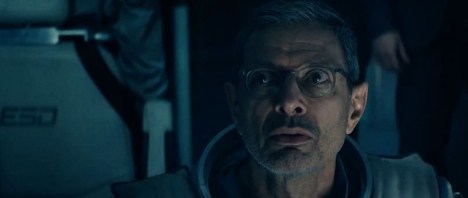
Jazzy Jeff, without the Fresh Prince.

Jazzy Jeff, without the Fresh Prince.

However, there is another truth about nineties nostalgia buried within this belated and bloated sequel. The nineties were a different time. They were a time at which Franci Fukuyami could make a semi-credible case that the United States stood at the end of history. The Cold War was over. The War on Terror had yet to begin. The Twin Towers still stood, and most Americans were oblivious to the existence of Osama Bin Laden or al-Qaeda. The economy was reasonably prosperous. Politics were relatively stable.

It is, of course, too easy to let nostalgia paint the nineties as some sort of “golden age.” There were horrific conflicts unfolding in Africa and Eastern Europe. There were clear shifts in American political rhetoric that paved the way for the current political climate. Paranoia and conspiracy theory were working their way into mainstream political discourse. However, the nineties were a time of much lower anxiety for most Americans, and time of peace rather than perpetual existential warfare.
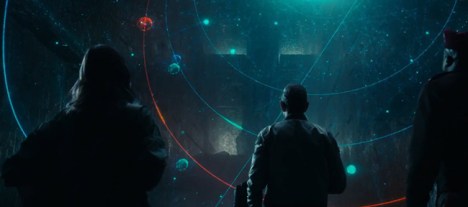
Maps to the stars.

Maps to the stars.

As a result, Independence Day had a radically different context in the summer of 1996 than it would in the summer of 2016. In 1996, the destruction of the White House and the Empire State Building could be treated as ridiculous escapism rather than traumatic repetition. The narrative of American individualism and exceptionalism was oddly endearing in the midst of a period of sustained global stability rather than an era of resurgent (and violent) political nationalism.

Even in terms of entertainment, the original Independence Day arrived at a point where it was enough for a blockbuster to be a blockbuster, where thematic resonance and political commentary were optional extras that were tolerated so long as they didn’t get in the way of the explosions. Independence Day was released at a point where it was enough for a movie to be “dumb fun” without carrying a deeper message. Without the internet to pick films apart and pour over their subtext, it was a lot easier to just release an unassuming spectacle.
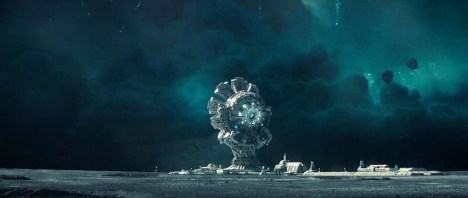
Over the moon about it.

Over the moon about it.

More than that, the sheer practical limitations of filming a blockbuster helped to rein in a lot of potential excesses of a film on this scale. While there was always computer-generated special effects, a heavy reliance on practical models and practical effects tended to dictate both the scripting and the direction of the film. Although Independence Day was an ode to heightened spectacle, there were limits to that spectacle. There was only so much of the aliens that could be shown, there were moments where things couldn’t be exploding.

In short, Independence Day was very much the perfect movie for 1996. In its own way, Independence Day: Resurgence is an ode to that. It is also a reminder that this is no longer 1996.

Not quite the Gold(blum) standard.

Not quite the Gold(blum) standard.

Continue reading