• Following Us

  • Categories

  • Check out the Archives


  • Awards & Nominations

Non-Review Review: Unicorn Store

Unicorn Store is, appropriately enough, a strange beast.

Brie Larson’s feature-length directorial debut, adapted from a screenplay by Samantha McIntyre, struggles to manage its tone. What is Unicorn Store? Who is the target audience for Unicorn Store? The stylistic sensibilities of Unicorn Store evoke the modern American mid-budget indie film; the listless title character stuck in arrested development, the cast populated by distinguished character actors like Joan Cusack and Bradley Whitford, the use of shaky handheld camerawork to create a sense of grounded intimacy and authenticity. However, the narrative itself aspires towards something more surreal and strange, the sort of abstract stylised magical realism associated with directors like Michel Gondry or Tim Burton.

Painting a perfect picture.

Similarly, the story itself never seems to figure out at what level it wants to pitch itself. Is Unicorn Store meant for children, with its empowering story about the importance of pursuing one’s dreams in a world that expects too much adult responsibility too quickly? If so, the narrative is too rooted in adult fears and anxieties to really land, the whimsical wonder often eroded by more mundane realities that are of little interest to a young audience. Is Unicorn Store aimed at an older audience then, people like the lead character Kit, who never grew up despite society constantly telling them that they needed to? If so, the story is too light and fluffy, too superficial and too simplistic in its outlook.

Perhaps, like the mysterious “Store” featured in the film, Unicorn Store is trying too hard to be all things to all people. Indeed, the climax of the film hinges on the idea that the eponymous “Store” cannot satisfy all of its customers. While the Unicorn Store attempts to put an optimistic spin on this, there is a sense in which this is true of the film itself. Unicorn Store seems so eager to be everything that anybody could want it to be that it never figures out what it actually is.

Making her mark.

Continue reading

Non-Review Review: Missing Link

Missing Link is yeti ‘nother triumph for stop motion animation studio Laika.

To be fair, Missing Link is a different beast than Kubo and the Two Strings, the last major release from the studio and one of the most striking (and under-appreciated) animated films of the last decade. Kubo and the Two Strings was a lyrical and powerful fairy tale, a surprisingly weighty meditation on big ideas like the stories that people tell and the losses that they carry around with them. Missing Link is a much lighter film than that, a piece of film that is much less consciously mature in the story that it is telling. This is not to suggest that Missing Link is shallow or superficial, or that it ignores big ideas in favour of small delights. However, Missing Link is a film that foregrounds its visceral thrills over its central themes, and there isn’t anything inherently wrong with that.

Armed and dangerous.

Although Missing Link director Chris Butler co-wrote the script for Kubo and the Two Strings, it is probably more accurate to treat Missing Link as a more mature extension of Butler’s last work for the studio. Missing Link might be seen as a more reflective and introspective take on some of the core ideas of ParaNorman, a similar high-energy romp that meditated upon the relationship that exists between mankind and those things which exist beyond mortal comprehension. Missing Link is sturdily constructed from a narrative perspective, with well-defined characters who are given strong arc and a script that understands both what it is trying to say and how best to say it without tripping over itself. However, the script also understands that it is not the primary draw to Missing Link.

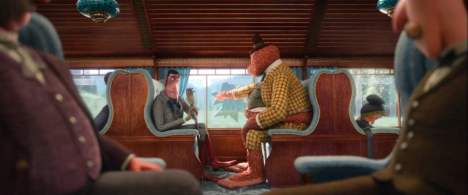
Whereas Kubo and the Two Strings felt like an intricate portrait drawn from the deepest pools of the animators’ imagination, Missing Link is a much more kinetic and dynamic piece. Missing Link is a globe-trotting adventure that spans from the deep blue-green forests of Washington State to the snowy plains of the Hindu Kush. It is the sort of rollicking old-fashioned adventure populated by heroes who spend a lot of time charting train lines and ferry lanes on maps, where obligatory back story is delivered against mesmerising backdrops, and where a variety of energised and imaginative action scenes arrive to a tightly-calculated schedule. Missing Link might lack the complexity of Kubo and the Two Strings, but there’s an infectious dynamism to Missing Link that neatly compensates.

Following their train of thought.

Continue reading

Non-Review Review: Pet Sematary

The horror in Pet Sematary is primal and ancient, both literally and figuratively.

The tropes that power Pet Sematary were already familiar and old-fashioned by the time that Stephen King published the book more than a quarter of a century ago. Indeed, there are extended stretches of the novel when Pet Sematary feels like a game of Stephen-King-related mad-libs: a dash of paternal anxiety here, a sense of existential dread about the American wilderness there, a familiar older character to provide exposition thrown in, and a climax where everything gets very brutal very quickly.

“You just take a left at the Pet Seminary.”

Even beyond the sense of Pet Sematary as a collection of familiar Stephen King elements blended together, the novel riffed on familiar genre elements. There was more than a faint whiff of The Monkey’s Paw to the basic plot, the story of a seemingly wondrous device that could resurrect the dead only for the person responsible to realise that their beloved had come back “wrong” – or, as Jud helpfully summarises, that “sometimes dead is better.” (The novel alluded to this more directly with the story of Timmy Baterman, which is consigned to a newspaper clipping in this adaptation.)

Writer Jeff Buhler, along with directors Kevin Kölsch and Dennis Widmyer, clearly understand that appeal. The script for Pet Sematary makes a number of major alterations to the book’s plot, but most are logical and organic, rooted in the realities and necessities of cinematic storytelling more than the desire to change things for the sake of changing them. For the most part, Pet Sematary revels in the old-fashioned blend of Americana and horror that defines so much of King’s work, the mounting sense of dread and the decidedly pulpy sensibility.

The purr-fect villain.

Pet Sematary only really runs into trouble in its third act, and this is arguably a problem that is carried over from the source material despite the major branching choices that the script makes leading up to that point. The issues with the third act are not those of character or plot, but instead of tempo and genre. In a weird way, these third act issues make Pet Sematary feel like a spiritually faithful adaptation, carrying over something of the essence of the book, for better and for worse.

Pet Sematary is at is strongest when building mood and mounting dread, when offering its own shading on the familiar iconography of a haunted and untamed wilderness. Pet Sematary is at its weakest when it is forced to shape that dread into a more conventional horror movie climax.

Shades of grey.

Continue reading

Non-Review Review: Shazam!

There’s a lot to like about Shazam!

Most obviously, there’s the sheer joy that the film takes in live-action superheroics. It is, of course, something of a cliché to suggest that a certain film or television show “makes superheroes fun again.” Even just among the recent crop of superhero cinema, Spider-Man: Into the Spider-VerseIncredibles 2, Ant Man and the Wasp, Thor: Ragnarok and Spider-Man: Homecoming can all claim to have injected fun back into the genre. (Indeed, for their myriad flaws, the problem with Justice League and Aquaman was not that they weren’t trying to have fun. Quite the opposite in fact.) So it is disingenuous to state that Shazam! reintroduces the concept of fun into the genre.

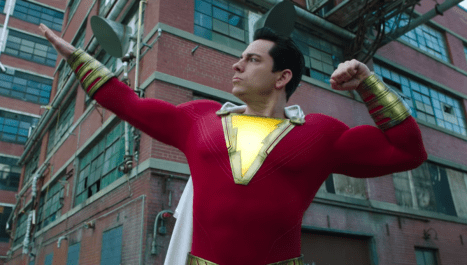
Dab-bling in superheroics.

However, Shazam! still takes an incredible amount of joy in playing with the tropes and conventions of the genre. Part of this comes built into the premise. While the character of Captain Marvel could be seen as an example of the “flying brick” archetype most effectively embodied by Superman, the most appealing part of the concept has always been his secret identity. Unlike other superheroes who simply change costume to fight crime, the character physically transforms into a superhero through the use of the magic word. Captain Marvel’s secret identity is Billy Batson, usually portrayed as a child or a teenager. There’s something endearing about the wish fulfillment that anchors that concept. Shazam! invites its audience to look at superheroics through the eyes of a child.

The first two acts of Shazam! are (mostly) a joy, an engaging riff on a playful concept that understands a large part of the appeal of superheroes to their target audience. Unfortunately, the film fumbles the ball in its third act. While the relative innocence and simplicity of Shazam! are a large part of its appeal, the climax of the film gets a little bit too boggled down in cynical worldbuilding, indulging in a bloated and over-extended computer-generated fight sequence that feels lifted from a much less playful and exciting film. To borrow an old cliché, Shazam! almost convinces its audience that a man can fly, but it just can’t stick the landing.

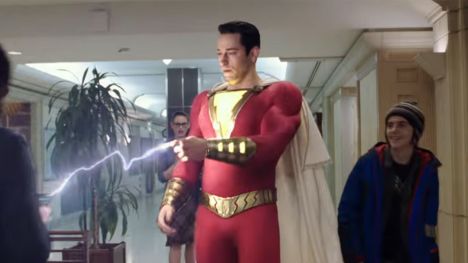
Zap to it.

Continue reading

New Podcast! Scannain Podcast (2019) #10!

It’s time for the Scannain podcast!

This week, I join Ronan Doyle and Jay Coyle to discuss the week in film. Because Varda season never ends, both Ronan and Jay have a new film to discuss from the legendary French director. Meanwhile, in film news, we mark the passing of veteran Irish character actor Pat Laffan, study the recent funding decisions of the Broadcast Authority of Ireland, discuss the opening of applications to the WRAP fund, navigate the line-up of the Belfast Film Festival, and discuss the availability of Ross Whitaker’s Katie on Netflix.

The top ten:

  1. Cold Pursuit
  2. A Dog’s Way Home
  3. The Hole in the Ground
  4. The Aftermath
  5. Fighting With My Family
  6. How to Train Your Dragon III: The Hidden World
  7. Green Book
  8. Instant Family
  9. The Lego Movie 2: The Second Part
  10. Captain Marvel

New releases:

That’s “Entertainer”-ment: “The Sting” in the Tale, and the Art of Movie-Making…

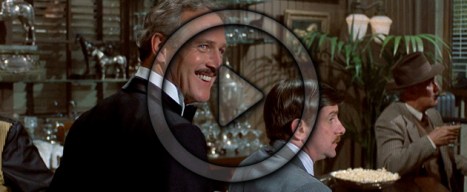
Last Sunday, I discussed The Sting on The 250, the weekly podcast that I co-host discussing the IMDb’s Top 250 Movies of All-Time. However, I had some thoughts on the film that I wanted to jot down first. You can listen to the podcast here.

The Sting is a remarkable movie in a number of ways.

The film is somewhat overlooked in the annals of Best Picture winners, its victory in the category nestled between The Godfather and The Godfather, Part II. More than that, the film feels positively old-fashioned when compared to many of the Best Picture winners of the decade; The French Connection, One Flew Over the Cuckoo’s Nest, Annie Hall, The Deer Hunter, Kramer vs. Kramer and even Rocky. Many of those Best Picture winners offered a sketch of America as it existed in the seventies, a more grounded and realistic approach to cinema reflecting a broader range of experiences and perspectives than had otherwise bubbled through mainstream popular film.

Continue reading

Non-Review Review: Us

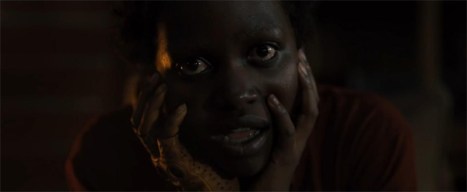
Us is fascinating, if undercut by comparisons to Get Out.

Get Out was a phenomenal feature debut from writer and director Jordan Peele, an unexpected left-turn from a comedian who was (at that time) best know for his work on one of the decade’s best sketch comedy shows, Key & Peele. It was an unexpectedly sharp piece of social satire, an incredibly pointed commentary on race and identity in contemporary America, one held together by an incredibly strong central metaphor. Get Out was driven by an almost single-minded commitment to its core ideas, which were skillfully wed to a genre vehicle. It was always clear exactly what Get Out was saying, and why it was saying that in the way that it was.

Taking a second swing.

Us is a fundamentally messier film, at once more conventional in terms of its structure and rhythms while being more abstract and confused in its central metaphors. One of the central throughlines of Us is the concept of “the untethering”, and it often feels like a metaphor for the film’s own internal creative process. Us is a lot less focused than Get Out, a lot less together. It often seems like the film is caught in a tug-of-war between its two core elements: on one hand, the desire to present an old-fashioned home-invasion-turned-national-crisis narrative in the style of everything from The Strangers to Dawn of the Dead; on the other, a central metaphor touching on everything from Jungian anxiety to class warfare to the modern division of the United States.

So, to answer the important questions about Us: no, the film is not as good as Get Out; and yes, the film is really good.

Face yourself.

Continue reading

123. The Sting (#100)

Hosted by Andrew Quinn and Darren Mooney, this week joined by special guest Gerry Mooney, The 250 is a (mostly) weekly trip through some of the best (and worst) movies ever made, as voted for by Internet Movie Database Users. New episodes are released every second Saturday at 6pm GMT, with the occasional bonus episode between them.

This time, George Roy Hill’s The Sting.

When a simple con leads to horrific consequences, amateur con artist Johnny Hooker vows to avenge himself on crime boss Doyle Lonnegan. Enlisting the help of over-the-hill veteran Henry Gondorff and a motley crew of small-time hoods, Hooker sets in motion an elaborate con game with potentially disastrous consequences.

At time of recording, it was ranked the 100th best movie of all time on the Internet Movie Database.

Continue reading

Non-Review Review: Under the Silver Lake

There is far too much masturbation in Under the Silver Lake, of both the literal and figurative variety.

To be entirely fair to writer and director David Robert Mitchell, this is entirely the point. Under the Silver Lake is many things, but a large part of it is a genre hybrid between existential slacker drama, anthropological journey through the eccentric and self-absorbed spaces of Los Angeles, and absurdist investigative thriller. Those sorts of genres lend themselves to excessive self-indulgence and self-importance, the sorts of grand-sounding-yet-completely-empty philosophical treatises on the human condition that seem to have been written by those high on their drug of choice or simply themselves. With that in mind, the amount of literal masturbation in Under the Silver Lake seems pointedly self aware, a tacit acknowledgement of the figurative masturbation.

Lost Angeles.

Under the Silver Lake does have a few good ideas. More than that, it has a couple of legitimately great scenes, moments that demonstrate the same skill with the uncanny that made Mitchell’s It Follows so effective. There are moments when Under the Silver Lake walks that fine line between being darkly, bleakly funny and also being uncomfortably, hauntingly unsettling. However, the issue is that these moments are far too fleeting and far too ephemeral, frequently lost amid long and listless passages in which Under the Silver Lake indulges in well-worn cliché and obvious ideas. Under the Silver Lake is shrewd enough to acknowledge and even try to deflate some of its sense of self-importance, but there’s an awkward seam of self-assuredness that runs through the film.

As much as Under the Silver Lake might brutally and incessantly mock its lead character for his assumption that he can figure out the secret code of the universe, it often feels like Under the Silver Lake is convinced that it has a much more insightful perspective, even as it packages well-worn ideas as profound revelations.

This is all going swimmingly.

Continue reading

122. Room – St. Patrick’s Day 2019, w/ When Irish Eyes Are Watching (#151)

Hosted by Andrew Quinn and Darren Mooney, The 250 is a fortnightly trip through some of the best (and worst) movies ever made, as voted for by Internet Movie Database Users. New episodes are released Saturdays at 6pm GMT.

This week, a special crossover episode with When Irish Eyes Are Watching, an Irish film podcast wherein Alex, Clíona and Séan take at a look at films connected to the Emerald Isle.

The 250 and When Irish Eyes Are Watching are crossing over for a St. Patrick’s Day treat. Lenny Abrahamson’s Room.

Jack has spent his entire life within the confines of “Room”, the space which comprises the totality of his world. He knows every inch of the ten-by-ten space in which he was raised, in which he lives day-by-day with Ma between visits from Old Nick. However, as Jack turns five, he is forced to confront some uncomfortable realities about the world within which he lives and the world beyond “Room.”

At time of recording, it was ranked the 151st best movie of all time on the Internet Movie Database.

Continue reading