• Following Us

  • Categories

  • Check out the Archives


  • Awards & Nominations

New Escapist Column! Reviewing “Loki”…

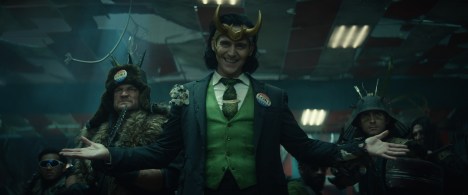
I published a new column at The Escapist yesterday. I took a look at the opening two episodes of Loki.

Loki arrives as the third and final of the first wave of live-action Marvel Cinematic Universe shows on Disney+. The opening episode suggests that it is burdened with “glorious purpose”, featuring one of the cinematic universe’s breakout characters while also introducing the Time Variance Authority to the cinematic continuity. The result is an interesting mix, something with a great deal of potential that also feels curiously cautious and overly familiar in places. Still, there’s a lot to like in the show.

You can read the piece here, or click the picture below.

New Escapist Column! On “M.O.D.O.K” as a Breath of Fresh Air…

I published a new In the Frame piece at The Escapist on Friday evening. With the release of M.O.D.O.K. on Hulu, it seemed like a good opportunity to take a look at this unusual addition to the Marvel television canon.

M.O.D.O.K. is not a perfect show, but it is a breath of fresh air. In particular, it arrives in a cultural landscape that is becoming increasingly homogeneous and consolidated, existing as one of the last projects produced by Marvel Television before it was swallowed by Marvel Studios. As such, it is a Marvel adaptation with a distinct aesthetic. More than that, it is a comic book adaptation that is completely and utterly unashamed of its comic book roots. It is a show that revels in the inherent absurdity of comic books in a way that puts many higher profile adaptations to shame.

You can read the piece here, or click the picture below.

New Escapist Video! “A Marvelous Escape” – “M.O.D.O.K. Full Series Review”…

With a slew of Marvel Studios productions coming to Disney+ over the next six months, The Escapist has launched a weekly show discussing these series

This week, in the gap between The Falcon and the Winter Soldier and Loki, KC Nwosu and I take a look at a rather unconventional entry in the Marvel television canon: M.O.D.O.K., the half-hour sitcom from Patton Oswalt and Jordan Blum about the maniacal supervillain trying to strike a work/life balance.

New Escapist Video! “A Marvelous Escape” – Falcon and the Winter Soldier – “Full Season Review”…

With a slew of Marvel Studios productions coming to Disney+ over the next six months, The Escapist has launched a weekly show discussing these series. I’ll be joining the wonderful Jack Packard and the fantastic KC Nwosu to break down WandaVision, Falcon and the Winter Soldier and Loki as they come out.

This week, we take a look back at the first season of Falcon and the Winter Soldier, including the news that Sam Wilson will be wielding the shield in Captain America 4 and trying to make sense of some of the season’s more chaotic plotting decisions.

New Escapist Column! On How “Captain Marvel” and the Perils of Prioritising Plot Above Character…

I published a new piece at The Escapist earlier today. With the news that Nia DaCosta will be directing the sequel to Captain Marvel, it seemed the right time to take a look back at the earlier film.

There is a lot to like about Captain Marvel. It is an extremely charming movie. However, it also suffers from one of the bigger recurring problems of the Marvel Cinematic Universe. The film is structured around a major plot reveal that lands at pretty much exactly the halfway point. However, this plot reveal is both incredibly obvious and something that prevents the first half of the movie from engaging in any characterisation. Captain Marvel feels like an expression of the recurring sense that Marvel Studios movies are nothing more than plot delivery mechanisms.

You can read the piece here, or click the picture below.

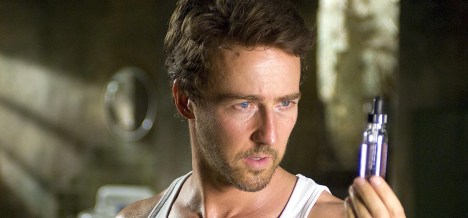
New Escapist Column! On Edward Norton, “The Incredible Hulk”, and the Kinds of Movies Marvel Doesn’t Want to Make…

I published a new In the Frame piece at The Escapist this evening. Prompted by a conversation with a colleague Matthew Razak, I took a look at the troubled second film in the Marvel Cinematic Universe, The Incredible Hulk.

I have always had something of a soft spot for The Incredible Hulk, in large part because it feels appropriate that a movie about the Green Goliath should find itself caught between extremes. The Incredible Hulk was caught in a conflict between Edward Norton and Marvel Studios. Norton wanted an introspective character-driven superhero film, and Marvel… didn’t. In some ways, The Incredible Hulk offered as clear a roadmap to the future of Marvel Cinematic Universe as Iron Man, if only because it served to illustrate what Marvel didn’t want from their blockbusters.

You can read the piece here, or click the picture below.

Non-Review Review: Captain Marvel

The biggest problem with Captain Marvel is one of spoiler culture.

“Spoiler culture” is a fascinating cultural phenomenon, and one that is interesting as a facet of cultural consumption that arose parallel with the internet. It is perhaps a logical extension of the manner in which information flows these days. Information travels instantly and in all directions, quickly consumed and quick disseminated. In the nineties, it was easy (or easier) to avoid spoilers to films like The Usual Suspects or The Sixth Sense. After all, there was no Twitter or Facebook to share information. If somebody had already seen the film, they had to be physically talking to somebody else to discuss it, and it was posisble to establish the ground rules for the flows of information before the conversation progressed.
In an era where simply being on the internet exposes a person to torrents of information, the advent of “spoiler culture” seems logical and rational. People want to be surprised. People don’t want to know the finer points of a story before witnessing it first hand. People do not want the easter eggs given out or the finer details dissected. This is an understandable response. Having an experience described is no match for actually having that experience first-hand. So a culture has grown up online about preserving surprise and controlling the flow of information. This is fine. This is healthy. This is good. Mostly “spoiler culture” is just common courtesy and common sense. A reviewer should not reveal anything to a reader that they themselves would not want to know.

As with any philosophy, there is a tendency to take things too far. Sometimes “spoiler culture” descends into self-parody. Reviewers were famously told not to reveal any information about the plot of Blade Runner 2049, which ironically made it very hard to sell the movie to a potential audience. Some more extreme adherents felt betrayed when Sony released a trailer for Spider-Man: Far From Home before Avengers: Endgame, as if the fact that Sony was making another Spider-Man movie would give away the resolution to the cliffhanger from Avengers: Infinity War. Naturally, Infinity War came with its own massive spoiler-warning from the studio, with reviewers told that “Thanos demands [their] silence.” This despite the fact the ending was lifted directly from a comic.

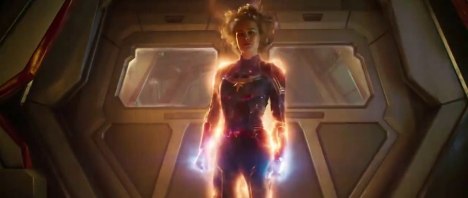
Captain Marvel embodies the worst impulses of “spoiler culture” because it confuses a logical and organic narrative development for a big twist. There is a reveal that comes around the half-way mark of the two-hour film which fundamentally changes the nature of the story being told. It plays against the story that had been set up to that point, and is positioned as a game-changer. It is a “twist.” It is a “big” moment. It is the kind of development for which Thanos would demand silence. Except it’s not really. It is not an actual twist. It is a plot point. It is a story beat. It is a part of the story that makes a great deal of sense in the context of the story as it is being told. However, Captain Marvel decides to play this game-changing story beat as a revelation.

There are a couple of big issues here. Most obviously, the actual narrative development is quite literally the only way that Captain Marvel could go without becoming something completely and irredeemably monstrous, so it is entirely predictable. (The twist is only a surprise to audience members who genuinely believe that Marvel’s first female-led superhero movie is likely to play out as extreme white nationalist propaganda.) More than that, though, it creates a larger problem with the flow of the story. The decision to play this story beat as a twist means the film has to conceal its hand for the first hour and fifteen minutes. This means that Captain Marvel is almost half-way over before any member of the cast gets any real character development.

Continue reading

Luke Cage – Can’t Front On Me (Review)

On of the most remarkable things about Luke Cage is just how much it enjoys being a superhero series, particularly compared to the other Marvel Netflix series.

The Punisher felt distinctly uncomfortable with its source material, and so instead tried to position itself as a low-rent 24 knock-off. Jessica Jones largely embraces the superhero genre as a vehicle for metaphors about trauma rather than as something to be enjoyed or appreciated of itself. Iron Fist made a strange choice to tone down both the most outlandish aspects of its character’s back story and the genre elements inherent in a kung-fu exploitation adventure. Daredevil is the only show to give its protagonist a costume, but it skews towards a much more sombre and serious school of superheroics.

All of these series contrast with Luke Cage, which eagerly embraces the trappings of the superhero genre, even as the second season remains deeply ambivalent about the very idea of a superhero. Showrunner Cheo Hodari Coker has described himself “a hip-hop showrunner”, and that sensibility infused the series. Hip-hop is a genre that heavily draws on sampling and remixing, so it makes sense that Luke Cage should draw on that tradition with its own stylistic influences, embracing the opportunity to create a deeply affectionate (and surprisingly traditional) superhero story around its hero.

For a story that inevitably goes to some very grim places, Luke Cage takes a great deal of joy in being a superhero television series.

Continue reading

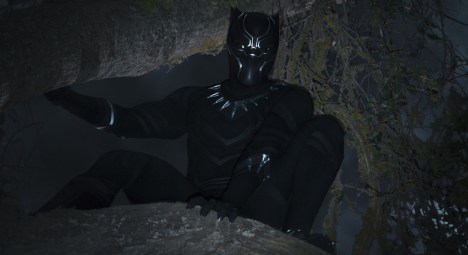
Non-Review Review: Black Panther

Black Panther is something special.

In a lot of ways, it is a very typical Marvel blockbuster. The familiar formula is in place, and the movie follows the rhythms that audiences have come to expect from these films. There is a certain tempo and structure to the film, the sort of clean efficiency that delineates most of the movies produced under the banner of Marvel Studios. For a film advertised using a remix of The Revolution Will Not Be Televised, it is striking how conservative Black Panther is.

The Panther Strikes!

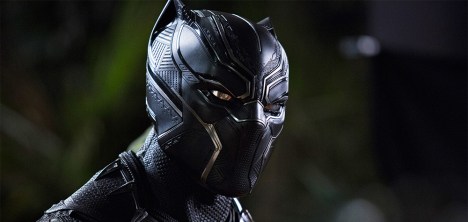
However, there is a lot to be said for the film’s more understated revolutionary qualities, the depth of understanding that the production team bring to the adaptation. Black Panther is acutely aware of what it means to construct a superhero fantasy epic about an African prince who leads a utopian society in the context of 2017, and there is something reassuring in how confidently and efficiently the film works within that framework. It is not merely that the existence of Black Panther is important, it is that Black Panther‘s assertion of its identity is important.

Black Panther is superior blockbuster by any measure, constructed with a great deal of care and thought about what it means. Much like its title character, there is a sense that the weight of expectation is upon Black Panther, and the most remarkable thing about the film is how seriously it takes that obligation without ever feeling burdened.

Heavy lies the head that wears the cowl.

Continue reading

52. Thor: Ragnarok – This Just In (#179)

Hosted by Andrew Quinn and Darren Mooney, This Just In is a subset of The 250 podcast, looking at notable new arrivals on the list of the 250 best movies of all-time, as voted for by Internet Movie Database Users.

This time, Taiki Waititi’s Thor: Ragnarok.

Continue reading