• Following Us

  • Categories

  • Check out the Archives


  • Awards & Nominations

New Escapist Video! On How “Doctor Strange in the Multiverse of Madness” is a Film with Two Authors…

We’re thrilled to be launching a fortnightly video companion piece to In the Frame at The Escapist. The video will typically launch every second Monday, and be released on the magazine’s YouTube channel. And the video will be completely separate from the written content. This is kinda cool, because we’re helping relaunch the magazine’s film content – so if you can throw a subscription our way, it would mean a lot.

This week, we took a look at a specific film: Doctor Strange in the Multiverse of Madness. It’s a Marvel Studios production from director Sam Raimi, and it manages to strike an interesting balance between those two creative poles. The film is very obviously of a piece with the larger Marvel Cinematic Universe. However, it is also undeniably a Sam Raimi movie. As a result, it is an interesting case study when it comes to talking about the idea of authorship within movies – in particular the idea that films can have multiple authors, and what makes Raimi so suited to working with Marvel Studios.

284. Doctor Strange in the Multiverse of Madness (#—)

Hosted by Andrew Quinn and Darren Mooney, and this week with special guest Luke Dunne, The 250 is a weekly trip through some of the best (and worst) movies ever made, as voted for by Internet Movie Database Users. New episodes are released Saturdays at 6pm GMT.

So this week, Sam Raimi’s Doctor Strange in the Multiverse of Madness.

The master of the mystic arts, Doctor Stephen Strange, is attending the wedding of his ex-girlfriend Christine Palmer when New York is attacked by a strange creature chasing a young refugee named America Chavez. Strange finds himself drawn into a chase across the vast and infinite multiverse, questioning the nature of the reality in which he has found himself.

At time of recording, it was not ranked on the list of the best movies of all time on the Internet Movie Database.

Continue reading

New Escapist Column! On What the Netflix Marvel Shows Bring to Disney+…

I published a new In the Frame piece at The Escapist this evening. With the arrival of the Netflix Marvel streaming shows on Disney+ last week, it seemed like a good opportunity to take stock of where the service’s brand was at.

Disney has established a reputation as a family-friendly company, often outsourcing its more adult-oriented fare to distinct subsidiaries with their own identities. This is arguably less sustainable in the streaming age, as companies are consolidating and the key to a streaming service’s viability might lie in the variety of its content. So Disney+ finds itself at a crossroads, forced to chose between its long-term appeal to a diverse array of audiences and its parent company’s history of wholesome family entertainment. The arrival of the Netflix Marvel shows provide a challenge and an opportunity.

You can read the piece here, or click the picture below.

New Escapist Column! On How Christopher Nolan Became the Internet’s Villain…

I published a new In the Frame piece at The Escapist this evening. Last week, the cinematic wold was shaken by the announcement that Warner Bros. would be releasing their entire cinematic slate day-and-date on HBO Max. This drew a lot of discussion and debate, but also demonstrating one of the internet’s weird cinematic fault lines: the strong hatred of director Christopher Nolan.

Nolan is one of the most interesting directors working the day. He is the last director who can approach a major studio with an original idea and secure hundreds of millions of dollars to realise it with minimal interference. In his early career, Nolan was a critical and internet darling, with a strong online following. However, since around 2012, Nolan has become a figure of a vocal and persistent derision online, much of which is anchored in the portrayal of the director as an old-fashioned auteur with a distinct sensibility.

This hatred of Nolan – which seems to bubble over in relation to anything from Anne Hathaway sharing chat show anecdotes about working with him to his reasonable critique of Warner Bros. failing to inform any of their directors or collaborators about the move to HBO Max – is interesting because it tied to other cultural trends that overlap. The internet’s passionate dislike of Nolan reflects broader shifts in the embrace of an intellectual-property- and corporate-identity-driven fandom. This hatred of Nolan often feels like a hatred of what he represents as a filmmaker.

You can read the piece here, or click the picture below.

“I Erased You”: Identity, or Lack Thereof, in Martin Scorsese’s “The Departed”…

The podcast that I co-host, The 250, continued our belated Summer of Scorsese last week with a look at The Aviator. This week, we’re looking at The Departed. It is a fun and broad discussion that is well worth your time, but it spurred some of my own thoughts about Martin Scorsese’s Best Picture winning gangster film.

The Departed is about a lot of different things.

As one might expect from a Martin Scorsese film, it is very much an exploration of a certain type of masculinity. It is a story about fathers and sons, but also about how a man’s worth is measured. Indeed, The Departed arguably takes Scorsese’s fascination with a certain kind of hyper-exaggerated American masculinity to its logical endpoint, as Frank Costello serves as a nexus point tying together sex and violence without producing an heir and Colin Sullivan is forced to discuss his impotence as his girlfriend eats a banana.

However, The Departed ties into some of Scorsese’s other core themes – most notably the director’s recurring fascination with identity. Of course, The Departed is an adaptation of the Hong Kong thriller Infernal Affairs, so it makes sense that identity would be a core theme. The film is the parallel stories of two undercover movies; Colin Sullivan and Billy Costigan. Colin is a criminal posing as a cop, while Billy is a cop posing as a criminal. Naturally, the theme of identity and self-image inevitably ends up tied up in all this.

That said, The Departed is perhaps most interesting for how it ties back to Scorsese’s larger filmography. So many of Scorsese’s films are tied back to the idea of human connection and belonging, even as extreme counter-examples in films like “god’s lonely man” Travis Bickle in Taxi Driver. Particularly in Scorsese’s crime movies like Goodfellas and Casino, there is a clear emphasis on the idea of “belonging” and “conforming”, with his films often focusing on outsiders (like the Irish Henry Hill or the Jewish Sam Rothstein) trying to blend into the largely Italian American mob.
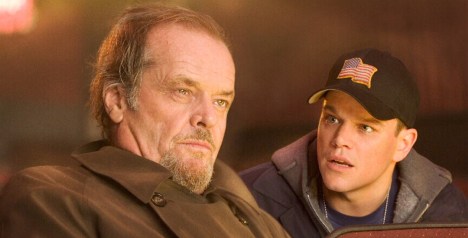
The Departed is largely built around the Irish mob in Boston, and so exists at a remove from Scorsese’s typical interest in the Italian mob in New York. (Notably, despite its Boston setting, large parts of The Departed were actually shot in New York City.) However, Scorsese’s portrayal of criminal life in The Departed marks a clear point of contrast from Goodfellas and Casino. While the characters in Goodfellas and Casino inevitably betray the bonds of family and loyalty to bond them together, they still acknowledge their importance. This is not the case in The Departed.

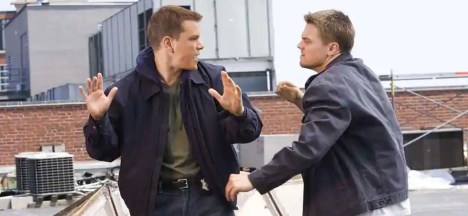
In The Departed, all of the characters eventually confront the reality that they exist in liminal spaces, caught more in the gravity of larger forces than held in place by ties of blood. The Departed marks a departure from Scorsese’s earlier crime films – arguably including Mean Streets and even Age of Innocence – because it completely disregards any sense of common community or shared identity. As Frank Costello opines in the opening scene, “When you’re facing a loaded gun, what’s the difference?”
Continue reading

New Escapist Column! On the “Necessity” of the R-Rating for “Birds of Prey”…

I published an In the Frame piece at Escapist Magazine last Friday, looking at the debate around the “R-rating” that Birds of Prey earned.

Following the film’s release, there’s been a lot of a debate around Birds of Prey, particularly in light of its box office performance. One of the more interesting arguments has been around the film’s age rating, with several pundits arguing that the film did not “need” to be rated R, that it could have been cut to a PG-13 movie without losing anything of value. This is an interesting argument, one that deserves a little interrogation. After all, the scenes which likely earned Birds of Prey its R-rating – certainly the scenes singled out as unnecessary by such critics – are essential to its identity. They make the film unique and distinct.

You can read the piece here, or click the picture below.

115. Roma – This Just In (#–)

Hosted by Andrew Quinn and Darren Mooney, and with special guests Aine O’Connor, This Just In is a subset of The 250 podcast, looking at notable new arrivals on the list of the 250 best movies of all-time, as voted for by Internet Movie Database Users.

This time, Alfonso Cuarón’s Roma.

At time of recording, it was not ranked on the list of the best movies of all time on the Internet Movie Database.

Continue reading

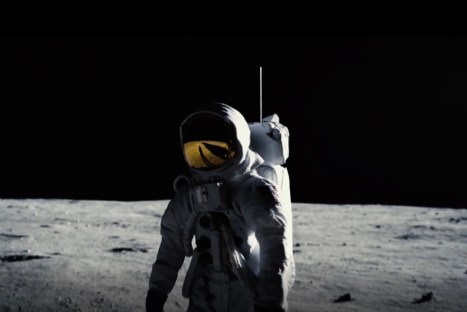
My 12 for ’18: Seeing It Again for the First Time in “First Man”

It’s that time of year. I’ll counting down my top twelve films of the year daily on the blog between now and New Year. I’ll also be discussing my top ten on the Scannain podcast. This is number three.

It is difficult to separate First Man from the cultural war around it.

There is always at least one piece of awards fare that generates a storm in the proverbial teacup, often around hot-button political issues. La La Land was the most contentious Best Picture nominee of its awards cycle, generating heated debate around issues of identity and cultural appropriation. Three Billboards Outside Ebbing, Missouri was the most controversial film the following year, most notably around its treatment of race and the portrayal of racism within local police departments.

First Man seems increasingly unlikely to secure a Best Picture nomination. This is likely in part due to its underwhelming box office performance, but also down to the toxic debate that has unfolded around it. It seems strange that the people so angry at First Man would be fine with the likely nomination of Green Book or Bohemian Rhapsody in its stead, but that is another debate entirely. First Man was a film that was everything (and nothing) to everybody (and nobody), a seemingly impossible feat.

First Man notably had too few flags for Marco Rubio. First Man also notably had too many flags for Richard Brody. First Man had too little patriotism for Buzz Aldrin. First Man had too much patriotism for Slate film writer Mark Joseph Stern. This is a remarkable and notable accomplishment of itself. At a point when the world seems divided on absolutely everything, First Man seemed to unite both sides of the political spectrum in outrage. That is one giant leap, after all.

Continue reading

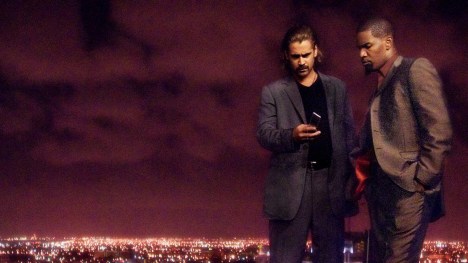
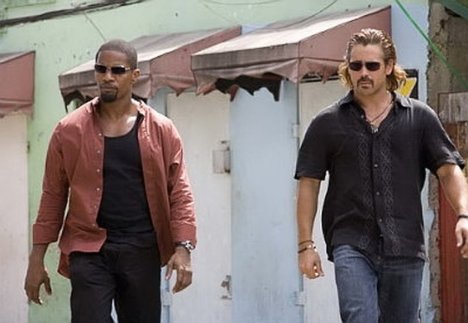
Collapsing Into One Frame: Miami Vice, Time and Luck…

It’s that time.

Yeah.

Badges get flashed, guns come out. Arrests get made. That’s what we do.

So?

So, fabricated identity and what’s really up collapses into one frame. You ready for that on this one?

I absolutely am not.

Time and again, Michael Mann’s Miami Vice returns to the idea of images collapsing into a single frame.

It’s a recurring visual and thematic motif in Miami Vice. Around the midway point, the undercover police note the technique that smugglers are using to get past the complex array of checkpoints and scans set up to secure the border. “What’d you spot?” Tubbs asks their source at the Federal Bureau of Investigation. “Go-fast boats running that close?” Crockett muses looking at the footage. “On radar they look like one, not two.” The same technique is used later with the jet, which blurs on radar into a single image. More impressively, Mann accomplishes something similar with the camera. Two become one.

This theme of collapse is core to Miami Vice. Watching the film, there is a sense that everything is falling apart, that boundaries cannot hold. This is true of all barriers; the lines that Crockett and Tubbs try to create between their professional and personal lives, the walls set up among the different groups on the inter-agency taskforce, the borders that nominally exist to separate Miami from Cuba and the Dominican Republic. It arguably even applies to the boundaries that writers and artists try to impose upon story, with Miami Vice constantly threatening to collapse into itself.

The result is a challenging a provocative piece of work, an ethereal dream-like mediation that reads very much as the inevitable climax of Mann’s meditation on the themes of law and order. Mann’s protagonists typically work to maintain some structure on what they do, to prevent the barriers from completely caving under outside pressure. Miami Vice represents the film in which those boundaries come crashing down.

Continue reading

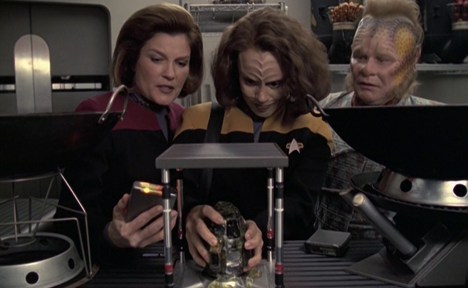
Star Trek: Voyager – Live Fast and Prosper (Review)

Live Fast and Prosper is a reasonably adequate mid-tier episode of Star Trek: Voyager.

It is not awful. It has an interesting premise, with some interesting potential for development and exploration. It fits with some of the larger fascinations of Voyager – in particularly recurring themes of identity and narrative, and the intersection of the two. More than that, unlike a lot of Voyager episodes, it has a story that feels somewhat original. This is not a dull rehash of a familiar story, a shiny new exterior hastily assembled over a familiar storytelling engine.

“Get this… whatever it is… to Sickbay!”

At the same time, it is also not very good of itself. Although Live Fast and Prosper has an absolutely ingenious premise, it never seems to push itself beyond that point. It never makes the leap that the best stories make, from an interesting premise into a satisfying execution. Live Fast and Prosper is pretty much exactly the episode that every audience member would anticipate given the one-line plot description of “Voyager encounters a group of con artists who have been impersonating them for shady business deals.”

The result is an hour of television that is solid, if not impressive. Live Fast and Prosper feels like a middling delivery on a fantastic promise, to the point where its status as merely adequate is almost as severe a disappointment as some of the spectacular misfires around it.

Unfamiliar faces…

Continue reading