• Following Us

  • Categories

  • Check out the Archives


  • Awards & Nominations

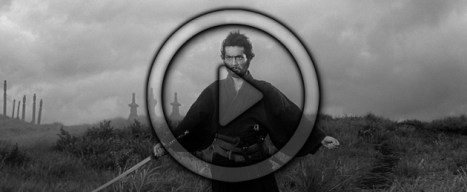
234. Mononoke-hime (Princess Mononoke) – Ani-May 2021 (#69)

Hosted by Andrew Quinn and Darren Mooney and with special guests Deirdre Molumby, Graham Day and Bríd Martin, The 250 is a (mostly) weekly trip through some of the best (and worst) movies ever made, as voted for by Internet Movie Database Users. New episodes are released every Saturday at 6pm GMT.

This year, we are proud to continue the tradition of Anime May, a fortnight looking at two of the animated Japanese films on the list. This year, we watched a double feature of the last two anime movies on the list, Hayao Miyazaki’s Mononoke-hime and Sen to Chihiro no Kamikakushi.

This week, the first part of the double bill, Mononoke-hime, the last film before Miyazaki’s first announced retirement.

A freak demon attack disturbs the peace of a remote village, and places a curse on a young prince. The hero must venture into the larger world in search of a cure, and quickly finds himself embroiled in a struggle between industrialisation and nature, between city and forest, between man and god.

At time of recording, it was ranked 69th on the list of the best movies of all time on the Internet Movie Database.

Continue reading

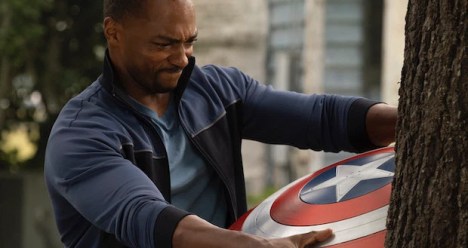
New Escapist Column! On “The Falcon and the Winter Soldier” in Conversation with the MCU…

I published a new In the Frame piece at The Escapist yesterday evening. With the wrapping up of the first season of The Falcon and the Winter Soldier, it seemed like a good time to take a look back at the show’s first season – and, in particular, how it positions itself within the larger Marvel Cinematic Universe.

The Marvel Cinematic Universe is thirteen years old this May. It spans 24 films, a handful of television series and almost a dozen separate film franchises. That is a lot of baggage. Indeed, it seems like the MCU has reached a point where the baggage of its earlier installments exerts almost as much gravity as the source material itself. The Falcon and the Winter Soldier feels like a prime example of this, with the series very much engaged in conversation with the films in the Captain America franchise.

You can read the piece here, or click the picture below.

New Escapist Video! On “Mortal Kombat: Annihilation” as the First Fan Service Blockbuster…

So, as I have mentioned before, I am launching a new video series as a companion piece to In the Frame at The Escapist. The video will typically launch with every second Monday article, and be released on the magazine’s YouTube channel the following week. This is kinda cool, because we’re helping relaunch the magazine’s film channel – so if you can throw a subscription our way, it would mean a lot.

This week, following the release of Mortal Kombat, we thought we’d give audiences what they really wanted. Yes, that’s right: a deep dive on Mortal Kombat: Annihilation.

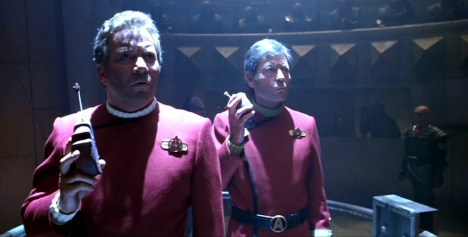
New Escapist Column! On “Star Trek VI: The Undiscovered Country”, and Saying Goodbye to Old Friends…

I published a new In the Frame piece at The Escapist this evening. With the passing of Christopher Plummer recently, and with the film celebrating its thirtieth anniversary this year, I thought it might be worth taking a look at Star Trek VI: The Undiscovered Country.

The Undiscovered Country was the last Star Trek film to focus on the entire cast of the original show. However, it is not an entirely celebratory farewell. Instead, it’s a movie that makes a valid and convincing argument for the need to move on, for characters like Kirk and Spock to get out of history’s way and to surrender the stage to Star Trek: The Next Generation. It’s an introspective (and occasionally even acerbic) rejection of nostalgia that is particularly hard to imagine today, particularly in the era of films like Star Wars: Episode IX – The Rise of Skywalker.

You can read the piece here, or click the picture below.

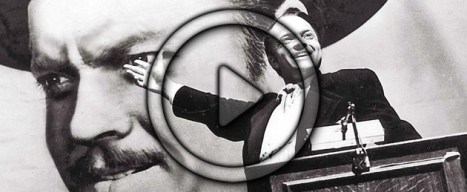
214. Citizen Kane – Christmas 2020 (#97)

Hosted by Andrew Quinn and Darren Mooney, and this week with special guest Niall Murphy, The 250 is a weekly trip through some of the best (and worst) movies ever made, as voted for by Internet Movie Database Users. New episodes are released Saturdays at 6pm GMT.

So this week, Orson Welles’ Citizen Kane.

Following the death of Charles Foster Kane, reports of the magnate’s final word slip out to the press. Trying to parse a portrait of the public figure’s life and times, a reporter attempts to discern the meaning of the word, “Rosebud.”

At time of recording, it was ranked 97th on the list of the best movies of all time on the Internet Movie Database.

Continue reading

210. Hugo – Summer of Scorsese, w/ The Movie Palace (#–)

Hosted by Andrew Quinn, Jay Coyle and Darren Mooney, with special guest Carl Sweeney, The 250 is a (mostly) weekly trip through some of the best (and worst) movies ever made, as voted for by Internet Movie Database Users. New episodes are released every Saturday at 6pm GMT.

This time, continuing our Summer of Scorsese season with a crossover with The Movie Palace, Martin Scorsese’s Hugo.

Martin Scorsese is one of the defining directors in American cinema, with a host of massively successful (and cult) hits that have shaped and defined cinema across generations: Alice Doesn’t Live Here Anymore, New York, New York, Goodfellas, Kundun, The Departed, The Wolf of Wall Street. The Summer of Scorsese season offers a trip through his filmography via the IMDb‘s 250.

Hugo Cabret is a twelve-year-old kid living and hiding in the industrial spaces behind a central Paris railway station. Recovering from the loss of his father, Hugo is desperate to repair the damaged automaton that is the last connection that he shares with his deceased parent. The mystery leads Hugo to a strange and lonely old man operating a kiosk, and into a whole new world.

At time of recording, it was not ranked on the Internet Movie Database‘s list of the best movies of all-time.

Continue reading

“The Blood Stays on the Blade”: The Birth of a Nation in Scorsese’s “Gangs of New York”…

The podcast that I co-host, The 250, continued our belated Summer of Scorsese last week with a look at Kundun. This week, we’re looking at Gangs of New York. It is a fun and broad discussion that is well worth your time, but it spurred some of my own thoughts about Martin Scorsese’s complicated and messy 2002 passion project.

Martin Scorsese had wanted to make Gangs of New York for over thirty years.

The director had reportedly stumbled across a copy of Herbert Asbury’s book while house-sitting for a friend over New Year in 1970. Gangs of New York became one of the projects that Scorsese desperately wanted to make, alongside The Last Temptation of Christ, which had been given to him by Barbara Hershey on the set of Boxcar Bertha. Of course, Scorsese would not get to make either The Last Temptation of Christ or Gangs of New York during the seventies. Instead, the implosion of New York, New York would set his plans back years.

Scorsese had reportedly been hoping to make either The Last Temptation of Christ or Gangs of New York following the release of New York, New York, when Robert DeNiro convinced him to direct Raging Bull instead. Scorsese would spend the eighties adapting to the collapse of the New Hollywood movement, and would just about manage to get The Last Temptation of Christ produced. He never gave up on Gangs of New York, and the film went through various iterations over the years. It might have starred Jim Belushi and Dan Aykroyd or Mel Gibson and Willem Dafoe.

When the possibility of making Gangs of New York emerged in the late nineties, it might have seemed like a culmination. As the project lurched closer and closer to actually materialising, it must have seemed like it would be one of Scorsese’s last major motion pictures. After all, Scorsese was almost sixty. Steven Spielberg and George Lucas were the only two other “movie brats” who were still making high-profile and big-budget films. There was perhaps a sense that Scorsese might just about have this film left in him, before retiring to less mainstream and more esoteric works.
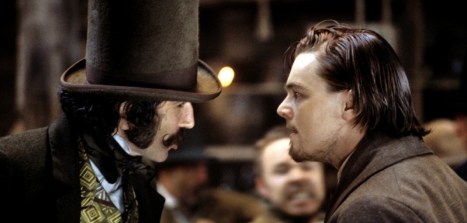
While Scorsese had entered the nineties on a high note with Goodfellas, the films that followed were not as universally welcomed. Roger Ebert complained about “a certain impersonality” in Cape Fear, the film following Goodfellas. The Age of Innocence arrived with a shrug. Casino was treated as highly derivative of Goodfellas, with Peter Travers sighing that “the black cloud of letdown hung over Scorsese’s epic tale.” Kundun sparked a diplomatic incident with China, and was quietly buried by Disney. Bringing Out the Dead felt like a curiosity more than a classic.

Of course, history has been kind to all (or at least most) of those films. Scorsese’s nineties output is recognised in hindsight as a vibrant and important part of his career. Nevertheless, as Gangs of New York slowly and awkwardly forced itself into being, it might have looked like the last swing of the bat from one of the great American directors. A film that had been simmering in the director’s imagination for decades, it might serve as a definitive and concluding statement about the city and the nation that he loved.
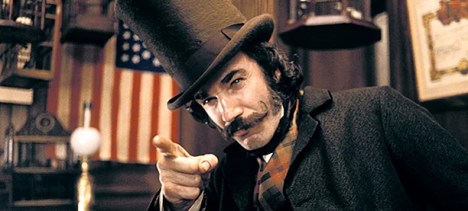
More than twenty years after the shutters came down on the New Hollywood movement, Scorsese would finally get to make an epic that was comparable to Francis Ford Coppola’s Apocalypse Now or Michael Cimino’s Heaven’s Gate. Of course, those sorts of projects feel like capstones – Heaven’s Gate famously brought United Artists tumbling down, while Coppola would never direct anything with as much freedom or cultural impact after Apocalypse Now. As such, Scorsese’s long-delayed shot at making his epic passion project seemed like closure.

Looking back at Gangs of New York, this seems absurd. Almost two decades after Gangs of New York, Scorsese is still making films. Scorsese is enjoying larger budgets on films like The Irishman and The Killers of the Flower Moon than he did earlier in his career. If anything, Gangs of New York is a watershed. It is not Scorsese’s epic finale, but is instead the first in a series of epics that includes films like The Aviator or The Wolf of Wall Street. It introduced Scorsese to a young actor who “reignited” his enthusiasm for film making.
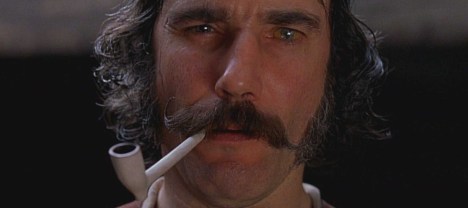
Indeed, time has been very kind to Gangs of New York. The film seemed to arrive at a crucial moment, both for Scorsese as director and for the United States as a nation. Gangs of New York offers a snapshot of American history that resonates strongly. It is not so much a historical picture as a dive into the depths of a shared unconscious and an excavation of the scars left on the American psyche. The catchy Oscar-nominated theme song might have boasted that the film was about “the hands that built America”, but the film was decidedly less optimistic in its perspective.

Gangs of New York is a story about the blood that stains those hands, and how history tends to repeat for those who refuse to learn from it.
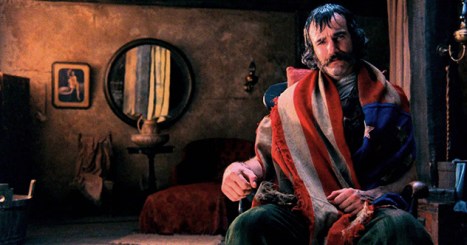
Continue reading

161. The Irishman – This Just In (#158)

Hosted by Andrew Quinn and Darren Mooney, and this week with special guests Phil Bagnall and Jay Coyle, The 250 is a fortnightly trip through some of the best (and worst) movies ever made, as voted for by Internet Movie Database Users.

This time, Martin Scorsese’s The Irishman.

Sitting alone in an older retirement home, former gangster Frank Sheeran recounts a life story that spans the second half of the twentieth century, charting a life lived on the margins of greatness but also at the outskirts of decency.

At time of recording, it was ranked the 158th best movie of all time on the Internet Movie Database.

Continue reading

New Escapist Column! “Charlie’s Angels” and the Franchise-ification of Everything…

I published a new In the Frame piece at Escapist Magazine a little while back, looking at the recent Charlie’s Angels film.

Elizabeth Banks’ Charlie’s Angels is a mess of a film, one that struggles with a variety of problems. Its biggest problems are tonal, with the movie unsure of exactly how it wants to pitch itself: is it a gritty reboot or a campy adventure? There’s a tension at the heart of the film, one which traps it between past and future. Banks clearly wants to reinvent Charlie’s Angels, but she’s also unable to escape the franchise’s history. This is an interesting push-and-pull, one that arguably illustrates the tension of modern franchise film-making.

Most obviously, is it really necessary for a campy seventies sexy spy series to have a “canon”, and is it really necessary for a cinematic adaptation to be beholden to that “canon”? You can read the piece here, or click the picture below.

Non-Review Review: Motherless Brooklyn

Motherless Brooklyn is a profoundly odd film.

On the surface, it looks like another one of those “movies they don’t really make anymore” that tend to get a small release around awards season, like Bad Times at the El Royale or Widows. It is an old-fashioned private detective story that starts with something relatively small before pulling back to reveal a vast and insidious conspiracy at work. It is a movie that is both a genre piece and a statement, and so seems an appropriate release for this late in the calendar.

Railing against the system.

However, on closer inspection, Motherless Brooklyn is much more surreal piece of work. The film was a passion project for writer, director and star Edward Norton. Norton had been struggling to bring the film to screen for the better part of two decades. It is a period piece in more than just its fifties New York setting. It feels like a time capsule. Although Motherless Brooklyn is only Norton’s second theatrical film as director, it arguably feels much more tailored to Norton’s style and interests than his actual directorial debut Keeping the Faith.

However, Motherless Brooklyn feels like it is lost in more than just time. The film is meandering, indulgent and unfocused. It has moments of incredible beauty and surprising power, but lacks the discipline to streamline everything else around those elements. Motherless Brooklyn is not a great film, but it is a strange one.

Evil plans.

Continue reading