• Following Us

  • Categories

  • Check out the Archives


  • Awards & Nominations

428. Aliens – Special Edition (#64)

Hosted by Andrew Quinn and Darren Mooney, The 250 is a (mostly) weekly trip through some of the best (and worst) movies ever made, as voted for by Internet Movie Database Users. New episodes are released every second Saturday at 6pm GMT, with the occasional bonus episode between them.

This week, James Cameron’s Aliens.

57 years after the destruction of the Nostromo, Ellen Ripley is found adrift in space. Her account of a strange encounter with a monstrous creature is met with ridicule and scorn, particularly considering the colonisation of planetoid LV-426, where Ripley claimed to have found the alien. However, when the colony suddenly falls silent, it becomes clear that Ripley may not be entirely free of her trauma.

At time of recording, it was ranked 64th on the list of the best movies of all time on the Internet Movie Database.

Continue reading

391. Barbie – Leaving Cert 2024 (#—)

Hosted by Andrew Quinn, Darren Mooney and Conor Murphy, this week with special guests Aoife Barry and Deirdre Molumby, The 250 is a (mostly) weekly trip through some of the best (and worst) movies ever made, as voted for by Internet Movie Database Users. New episodes are released every second Saturday at 6pm GMT, with the occasional bonus episode between them.

This September, the podcast is going back to school, covering the films on the Irish Leaving Certificate that we have yet to cover. This time, Greta Gerwig’s Barbie.

In Barbieland, every day is perfect. Just like yesterday. And just like tomorrow. However, one morning, Barbie wakes up and realises that things are not perfect at all. She finds herself contemplating mortality, tumbling through the air and walking on the soles of her feet. Thus begins an epic adventure that will take Barbie into a brave new realm: the real world.

At time of recording, it was not ranked on the list of the best movies of all time on the Internet Movie Database.

Continue reading

346. Mustang – Leaving Cert 2023 (#—)

Hosted by Andrew Quinn, Darren Mooney and Conor Murphy, this week with special guest Natasha Waugh, The 250 is a weekly trip through some of the best (and worst) movies ever made, as voted for by Internet Movie Database Users. New episodes are released Saturdays at 6pm GMT.

This September, we are running a season looking at the films on the Irish Leaving Cert English Curriculum. So this week, Deniz Gamze Ergüven’s Mustang.

In a remote Turkish village along the Black Sea, five young sisters find themselves locked inside the family house. Destined to be married off one-at-a-time, the five girls struggle to hold on to their humanity and their spirit in the face of soul-crushing oppression. Can they escape this captivity and can they emerge with their selves truly intact?

At time of recording, it was not ranked on the list of the best movies of all time on the Internet Movie Database.

Continue reading

260. El laberinto del fauno (Pan’s Labyrinth) (#146)

Hosted by Andrew Quinn and Darren Mooney, with special guest Jack Packard, The 250 is a (mostly) weekly trip through some of the best (and worst) movies ever made, as voted for by Internet Movie Database Users. New episodes are released every Saturday at 6pm GMT.

This time, Guillermo Del Toro’s El laberinto del fauno.

In the aftermath of the Spanish Civil War, a young girl named Ofelia moves to her new stepfather’s house. As Captain Vidal ruthlessly hunts down the remaining rebels, Ofelia discovers that there is something enchanted lurking in the nearby woods. A mysterious faun promises to secret Ofelia away to a magical realm, if she can complete three tasks. As Ofelia finds herself caught between fantasy and reality, she discovers the sometimes the worst monsters are the human kind.

At time of recording, it was ranked 146th on the list of the best movies of all time on the Internet Movie Database.

Continue reading

254. All About Eve (#134)

Hosted by Andrew Quinn and Darren Mooney, with special guests Donald Clarke and John Maguire, The 250 is a (mostly) weekly trip through some of the best (and worst) movies ever made, as voted for by Internet Movie Database Users. New episodes are released every Saturday at 6pm GMT.

This time, Joseph L. Mankiewicz’s All About Eve.

Late one evening, after a performance of Aged in Wood, Karen Richards find young Eve Harrington waiting outside the stage door. Taking pity on the young girl, Karen invites Eve backstage to meet her idol, the actor Margo Channing. Even very quickly insinuates herself into Margo’s life and it becomes clear that the young woman has ambitions that extend beyond mere fandom.

At time of recording, it was ranked 134th on the list of the best movies of all time on the Internet Movie Database.

Continue reading

253. Catwoman – Batman Day 2021 (-#49)

Hosted by Andrew Quinn and Darren Mooney, and this week with special guests Billie Jean Doheny and Niall Glynn, The 250 is a weekly trip through some of the best (and worst) movies ever made, as voted for by Internet Movie Database Users. New episodes are released Saturdays at 6pm GMT.

So this week, Pitof’s Catwoman.

Patience Phillips is a young woman working as a designer at a cosmetics company. One evening, while working late, Patience hears something she shouldn’t. Hunted by her employer’s security staff, Patience is left for dead and washed away like the trash. However, her would-be murderers are about to discover that Patience has never been more alive.

At time of recording, it was ranked 49th on the list of the worst movies of all time on the Internet Movie Database.

Continue reading

“Anything Goes!” The Curious, Qualified Appeal of “Indiana Jones and the Temple of Doom”…

This August, the podcast that I co-host, The 250, is doing a season looking at all four Indiana Jones films as part of our “Indiana Summer.” This week, we’re looking at Indiana Jones and the Temple of Doom, and I had some thoughts on the film.

Indiana Jones and the Temple of Doom occupies an interesting space in the cultural consciousness.

Released as a sequel to Raiders of the Lost Ark, the film was generally considered something of a disappointment. Despite a higher profile and a higher budget, the film grossed slightly less than its direct predecessor. The reviews were generally unkind. People Magazine decried the movie as “an astonishing violation of the trust people have in Spielberg and Lucas’ essentially good-natured approach to movies intended primarily for kids.”
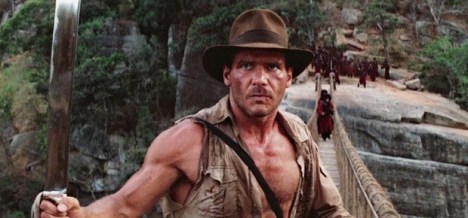
A bridge too far?

Many of those involved with the film seem to have accepted this criticism and taken it to heart. Kate Capshaw quipped that Indiana Jones and the Temple of Doom only really endured because it was packaged as part of trilogy re-releases, joking, “Thank goodness it’s a three-pack, or we wouldn’t have made the cut.” Spielberg was already apologising for the movie in the pre-release publicity for Indiana Jones and the Last Crusade, admitting, “I wasn’t happy with the second film at all.”

To be clear, there are a lot of valid criticisms of Indiana Jones and the Temple of Doom. It would almost be a cheat to concede that the film “has not aged well”, as that would imply that its portrayal of the Indian subcontinent was not horribly dated on its initial release in the mid-eighties. However, accepting and allowing for these very real problems, there is still something interesting and engaging about Indiana Jones and the Temple of Doom. It’s not a movie that is appealing in spite of its darkness, but one that is appealing precisely because of it.
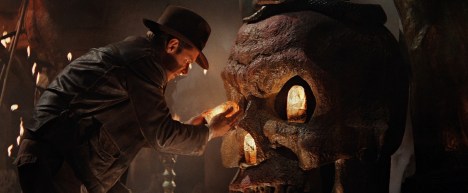
Fortune and glory.

Indiana Jones and the Temple of Doom is a messy and brutal movie. It’s angry and it’s unpleasant. However, it is interesting for precisely that reason. It stood out in the context of Steven Spielberg’s career at the time because Spielberg had cultivated an image of himself as a wholesome and wondrous filmmaker. Indiana Jones and the Temple of Doom marks the first real challenge to that image, perhaps paving the way for the director’s later forays into darkness and cynicism with movies like The Lost World: Jurassic Park, A.I. Artificial Intelligence, Minority Report, War of the Worlds, Munich and more.

Indiana Jones and the Temple of Doom feels like the work of Steven Spielberg at his most unguarded, cutting completely loose and working through a lot of stuff. It’s a very candid and very explicit film, lacking a lot of the polish and the cleanliness of Spielberg’s other major works from around this time. That’s what makes it such a fascinating artifact.
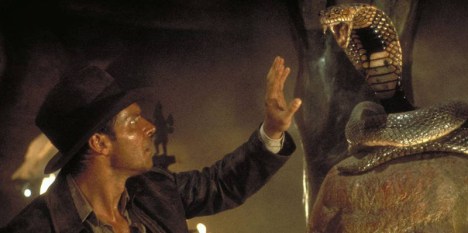
“Why did it have to be snakes?”

Continue reading

New Escapist Video! On How “Aliens” Responds to “Alien”…

So, as I have mentioned before, I am launching a new video series as a companion piece to In the Frame at The Escapist. The video will typically launch with every second Monday’s article, and be released on the magazine’s YouTube channel the following week. This is kinda cool, because we’re helping relaunch the magazine’s film content – so if you can throw a subscription our way, it would mean a lot.

This month, with Aliens celebrating its thirty-fifth anniversary, it seemed like a good opportunity to take a look at the film. In particular, how James Cameron designed one of the great sequels by refusing to simply repeat what worked about the original Alien. Instead, Aliens works in large part because it actively responds to and engages with Alien, in a way that enriches both films.

New Podcast! The Escapist Movie Podcast – “Will Black Widow Have Us Russian Back to Cinemas?”

The Escapist have launched a movie podcast, and I was thrilled to join Jack Packard and Richard Newby for the twenty-first episode of the year. With the release of Black Widow on streaming and in cinemas, there was only one movie to discuss. So we went for a deep dive into Marvel’s interquel, its character-centric movie for a dead Avenger.

You can listen to back episodes of the podcast here, click the link below or even listen directly.

Non-Review Review: Black Widow

Black Widow was originally supposed to release in May 2020.

This would have marked as something of a “coda” movie to the main saga of the Marvel Cinematic Universe, a belated follow-up tidying away loose ends from Avengers: Endgame in much the same way as Spider-Man: Far From Home. Like a lot of the releases immediately following that massive cultural phenomenon, Black Widow feels like a bit of unfinished business. It is the first solo movie based around the only female founding member of The Avengers, a project that gestated in various forms over decades across multiple production companies.

A vicious cycle.

Of course, Black Widow would always have felt curiously out of step and out of time. Scarlett Johansson wrapped up her tenure as Natasha Romanoff in Endgame, with the superhero sacrificing her life in the quest to defeat Thanos. As a result, Black Widow has to position itself earlier in the timeline. It functions as something of an interquel between Captain America: Civil War and Avengers: Infinity War, following the title character as she desperately evades capture by United States Secretary of State Thaddeus “Thunderbolt” Ross.

Had Black Widow released on time, it still would have felt like a movie that arrived four years too late. After all, despite introducing Natasha Romanoff as early as Iron Man 2, the Marvel Cinematic Universe would not build a solo superhero film around a female character until Captain Marvel. For all the chaos unfolding behind the scenes, the DC Extended Universe managed to beat Marvel Studios to the punch with the release of Wonder Woman in May 2017. It’s interesting to wonder whether the decision to position Black Widow as a direct sequel to a May 2016 release is something of a retroactive grab at that title.

Widow maker.

Even aside from all of this baggage, Black Widow is a frustrating film. It is a movie that feels only a draft or two (or an editting pass or two) away from greatness. The film grapples with big themes and bold character work in interesting ways that occasionally verge on confrontational. After all, Natasha Romanoff has consistently been portrayed as a complicated and ambiguous figure within this world of gods and legends, an international assassin whose moral and bodily autonomy was violated in the most grotesque ways, and who responded to this by trying to reinvent herself as a superhero.

There’s a fascinating story there, and Black Widow intermittently acknowledges as much. However, when the film gets close to hitting on any nerves, it immediately retreats into snarky irony and wry one-liners that rob the story of any real weight and the characters of any real agency. Black Widow is supposed to be a story about a character asserting her own agency in the face of an uncaring machine. Instead, it feels like a film where the machine always wins.

Continue reading