• Following Us

  • Categories

  • Check out the Archives


  • Awards & Nominations

New Escapist Column! On “Invincible” and the Future of Superheroic Storytelling

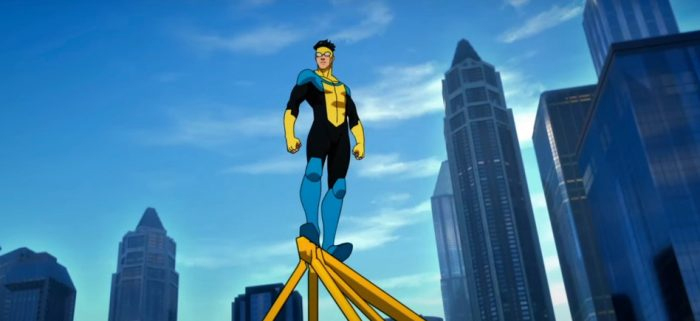
I published a new In the Frame piece at The Escapist this evening. With the release of the first three episodes of Invincible on Amazon Prime on Friday, I thought it was worth taking a look at what the new show means.

Invincible makes a big step forward for Amazon. As Warners and Disney continue consolidating their superhero content under their established brands, other studios are going to have to find ways to compete in the superhero content wars. Invincible is a fascinating testcase: a lavish adult-skewing hour-long animated series that aims to deliver superhero spectacle with a character largely unknown to the larger public. If the chow can make an impact, it bodes well for studios without their in-house intellectual property farms.

You can read the piece here, or click the picture below.

New Escapist Column! On Zack Snyder’s DCEU as a Joyride Through Comic Book History…

I published a new In the Frame piece at The Escapist this evening. With the release of Zack Snyder’s Justice League last week, it seemed like a good opportunity to dig into the movie’s portrayal of Superman.

One of the more interesting aspects of Snyder’s work on Man of Steel, Batman v.s Superman and Zack Snyder’s Justice League is the sense in which it offers a capsule account of a certain stretch of comic book history, effectively dramatising the characters’ journey from the “dark ‘n’ gritty” comics inspired by Watchmen and The Dark Knight Returns to the more aggressively and pointedly reconstructionist work of Grant Morrison on stories like Justice League or Final Crisis.

You can read the piece here, or click the picture below.

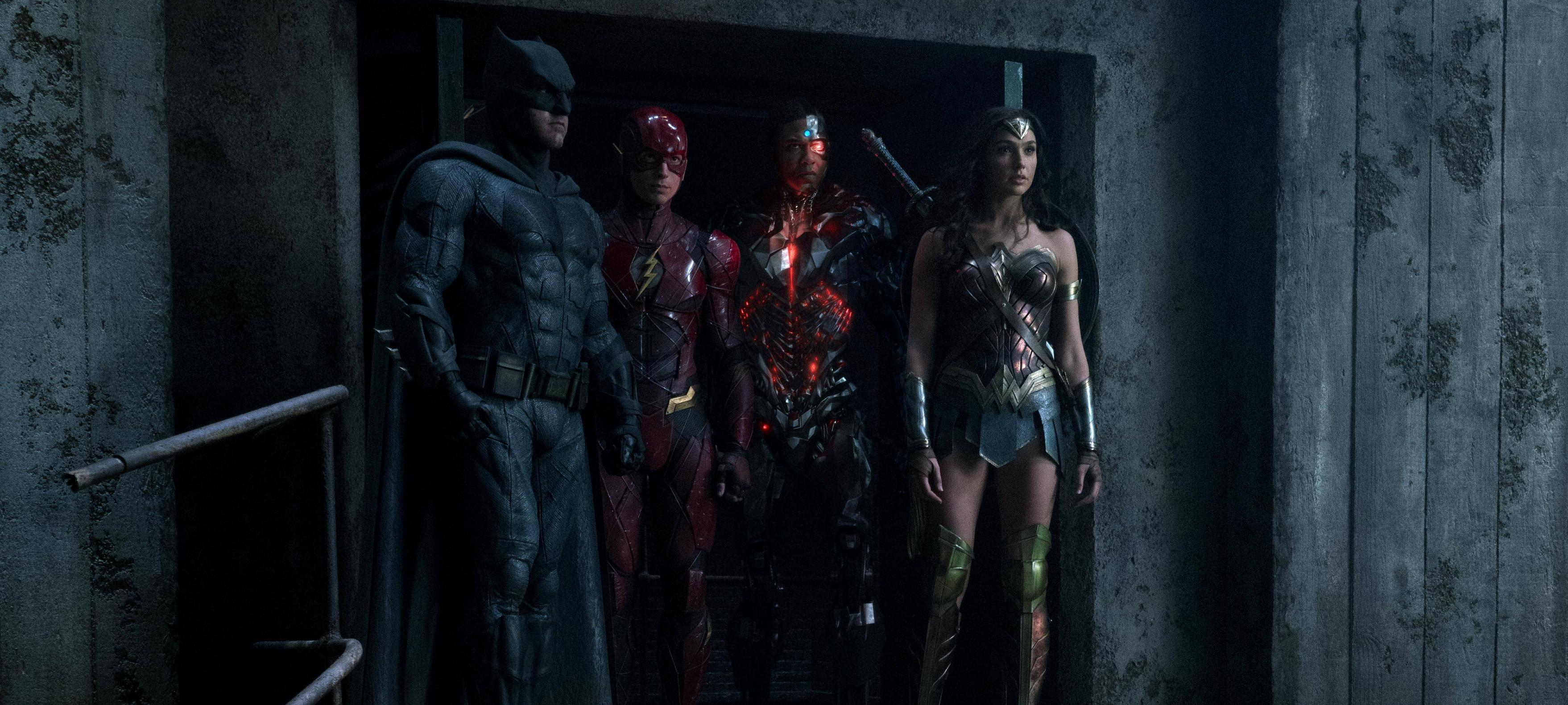
226. Zack Snyder’s Justice League (#86)

Hosted by Andrew Quinn and Darren Mooney, and this week with special guest Graham Day, The 250 is a fortnightly trip through some of the best (and worst) movies ever made, as voted for by Internet Movie Database Users.

This time, Zack Snyder’s Zack Snyder’s Justice League.

Following the death of Superman, Batman sets about putting together a team of superheroes to fight a threat that is charging at Earth from across the cosmos.

At time of recording, it was ranked the 86th best movie of all time on the Internet Movie Database.

Continue reading

New Escapist Video! On the Multiverse is the Way of the Future…

So, as I have mentioned before, I am launching a new video series as a companion piece to In the Frame at The Escapist. The video will typically launch with the Monday article, and be released on the magazine’s YouTube channel the following week. This is kinda cool, because we’re helping relaunch the magazine’s film channel – so if you can throw a subscription our way, it would mean a lot.

This week, we took a look at the emergence of the multiverse, which appears to be the future of various shared cinematic and television universe. Why is this idea suddenly so popular? What does it mean? What does it hold for the future?

New Escapist Column! On the Multiverse as the Future of Franchising…

I published a new In the Frame piece at The Escapist this evening. The past few months have seen a lot of attention directed at the multiverse, with a suggestion that both Warner Bros. and Disney would be embracing it as a storytelling model going forward.

This shift is interesting, given how much effort these companies have build into fashioning internally consistent shared universes, singular narratives unfolding across dozens of films building inexorably towards a climactic pay-off. However, this shift towards the multiverse feels like a logical response to any number of market forces: the shattering of the idea of the monoculture in the midst of the streaming wars, the pull of nostalgia, and the demands of the actors making these movies. It’s a new world. Actually, it’s several new worlds.

You can read the piece here, or click the picture below.

New Escapist Column! On How “The Snyder Cut” Went From Impossibility to Inevitability…

I published a new In the Frame piece at Escapist Magazine this evening. The big news this past week has been that Zack Snyder has been given $30m to finish his cut of Justice League.

This is quite a complicated matter. There’s a lot of discussion and debate around it, about what this means for the future of Hollywood. However, the news about the release of The Snyder Cut is down to a number of unique factors aligning in completely unpredictable ways, meaning that a project like this one went from being the last thing that Warners would want to being exactly what they needed. In the course of a few months, the Snyder Cut morphed from seeming impossibility to inevitability. That is an incredible turnaround.

You can read the piece here, or click the picture below.


New Escapist Column! On What Modern Superhero Films Could Learn From Sam Raimi’s “Spider-Man”…

I published a new In the Frame piece at Escapist Magazine this evening. With the news that Sam Raimi is going to be directing Doctor Strange and the Multiverse of Madness, I thought it was worth taking a look back at his Spider-Man movies.

Sam Raimi’s Spider-Man movies helped to pave the way for the modern superhero blockbuster, arriving at a pivotal moment for mainstream blockbuster cinema. Along with Blade and X-Men, Spider-Man demonstrated that it was possible to accurately translate these heroes to screen. In the years since, the superhero genre has become the dominant form of contemporary blockbuster cinema. However, rewatching Raimi’s Spider-Man movies, it is immediately clear that the genre hasn’t always developed in the healthiest or most satisfactory directions.

What could the MCU learn from Sam Raimi’s Spider-Man movies? You can read the piece here, or click the picture below.

“… You Wanna Get Nuts?” The Unique Legacy of Tim Burton’s “Batman”…

Tim Burton’s Batman is thirty years old this year, having opened in Irish cinemas thirty years ago this weekend. It leaves a complicated and underappreciated legacy.

To be fair, at least part of that is down to how the series ended. Joel Schumacher’s Batman Forever and Batman and Robin count among the worst blockbusters of the nineties and the worst comic book movies ever made. Taken together, they were responsible for killing not only that iteration of the cinematic Batman franchise, but also for effectively killing the superhero as a blockbuster genre until the triple whammy of Blade, X-Men and Spider-Man kick-started it again at the turn of the millennium.

Continue reading

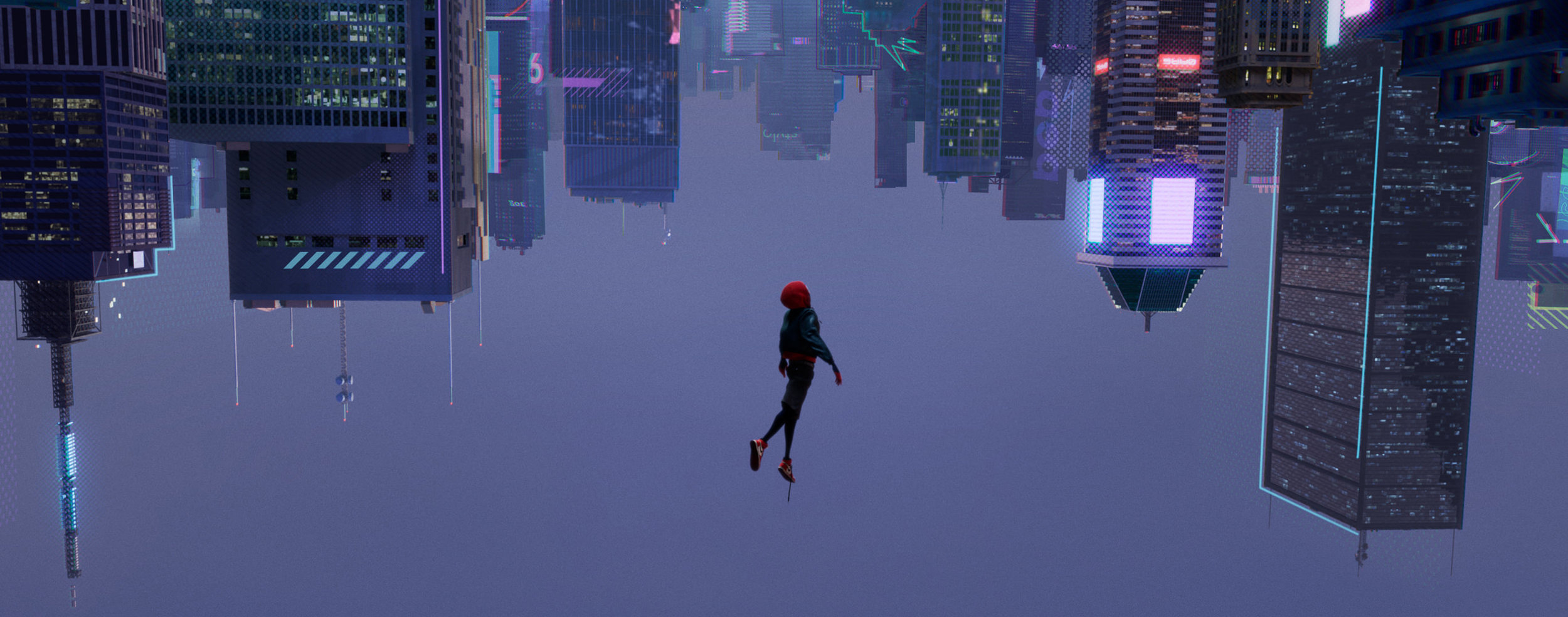
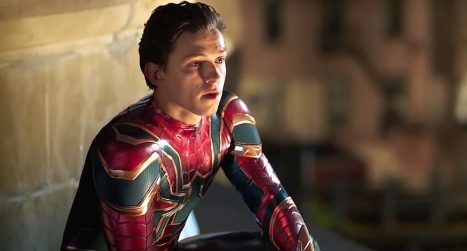
Non-Review Review: Spider-Man – Far From Home

Spider-Man: Far From Home cannot help but exist in the shadow of Avengers: Endgame.

Indeed, one of the problems marketing Far From Home was the manner in which the entire emotional premise of the film served as a spoiler for Endgame, which meant that the film had to wait quite late in the game to release its second trailer. This sets up an interesting tension with Far From Home, which finds itself in the the seemingly contradictory position of being both the last movie in the current “phase” of the Marvel Cinematic Universe and also a film actually being produced by a company other than Marvel Studios.

Masking his feelings.

This weird push-and-pull runs through Far From Home, which seems caught between existing as a coda and epilogue to Endgame and working as a Spider-Man movie in its own right. To a certain extent, this was always going to be a tension within Far From Home, even before Endgame set its sights on becoming the biggest movie of all time. Endgame was always going to exert a gravity on Far From Home, given its plot mechanics and its character decisions. Writers Chris McKenna and Erik Sommers, along with director Jon Watts, were always going to be reacting to narrative and character choices that they never made.

As such, the most interesting thing that Far From Home can do is to literalise that tension.

Night Monkey Moves.

Continue reading

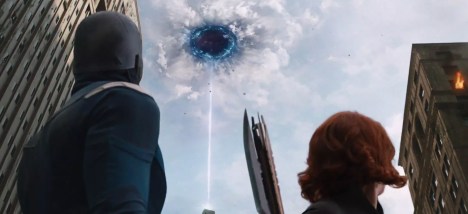
“We’re Not Soldiers”: The Cautious Superhero Optimism of “The Avengers”…

Before it was a Bomb, the Bomb was an Idea. Superman, however, was a Faster, Stronger, Better Idea. It’s not that I needed Superman to be “real,” I just needed him to be more real than the Idea of the Bomb that ravaged my dreams. I needn’t have worried; Superman is so indefatigable a product of the human imagination, such a perfectly designed emblem of our highest, kindest, wisest, toughest selves, that my Idea of the Bomb had no defense against him.

– Grant Morrison, Supergods

There was an idea, Stark knows this, called the Avengers Initiative. The idea was to bring together a group of remarkable people, see if they could become something more. See if they could work together when we needed them to to fight the battles we never could.

– Nick Fury, The Avengers

In hindsight, The Avengers looks like a sure bet; a bunch of recognisable characters from successful properties bound together to create a blockbuster.

It is a testament to how profoundly The Avengers has reshaped the media landscape in its image that this appears almost a given. In a world that has seen the release of Avengers: Infinity War and Avengers: Endgame, the original film in the franchise seems almost quaint. Only six heroes? Only one primary villain, and one who was previously defeated by Thor in Thor? Sure, Thor is “the strongest Avenger”, but that seems almost quaint in this era of universe-spanning crossovers that fold on the expansive casts of films like Ant Man or Black Panther or Guardians of the Galaxy. Perhaps it is an ode to the power of  the idea that The Avengers feels so small in hindsight.

At the same time, there’s a maturity and reflection in the original Avengers that is largely lacking from Infinity War and Endgame. One of the most frustrating aspects of Infinity War and Endgame is the way in which the films devolve into unquestioning power fantasies; stories about great men who wield the power of gods for their own benefit with little regard for the obligations or responsibilities that come with that power. The characters of Infinity War and Endgame never question the use of their power for their own benefit, never contemplate their right to hold the fate of four different universes in their hands. Banner never questions the appeal of living as the Hulk forever, just as Thor insists on abandoning his people to have wack adventures with the Guardians of the Galaxy cast.

In hindsight, what is most striking about The Avengers is how fascinated it is with the question of what superheroes are, and what function they serve. Perhaps in keeping with the general enthusiasm of the Marvel Cinematic Universe, or perhaps reflecting his own affection for the genre, Joss Whedon keeps coming back to the suggestion that superheros represent an idea and an ideal. They represent an idealised manifestation of American power and identity, quite literally contrasted at the end of the film with the horror and majesty of the atomic bomb.
Continue reading