• Following Us

  • Categories

  • Check out the Archives


  • Awards & Nominations

435. Star Trek Into Darkness (#—)

Hosted by Andrew Quinn and Darren Mooney The 250 is a weekly trip through some of the best (and worst) movies ever made, as voted for by Internet Movie Database Users.

This week, JJ Abrams’ Star Trek Into Darkness.

Captain James T. Kirk has been in command of the USS Enterprise for a year. In that time, he has not lost a single service man. Kirk is angling for the hottest new assignment – a five year mission of exploration into uncharted territory – when a terrorist attack masterminded by a rogue Starfleet Security Officer throws everything that Kirk thinks he knows into doubt.

At time of recording, it was not ranked on the list of the best movies of all time on the Internet Movie Database.

Continue reading

“No one trusts each other anymore.” Brian Michael Bendis’ “Avengers” and the War on Terror

One of the great things about long-running pop art, whether television shows, film franchises or comic books, is the sense in which they can serve as a reflection of shifting cultural concerns.

The Marvel Universe spans more than six decades of continuity. It is perhaps too much to call it a single story, even if comic book continuity is held together by that fiction. It is the work of countless writers and artists, working under different editorial regimes with different creative and commercial constraints. The visual language of the medium has shifted over decades, along with its target audience, not to mention its relationship with the mainstream culture.

Still, while monthly superhero comics are rarely considered high or important art, they are an interesting window into their particular cultural moment. These characters and archetypes are constantly changing and evolving, being reworked and recontextualised to fit the perpetual present. Rereading old comic books can feel like stepping inside a time machine, taking the reader back to not just a particular moment in comics continuity, but a funhouse mirror of the larger culture.

Brian Michael Bendis stewarded the Avengers titles for eight years, from 2004 to 2012. He managed the brand across multiple titles starting with Avengers Disassembled into New Avengers and Mighty Avengers, and through a host of epic status quo-altering events. Some of those events, like House of M, Secret Invasion and Siege, Bendis wrote himself. Other events, like Civil War, he simply tied into from the sidelines.

Still, that initial run of comics from Avengers Disassembled to Siege remains hugely important. Bendis restructured the Marvel Universe to place the Avengers franchise at its core, displacing the X-Men as the company’s flagship brand. Coinciding with the launch of Marvel Studios, that run is an obvious and ongoing touchstone for the Marvel Cinematic Universe, which has directly adapted segments of this run into films like Captain America: Civil War and shows like Secret Invasion.
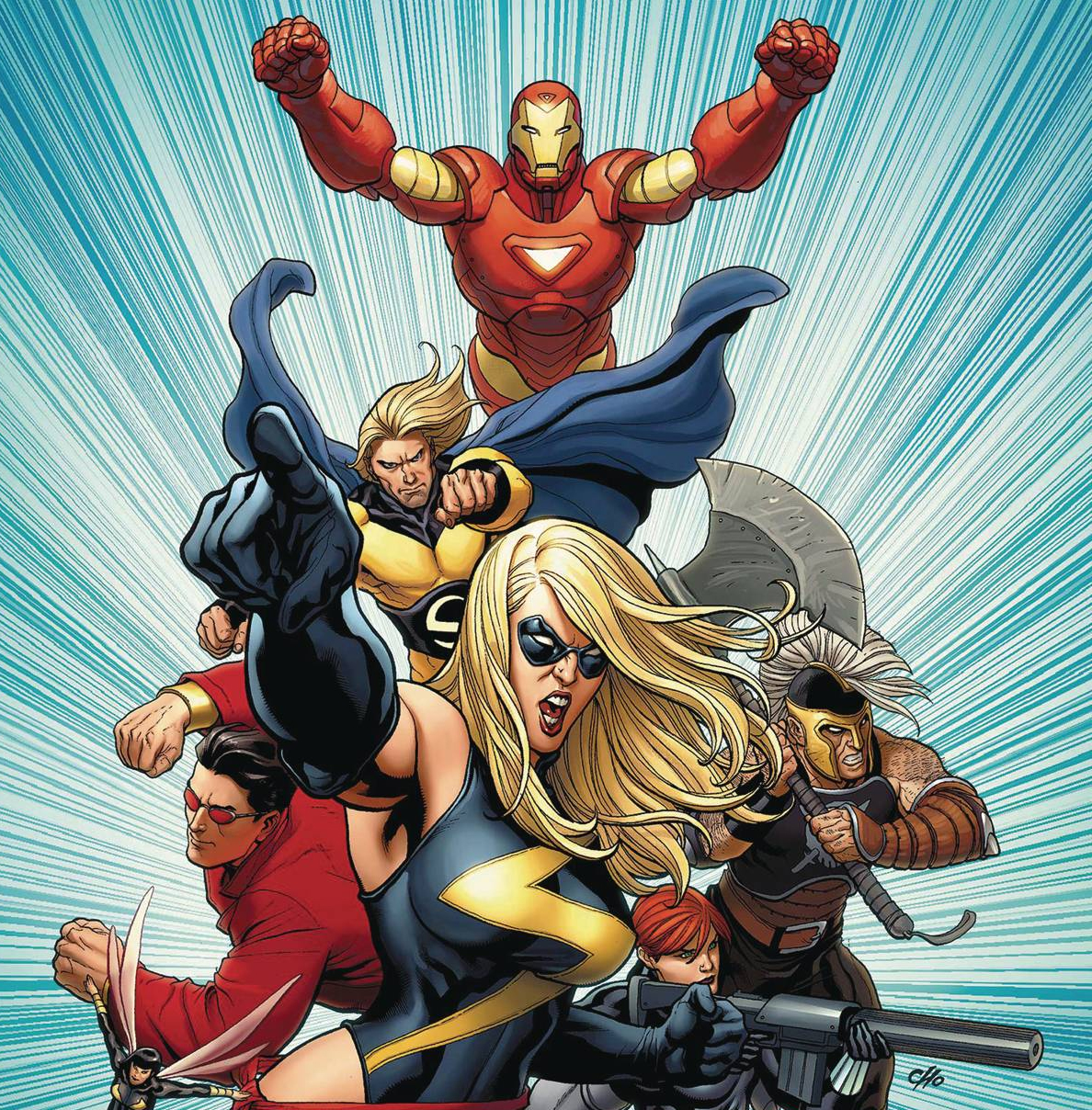
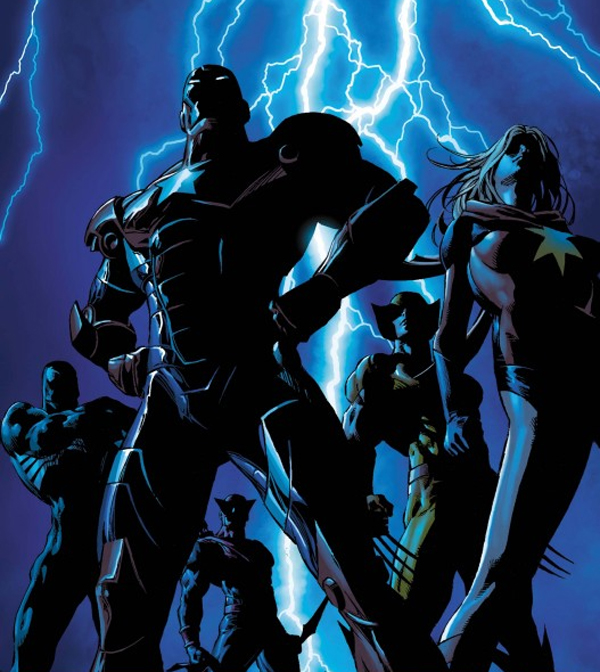
Even as the big crossover events like Avengers: Infinity War or Avengers: Secret Wars draw more heavily from the work of Bendis’ successor on the Avengers titles, Jonathan Hickman, Bendis’ Avengers remains a key influence. Thunderbolts*, for example, feels heavily indebted conceptually to Bendis’ Dark Avengers and even leans heavily on the character of Sentry, a continuity curiosity who became central to Bendis’ larger arcs.

However, even outside of its obvious cultural footprint, the remains one of the definitive explorations of the War on Terror in popular American culture, elevating the emotional and symbolic response to the 9/11 terrorist attacks into a sort of pop mythology, playing out the country’s psychodrama in costumes and capes. Bendis’ Avengers run is messy and uneven, occasionally downright clumsy in its execution. It is also a snapshot of a moment.
Continue reading

400. Ballistic: Ecks vs. Sever (#—)

Hosted by Andrew Quinn and Darren Mooney, this week with special guest Dean Buckley, The 250 is a (mostly) weekly trip through some of the best (and worst) movies ever made, as voted for by Internet Movie Database Users. New episodes are released every second Saturday at 6pm GMT, with the occasional bonus episode between them.

This time, the GameBoy Advance Games Ecks vs. Sever and Ballistic: Ecks vs. Sever.

Two of the best killers in the world find themselves thrown into conflict with one another, against the backdrop of Vancouver. Also, there are two famously good tie-in games available for the movie.

At time of recording, it was not ranked on the list of the worst movies of all time on the Internet Movie Database.

Continue reading

New Escapist Column! On Thor as the Marvel Cinematic Universe’s One True Superhero…

I published a new In the Frame piece at The Escapist this evening. With the looming release of Thor: Love and Thunder, it seemed like as good an excuse as any to take a look back at the character of Thor within the Marvel Cinematic Universe, and what makes him unique within the shared universe.

Interestingly, Thor is perhaps the only major character within the shared universe who feels like an old-fashioned superhero rather than a product of the military industrial complex. This is particularly apparent within Kenneth Branagh’s Thor and Taika Waititi’s Thor: Ragnarok, both of which are essentially stories about Thor being exiled from or rejecting the structures of Asgardian society. The result of all this is interesting. In a universe where so many heroes are defined by their relationship to the armed forces, Thor actually feels like a superhero.

You can read the piece here, or click the picture below.

268. Incendies (#110)

Hosted by Andrew Quinn and Darren Mooney, The 250 is a (mostly) weekly trip through some of the best (and worst) movies ever made, as voted for by Internet Movie Database Users. New episodes are released every Saturday at 6pm GMT.

This time, Denis Villeneuve’s Incendies.

Following the death of their mother Nawal, twins Jeanne and Simon find themselves dealing with dark family secrets bubbling to the surface. Nawal’s will includes two instructions for her children, to find both their father and their long-lost sibling. While Simon dismisses this last request as another manipulation from an emotionally-distant mother, Jeanne embarks on an epic journey to trace her family’s history and perhaps change its future.

At time of recording, it was ranked 110th on the list of the best movies of all time on the Internet Movie Database.

Continue reading

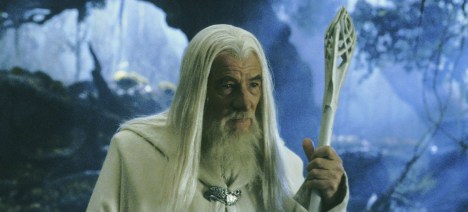
New Escapist Column! On “The Lord of the Rings” as a Blockbuster for the Post-Ironic Age…

I published a new In the Frame piece at The Escapist this evening. With the twentieth anniversary of Peter Jackson’s The Lord of the Rings fast approaching, it seemed like a good opportunity to place the films in the context of their times.

Obviously, every work reflects the time in which it is produced – it speaks to a variety of factors (consciously or unconsciously) acting on the creative talent as it evolves into its final form. However, audiences also can’t help but engage with a work in the context of the time in which it is released. Peter Jackson shot most of his Lord of the Rings trilogy before 9/11, even if The Lord of the Rings: The Fellowship of the Rings was released in theatres three months after the attack. Still, it’s not to feel like the films’ earnestness and sincerity resonated with an audience looking for meaning in seemingly chaotic and arbitrary time.

You can read the piece here, or click the picture below.

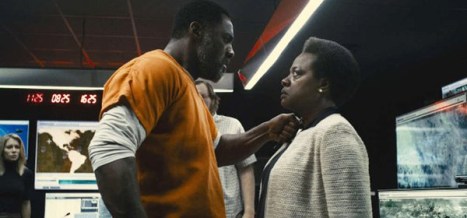
New Escapist Column! On How “The Suicide Squad” Deconstructs Amanda Waller…

I published a new In the Frame piece at The Escapist this evening. With the release of The Suicide Squad, it seemed like a good opportunity to take a look at one small-but-clever aspect of James Gunn’s superhero sequel.

The character of Amanda Waller is a pop culture archetype. She is an example of the ruthless intelligence operative who will cross whatever line it takes in pursuit of what she believes to be the greater good. Outside of comic books, one need only look at the character of Jack Bauer. Within the modern superhero landscape, the archetype is embodied by Nick Fury. These characters might be edgy or ambiguous, but they are also undeniably cool. Gunn’s approach to Waller in The Suicide Squad is interesting in large part because it rejects that idea of effortless cool in favour of something a lot blunter and more horrific.

You can read the piece here, or click the picture below.

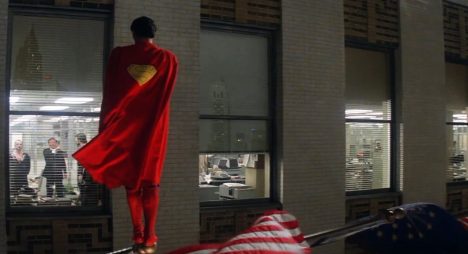
New Escapist Column! On the “Superman II” as the Rosetta Stone of Zack Snyder’s DCEU…

I published a new column at The Escapist this evening. With the release of Zack Snyder’s Justice League this week, it seemed like an appropriate opportunity to take a look at the strange and enduring influence of Superman II on the DCEU, from Man of Steel forward.

Superman II is one of the cornerstones of the superhero genre. It was the first big superhero blockbuster sequel, setting the stage for the franchises that would follow. It was the first depiction of the urban devastation that has become a fixture of the modern superhero spectacle. However, what makes movies like Man of Steel and Zack Snyder’s Justice League so interesting is the extent to which they interrogate and explore the fantasy presented in Superman II.

You can read the piece here, or click the picture below.

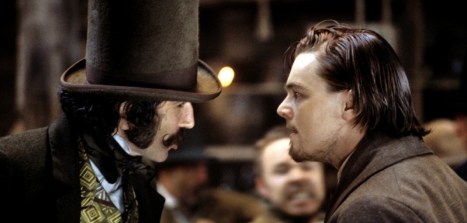
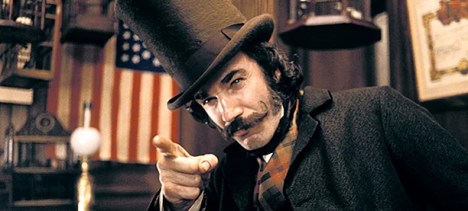
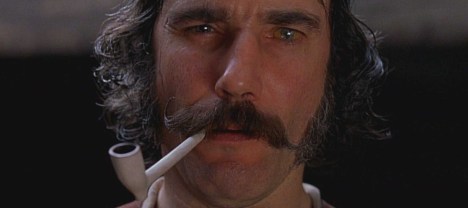
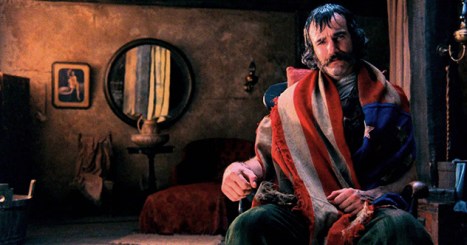
“The Blood Stays on the Blade”: The Birth of a Nation in Scorsese’s “Gangs of New York”…

The podcast that I co-host, The 250, continued our belated Summer of Scorsese last week with a look at Kundun. This week, we’re looking at Gangs of New York. It is a fun and broad discussion that is well worth your time, but it spurred some of my own thoughts about Martin Scorsese’s complicated and messy 2002 passion project.

Martin Scorsese had wanted to make Gangs of New York for over thirty years.

The director had reportedly stumbled across a copy of Herbert Asbury’s book while house-sitting for a friend over New Year in 1970. Gangs of New York became one of the projects that Scorsese desperately wanted to make, alongside The Last Temptation of Christ, which had been given to him by Barbara Hershey on the set of Boxcar Bertha. Of course, Scorsese would not get to make either The Last Temptation of Christ or Gangs of New York during the seventies. Instead, the implosion of New York, New York would set his plans back years.

Scorsese had reportedly been hoping to make either The Last Temptation of Christ or Gangs of New York following the release of New York, New York, when Robert DeNiro convinced him to direct Raging Bull instead. Scorsese would spend the eighties adapting to the collapse of the New Hollywood movement, and would just about manage to get The Last Temptation of Christ produced. He never gave up on Gangs of New York, and the film went through various iterations over the years. It might have starred Jim Belushi and Dan Aykroyd or Mel Gibson and Willem Dafoe.

When the possibility of making Gangs of New York emerged in the late nineties, it might have seemed like a culmination. As the project lurched closer and closer to actually materialising, it must have seemed like it would be one of Scorsese’s last major motion pictures. After all, Scorsese was almost sixty. Steven Spielberg and George Lucas were the only two other “movie brats” who were still making high-profile and big-budget films. There was perhaps a sense that Scorsese might just about have this film left in him, before retiring to less mainstream and more esoteric works.

While Scorsese had entered the nineties on a high note with Goodfellas, the films that followed were not as universally welcomed. Roger Ebert complained about “a certain impersonality” in Cape Fear, the film following Goodfellas. The Age of Innocence arrived with a shrug. Casino was treated as highly derivative of Goodfellas, with Peter Travers sighing that “the black cloud of letdown hung over Scorsese’s epic tale.” Kundun sparked a diplomatic incident with China, and was quietly buried by Disney. Bringing Out the Dead felt like a curiosity more than a classic.

Of course, history has been kind to all (or at least most) of those films. Scorsese’s nineties output is recognised in hindsight as a vibrant and important part of his career. Nevertheless, as Gangs of New York slowly and awkwardly forced itself into being, it might have looked like the last swing of the bat from one of the great American directors. A film that had been simmering in the director’s imagination for decades, it might serve as a definitive and concluding statement about the city and the nation that he loved.

More than twenty years after the shutters came down on the New Hollywood movement, Scorsese would finally get to make an epic that was comparable to Francis Ford Coppola’s Apocalypse Now or Michael Cimino’s Heaven’s Gate. Of course, those sorts of projects feel like capstones – Heaven’s Gate famously brought United Artists tumbling down, while Coppola would never direct anything with as much freedom or cultural impact after Apocalypse Now. As such, Scorsese’s long-delayed shot at making his epic passion project seemed like closure.

Looking back at Gangs of New York, this seems absurd. Almost two decades after Gangs of New York, Scorsese is still making films. Scorsese is enjoying larger budgets on films like The Irishman and The Killers of the Flower Moon than he did earlier in his career. If anything, Gangs of New York is a watershed. It is not Scorsese’s epic finale, but is instead the first in a series of epics that includes films like The Aviator or The Wolf of Wall Street. It introduced Scorsese to a young actor who “reignited” his enthusiasm for film making.

Indeed, time has been very kind to Gangs of New York. The film seemed to arrive at a crucial moment, both for Scorsese as director and for the United States as a nation. Gangs of New York offers a snapshot of American history that resonates strongly. It is not so much a historical picture as a dive into the depths of a shared unconscious and an excavation of the scars left on the American psyche. The catchy Oscar-nominated theme song might have boasted that the film was about “the hands that built America”, but the film was decidedly less optimistic in its perspective.

Gangs of New York is a story about the blood that stains those hands, and how history tends to repeat for those who refuse to learn from it.

Continue reading

125. V for Vendetta (#153)

Hosted by Andrew Quinn and Darren Mooney, The 250 is a (mostly) weekly trip through some of the best (and worst) movies ever made, as voted for by Internet Movie Database Users. New episodes are released every Saturday at 6pm GMT.

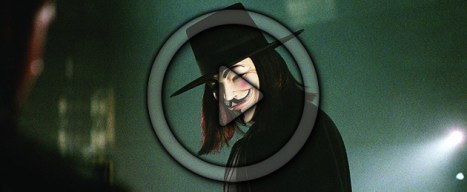
This time, James McTeigue’s V for Vendetta.

Accosted by “finger men” for breaking curfew, Evey Hammond is rescued by a mysterious stranger who only introduces himself as “V.” As Evey finds herself drawn deeper into the world of this violent vaudevillian figure and as she discovers more and more of his plot to topple the country’s totalitarian regime, Evey finds herself wonder whether this masked figure is a vigilante or villain.

At time of recording, it was ranked the 153rd best movie of all time on the Internet Movie Database.

Continue reading