• Following Us

  • Categories

  • Check out the Archives


  • Awards & Nominations

Non-Review Review: King Richard

King Richard is an interesting take on the classic sports biopic.

On the one hand, King Richard is a very conventional film. It’s a movie that hits all of the marks that one expects for an inspiring look at two sports icons like Venus and Serena Williams. There is family tension. There are debates about whether the young athletes are ready. There are training montages. Made with the active participation of the Williams family, King Richard was never going to be a gritty “warts and all” interrogation of its subject. Instead, it’s a charming and charismatic star vehicle for Will Smith, one of cinemas most charming and charismatic stars.

King Richard holds Court.

However, there’s also an interesting tension at play within the film itself, one that derives from the film’s understand of just how inevitable the success of Venus and Serena Williams actually is. To be fair, most sports biopics are stories of triumph over adversity, given that they tend to focus on successful sports stars. However, Venus and Serena Williams exist in such rarified company, dominating culture to such an impressive degree, that the conclusion of King Richard doesn’t just feel predetermined but inescapable.

Cleverly, King Richard doesn’t try to fight this idea. Instead, it leans into it. King Richard is a character study of Richard Williams, the hustler who boasts eagerly and enthusiastically that he is “in the champion-raising business.” To any outside observer, Richard’s confidence borders on insanity. When an observer remarks that he’s claiming to have raised “the next Mohammad Ali”, Richard is quick to correct them and boast that he’s got “two” of them. There’s an interesting frisson at play here, because King Richard trusts its audience to know that – no matter how surreal his claims might appear to his contemporaries – he is entirely correct.
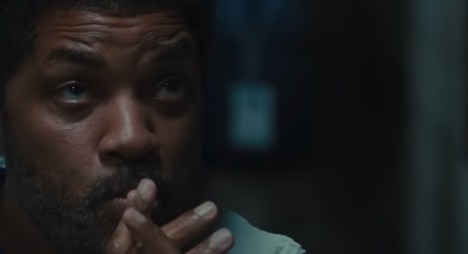
A Rich(ard) character study…

In hindsight, it seems almost absurd to point out how severely the odds were stacked against the success of Venus and Serena Williams. The two were born into a large working class family in Compton, surrounded by drugs and violence, with nowhere to train but community tennis courts. Richard and his wife Brandy didn’t have the money to send the pair to upper-class academies, so had to teach the girls themselves with an obsessive devotion to recording and playing back the work of professionals. However, none of that really matters, because any audience watching King Richard knows the outcome of this story.

The result of all of this is a sports biopic that hews quite close to the familiar rhythms and template of other sports biopics, but which operates according to a different internal tension. It’s a movie which sticks close enough to events that there’s no second act humbling of Richard, Venus or Serena. The movie never tries to build suspense around whether its stars are going to succeed in the face of the enormous odds against them, but instead about when and why. It’s a subtle shift in emphasis. However, coupled with the film’s strong casting and powerhouse lead performance, it’s enough to help King Richard stand out from the crowd.

The perfect Ten(nis)?

Continue reading

New Escapist Video! On the Reverence for the Irreverent “Ghostbusters”…

So, it’s been a fun road for the video companion series to In the Frame at The Escapist, but all good things must come to an end. It looks like this will be the last episode of the series, at least for a little while. It’s been a pleasure.

That said, it’s a hell of a topic to go out on, as we discuss the strange reverential cult that has developed around Ghostbusters, with the wry and ironic eighties comedy increasingly treated as something of a holy text for a certain generation of fans. It’s a very strange illustration of how nostalgia warps and distorts the very things that it claims to remember.

New Escapist Review! “Wheel of Time”…

I published a new review at The Escapist today. Wheel of Time is premiering on Amazon on Friday, and I was lucky enough to see the first six episodes.

Publicity around Wheel of Time has mostly focused on comparisons to Game of Thrones. This is reductive, and not just because Robert Jordan’s fantasy epic predates that of G.R.R. Martin. In reality, Wheel of Time often feels like a warm-up for Amazon’s upcoming adaptation of Lord of the Rings. As one might expect, given the source material, Wheel of Time offers a detailed and compelling fantasy world, but the series gets a little bit too preoccupied with setting all of its balls in motion rather than engaging with the story that it is telling.

You can read the piece here, or click the picture below.

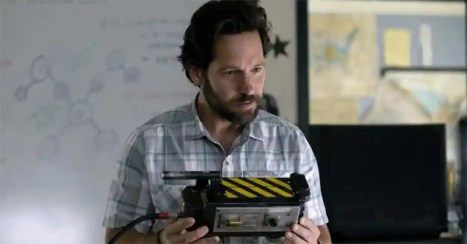
Non-Review Review: Ghostbusters – Afterlife

In the final act of Ghostbusters: Afterlife, young Phoebe has a sudden realisation about the farm that her family has inherited from her eccentric grandfather. “This isn’t a farm,” she boasts. “It’s a trap.”

She could just as easily be talking about the film itself. Afterlife is a belated sequel to the original Ghostbusters, consigning Ghostbusters II to a weird continuity limbo where Ray still owns an occult bookstore but there’s no way that that the film’s climax could have happened. The film follows the family of Egon Spengler, his estranged daughter and her two grandchildren, who take ownership of his farm shortly after his death. Inevitably, the family unit learns that the eccentric patriarch who abandoned them in the middle of the night with no explanation really did love them all along.

Blast from the past.

Afterlife is suffocated in a reverential nostalgia that treats the original Ghostbusters as a fetish object. Sure, a casual audience member might watch Ghostbusters as an irreverent mid-eighties comedy that was cleverly skewing Reagan era values, but Afterlife instead sees an earnest classic of American cinema that deserves to be venerated and celebrated as a monument of popular culture. Much like Ivo Shandor erected the skyscraper at 55 Central Park West as a tribute to the Cult of Gozer, Afterlife has been erected as a monument to the cult of Ghostbusters.

It’s telling that the movie’s subtitle is “Afterlife” rather than “Resurrection.” This is not a movie about breathing new life into an existing property. It’s not about finding anything new or interesting to do with these characters or concepts. Instead, it’s about finding a way to tap into the audience’s desire for Ghostbusters nostlagia as a way to wring a few more dollars. In its own way, Afterlife is as cynical as Peter Venkeman in the original Ghostbusters, but at least Venkeman had the decency not to disguise his ruthless pragmatism as earnest sentiment.

Kidding around.

Afterlife is a nightmare coloured in shades of sepia-tinted nostalgia. It is a story about how the best that children can ever hope to accomplish is to emulate their forebearers, foresaking any identity of their own as they grapple with problems that their grandparents singularly failed to resolve. It is a story about how even death is not enough to remove a respected actor and writer from his obligations to a piece of intellectual property, and a reminder of how easily the dead can be animated to serve the demands of the living.

In the world of Afterlife, the dead exist to satisfy the living. This isn’t nostalgia, it is necrophilia.

Continue reading

New Escapist Column! On “Ghostbusters”, and How Irreverence Became a Source of Reverence…

I published a new In the Frame piece at The Escapist this evening. With the release of Ghostbusters: Afterlife this weekend, it seemed like a good opportunity to take a look back at the original Ghostbusters.

The original Ghostbusters was a wry and cynical movie about three academics who find themselves forced to work in the public sector, and so start a business busting ghosts in a run-down and decaying New York City. The film was very self-aware and very glib, essentially built around the idea that three men who would be con artists in any other situation were able to come out on top in eighties America. However, in the years since, Ghostbusters has become an institution. What was once irreverent is now venerated, without any of the self-awareness that made the first film so compelling.

You can read the piece here, or click the picture below.

Doctor Who: Flux – Chapter Three: Once, Upon Time (Review)

“Love is the only mission.”

Once, Upon Time is equal parts ambitious and frustrating.

It feels like an attempt to adopt the approach that Chris Chibnall took to The Halloween Apocalypse and apply it to a mid-season episode. Allowing for the tertiary plot involving Yaz, War of the Sontarans was recognisable as a fairly straightforward Chibnall era episode, albeit one tied to the season arc. It was a historical epic about a marginalised female hero like Rosa or Spyfall, Part II and it was also a modern-day invasion story like Arachnids in the U.K. or Revolution of the Daleks. Sure, the plot mechanics where governed by the larger concerns of Doctor Who: Flux, but it was recognisable as an episode of Doctor Who.

Blaster from the… future?

In contrast, Once, Upon Time is a radically different approach to Doctor Who on television, one that feels like an extension of the style of The Halloween Apocalypse. On some level, it recalls another of the bolder scripts of the Chibnall era, The Timeless Children, in that it really feels like Chris Chibnall is driving Doctor Who like he stole it. He is trying to do something new with a nearly sixty-year-old franchise. That is genuinely admirable, particularly given how traditionalist the rest of the era around it can feel. For Doctor Who to grow and evolve, it needs to be able to try new things.

However, that’s a very qualified comparison. Like The Timeless Children before it, Once, Upon Time is an episode that doesn’t necessarily work on its own terms. It demonstrates that an episode like The Halloween Apocalypse – an episode with multiple seemingly disconnected threads constantly pushing the narrative forward – only really worked as a season premiere. The Halloween Apocalypse worked because it started with a bang. The audience were oriented coming into the episode, which made the chaos somewhat compelling.

Time, pyramided.

In contrast, Once, Upon Time is too disjointed. It never provides the audience with enough to hold on to as it jumps from one concept to another. It is an episode that should theoretically have a set of clear emotional hearts – Dan and Diane, Vinder and Bel, the Doctor and her past – but gets too tied up in scale and speed to really ground anything that is happening. Once, Upon Time feels like a more dynamic version of The Timeless Children, a lot of exposition in place of what should be a compelling and engaging emotional narrative.

Once, Upon Time feels like it is trying for something new, but it isn’t quite succeeding.

Back up.

Continue reading

260. El laberinto del fauno (Pan’s Labyrinth) (#146)

Hosted by Andrew Quinn and Darren Mooney, with special guest Jack Packard, The 250 is a (mostly) weekly trip through some of the best (and worst) movies ever made, as voted for by Internet Movie Database Users. New episodes are released every Saturday at 6pm GMT.

This time, Guillermo Del Toro’s El laberinto del fauno.

In the aftermath of the Spanish Civil War, a young girl named Ofelia moves to her new stepfather’s house. As Captain Vidal ruthlessly hunts down the remaining rebels, Ofelia discovers that there is something enchanted lurking in the nearby woods. A mysterious faun promises to secret Ofelia away to a magical realm, if she can complete three tasks. As Ofelia finds herself caught between fantasy and reality, she discovers the sometimes the worst monsters are the human kind.

At time of recording, it was ranked 146th on the list of the best movies of all time on the Internet Movie Database.

Continue reading

New Escapist Video! “Ghostbusters: Afterlife is a Lifeless Franchise Resurrection”

I’m thrilled to be launching movie reviews on The Escapist. Over the coming weeks and months, I will be joining a set of contributors in adding these reviews to the channel. For the moment, I’m honoured to contribute a three-minute film review of Ghostbusters: Afterlife, which will release in theatres next weekend.

New Escapist Column! On “The Lord of the Rings” as a Blockbuster for the Post-Ironic Age…

I published a new In the Frame piece at The Escapist this evening. With the twentieth anniversary of Peter Jackson’s The Lord of the Rings fast approaching, it seemed like a good opportunity to place the films in the context of their times.

Obviously, every work reflects the time in which it is produced – it speaks to a variety of factors (consciously or unconsciously) acting on the creative talent as it evolves into its final form. However, audiences also can’t help but engage with a work in the context of the time in which it is released. Peter Jackson shot most of his Lord of the Rings trilogy before 9/11, even if The Lord of the Rings: The Fellowship of the Rings was released in theatres three months after the attack. Still, it’s not to feel like the films’ earnestness and sincerity resonated with an audience looking for meaning in seemingly chaotic and arbitrary time.

You can read the piece here, or click the picture below.

New Podcast! Podcast 616 – “Eternals”

Podcast 616 is a podcast looking at the Marvel Cinematic Universe. I was thrilled to be invited to join Dan Owen for a discussion of Chloé Zhao’s Eternals, which is a movie I enjoyed considerably more than most.

It’s a fun and broad discussion, which delves into questions around auteurship within the Marvel Cinematic Universe, the paradox of superheroes, the question of power, and the challenges in adapting concepts like the Deviants for the big screen. It was really fun to roll up my sleeves and delve into this discussion with Dan, which allowed me to chat about everything from my blind spots with certain characters to the way in which the plot and themes of Eternals feels true to the spirit – if not necessarily the art – of Jack Kirby.

You can listen to the episode here, or click the link below.