• Following Us

  • Categories

  • Check out the Archives


  • Awards & Nominations

New Escapist Column! On “The Last Duel”, “Dune”, “The Green Knight”, and Being the Hero of One’s Own Story…

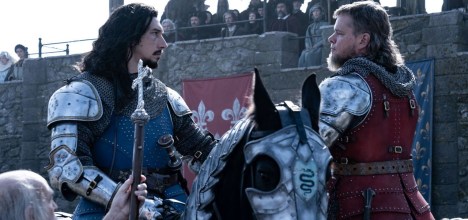
I published a new column at The Escapist at the weekend. With the release of Dune and The Last Duel on home media, it seemed like a good opportunity to take a look at the overlap between the two films, along with The Green Knight.

All three stories are recognisable as traditional epics, medieval or pseudo-medieval adventures featuring men who perceive themselves to be the heroes of their own narratives. However, all three films cleverly interrogate that idea of story and narrative, asking what it means to be the hero of one’s own story and who gets to control the narrative. It’s a fascinating and interesting trend, and it’s notable that all three films premiered within a few months of each other.

You can read the piece here, or click the picture below.

New Escapist Column! On What Three More “Spider-Man” Movies Might Mean For the MCU…

I published a new In the Frame piece at The Escapist this evening. With reports that Sony have plans for another trilogy of movies built around Tom Holland’s Peter Parker, it felt like a good time to reflect on what that might mean.

After all, most Marvel Cinematic Universe properties seem to be content with trilogies. Robert Downey Jr. and Chris Evans tapped out after three films. There is some suggestion that directors James Gunn and Peyton Reed may be done with their properties after completing their third films. So it’s interesting to imagine a world where Tom Holland has headlined six solo Spider-Man movies. What challenges might this pose for the Marvel Cinematic Universe? What opportunities?

You can read the piece here, or click the picture below.

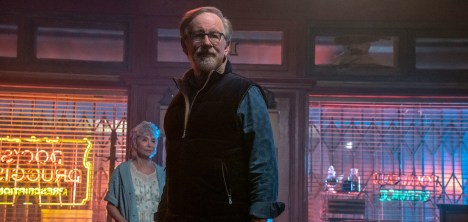
New Escapist Column! On The Reflective and Introspective Nature of Late Steven Spielberg…

I published a new In the Frame piece at The Escapist on Friday. With the looming release of West Side Story, it seemed like a good opportunity to take a look at the late career of Steven Spielberg.

Spielberg is a director who defined and shaped Hollywood, largely by inventing the modern blockbuster with Jaws. What is really interesting about so much of his twenty-first century output, starting with A.I. Artificial Intelligence and continuing into films like Ready Player One, is the sense in which Spielberg seems to be grappling with the long-term and unintended consequences of how he shaped cinema, to the point that many of his modern movies – from War Horse to The Post – seem to be the kinds of movies that he squeezed out of the market.

You can read the piece here, or click the picture below.

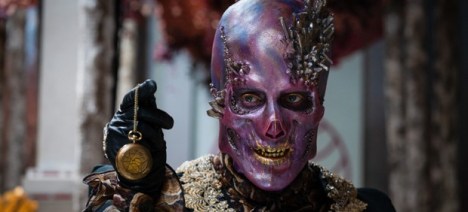
Doctor Who: Flux – Chapter Six: The Vanquishers (Review)

“Not like we don’t have enough to do.”

And, like that, Doctor Who: Flux collapses into itself, in a season finale that manages to combine the worst aspects of both The Battle of Ranskoor av Kolos and The Timeless Children.

To be fair, this was always the risk. It was obvious from The Halloween Apocalypse that the season would be putting a lot of weight on the finale to determine whether it all worked or not. Particularly in episodes like Once, Upon Time and Survivors of the Flux, Chibnall was effectively able to structure the season so that the finale would make or break the season as a whole. Given Chris Chibnall’s track record with season finales, this was always a gamble. However, it was an approach that allowed the entire season to buttress itself with the audience’s good faith and hope. With The Vanquishers, it all comes down like a deck of cards.

Watch yourself.

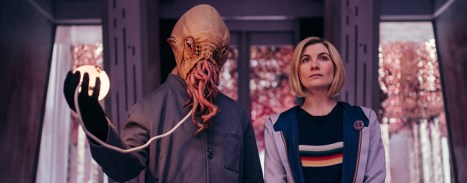
The Vanquishers is in many ways a very typical Chris Chibnall episode, indicative of his approach to showrunning Doctor Who dating back to The Woman Who Fell to Earth. It’s an episode that is powered by plot, based on the assumption that more plot makes the episode better, and that the episode is more engaging whenever Chibnall has something else that he can cut to. In some ways, the splitting of the Doctor into three versions of herself “split across three realities” feels perfectly suited to Chibnall’s sensibility, effectively allowing Jodie Whittaker to star in three separate episodes that the series can keep cutting across.

The problem is that none of the three episodes are any good, and none are in anyway satisfying as a conclusion to this epic saga.

Ood one out.

Continue reading

262. Superbabies: Baby Geniuses 2 (-#2)

Hosted by Andrew Quinn and Darren Mooney, and this week with special guest Luke Dunne, The 250 is a weekly trip through some of the best (and worst) movies ever made, as voted for by Internet Movie Database Users. New episodes are released Saturdays at 6pm GMT.

So this week, Bob Clark’s Superbabies: Baby Geniuses 2.

Dating back to the dark days of the Cold War, there has always been one superhero who has taken the best interests of babies to heart. Many believe that Baby Kahuna is a myth, a legend. He is a rumour discussed in hushed tones, a bedtime story with no basis in reality. However, four babies are about to discover that Baby Kahuna is very real indeed – and the fate of the world might depend on him.

At time of recording, it was ranked 2nd on the list of the worst movies of all time on the Internet Movie Database.

Continue reading

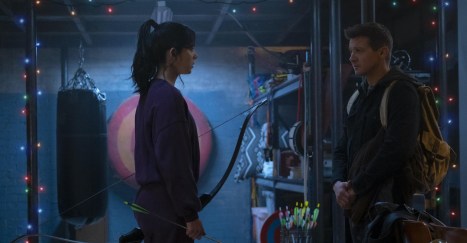
New Escapist Column! On The Genre Dissonance of “Hawkeye”…

I published a new column at The Escapist at the weekend. With the release of Hawkeye on streaming, it seemed worth an opportunity to take a look at the show.

In particular, there’s a fascinating genre dissonance between what Hawkeye is trying to be and what it actually is. The show positions itself as a feel-good holiday buddy comedy, but it also inherits the weight of a film noir. It is essentially a six-episode series rooted in the title character’s attempts to recover the one piece of evidence that links him to mass murder, but the show absolutely refuses to let any of these considerations get in the way of its desire to be “fun” and “chirpy.” The result is an interesting tonal clash between what Hawkeye wants to be, and what it actually is.

You can read the piece here, or click the picture below.

New Escapist Column! On the Quiet Revolution of Disney’s Modern Princess Movies…

I published a new In the Frame piece at The Escapist this evening. With the release of Encanto this weekend, it seemed like a good opportunity to talk about the animated “princess” movies being produced by Disney.

Disney has always been associated with these movies, dating back to the breakout success of Snow White and the Seven Dwarves. However, the company has also long had a complicated relationship to them, and in particular the way in which they are perceived as movies aimed at young girls. However, the past decade has seen the studio clever and consistently reinventing this archetypal “fairy tale” sort of story for the twenty-first century, to the point that it’s arguably that the run of movies from Tangled onwards has been the most consistent of the studio’s output.

You can read the piece here, or click the picture below.

Doctor Who: Flux – Chapter Five: Survivors of the Flux (Review)

“We’re not in the universe.”

Survivors of the Flux marks a return to the narrative style of both The Halloween Apocalypse and Once, Upon Time.

It’s not so much an individual episode of television so much as it’s a space in which the larger narrative threads of the season advance itself. While it’s not as scattershot as Once, Upon Time, it lacks the clarity of focus and momentum that held The Halloween Apocalypse together as a season premiere. Surivivors of the Flux often feels like things happening, which is particularly noticeable in the two story threads focusing on the Great Serpent and the separated companion crew, which are largely a series of disconnected vignettes jumping through time and space respectively to provide a sense of scale to the adventure.

Tomb to manoeuvre.

Even more than The Halloween Apocalypse, Survivors of the Flux is an episode that hinges heavily on the looming series finale. The nature of Doctor Who: Flux places a lot of weight on The Vanquishers. If the season finale is suitably compelling, any earlier missteps will either be retroactively justified or easily excused. However, if the last episode of the set collapses into itself, it may erase a lot of the more interesting ideas leading into it. It is best to travel hopefully, but The Battle of Ranskoor Av Kolos and The Timeless Children are perhaps cause for concern.

Survivors of the Flux is not only a heavily serialised instalment, it’s also recognisable as the first half of the season finale. It is comparable to something like The Stolen Earth or Dark Water. The best of these penultimate seasonal episodes manage to balance a compelling self-contained narrative, or at least engaging character work, with the necessity of setting up larger plot arcs to pay off the following episode. Survivors of the Flux feels a lot more like homework than episodes like Heaven Sent or World Enough and Time.
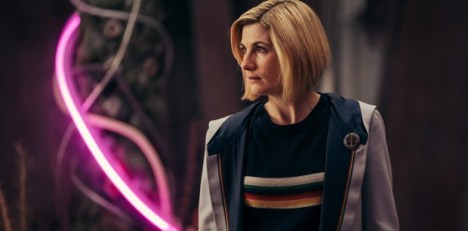
Glowing concern.

Continue reading

262. Sunrise: A Song of Two Humans (#250)

Hosted by Andrew Quinn and Darren Mooney, The 250 is a (mostly) weekly trip through some of the best (and worst) movies ever made, as voted for by Internet Movie Database Users. New episodes are released every Saturday at 6pm GMT.

This time, F.W. Murnau’s Sunrise: A Song of Two Humans.

In the countryside, a married man finds himself tempted by a visitor from the city. Deciding to murder his wife and escape from his mundane life, the man has a last minute change of heart. Their passion reignited, the married couple embark on an adventure to the big city, where they might get lost in the crowds and perhaps find each other once again.

At time of recording, it was ranked 250th on the list of the best movies of all time on the Internet Movie Database.

Continue reading

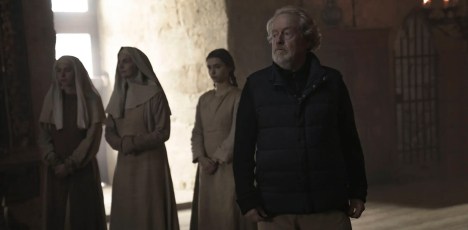
New Escapist Column! On Letting Ridley Scott Be a Grumpy Old Man…

I published a new In the Frame piece at The Escapist this evening. With the release of House of Gucci, Ridley Scott has had a chance to talk about the financial failure of The Last Duel, blaming “millennian” audiences.

Scott’s comments have generated considerable online outrage, fueling more than a few clickbaity headlines designed to stoke anger. It’s a familiar process, which is why so many interviews seem to consist of asking really great directors what they think about superhero movies so that the outlet might be able to go viral with a spicy headline. In truth, Scott’s a filmmaker who has been working for well over half a decade. He’s an 84-year-old man who made two movies in the middle of the pandemic – one of which is actively good, and both are at least interesting. Maybe he can be a grumpy old man.

You can read the piece here, or click the picture below.