• Following Us

  • Categories

  • Check out the Archives


  • Awards & Nominations

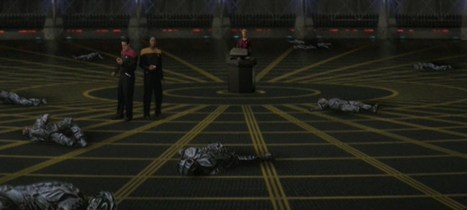
Star Trek: Voyager – Shattered (Review)

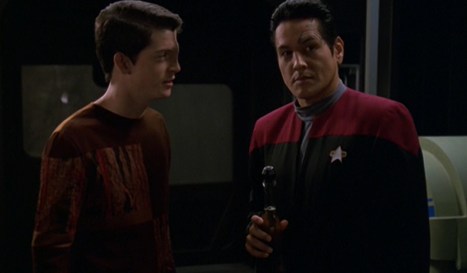
Shattered was the first episode of Star Trek to be broadcast in the new millennium, premiering in January 2001.

Of course, there is some debate about when the new millennium actually began, even as Star Trek: Voyager mailed its colours to the mast with 11:59. However one might feel on the issue, Shattered seems more deserving of the claim than Fair Haven. This is an episode that captures a real sense of the moment that which the nineties technically gave way to the twenty-first century, a transition defined in very literal terms. It was a moment that was simultaneously about great cultural, social and technological change while also reflecting on how little had actually changed.

Say it, don’t hypospray it.

The nineties were (and remain) a paradox. They are easily defined by any chronological measure, with a neatly delineated start and end date. However, like any other decade, they are fuzzier when defined in a cultural sense. In some ways, the nineties began with the fall of the Berlin Wall and ended with the attack on the World Trade Centre. In another way, the nineties are still happening in terms of culture and fashion. They are at once present in the way that we make and consume art, but also something so absent that we long for the comfort of their trappings.

Shattered captures that weird fractured sense of time, the uncanny feeling that time is out of joint, that the past and the future are all overlapping in the same physical space without any sensation of linear progression. Shattered suggests that Voyager‘s past, present and future can all share the same physical space and that they can be navigated with relative ease. Despite the fact that this ship has been on a seven-year journey home, its past and its future are never distant.

“I am Commander Chakotay, and I endorse this cider.”

Continue reading

The Moffat Moment: The Lasting Legacy of Steven Moffat’s “Doctor Who” and “Sherlock”…

Hindsight is a powerful tool.

It’s hard to recognise patterns in the moment, to understand how a larger design is unfolding as it actually unspools. It’s a lot easier to process the larger context once the work is complete. Many important works only reveal themselves in retrospect, once they can be properly contextualised as part of broader cultural movements and placed within the larger popular consciousness. By this measure, Steven Moffat’s run on Doctor Who is a particularly fascinating piece of work.

Moffat’s Doctor Who is an interesting piece of work, in large part due to the sheer volume of venom that it generates online. This is to be expected with any writer working on a major geek-friendly property. Fandoms are inherently protective of what they deem to belong to them, and this can lead to excessive and aggressive campaigns of hatred against those writers and directors they believe to be betraying the object of their affection. This is most obvious in terms of the response to Star Wars: Episode VIII – The Last Jedi, with harassment campaigns against actors and insane petitions and misogynist edits.

Moffat was subject to that sort of online hatred to the point that he was chased off Twitter, but the most interesting thing about the hatred of his tenure was that it seeped into professional journalism. Professional websites like The Daily Dot were so aggressively critical of Steven Moffat that they even made a point to blame him for decisions made by his direct predecessor; even when issuing a correction of that simple fact-checking oversight, they made a point to leave his sarcastic commentary on that narrative choice within the article without any context so that it might look like an endorsement.
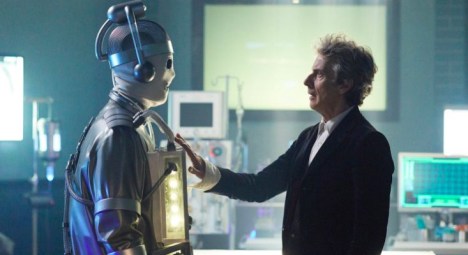
There was an interesting dishonesty in the criticism of Moffat’s tenure. The most obvious example might be Rebecca A. Moore’s infamous study that argued that women’s speaking roles actually decreased under Moffat’s tenure, which was circulated in mainstream media and press. While it’s possible to have subjective arguments about the content of such dialogue and characterisation, the study itself was easily demonstrably inaccurate and read very much as an attempt to manipulate the numbers in service of a predetermined editorial perspective.

It is, of course, perfectly reasonable to dislike the work of a particular writer or to dislike the direction of a particular show. Life would be boring if everybody liked the same things. However, a large part of the fan-press coverage of the Moffat era seemed dedicated to arguing that the series was objectively awful with little room for debate. This resulted in a very heightened tone in online discourse around it in which the producer had to give interviews to the mainstream press insisting that he was not a misogynist. This critical environment was less than healthy, and its spread to professional outlets was regrettable.

As with most things, including the tenure of Russell T. Davies and Andrew Cartmel, the reality of the Steven Moffat’s tenure as showrunner was complicated. It is, for example, true that the overnight ratings did drop during the final years of his tenure. It is also true that the manner in which people were consuming television changed as well, making overnights less important. It is similarly true that Moffat’s tenure saw the series breaking into America; synchronising broadcast on BBC America, record high ratings and shooting episodes like The Impossible Astronaut, Day of the Moon and The Angels Take Manhattan there.

More to the point, it was the Moffat era that saw the series’ impact on American popular culture increase dramatically. To be fair, at least some of this was a delayed reaction to the hard work done by Russell T. Davies who had made smaller-scale efforts at outreach such as second-unit shooting in Daleks in Manhattan and Evolution of the Daleks. Nevertheless, the impact was felt. For example, Christopher Eccleston showed up on The Sarah Silverman Program playing “Doctor Lazer Rage.” Similarly, Community featured “Inspector Spacetime”, with a superfan played by future Moffat-era co-star Matt Lucas.
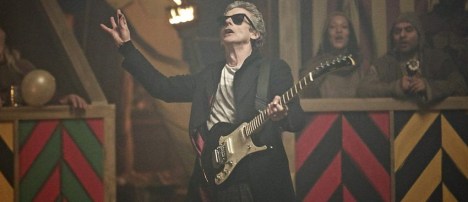
Whatever the precise cause of this increasingly mainstream interest in the show in American popular culture, and it seems fair to credit at least some of that to the increased access that American audiences had to the show during Moffat’s tenure as showrunner, it gets at one of the larger and stranger overlaps between Moffat’s work on the series and broader cultural trends. Moffat’s Doctor Who often seems like a template for certain strands of contemporary popular culture, whether through coincidence or design.

Rewatching Moffat’s Doctor Who, removed from its original context, it often seems like Moffat had a much stronger understanding of the direction of contemporary culture than many of his critics would allow.

Continue reading

Non-Review Review: Mary, Queen of Scots

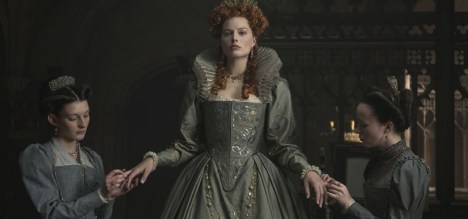
Mary, Queen of Scots is unfocused and unmoored.

Mary, Queen of Scots feels like it should be a star vehicle for Saoirse Ronan. This makes sense. Ronan is a star in ascent. She has three Oscar nominations, and has recently headlined films with broad appeal like Brooklyn and Lady Bird. The concept of building a star vehicle for Ronan from the life and times of Mary Stuart seems like a good idea. Ronan experimented with larger-scale films in her teens like The Lovely Bones or The Host, but it seems perfectly reasonable to have her approach a large scale period drama as a genuine movie star.

Beth left unsaid.

However, Mary, Queen of Scots suffers from what feels like a crisis of confidence. The film’s second-billed lead is Margot Robbie, a successful Oscar-winning actor with similar star wattage to Ronan. Despite the fact that Mary Stuart retained the title of the film, Mary, Queen of Scots has largely been sold and marketed as a film with two leads; consider the misguided #dearsister hashtag publicity campaign, or the misguided branding on the character-focused profiles. It often seems like Mary, Queen of Scots clumsily aspires to be a biography of Queen Elizabeth I.

Mary, Queen of Scots is never entirely sure whether it wants to be a character-driven story focused on one woman’s life or a two-hander about lives in parallel. Watching the film, it feels like the decision was repeatedly taken and revised at various points during production, never committing to one approach for fear that it might preclude the other. The result is uneven and disjointed. Mary, Queen of Scots devotes enough time to Queen Elizabeth I that she feels like a major player, but only managed to get Ronan and Robbie together on set for a single day.

Queen of hearts.

Continue reading

113. Once Upon a Time In America (#70)

Hosted by Andrew Quinn and Darren Mooney, The 250 is a fortnightly trip through some of the best (and worst) movies ever made, as voted for by Internet Movie Database Users.

This time, Sergio Leone’s Once Upon a Time in America.

Drawn back to New York City from a decades-long exile, retired gangster David “Noodles” Aaronson discovers that the past is not buried nearly as well as he might like. Navigating a complex web of secrets and betrayals, “Noodles” is forced to confront sins past; both his own and those dearest to him.

At time of recording, it was ranked the 70th best movie of all time on the Internet Movie Database.

Continue reading

New Podcast! Scannain Podcast (2019) #1!

Happy New Year! It’s time for the latest Scannain podcast!

This week, I join Grace Duffy, Ronan Doyle and Jay Coyle to discuss the week in film news. As the first podcast we’ve recorded in three weeks, since the end-of-year spectacular back in December, there is a lot to talk about. And so we do! Everything from T2 Trainspotting to Bird Box to Bandersnatch to The Dead, it’s an eclectic selection of films. It includes some of the new releases that we didn’t get to cover over the break, including Life Itself and Welcome to Marwen.

There is also understandably a lot of ground to cover. In awards season news, the success of The Favourite at both the Golden Globes and in the BAFTA nominations. The various Oscar-season gossip, including the success of Bohemian Rhapsody, the chaos around Green Book, Kevin Hart’s controversy and the decision to go hostless. Closer to home, there was an acknowledgement of James Hickey’s decision to step down at the end of his term as head of Screen Ireland and a brief discussion of the Dublin Bowie Festival.

The top ten:

  1. Holmes and Watson
  2. Bohemian Rhapsody
  3. The Grinch
  4. Spider-Man: Into the Spider-Verse
  5. Wreck-It Ralph 2: Ralph Breaks the Internet
  6. Aquaman
  7. The Favourite
  8. Andre Rieu’s 2019 New Year Concert From Sydney
  9. Bumblebee
  10. Mary Poppins Returns

New releases:

You can download the episode here, or listen to it below.

Star Trek: Voyager – Flesh and Blood, Part II (Review)

In its seventh season, Star Trek: Voyager gets nostalgic.

It happens naturally when long-running shows begin the process of wrapping up. It is inevitable that the production team will look back with affection and sincerity towards the early years of their shared adventures. The seventh season of Star Trek: Deep Space Nine even made a number of strange callbacks to the first season. Chimera offered a very late-in-the-game return to “the hundred”, the Founders that were sent out into the void like Odo had been. What You Leave Behind featured Sisko fulfilling the task for which he has been chosen in Emissary.

“Star Trek was never about shooting stuff with big guns,” argue a certain strand of modern Star Trek fans.

That nostalgia simmers and bubbles through Flesh and Blood, Part I and Flesh and Blood, Part II. However, there’s a sense that Flesh and Blood, Part I and Flesh and Blood, Part II don’t quite understand what they are evoking. Flesh and Blood, Part I and Flesh and Blood, Part II hark back to the earliest seasons of Voyager in a number of surprising ways, providing a neat bookend to some of the core anxieties that have been bubbling through the series since Caretaker.

Unfortunately, Flesh and Blood, Part I and Flesh and Blood, Part II seem to be doing this almost unconsciously. This is not an exorcism or an exploration, but an unexpected repetition. Voyager is still haunted by memories of the show’s turbulent early years, and it is clear that Voyager has no better understanding of itself now than it did then. The result is deeply unsatisfying and frustrating.

East of Iden.

Continue reading

Non-Review Review: Destroyer

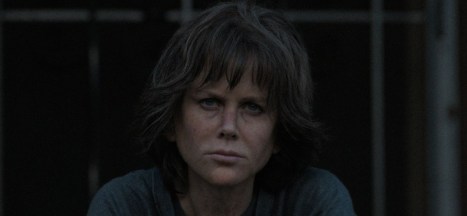
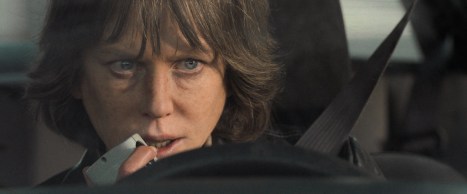
At its core, Destroyer is a pulpy, heightened B-movie.

The basic plot involves a former undercover officer who finds herself tidying up loose ends from a botched job twelve years earlier, Erin Bell trying desperately to stay ahead of everything as the walls close in around her. It’s a standard template for a story like this, and audiences will be familiar with the basic structure of the story. Erin’s life is a disaster zone, and there is a sense that she still carries the scars from the trauma she enduring working with a local criminal gang.

She is become death…

As with most other genre exercises like this, Destroyer lives or dies in the execution. The template is so recognisable because it works efficiently. Apply a talented performer, a good director and a solid script to the template, and the movie will work. In that respect, Destroyer benefits from a compelling central performance by Nicole Kidman as Erin Bell, and from director Karyn Kusama’s understanding of the rhythms and tempos of genre exercises like this.

Destroyer stumbles a little bit in its third act, largely due to a completely unnecessary piece of narrative trickery. However, the film is propulsive and compelling enough to make it across the finish line.

Copping to it.

Continue reading

Star Trek: Voyager – Flesh and Blood, Part I (Review)

In its seventh season, Star Trek: Voyager gets nostalgic.

It happens naturally when long-running shows begin the process of wrapping up. It is inevitable that the production team will look back with affection and sincerity towards the early years of their shared adventures. The seventh season of Star Trek: The Next Generation made a conscious effort to tie up loose ends and to handle long-dangling plot threats. Daimon Bok made a surprise return in Bloodlines, seven years after his first appearance in The Battle. In fact, All Good Things… even sent Picard back in time to relive the events of Encounter at Farpoint.

Going off the grid.

That nostalgia simmers and bubbles through Flesh and Blood, Part I and Flesh and Blood, Part II. The two-parter is openly nostalgic, consciously harking back to the middle seasons of the show. Both parts were aired in a single evening, recalling the broadcast of The Killing Game, Part I and The Killing Game, Part II or Dark Frontier, Part I and Dark Frontier, Part II. More to the point, the two-parter brought back the Hirogen for their first appearance since the fourth season, acknowledging that they were perhaps Voyager‘s most successful recurring alien menace.

Unfortunately, Flesh and Blood, Part I and Flesh and Blood, Part II are a flawed recreation of the past. They are a fake, a simulation, an illusion. They are crafted from a fading memory of the show’s short-lived glory years, and rooted in a number of fundamental misunderstandings about what exactly worked when Voyager was at its best. The result is deeply unsatisfying and frustrating.

They were never really here.

Continue reading

Non-Review Review: Monsters and Men

Monsters and Men is an impressive theatrical debut for director Reinaldo Marcus Green, at least in technical sense.

There is an artfulness to Monsters and Men, an impressive level of craft. The compositions are striking and impressive. In particular, the closing shot of the film is an emotive and memorable visual that lingers as the closing credits role. If Monsters and Men is any indication, Green has a long and impressive career ahead of him. He demonstrates a keen eye for cinematic images and an intuitive knack for visual storytelling.

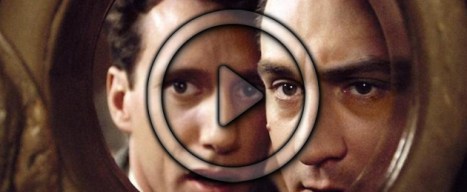
“I’m talkin’ to the man in the two-way mirror…”

Unfortunately, Monsters and Men is much less satisfying as a narrative experience than it is as a collection of shots and images. It is an ambitious and provocative piece of work, a narrative triptych that focuses on three very different characters affected in three very different ways by a police shooting in New York. Monsters and Men hopes to fashion a mosaic, to offer three fractured perspectives that might better illuminate the whole. Unfortunately, these individual stories don’t really work together and do not cohere into a singular or defining statement.

Monsters and Men undoubtedly has its heart in the right place as a piece of low-budget socially-conscious film making, but it simply cannot deliver on its ambitions. Although this ultimately undercuts the film, there are certainly worse flaws to have.

Feeling fenced in.

Continue reading

Non-Review Review: The Upside

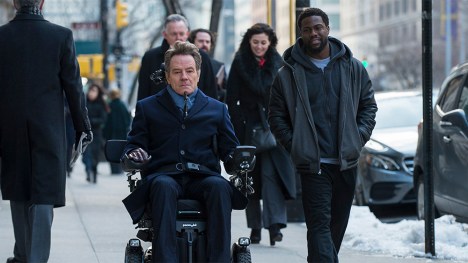
The Upside doesn’t work.

From the outset, it is very clear what The Upside wants to be. This a movie that aspires towards a broad feel-good mood. Perhaps its closest companion in this particular awards cycle is Green Book. It is easy to be cynical about such films, and it is particularly easy to be cynical about The Upside. The film’s delayed release is not the result of a studio desperately holding a hidden gem until late in awards season, this is a would-be crowd pleaser pried from the cold dead hands of the Weinstein Company.

Hart to heart.

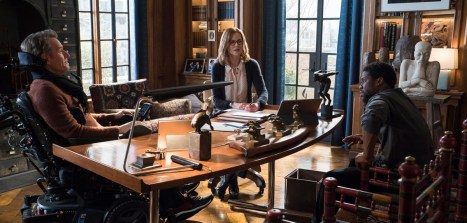
Everything in The Upside seems designed to guide an audience on an emotionally uplifting journey, a story of two characters from very different circumstances brought together so that each might elevate the other. All of the big moments in The Upside are no so much telegraphed as broadcast, the volume turned up to eleven. Characters scream and shout, at both each other and the world around them. Catharsis isn’t just sought, it is amplified. There is no moment at which The Upside leaves the audience in any doubt about what they should feel.

The result is a clumsy and awkward piece of cinema that constantly trips over itself, repeatedly undermining anything meaningful or significant that it might have to say about either of its two central characters.

“So, what is The Upside here?”

Continue reading