• Following Us

  • Categories

  • Check out the Archives


  • Awards & Nominations

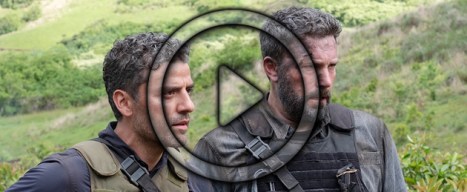
Non-Review Review: Pet Sematary

The horror in Pet Sematary is primal and ancient, both literally and figuratively.

The tropes that power Pet Sematary were already familiar and old-fashioned by the time that Stephen King published the book more than a quarter of a century ago. Indeed, there are extended stretches of the novel when Pet Sematary feels like a game of Stephen-King-related mad-libs: a dash of paternal anxiety here, a sense of existential dread about the American wilderness there, a familiar older character to provide exposition thrown in, and a climax where everything gets very brutal very quickly.

“You just take a left at the Pet Seminary.”

Even beyond the sense of Pet Sematary as a collection of familiar Stephen King elements blended together, the novel riffed on familiar genre elements. There was more than a faint whiff of The Monkey’s Paw to the basic plot, the story of a seemingly wondrous device that could resurrect the dead only for the person responsible to realise that their beloved had come back “wrong” – or, as Jud helpfully summarises, that “sometimes dead is better.” (The novel alluded to this more directly with the story of Timmy Baterman, which is consigned to a newspaper clipping in this adaptation.)

Writer Jeff Buhler, along with directors Kevin Kölsch and Dennis Widmyer, clearly understand that appeal. The script for Pet Sematary makes a number of major alterations to the book’s plot, but most are logical and organic, rooted in the realities and necessities of cinematic storytelling more than the desire to change things for the sake of changing them. For the most part, Pet Sematary revels in the old-fashioned blend of Americana and horror that defines so much of King’s work, the mounting sense of dread and the decidedly pulpy sensibility.

The purr-fect villain.

Pet Sematary only really runs into trouble in its third act, and this is arguably a problem that is carried over from the source material despite the major branching choices that the script makes leading up to that point. The issues with the third act are not those of character or plot, but instead of tempo and genre. In a weird way, these third act issues make Pet Sematary feel like a spiritually faithful adaptation, carrying over something of the essence of the book, for better and for worse.

Pet Sematary is at is strongest when building mood and mounting dread, when offering its own shading on the familiar iconography of a haunted and untamed wilderness. Pet Sematary is at its weakest when it is forced to shape that dread into a more conventional horror movie climax.

Shades of grey.

Continue reading

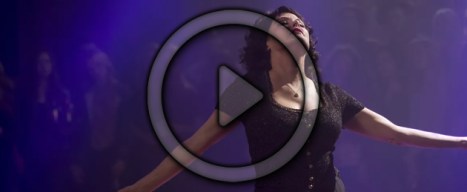
124. Twin Peaks: The Return – This Just In/Daffodil Day/April Fool’s Day 2019 (#∞)

Hosted by Andrew Quinn and Darren Mooney, The 250 is a (mostly) weekly trip through some of the best (and worst) movies ever made, as voted for by Internet Movie Database Users. New episodes are released every Saturday at 6pm GMT, with the occasional bonus episode thrown in.

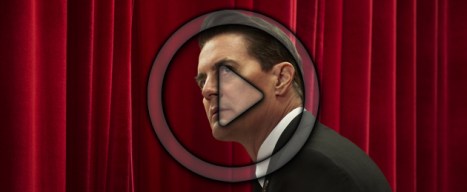
This time, a special treat: David Lynch’s Twin Peaks: The Return.

Twenty-five years after Special Agent Dale Cooper disappeared from the small town of Twin Peaks in Washington, a series of strange occurrences suggest that mysterious forces are still playing a dangerous game on the mortal plane. What connects a secret FBI task force, a sinister crime lord, an isolated rural community, a set of Las Vegas gangsters, a strange glass cube in New York, and a strange murder in South Dakota? It’s happening again.

At time of recording, it was ranked the ∞th best movie of all time on the Internet Movie Database.

Continue reading

New Podcast! Scannain Podcast (2019) #12!

It’s time for the Scannain podcast!

This week, I join Ronan Doyle and Jay Coyle to discuss the week in film. It’s a light week for Ronan and myself, but Jay has us covered with deep dives that extend from Varda through to the joy of Music and Lyrics or the siren call from Under the Silver Lake. In terms of film news, we mark the passing of Broncho McLoughlin, take a look at April at the Irish Film Institute, check in on the release date of The Dig and chart a number of upcoming Irish digital releases.

The top ten:

  1. Fisherman’s Friends
  2. Fighting With My Family
  3. A Dog’s Way Home
  4. How to Train Your Dragon III: The Hidden World
  5. Green Book
  6. The Lego Movie 2: The Second Part
  7. Instant Family
  8. What Men Want
  9. Captain Marvel
  10. Us

New releases:

  • The Vanishing
  • Being Frank: The Chris Sievey Story
  • Dumbo
  • Out of Blue

Non-Review Review: Shazam!

There’s a lot to like about Shazam!

Most obviously, there’s the sheer joy that the film takes in live-action superheroics. It is, of course, something of a cliché to suggest that a certain film or television show “makes superheroes fun again.” Even just among the recent crop of superhero cinema, Spider-Man: Into the Spider-VerseIncredibles 2, Ant Man and the Wasp, Thor: Ragnarok and Spider-Man: Homecoming can all claim to have injected fun back into the genre. (Indeed, for their myriad flaws, the problem with Justice League and Aquaman was not that they weren’t trying to have fun. Quite the opposite in fact.) So it is disingenuous to state that Shazam! reintroduces the concept of fun into the genre.

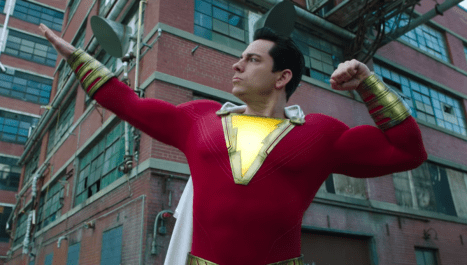
Dab-bling in superheroics.

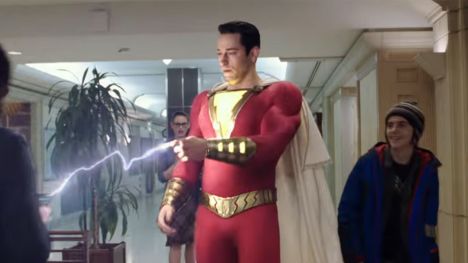
However, Shazam! still takes an incredible amount of joy in playing with the tropes and conventions of the genre. Part of this comes built into the premise. While the character of Captain Marvel could be seen as an example of the “flying brick” archetype most effectively embodied by Superman, the most appealing part of the concept has always been his secret identity. Unlike other superheroes who simply change costume to fight crime, the character physically transforms into a superhero through the use of the magic word. Captain Marvel’s secret identity is Billy Batson, usually portrayed as a child or a teenager. There’s something endearing about the wish fulfillment that anchors that concept. Shazam! invites its audience to look at superheroics through the eyes of a child.

The first two acts of Shazam! are (mostly) a joy, an engaging riff on a playful concept that understands a large part of the appeal of superheroes to their target audience. Unfortunately, the film fumbles the ball in its third act. While the relative innocence and simplicity of Shazam! are a large part of its appeal, the climax of the film gets a little bit too boggled down in cynical worldbuilding, indulging in a bloated and over-extended computer-generated fight sequence that feels lifted from a much less playful and exciting film. To borrow an old cliché, Shazam! almost convinces its audience that a man can fly, but it just can’t stick the landing.

Zap to it.

Continue reading

New Podcast! Scannain Podcast (2019) #10!

It’s time for the Scannain podcast!

This week, I join Ronan Doyle and Jay Coyle to discuss the week in film. Because Varda season never ends, both Ronan and Jay have a new film to discuss from the legendary French director. Meanwhile, in film news, we mark the passing of veteran Irish character actor Pat Laffan, study the recent funding decisions of the Broadcast Authority of Ireland, discuss the opening of applications to the WRAP fund, navigate the line-up of the Belfast Film Festival, and discuss the availability of Ross Whitaker’s Katie on Netflix.

The top ten:

  1. Cold Pursuit
  2. A Dog’s Way Home
  3. The Hole in the Ground
  4. The Aftermath
  5. Fighting With My Family
  6. How to Train Your Dragon III: The Hidden World
  7. Green Book
  8. Instant Family
  9. The Lego Movie 2: The Second Part
  10. Captain Marvel

New releases:

New Podcast! Scannain Podcast (2019) #9!

It’s time for the Scannain podcast!

This week, I join Grace Duffy and Jay Coyle to discuss the week in film. Having taken time out for the Virgin Media Dublin International Film Festival, there’s a lot to get through. There are discussions of everything from Runaway Bride to Isn’t It Romantic? to Serenity to Burning. On top of that, there’s a lot of film news to cover, including the passing of Luke Perry, the Oscar results, the various awards given out at the end of the Virgin Media Dublin International Film Festival, and the IFI International Festival Tour that is taking Irish films abroad for Saint Patrick’s Day.

The top ten:

    1. A Dog’s Way Home
    2. Kobiety Mafii 2
    3. Cold Pursuit
    4. The Aftermath
    5. The Hole in the Ground
    6. Fighting With My Family
    7. Green Book
    8. How to Train Your Dragon III: The Hidden World
    9. Instant Family
    10. The Lego Movie 2: The Second Part

New releases:

You can download the episode here, or listen to it below.

That’s “Entertainer”-ment: “The Sting” in the Tale, and the Art of Movie-Making…

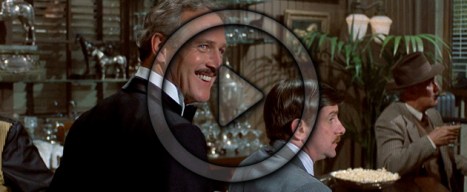
Last Sunday, I discussed The Sting on The 250, the weekly podcast that I co-host discussing the IMDb’s Top 250 Movies of All-Time. However, I had some thoughts on the film that I wanted to jot down first. You can listen to the podcast here.

The Sting is a remarkable movie in a number of ways.

The film is somewhat overlooked in the annals of Best Picture winners, its victory in the category nestled between The Godfather and The Godfather, Part II. More than that, the film feels positively old-fashioned when compared to many of the Best Picture winners of the decade; The French Connection, One Flew Over the Cuckoo’s Nest, Annie Hall, The Deer Hunter, Kramer vs. Kramer and even Rocky. Many of those Best Picture winners offered a sketch of America as it existed in the seventies, a more grounded and realistic approach to cinema reflecting a broader range of experiences and perspectives than had otherwise bubbled through mainstream popular film.

Continue reading

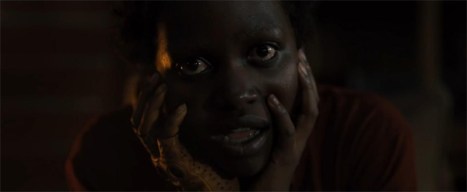
Non-Review Review: Us

Us is fascinating, if undercut by comparisons to Get Out.

Get Out was a phenomenal feature debut from writer and director Jordan Peele, an unexpected left-turn from a comedian who was (at that time) best know for his work on one of the decade’s best sketch comedy shows, Key & Peele. It was an unexpectedly sharp piece of social satire, an incredibly pointed commentary on race and identity in contemporary America, one held together by an incredibly strong central metaphor. Get Out was driven by an almost single-minded commitment to its core ideas, which were skillfully wed to a genre vehicle. It was always clear exactly what Get Out was saying, and why it was saying that in the way that it was.

Taking a second swing.

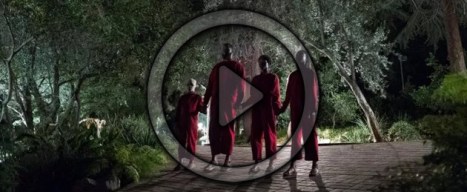
Us is a fundamentally messier film, at once more conventional in terms of its structure and rhythms while being more abstract and confused in its central metaphors. One of the central throughlines of Us is the concept of “the untethering”, and it often feels like a metaphor for the film’s own internal creative process. Us is a lot less focused than Get Out, a lot less together. It often seems like the film is caught in a tug-of-war between its two core elements: on one hand, the desire to present an old-fashioned home-invasion-turned-national-crisis narrative in the style of everything from The Strangers to Dawn of the Dead; on the other, a central metaphor touching on everything from Jungian anxiety to class warfare to the modern division of the United States.

So, to answer the important questions about Us: no, the film is not as good as Get Out; and yes, the film is really good.

Face yourself.

Continue reading

123. The Sting (#100)

Hosted by Andrew Quinn and Darren Mooney, this week joined by special guest Gerry Mooney, The 250 is a (mostly) weekly trip through some of the best (and worst) movies ever made, as voted for by Internet Movie Database Users. New episodes are released every second Saturday at 6pm GMT, with the occasional bonus episode between them.

This time, George Roy Hill’s The Sting.

When a simple con leads to horrific consequences, amateur con artist Johnny Hooker vows to avenge himself on crime boss Doyle Lonnegan. Enlisting the help of over-the-hill veteran Henry Gondorff and a motley crew of small-time hoods, Hooker sets in motion an elaborate con game with potentially disastrous consequences.

At time of recording, it was ranked the 100th best movie of all time on the Internet Movie Database.

Continue reading

“The 250 Live: Twin Peaks – The Return”, 23rd March 2019 in Support of the Irish Cancer Society

As a fundraiser for the Irish Cancer Society’s annual Daffodil Day, the Irish popular film podcast The 250 is hosting a live eighteen-hour podcast covering David Lynch’s groundbreaking television series Twin Peaks: The Return from 2pm GMT (8am EST/5am PST) on Saturday 23rd March.

Twin Peaks: The Return is considered a landmark in modern popular culture. Originally broadcast on Showtime in May 2017, The Return has been described as “one of the most groundbreaking TV series ever” by Sean T. Collins at Rolling Stone. Matt Zoller Seitz argued that it was “the most original and disturbing to hit TV drama since The Sopranos.”

However, there is also an argument that it transcends television, and is in fact an eighteen-hour film. Those who worked on the show have suggested that director David Lynch (who directed all eighteen episodes) saw it as a single eighteen-hour movie. Film magazines like Cahiers du Cinéma and Sight and Sound ranked Twin Peaks: The Return among the very best films of the year.

What better way to hash out this debate over whether Twin Peaks: The Return is an eighteen-hour film than with an eighteen-hour podcast?

Over the course of those eighteen hours, guests will wrestle with everything from the question of whether these eighteen hours are film, television or something else entirely, take a broader look at David Lynch’s filmography, explore the themes of the series/film, and even try to make sense of the wealth of imagery within. “We’re hoping to create an experience that will appeal to both casual fan and eager enthusiast,” explained co-host Darren Mooney. “The eighteen-hour podcast should offer something for everybody. I’m very excited. And maybe a little terrified. But it’s for a good cause.”

The event will be broadcast live on The 250’s Mixlr, and an edited version of the entire podcast will be released for public consumption on The 250’s Soundcloud after the fact. Donations can be made to the Irish Cancer Society through The 250’s Just Giving in both the lead-up to and during the event itself.

The live broadcast will begin at 2pm GMT on Saturday 23rd March and run through until 8am GMT on Sunday 24th March, bringing the podcast up until midnight in Washington State. Darren and Andrew will need some damn fine coffee and cherry pie to get them through the night, which is being thoughtfully provided by the Camerino Bakery.

Although the schedule is subject to change, due to the nature of live broadcasting, at the moment it looks like:

  • 2pm: “Home.” Nostalgia and Twin Peaks: The Return, with guests Niall Glynn and Richard Drumm (HeadStuff, Quantum of Friendship)
  • 3pm: “It’s Happening Again.” Fire Walk With Me as a prelude to Twin Peaks: The Return, with guest Niall Glynn
  • 4pm: “Damn Good Coffee.” Food in Twin Peaks as a slice of Lynch’s American, with guest Caryna Camerino
  • 5pm: “We’re in the version layer.” Actor Amy Shiels (Candie) talks about working with David Lynch and her career.
  • 6pm: “This is the man I told you about.” Discussing Cooper, masculinity (and apparently Wally Brando) with guest Charlene Lydon (Element Pictures, The Lighthouse)
  • 7pm: “Not where it counts, buddy!” Discussing David Lynch’s filmography, and The Return‘s place in it with guest Donald Clarke (The Irish Times)
  • 8pm: “What is that thing?” “A glass box.” Discussing whether The Return is an eighteen hour film, an eighteen part series, or something else entirely, with guests Brian Lloyd (Entertainment.ie) and Jenn Gannon
  • 9pm: “Gotta light?” Dissecting Part 8 with Phillip Bagnall and Jason Coyle (Scannain)
  • 10pm: “Next on the Roadhouse playlist…” Analysing the musical choices of The Return with guest Cian (Selected)
  • 11pm: “What’s going on around here?” Does The Return make literal sense? Does it have a single correct meaning? Does it have to? With guest Phillip Bagnall
  • Midnight: “… is that one of the Marx Brothers?” Balancing genre, tone and pacing in The Return. With guest Phillip Bagnall.
  • 1am: “… drink deep and descend.” Alone at last, Darren and Andrew discuss Andrew’s first binge through the series, from The Pilot to the end.
  • 2am: “We’re not anywhere near Mount Rushmore.” The Return as a portrait of America, particularly modern America, and as an extension of Lynch’s vision of the country.
  • 4am: “… the evil that men do.” Andy Hazel (Twin Peaks Season 3) stops by to talk about evil as it exists in Twin Peaks.
  • 5am: “Wrapped in plastic”; Laura Palmer and the trope of the dead girl, and the engagement of The Return with that.
  • 6am: “… a long way from the world.” Darren and Andrew discuss some of their favourite moments and characters from the series, especially those neglected in earlier hours.
  • 7am: “What year is this?” Is Twin Peaks finished? Could it come back? Do we really want it to? Will it take another twenty-five years? Is the ending the best place to leave it?

Important/useful links: