• Following Us

  • Categories

  • Check out the Archives


  • Awards & Nominations

New Escapist Column! On the Fan Reaction to the Final Season of “Game of Thrones”…

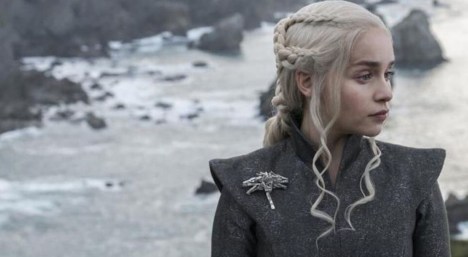
I published a new In the Frame piece at Escapist Magazine this evening. It’s the one year anniversary of the end of Game of Thrones, so it seemed appropriate to look back on the fan reaction to that final season.

The final season is admittedly a flawed season of television. However, that doesn’t quite explain the level of vitriol that it provokes online. After all, the finale was widely enjoyed by general audiences, performed reasonably well at the Emmys and is doing very well for itself in streaming in social isolation. This contrast is interesting, suggesting that there’s something particularly prickly about the final season that alienated its most vocal fans so extremely.

In hindsight, this seems to be the actions of Daenerys Targaryen in the second half of the season. In the home strange, Daenerys ceased to be seen as a “liberator” of the continent, and instead became a conqueror. She did what all conquerors do, raining down death and destruction on those civilisations that do not welcome her. This was all very clearly seeded across the previous seven seasons, but it turned rather sharply against the audience’s sympathy for Daenerys. In doing so, it made the audience complicit in the carnage. One suspects that complicity stings.

You can read the piece here, or click the picture below.
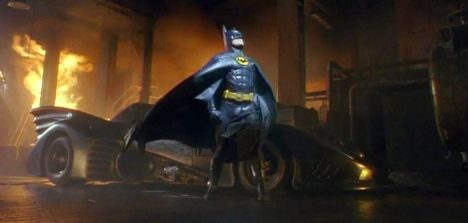
New Escapist Column! On Versatility and Adaptability as Batman’s True Superpowers…

I published a new In the Frame piece at Escapist Magazine this evening. It’s been a busy couple of weeks with actors talking about the role of Batman. Val Kilmer discussed it in a long-form interview with The New York Times and Robert Pattinson brought it up in his GQ quarantine profile.

Kilmer argued that the actor playing Batman was unimportant in irrelevant, which is both true in the general case and false in this specific situation. In a general sense, Hollywood is moving away from movie stars and towards intellectual property. However, Batman remains one of the few established brands that is flexible enough to allow a unique approach shine through; Adam West, Kevin Conroy, Michael Keaton, Christian Bale, Will Arnett and Ben Affleck have all offered distinctive takes on the Caped Crusader, each finding a different window to explore the cultural icon.

There is no single “right” interpretation of Batman, and this has contributed to the character’s ubiquity and endurance. Indeed, it’s arguable that Superman has struggled to remain relevant precisely because he doesn’t have that same flexibility. Superman remains largely stuck in a template defined by the Richard Donner movies, unable to escape their gravity and the pull of the nostalgia around them. Batman can be anything that he needs to be – and that is why he remains as popular as ever.

You can read the piece here, or click the picture below.

182. Hauru no ugoku shiro (Howl’s Moving Castle) – Ani-May 2020 (#134)

Hosted by Andrew Quinn and Darren Mooney and with special guests Graham Day and Bríd Martin, The 250 is a (mostly) weekly trip through some of the best (and worst) movies ever made, as voted for by Internet Movie Database Users. New episodes are released every Saturday at 6pm GMT.

This year, we are proud to continue the tradition of Anime May, a fortnight looking at two of the animated Japanese films on the list. This year, we watched a double feature of Hayao Miyazaki’s Tenkû no shiro Rapyuta and Hauru no ugoku shiro. We’ll also be covering a bonus on a recent entry on the list next week, Naoko Yamada’s Koe no katachi.

This week, the second part of the double bill, Hauru no ugoku shiro, Miyazaki’s first film after the breakout success of Spirited Away.

Chance encounters with both a mysterious young wizard and spiteful old witch find Sophie Hatter cursed. The eighteen-year-old young woman finds herself trapped in the body of a ninety-year-old crone. Never one to be defeated or outwitted, Sophie embarks on an adventure to lift the curse that takes her into the wilderness and to the heart of a majestic ambulatory castle inhabited by a fascinating bunch of misfits. As war simmers on the horizon, Sophie finds herself drawn to the temperamental but sensitive young magician Howl, but can they ever find peace?

At time of recording, it was ranked 134th on the list of the best movies of all time on the Internet Movie Database.

Continue reading

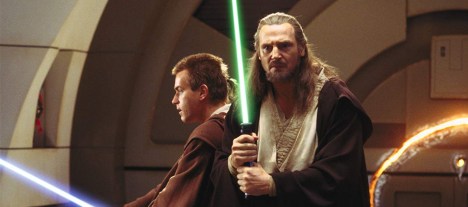
New Escapist Column! On Qui-Gon Jinn as the Flawed Figure at the Centre of the Phantom Menace…

I published a new In the Frame piece at Escapist Magazine this evening. Earlier in the week, a clip of Dave Filoni on Disney Gallery: The Manadalorian went viral, discussing the role of Qui-Gon Jinn in Star Wars: Episode I – The Phantom Menace. Filoni argued that Qui-Gon was a hero fighting for Anakin’s soul.

This is interesting, because it reduces Qui-Gon to a much more generic character than the version featured in the film. Qui-Gon is a deeply flawed character, one with several blindspots and one who is unable to assume the role of hero whether because of the audience’s understanding of the mechanics of a Star Wars prequel or because of the character’s increasing sense of disconnect with the larger universe. Qui-Gon is a character that means well, who positions himself as a hero in this story, but is unable to fulfill that function.

You can read the piece here, or click the picture below.

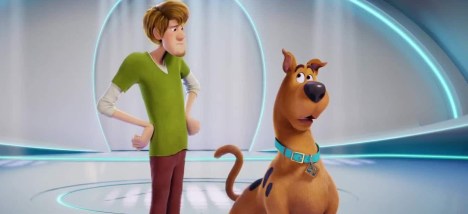
Non-Review Review: Scoob!

Have you ever wondered what it might look like is a beloved fifty-one-year-old children’s television franchise had a midlife crisis?

If so, Scoob! might just be for you.

We have lift-off.

Continue reading

New Podcast! The Time is Now – Season 2, Episode 15 (“Roosters”)

I have had the immense good fortune to appear on The Time is Now quite a lot lately, but was particularly flattered to be invited on to talk about Owls and Roosters, the big “mythology” two-parter in the late second season of Millennium. It’s an honour to join Kurt North for the second part of this conversation.

Owls and Roosters are two of my favourite episodes of television, because they demonstrate everything that Millennium did so well. They’re incredibly densely packed with information, in a way that really captures the sense of modern living – a constant influx of often contradictory stimulae that the individual often struggles to parse or process. In many ways, the second season of Millennium has aged remarkably well, capturing a sense of information overload in a manner that resonates even more strongly today than it did on broadcast.

As ever, you can listen directly to the episode here, subscribe to the podcast here, or click the link below.

Continue reading

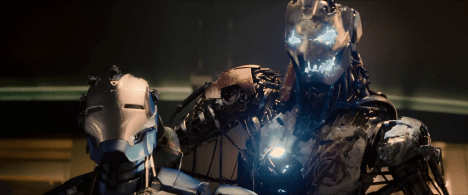
New Escapist Column! On “Avengers: Age of Ultron” as a Limit Case for the MCU…

I published a new In the Frame piece at Escapist Magazine this evening. Given that Avengers: Age of Ultron turned five years old, it seemed like a good time to take a look back at it.

Age of Ultron was an interesting film at the time, and it has become an even more interesting film in hindsight, following the release of Avengers: Infinity War and Avengers: Endgame. In many ways, Whedon positioned The Avengers as an argument in favour of the superhero genre as a romantic fantasy worthy of attention and respect. Age of Ultron feels like the flipside of that argument, a film about the limitations inherent in the genre and its perpetual second act. Age of Ultron is a deeply flawed film, but one flawed in very interesting ways.

You can read the piece here, or click the picture below.

Non-Review Review: M.o.M. Mothers of Monsters

M.o.M. Mothers of Monsters is an ambitious and clever piece of indie horror constructed on a tight budget.

It marks the feature-length narrative directorial debut of Tucia Lyman. Lyman has a variety of experience in horror, particular on television shows like Fact or Faked: Paranormal Files, Ghosts of Shepherdstown and Ghosts of Morgan City. With that in mind, it makes sense that Lyman’s first narrative feature should borrow a lot of the language of paranormal reality television. M.o.M. is essentially a found-footage horror film, with the audience navigating and assembling a collection of seemingly raw video files into a cohesive narrative.

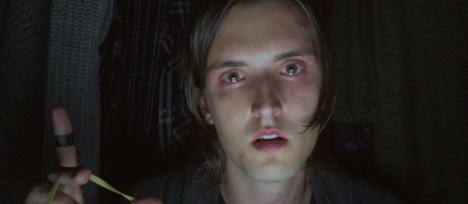
Will he snap?

There is something inherently old-fashioned about the found footage horror template. The format was all the rage in the early years of the twenty-first century, perhaps informed by the use of first-person camcorder footage to document events like 9/11. It arguably reached its apotheosis with the release of the security-camera home haunting horror Paranormal Activity in 2007. Contemporary horror has moved back toward more traditional approaches, prompted by the success of films like The Conjuring, making M.o.M.‘s found footage approach feel decidedly retro.

M.o.M. is occasionally a little clumsy and heavy-handed, sometimes stretching its premise a little too far and struggling to balance sharp tonal shifts between heightened sensationalism and grounded domestic horror. Still, there’s something endearingly committed and energetic in this low-fi horror thriller, an infectious and gleeful embrace of its more absurd elements.

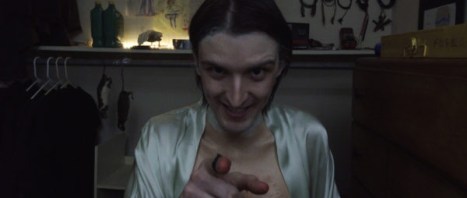
Receiving a dressing gown.

Continue reading

New Escapist Column! On “Gladiator” as a Celebration of Spectacle…

I published a new piece at Escapist Magazine this evening. Gladiator was released twenty years ago this month, so it seemed like a good time to look back on it.

Gladiator is very obviously an example of classic Hollywood spectacle, harking back to the biblical epics of the middle of the twentieth century like Ben Hur or The Ten Commandments or Spartacus or even Cleopatra. However, there’s also a more reflective aspect to the film. Ridley Scott constructs Gladiator as a celebration of the art of spectacle, and the power of populist narratives to shape and define a larger society. Maximus does not triumph because he is a soldier or a general, he ultimately wins because he is an entertainer.

You can read the piece here, or click the picture below.


181. Tenkû no shiro Rapyuta (Laputa: Castle in the Sky) – Ani-May 2020 (#—)

Hosted by Andrew Quinn and Darren Mooney and with special guests Graham Day and Bríd Martin, The 250 is a (mostly) weekly trip through some of the best (and worst) movies ever made, as voted for by Internet Movie Database Users. New episodes are released every Saturday at 6pm GMT.

This year, we are proud to continue the tradition of Anime May, a fortnight looking at two of the animated Japanese films on the list. This year, we watched a double feature of Hayao Miyazaki’s Tenkû no shiro Rapyuta and Hauru no ugoku shiro. We’ll also be covering a bonus on a recent entry on the list, Naoko Yamada’s Koe no katachi.

This week, the first part of the double bill, Tenkû no shiro Rapyuta, the first official Studio Ghibli film.

Perhaps overshadowed by the movies either side of it – Nausicaä of the Valley of the Wind preceding it and My Neighbour Totoro and Grave of the Fireflies following it – Castle in the Sky is in some ways an archetypal Hayao Miyazaki film. What begins as a chance encounter between a lonely boy and a girl who falls to Earth evolves into a fable about the perils of militarism and the importance of environmentalism.

At time of recording, it was not ranked on the list of the best movies of all time on the Internet Movie Database.

Continue reading