• Following Us

  • Categories

  • Check out the Archives


  • Awards & Nominations

Marvel and Netflix’s Iron Fist (Review)

Iron Fist is a spectacular failure.

There are a lot of different reasons for this. On a purely practical level, so much of the show disappoints. The cast are bland and forgettable. The dialogue is awful. The stunt work is pedestrian. The direction is sterile. The special effects work looks like it was lifted from the later nineties. The editing is jarring. The attempt to recreate foreign locales looks like something from nineties television. These are all very significant problems with the production, aspects that would be irritating on their own, but come together to create a larger problem.
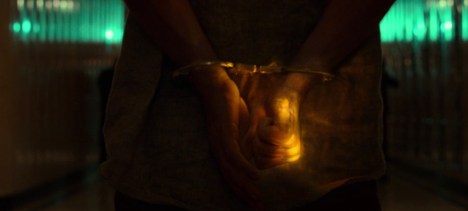
However, the flaws with Iron Fist are even more fundamental than this. Iron Fist is a show with an interesting premise but a complete lack of ambition. The show has no sense of its own identity or direction, its very existence dictated by external factors. It is a series that exists simply because it must exist, not because the writing staff had something interesting to say or because Danny Rand was the perfect hero for this cultural moment. Iron Fist exists because there is a slot in the schedule that needs to be filled, and Iron Fist aspires to do nothing more than fill it.

This is perhaps the most severe problem with Iron Fist. It is not that the show is bad, although it is definitely bad. The unforgivable flaw with Iron Fist is that the show is boring.

Continue reading

23. Song of the Sea – St. Patrick’s Day 2017 (#248)

Hosted by Andrew Quinn and Darren Mooney, The 250 is a fortnightly trip through some of the best (and worst) movies ever made, as voted for by Internet Movie Database Users.

This time, a St. Patrick’s Day treat. Tomm Moore’s Song of the Sea.

An adventure home through Ireland’s mythical dreamscape, Song of the Sea follows siblings Ben and Saoirse as they journey back home to the family lighthouse off the coast of Donegal. Along the way, they encounter mythic tricksters and sinister forces, while also uncovering long-buried family secrets that chip away at everything Ben thought that he knew.

At time of recording, it was ranked the 248th best movie of all time on the Internet Movie Database.

Continue reading

Iron Fist – Snow Gives Way (Review)

So, what is Iron Fist about?

To be fair, it is a tough question to answer. The final Netflix series, publicised as “the Last Defender”, seems to have been a hard sell. Indeed, the emphasis on the show’s position as “the Last Defender” recalls the marketing of Captain America: The First Avenger. In both cases, Marvel was selling a property that posed a creative challenge by tethering it to a looming mass-market crossover, counting on its position as “the last piece of the puzzle” to draw in audiences that might otherwise hold little interest in the material.

Fist first.

And, by and large, Iron Fist is defined by these outside demands. Any audience member trying to figure out what Iron Fist is or what purpose it serves will arguably get a better sense of that by tracing the outline established by the other Marvel Netflix shows. Iron Fist is not a television show that defines itself, instead existing in a narrative and marketing space that has already been defined for it by the demands of other multimedia. Iron Fist is not so much a television show as a bunch of stuff that fits in that space before The Defenders.

That much is evident even as early as Snow Gives Way, the first episode of the Netflix series. The pilot is arguably as instructive in what it fails to do as it is in what it actually accomplishes. It eats up fifty minutes of airtime without providing the audience with any real sense of who these people are, what they want, or what the series is trying to say that isn’t on the agenda already set up by the other Marvel Netflix shows.

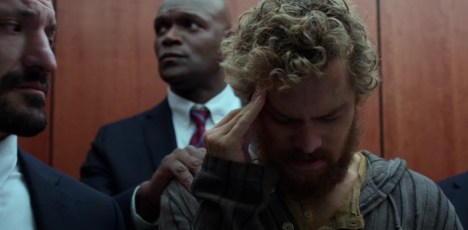
He’s acting. Really hard.

Continue reading

Star Trek: Deep Space Nine – Who Mourns for Morn? (Review)

Who Mourns for Morn? suffers a great deal from its place in the sixth season.

Who Mourns for Morn? is the second broad comedy in the last three episodes. It is the third light-hearted episode of the last six. That would be a lot of comedy for any season of Star Trek, but it is particularly apparent in the context of the sixth season of Star Trek: Deep Space Nine. After all, there is supposed to be a war raging in the background. The cathartic release of You Are Cordially Invited made a great deal of sense after the opening six-episode arc, and The Magnificent Ferengi was a brilliant comedy episode. However, this is just too much.

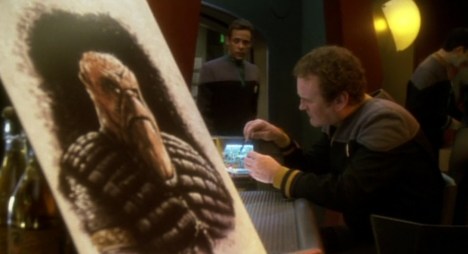
Painting a picture of a life...

Painting a picture of a life…

To be fair, the structure of the season contributes to this sense of humour fatigue. The decision to open the sixth season with a six-episode arc focusing on the retaking of Deep Space Nine was bold and ambitious, but it left little room for comedy or humour. As a result, the comedy episodes were concentrated in the aftermath of that sprawling war story, making for a particularly jarring contrast. The first half of the sixth season of Deep Space Nine only has three comedy episode, which is not too much by any measure. However, they arrive in rapid succession.

Taken on its own terms, Who Mourns for Morn? is a solid and enjoyable episode. It is not as funny as House of Quark or Little Green Men, but it moves quickly and works from a clever premise. It is populated with quirky supporting characters, none of whom outstay their welcome. Who Mourns for Morn? is a fun little runaround. Unfortunately, it arrives at a point in the season where the audience is exhausted from all those runarounds.

A very messy, very dirty business.

A very messy, very dirty business.

Continue reading

Star Trek: Voyager – Message in a Bottle (Review)

Message in a Bottle is an intriguing episode, although not necessarily for the most obvious of reasons.

Working with Andy Dick can be tough.

Working with Andy Dick can be tough.

Message in a Bottle is notable for its stunt casting, featuring controversial comedian Andy Dick as the Emergency Medical Hologram, Mark II. Given his background and his interests, Andy Dick is a very strange choice for a Star Trek guest role. Then again, it takes all sorts; Star Trek: Deep Space Nine cast Iggy Pop in The Magnificent Ferengi and Star Trek: Voyager finds room for the Rock in Tsunkatse. However, the last time the franchise attempted to cast a famous comedian, Star Trek: The Next Generation ended up with The Outrageous Okona.

Understand, Andy Dick tends to be the focal point for discussion around Message in a Bottle. However, the episode is notable for other reasons. In a weird way, Message in a Bottle kicks off a very loose serialised arc that plays through the next handful of episodes. It introduces the communications grid that plays a major role in Hunters, and features the first glimpse of the Hirogen. The Hirogen go on to play a major role in episodes like Prey, The Killing Game, Part I and The Killing Game, Part II.

"What the hell are YOU doing in my Star Trek show?"

“What the hell are YOU doing in my Star Trek show?”

Message in a Bottle also comes at the half-way point in Voyager‘s run, speaking in terms of structure rather than episode count. Message in a Bottle is positioned mid-way through the middle season of Voyager‘s seven year run. Although the count is skewed somewhat by the series’ abridged first season, it feels like the last point at which Voyager is closer to its beginning than to its end. As such, there is something strangely appropriate in the fact that Message in a Bottle allows Voyager to reconnect with Starfleet and the Alpha Quadrant.

This is perhaps the point where the end of the journey “seems a little closer.”

"This never would have happened if they'd just gone with the Bashir model!"

“This never would have happened if they’d just gone with the Bashir model!”

Continue reading

22. Logan – This Just In (#37)

This is what podcasting looks like. You should take a moment. Really feel it.

Hosted by Andrew Quinn and Darren Mooney and this week with special guest John Hanney, This Just In is a subset of the fortnightly The 250 podcast, looking at notable new arrivals on the list of the 250 best movies of all-time, as voted for by Internet Movie Database Users.

This time, James Mangold’s Logan.

Continue reading

Star Trek: Voyager – Waking Moments (Review)

Waking Moments feels very much like a first or second season episode of Star Trek: Voyager that somehow entered production in the middle of the fourth season.

A lot of this is down to the simple texture of the episode. Waking Moments centres around a decidedly “weird” alien species, a touch that recalls the early mysteries of Delta Quadrant life suggested by episodes like Phage, The Cloud, Heroes and Demons, Cathexis and even Emanations. These are aliens that do not conform to standard Star Trek logic, stalking their prey through dreams rather than with advanced technology. In fact, the emphasis on dreams in Waking Moments harks back to the vague New Age sentiment of Michael Piller’s time on Voyager.

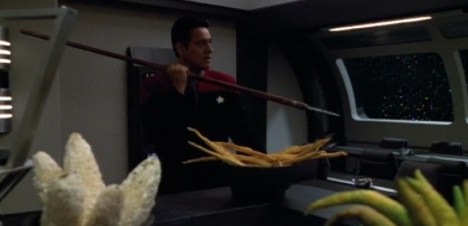
No, Chakotay. Hunters and Prey are next week.

No, Chakotay. Hunters and Prey are next week.

In fact, Waking Moments returns to a very New Age cliché version of Chakotay. Following on directly from Mortal Coil, Chakotay is once again repeating “ah-koo-chee-moya” and talking about “vision quests.” He mentions his father as a connection to his Native American heritage for the first time since Basics, Part I, and even evoked Tattoo in discussing his rejection of shared activities in his youth. Waking Moments feels like an episode that was originally written while Michael Piller was overseeing the show, but has finally made it to air.

Of course, Waking Moments feels rather retrograde in other ways. It is a very clumsy ensemble piece that treats tired old plot twists as innovative and exciting, moving along at a leaden pace without any sense of what makes this story interesting or compelling in its own right. Waking Moments is a surprisingly tiring piece of television.

An artist's impression of the audience watching Waking Moments.

An artist’s impression of the audience watching Waking Moments.

Continue reading

Omniplex Secret Screenings, Launching Monday 13th March!

Our good friends at Omniplex are launching a new “secret screening” programme on Monday night, with a host of mystery screenings organised at Omniplex venues around the country. Offering audience members the chance to see a new movie and get a medium popcorn and drink combo for only €10, there’s just one catch: nobody knows with the movie is.

There’s something to be said for the thrill of going to see a film without knowing what it might be, getting to see it first hand without any preconceptions. You can book tickets at the Omniplex site, and guess online using the hashtag #OmniplexSecretScreening. The first screening is Monday, 13th March, at 6:30pm.

We have some suspicions about what the film might be, and if it is what we think it is, then audiences are in for a treat.


New Podcast! The X-Cast – Episode 80 (Chris Carter’s “The After)

Just a quick link to a recent guest appearance on a lovely bonus episode of The X-Cast, a great X-Files podcast run by the prolific Tony Black.

Taking a quick break from the show’s coverage of the second season, I chatted with Tony about Chris Carter’s pilot for Amazon, The After. The After is an interesting addition to Carter’s filmography, and in many ways prefigures the direction in which he would take his six-episode revival of The X-Files. We got to talk about all sorts of fun things, from Irish stereotypes to dead bees to capitalising most effectively on the lack of broadcast standards and practices. Check it out the episode here, or click the link below.

Continue reading

Non-Review Review: Beauty and the Beast (2017)

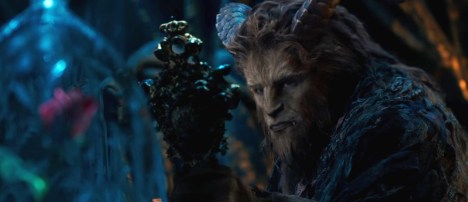
The best and worst thing that can be said for Beauty and the Beast is that it beautifully recreates the animated source material.

A lot of love and affection went into Beauty and the Beast. The production design is amazing, a truly stylish blend of physical objects and computer-generated imagery to create something that feels like a hybrid between live action and animation. It is a very skillful blending of two different approaches to film making. On a purely technical level, judged as a mechanical adaptation, Beauty and the Beast succeeds triumphantly. It is a live action fantasia recreation of a beloved animated film.

More than that, Beauty and the Beast works largely because it is so effective an adaptation. Beauty and the Beast scores phenomenally well because it so carefully and precisely translates material that has incredible emotional power. There is a case to be made that the original Disney adaptation is one of the best films in the company’s canon, with some of the best songs and the most memorable set pieces. The live action adaptation ensures that very few of these moments get lost in translation, which lends the movie a compelling weight.

Unfortunately, it is also a reminder that a nigh-perfect adaptation of this version of the story already exists. Beauty and the Beast runs a muscular two-hours-and-six minutes to the animated film’s eighty-two minutes, but that statistic is misleading. The additions are pointless at best and distracting at worst. As a whole, Beauty and the Beast makes the animated original look like a more streamlined take on this tale that cuts a lot of the fat, telling the same story in a way that is at once more concentrated and more concise.

Mirror, mirror.

Continue reading