• Following Us

  • Categories

  • Check out the Archives


  • Awards & Nominations

New Podcast! Scannain Podcast (2018) #27!

Your podcast, should you choose to accept it…

This week, I join Jay Coyle and Luke Dunne from Film in Dublin to discussion the week in film news. There’s a host of interesting stuff here, from the James Gunn controversy over Guardians of the Galaxy, Vol. 3 to the film noir compromise of Gilda to the divisive Dublin Oldschool. Along the way, we take a side-trip into discussions of vaguely unsettling YouTube algorithms aimed at children. However, perhaps the real reason to give it a listen is to hear Luke’s “grand unified theory of Tom Cruise” as part of a broad discussion about Mission Impossible: Fallout.

Give it a listen at the link, or check it out below.

New Podcast! Scannain Podcast (2018) #26!

Returning from the Galway Film Fleadh, it is the Scannain podcast.

This week, it’s a stacked panel with myself, Grace Duffy, Phil Bagnall, Ronan Doyle and Jay Coyle. There’s an extended discussion of Paul Schrader’s First Reformed, the dueling Emily Dickinson movies A Quiet Passion and Wild Nights With Emily. There’s also a bumper discussion of the new releases, to cover the films that were released while the podcast crew were in Galway, including Le Fidèle, Hotel Artemis, Madame, Mamma Mia: Here We Go Again and A Prayer Before Dawn.

Give it a listen at the link, or check it out below.

Non-Review Review: The Nun

Nobody really talks about how strange The Conjuring is.

James Wan has effectively managed to fashion Hollywood’s second most successful shared universe from a variety of old-fashioned horror tropes stitched together with a more modern blockbuster aesthetic. The films in franchise – which include The Conjuring 2, Annabelle and Annabelle: Creation – are remarkable because they seem like such a strange basis for a twenty-first century blockbuster franchise. They are all period piece jump-scare driven retro jorror movies that are produced with a very slick and modern sensibility.

Bad habits.

The Nun is another worthy (and interesting) addition to that canon. As with the other films in the series, its basic structure wields more modern storytelling and filmmaking techniques to a more classic horror tone. As with the other films, the production team also understand the appeal of a certain level of variety within that familiar template. The Conjuring was a throwback to beloved seventies haunted house films, Annabelle set its horror against the backdrop of the sixties, The Conjuring 2 moved to England and Annabelle: Creation unfolded against the backdrop of rural America.

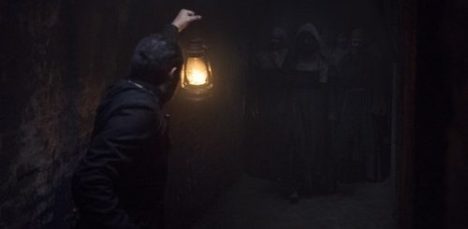
The Nun evokes gothic horror. Set in a creepy abbey in Romania during the fifties, following an investigator dispatched from the Vatican to investigate the suicide of a young nun, The Nun thrives in this environment with this iconography. The Nun falters a little bit in its storytelling, especially its exposition, and it stumbles a little bit when it comes to building a climax that works as both an action film and as a horror. However, the film is canny enough in its choice of setting and imagery that it never completely comes apart.

Who goes stair?

Continue reading

Non-Review Review: Mile 22

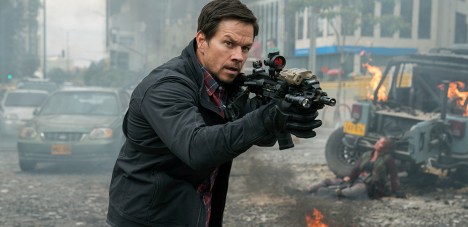
Mile 22 is an intriguing and muddled piece of work.

Judged by the standards of contemporary filmmaking, Mile 22 is a deeply frustrating and disjointed piece of cinema. In some ways, it seems strange to describe it as a movie. It is a film with one of the most blatant and transparent sequel hooks in recent memory, cutting to the credits at what feels like the end of the second act. This sense of confusion and bewilderment is only increased by Berg’s direction of action sequences, which are disorienting to the point where they come close to incomprehensibility.

Wahl-to-Wahl action.

However, while these elements add up to an underwhelming cinematic experience, there is something strangely compelling in the way that Berg stitches together this relatively straightforward narrative. The chaos at the heart of the movie makes it hard to enjoy the action sequences, but offers an endearing frenetic energy that sustains the film. There are moments when Mile 22 borders on the self-aware, particularly as at careens towards a climax that seems to have been reverse-engineered from two separate Mark Wahlberg memes.

The results are baffling, but fun to pick at.

Picking up the pace.

Continue reading

Bottom’s Up: The IMDb Bottom 100 and the Art of Identifying “Worst” Movies…

Readers of the site might be aware that I co-host a weekly podcast called The 250 with my good friend Andrew Quinn, in which we pick a movie ranked on the Internet Movie Database as one of the best movies of all-time. It’s a dynamic and public list, which means that it covers a wide variety of films and tastes. In the part couple of months alone, we’ve covered everything from Mission: Impossible – Fallout to Battle of Algiers to Paper Moon to The Secret in Their Eyes to The Prestige. I’m very proud of the podcast, and a lot of the discussions that we’ve had on it.

Part of this podcast has also involved looking at the list that the Internet Movie Database maintains of the worst movies ever made. We originally planned to rotate through both lists in an even-handed manner; five episodes of the top two-hundred-and-fifty for two episodes of the bottom one hundred. Indeed, we cover a number of the bottom one hundred as part of the show; episodes like Crimea and United Passions. However, we moved away from covering the bottom one hundred because we found that the movies populating the list weren’t so much awful as just mind-numbingly dull; Lawnmower Man 2, Crossover.

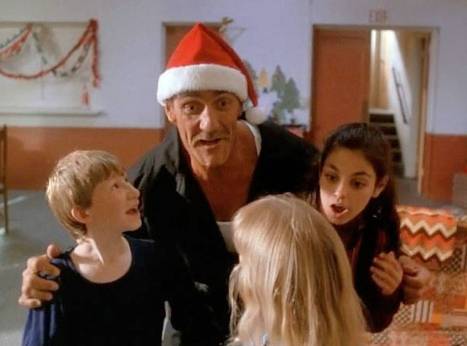
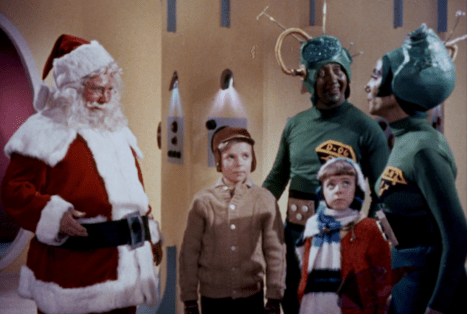
However, something vaguely interesting happened in the middle of July. The Internet Movie Database made a change to their list of the one hundred worst movies of all time that radically revised the nature and composition of the list. Suddenly, a lot of the smaller and stranger titles disappeared. Fringe films like Space Mutiny, Die Hard Dracula, Invasion of the Neptune Men and Santa With Muscles were all wiped out in an instant, replaced by more familiar and recognisable films like Jaws 3D, S. Darko, Blair Witch II: Book of Shadows, The Wicker ManBatman and Robin and Fifty Shades of Grey.

The result was a list that was suddenly a lot more fun to talk about, composed of films that people had actually seen instead of disastrously bad cult curiosities. Indeed, one very small consequence of this change is that we’re actually going to try to get back into talking about these terrible movies on a semi-regular basis on the podcast, because the list is now populated with films that will engender more interesting discussions both about the films themselves and their larger cultural context.

At the same time, it raises larger questions about what we consider to be the “worst” films, how we rank and access bad cinema and what that actually means in the grander scheme of popular culture. The change implemented to the IMDb’s bottom one hundred list is a conscious attempt on the part of the organisation to answer these questions, to create a broad consensus about what it means to be the “worst” films ever made. It’s an intriguing effort, and arguably something very different from trying to pick the “best” films ever made.

After all, it’s broadly possible to forge something resembling a consensus on the best movies. Trying to identify the worst is a much more difficult proposition.

Continue reading

96. Paper Moon (#229)

Hosted by Andrew Quinn and Darren Mooney, The 250 is a (mostly) weekly trip through some of the best (and worst) movies ever made, as voted for by Internet Movie Database Users. New episodes are released every Saturday at 6pm GMT, with the occasional bonus episode thrown in.

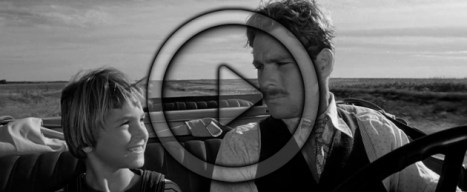
This time, Peter Bogdonavich’s Paper Moon.

Mose is a two-bit hustle who is passing through town in time to visit a funeral for an old flame. While there, the woman’s young daughter is thrown into his care. Mose immediately denies paternity of the precocious and intelligent young Adie, but the pair quick gel as they embark upon a string of hustles across Depression-era America.

At time of recording, it was ranked the 229th best movie of all-time on the Internet Movie Database.

Continue reading

Listen In To The X-Cast Live! All Day Saturday!

That mad man Tony Black over at The X-Cast has done something completely crazy.

He is doing a twenty-four hour live X-Files podcast. However, it’s okay. He’s doing it for charity, to raise money and awareness for Alzheimer’s Society. You can still donate to the cause, which is very worthy of your support.

I’m thrilled to be joining Tony at a couple of points during the day. The full schedule is below, and Tony’s put together a fantastic line-up for a great cause. In the meantime, you can listen to the podcast at Mixlr. It will be kicking off at 9am BST and running straight through for twenty-four hours.

https://mixlr.com/the-x-cast/embedThe X-Cast is on Mixlr


Continue reading

Star Trek: Voyager – Critical Care (Review)

Critical Care is the seventh season of Star Trek: Voyager attempting to be archetypal Star Trek.

To be fair, Voyager had done this before. When Jeri Taylor took over the show during its third season, she steered it away from the disaster of the Kazon arc and towards a more conventional style of Star Trek storytelling. Many of the episodes of the later seasons could easily have been repurposed for Star Trek: The Next Generation or Star Trek: Deep Space Nine or Star Trek: Enterprise without changing much beyond the characters’ names; think of Warlord, Scientific Method, Random Thoughts, Waking Moments.

What’s up, Doc?

This isn’t inherently a bad thing. Indeed, many of the best episodes of Voyager had this broad and generic quality to them, offering something resembling an archetypal distillation of Star Trek for audiences. Remember and Memorial were both stunning explorations of cultural memory and Holocaust denial that could arguably have worked with any Star Trek cast. Blink of an Eye was a beautiful science-fiction parable that was more about Star Trek itself than Voyager. Even Nemesis could have easily worked with Riker or O’Brien or Tucker as easily as it did with Chakotay.

However, there are also points when these attempts to create “archetypal Star Trek” feels cynical and exploitative, the writing staff very cynically offering audiences something that is designed to meet as many of the vaguely defined aesthetic qualities of Star Trek, but without any substance underneath it. This happens repeatedly during the seventh season of Voyager, when it seems like the production team understand what Star Trek looks and feels like enough to offer a passable approximation, but don’t understand the underlying mechanics enough to replicate that ineffable feeling.

“Don’t worry, we’re almost home.”

Like a lot of seventh season episodes, Critical Care is couched in the trappings of Star Trek but without any substance to group it. On the surface, Critical Care is classic “social commentary” storytelling, the type of allegorical narrative exemplified by stories like Let That Be Your Last Battlefield or The High Ground. It is an episode about the horrors of contemporary healthcare, transposed to a distant alien world where Voyager can draw some very broad parallels for the audience watching at home. This is, on a very superficial level, what Star Trek is to a large number of fans.

Unfortunately, these touches do not add up to anything particularly insightful or compelling, Critical Care providing observations on contemporary American healthcare that amount to “this is pretty bad, isn’t it?” without anything resembling actual engagement. The result is a shell of an episode, a missed opportunity, and a pale imitation of the franchise’s best social commentary.

“What is up, Doc?”

Continue reading

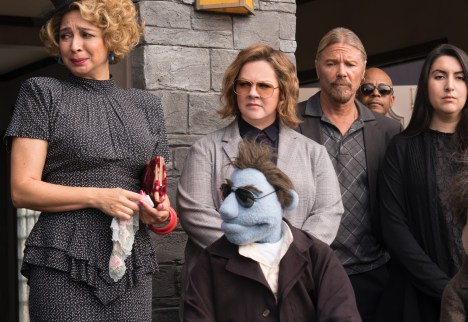
Non-Review Review: The Happytime Murders

The Happytime Murders may be the worst film of the year.

There are any number of issues with The Happytime Murders. The film is only ninety one minutes long, but feels interminable. The film has no idea what it is about in any meaningful sense, beyond assembling a number of familiar tropes in a very familiar way. Beyond that, the film seems to believe that rehashing familiar clichés is amusing of itself, some sort of self-aware postmodern ironic anti-comedy where the reference to the thing is enough of itself to become a joke.

It really blows.

A larger problem is that the film assumes that seeing puppets do “adult” things has greater novelty than it does. The Happytime Murders is a film that is consciously powered by the juvenile thrill of watching beloved children’s characters caught in inappropriate situations – swearing at one another, smoking cigarettes, engaging in vigorous sexual activity. This glosses over the fact that there are plenty of other media that has already covered this ground. The Happytime Murders runs on a joke that has already been repeated and rehashed several times.

However, all of these concerns distract from the biggest issue with The Happytime Murders. It is just not funny.

The boy in blue.

Continue reading

95. Into the Wild (#180)

Hosted by Andrew Quinn and Darren Mooney, and this week with special guest Jack Hodges, The 250 is a (mostly) weekly trip through some of the best (and worst) movies ever made, as voted for by Internet Movie Database Users. New episodes are released every Saturday at 6pm GMT, with the occasional bonus episode thrown in.

This time, Sean Penn’s Into the Wild.

Christopher McCandless abandoned a comfortable middle-class life in pursuit of something greater. His search would take him across the United States, impacting the lives of those he met along the way. His search would eventually lead him into the Alaskan wilderness.

At time of recording, it was ranked the 180th best movie of all-time on the Internet Movie Database.

Continue reading