• Following Us

  • Categories

  • Check out the Archives


  • Awards & Nominations

Listen In To The X-Cast Live! All Day Saturday!

That mad man Tony Black over at The X-Cast has done something completely crazy.

He is doing a twenty-four hour live X-Files podcast. However, it’s okay. He’s doing it for charity, to raise money and awareness for Alzheimer’s Society. You can still donate to the cause, which is very worthy of your support.

I’m thrilled to be joining Tony at a couple of points during the day. The full schedule is below, and Tony’s put together a fantastic line-up for a great cause. In the meantime, you can listen to the podcast at Mixlr. It will be kicking off at 9am BST and running straight through for twenty-four hours.

https://mixlr.com/the-x-cast/embedThe X-Cast is on Mixlr


Continue reading

Star Trek: Voyager – Critical Care (Review)

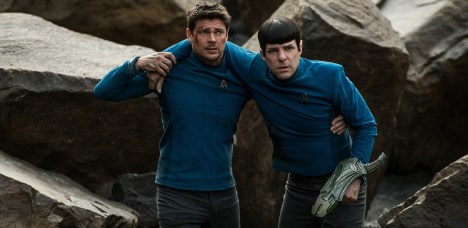
Critical Care is the seventh season of Star Trek: Voyager attempting to be archetypal Star Trek.

To be fair, Voyager had done this before. When Jeri Taylor took over the show during its third season, she steered it away from the disaster of the Kazon arc and towards a more conventional style of Star Trek storytelling. Many of the episodes of the later seasons could easily have been repurposed for Star Trek: The Next Generation or Star Trek: Deep Space Nine or Star Trek: Enterprise without changing much beyond the characters’ names; think of Warlord, Scientific Method, Random Thoughts, Waking Moments.

What’s up, Doc?

This isn’t inherently a bad thing. Indeed, many of the best episodes of Voyager had this broad and generic quality to them, offering something resembling an archetypal distillation of Star Trek for audiences. Remember and Memorial were both stunning explorations of cultural memory and Holocaust denial that could arguably have worked with any Star Trek cast. Blink of an Eye was a beautiful science-fiction parable that was more about Star Trek itself than Voyager. Even Nemesis could have easily worked with Riker or O’Brien or Tucker as easily as it did with Chakotay.

However, there are also points when these attempts to create “archetypal Star Trek” feels cynical and exploitative, the writing staff very cynically offering audiences something that is designed to meet as many of the vaguely defined aesthetic qualities of Star Trek, but without any substance underneath it. This happens repeatedly during the seventh season of Voyager, when it seems like the production team understand what Star Trek looks and feels like enough to offer a passable approximation, but don’t understand the underlying mechanics enough to replicate that ineffable feeling.

“Don’t worry, we’re almost home.”

Like a lot of seventh season episodes, Critical Care is couched in the trappings of Star Trek but without any substance to group it. On the surface, Critical Care is classic “social commentary” storytelling, the type of allegorical narrative exemplified by stories like Let That Be Your Last Battlefield or The High Ground. It is an episode about the horrors of contemporary healthcare, transposed to a distant alien world where Voyager can draw some very broad parallels for the audience watching at home. This is, on a very superficial level, what Star Trek is to a large number of fans.

Unfortunately, these touches do not add up to anything particularly insightful or compelling, Critical Care providing observations on contemporary American healthcare that amount to “this is pretty bad, isn’t it?” without anything resembling actual engagement. The result is a shell of an episode, a missed opportunity, and a pale imitation of the franchise’s best social commentary.

“What is up, Doc?”

Continue reading

Non-Review Review: The Happytime Murders

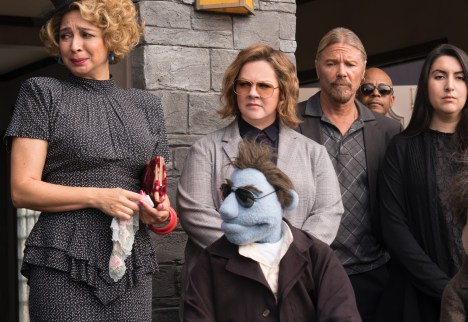
The Happytime Murders may be the worst film of the year.

There are any number of issues with The Happytime Murders. The film is only ninety one minutes long, but feels interminable. The film has no idea what it is about in any meaningful sense, beyond assembling a number of familiar tropes in a very familiar way. Beyond that, the film seems to believe that rehashing familiar clichés is amusing of itself, some sort of self-aware postmodern ironic anti-comedy where the reference to the thing is enough of itself to become a joke.

It really blows.

A larger problem is that the film assumes that seeing puppets do “adult” things has greater novelty than it does. The Happytime Murders is a film that is consciously powered by the juvenile thrill of watching beloved children’s characters caught in inappropriate situations – swearing at one another, smoking cigarettes, engaging in vigorous sexual activity. This glosses over the fact that there are plenty of other media that has already covered this ground. The Happytime Murders runs on a joke that has already been repeated and rehashed several times.

However, all of these concerns distract from the biggest issue with The Happytime Murders. It is just not funny.

The boy in blue.

Continue reading

95. Into the Wild (#180)

Hosted by Andrew Quinn and Darren Mooney, and this week with special guest Jack Hodges, The 250 is a (mostly) weekly trip through some of the best (and worst) movies ever made, as voted for by Internet Movie Database Users. New episodes are released every Saturday at 6pm GMT, with the occasional bonus episode thrown in.

This time, Sean Penn’s Into the Wild.

Christopher McCandless abandoned a comfortable middle-class life in pursuit of something greater. His search would take him across the United States, impacting the lives of those he met along the way. His search would eventually lead him into the Alaskan wilderness.

At time of recording, it was ranked the 180th best movie of all-time on the Internet Movie Database.

Continue reading

“It’s not over, it’s just not yours any more”: Thoughts on Fandom and Growing Old Gracefully…

It is not a new observation to suggest that modern audiences live in a world dominated by existing intellectual property.

It has been argued frequently and convincingly that the era of the movie star has surrendered itself to the era of the brand, where the biggest draw for audiences it not which actor is on screen but which universe is being developed. Cinemas are flooded with long-delayed sequels and spin-offs to beloved favourites, films often separated from their predecessors by decades; consider the gap between The Incredibles and Incredibles II or between Blade Runner and Blade Runner 2049, even between xXx 2 and xXx 3 or between Trainspotting and Trainspotting 2.

It is easy to exaggerate the scope of these issues. After all, there have always been films based around established intellectual property, whether early films or television series or even novels. Gone with the Wind was a book before it was a film. The Magnificent Seven was a remake of The Seven Samurai. Philip Marlowe was continuously reimagined on film from Time to Kill in 1942 to The Big Sleep in 1978. Star Trek: The Motion Picture transitioned a failed television series into a big budget science-fiction film franchise. This is to say nothing of perennial favourites like the story of Robin Hood or Jesus Christ.

At the same time, the indie market is thriving. Although making any movie is a tremendous accomplishment, there has arguably never been a better time for people making movies. Companies like Netflix and Amazon are buying up as much “content” from film festivals as they can, and in doing so are making filmmakers and production companies whole. Companies like Annapurna are adopting a model that consciously puts creativity ahead of commercial concerns. Even technology has advanced to the point where it is possible to make films on a phone. Cinema is not endangered or under threat. It is vibrant.

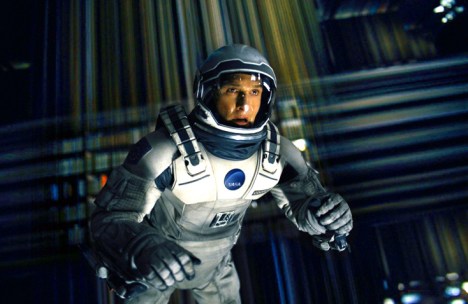
Still, it feels like things are different in the modern era of blockbuster entertainment. For one thing, there are fewer big budget blockbusters based around wholly original ideas. In the past decade, only the work of Christopher Nolan stands out; Inception, Interstellar, Dunkirk. There have obviously been other success stories, like J.J. Abrams’ Cloverfield and Super 8 or like Jordan Peele’s Get Out, but these are notable for being the exception rather than the rule. There is a sense that the mainstream is dominated by revivals of beloved properties, and not just in film. Hannibal, Star Trek: Discovery, Fargo, Watchmen.

One of the interesting tensions of this era has been in watching the way that fandoms react to these revivals, the manner in which they approach these new takes on established mythologies. By and large, it has not been especially flattering or engaging. There have been death threats, misogyny, cultural wars, heated arguments, simmering disagreements. Recent years have seen the growth of a strange cult of fannish entitlement within the cultural mainstream, perhaps reflecting the manner in which the mainstream has embraced fannish desire. There is something deeply frustrating and disheartening about this.

Continue reading

Star Trek: Voyager – Repression (Review)

There is something almost obligatory about Repression, as if the production team have arrived at the point in every season where they are obligated to do a Tuvok-centric story but without any particularly strong ideas for that Tuvok-centric story. It is there because Tim Russ is a credited lead and Tuvok is part of the ensemble, and because there is a twenty-six episode season order to fill. It is not there because any writer thought that there was a story that needed to be told with Tuvok, some part of his psyche that needed to be illuminated.

The seventh season is populated with episodes like this, stories built around particularly characters in the most archetypal of fashions. Star Trek: Voyager is frequently criticised for recycling premises from other Star Trek series, especially Star Trek: The Next Generation, but the show is less often criticised for simply repeating itself. The supporting characters on Voyager don’t really have arcs, often simply having a handful of stories that the series dutifully cycles through on rotation.

“Another fine mess(hall) you’ve gotten us into, Tuvok…”

On Star Trek: Deep Space Nine, a marathon of character-centric episodes would reveal the slow and gradual evolution of the cast. Julian Bashir changes and evolves over his time on the series, from the generic any-character-will-do narratives of The Passenger and Melora into the weirder and more awkward Distant Voices through to his emergence as a distinctive person in Hippocratic Oath, Our Man Bashir and The Quickening. Bashir is not the same character in What You Leave Behind that he was in Emissary, and watching a chain of episodes based around Bashir would explain and explore that growth.

In contrast, a character-centric marathon on Voyager would be a much more frustrating experience, as the characters inevitably go through the same motion and repeat the same plots. This is particularly true in the seventh season episodes, where the obligatory character-focused episodes underscore how little these characters have actually and fundamentally changed since the first season. In Nightingale, Harry Kim is still insecure and lacking in experience. In Lineage and Prophecy, B’Elanna Torres is once again wrestling with her Klingon heritage. In Drive, Tom Paris is once again the careless flyboy who learns about responsibility.

“The more things don’t change…”

At the same time, Tuvok has always represented a very particular challenge for the writers, in that he doesn’t even really have an archetypal story in the same way that Torres or Kim or Paris does. Tuvok doesn’t have a “lesson” that he needs to learn over and over again, or a default factory setting that he can fall back to in order to learn that lesson. At least at the end of Extreme Risk or Juggernaut, Torres had learned that she should not let her more destructive impulses guide her actions, even if she would forget it and learn again. This allows for a character arc that can be repeated and reiterated. In contrast, Tuvok was generally well-adjusted and well-balanced.

As a result, stories featuring Tuvok tend to take something away from him and watch him struggle to return to normality. As a Vulcan, Tuvok is often stripped of his Vulcan reserve and forced to recover it. The results can be interesting and compelling, with Meld and Gravity ranking among the best episodes that Voyager ever produced. However, these episodes can also feel very trite and formulaic, often reducing Tuvok to a passenger in stories nominally focused on him: he drives a lot of the plot in Random Thoughts, but Torres in the focal character; Riddles is about something that happens to Tuvok, but focuses on Neelix.

Looking at things from a new perspective.

Repression is notably the show’s last Tuvok-centric story. It is also perhaps the most archetypal. As with episodes like Nightingale or Lineage, it is a collection of familiar tropes for a supporting cast member trotted out one last time before the show crosses the finish line. Repression is an episode that has clearly been assembled from a variety of earlier episodes focused on Tuvok, right down to plot points and individual scenes or costume choices; it is Random Thoughts meets Meld, with an extended final-act homage to Worst Case Scenario. All of which reduces Tuvok to a passenger in his own story.

This is a shame, as Repression works about as well as any episode built around its core premise has any right to it. Like Drive before it, there’s a certain pulpy thrill to its core premise that fits comfortably within the heightened retro sci-fi surroundings of Voyager. The story of a detective who is investigating himself, spreading subversive ideas through telepathic assault, Repression is a patently absurd bit of television which feels very much of a piece with earlier stories like Cathexis or Macrocosm or Darkling or In the Flesh. It works much better as a trashy late-night B-movie than as a character-centric narrative.

There’ll be Meld to pay for this.

Continue reading

Non-Review Review: BlacKkKlansman

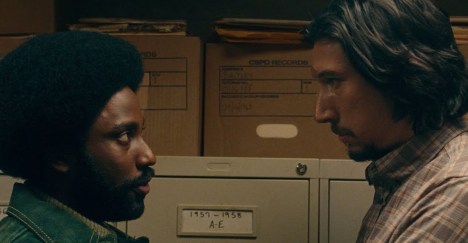
BlacKkKlansman is an American tragicomedy.

The past few years have seen a heightening of reality, a blurring of the boundaries between fact and fiction, an intrusion of the unreal into the real world. The President of the United States is effectively a reality television star, and is running the country as some sort of grotesque reality television show. “Truth is not truth”, to quote one administration figure, while another has peddled in the idea of “alternative facts” while alluding to a horrific terrorist attack that simply never happened while other supporters of the administration insist that other horrific events did not happen.

The two Ronnies.

With all of that going on in the background, soaking into the zeitgeist, BlacKkKlansman feels very much like a movie for the moment. It is – to quote the introductory text – “based on some fo’ real, fo’ real sh*t”, taking its inspiration from a memoir written by undercover police officer Ron Stallworth. However, it is also filtered through the hyperstylised cartoonish lens of a blackploitation buddy comedy, with Lee taking every opportunity to remind his audience that they are watching a piece of pop culture.

The premise of the film is so absurd that it’s almost impossible to play it as anything but comedy. The first black police officer in Colorado Springs launches an undercover sting on the KKK, using his own name to infiltrate the organisation through the telephone. Working with a fellow white police officer, this ambitious young go-getter manages to manoeuvre his way to the top of the organisation, fooling even the Grand Wizard himself. It’s a ridiculous story, one that seems inherently unreal. Even the name – “Stallworth” – sounds like something from a dimestore paperback.

Hitting all its marks.

Of course, in this era of unreality, it is entirely real. Indeed, the power of BlacKkKlansman comes crashing down on the audience in the final moments, when Lee brushes aside the heavy-handed references to contemporary politics that play through the narrative for something that is much more tangible and real, serving to throw the entire grim joke of the film into stark relief, suggesting that so much of the awkward squirming and ridiculous twists are all the foundation of the horror show through the audience are living.

BlacKkKlansman laughs in the face of horror and brutality. But only because the alternative is to cry.

The historical record.

Continue reading

New Podcast! The Movie Palace – “Gilda”

It was a pleasure to join the great Carl Sweeney on his podcast The Movie Palace to discuss Gilda, Charles Vidor’s iconic postwar film noir which is possibly the most exciting movie ever made about tungsten monopolies. A psycho-sexual thriller about two men trying to forge a future in Buenos Aires and the woman who comes between them, Gilda remains one of the most enduring films of the late forties in large part due to Rita Hayworth’s central performance.

At the same time, Gilda occupies an interesting place in the film noir canon, never quite considered a classic in the style of Casablanca or The Maltese Falcon or Double Indemnity, but always respected by those with an appreciation for postwar American cinema. It’s certainly a film about which I have very mixed feelings, even if they aren’t quite as intense as those between Johnny and Gilda.

The Movie Palace is a podcast that takes an affectionate look at the Golden Age of Hollywood, with Carl talking about a classic film with a guest once a week. It was an honour to be asked on, even if I’ll concede out of the gate that I’m not anywhere near as familiar with the era of filmmaking as Carl is.  You can check out the episode here, back episodes of the podcast here, or just click the link below.

94. Mission: Impossible – Fallout (#166) – This Just In

Hosted by Andrew Quinn and Darren Mooney, and with special guests Graham Day and Luke Dunne, This Just In is a subset of The 250 podcast, looking at notable new arrivals on the list of the 250 best movies of all-time, as voted for by Internet Movie Database Users.

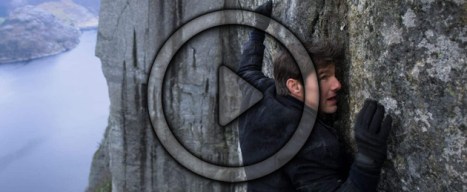
This time, Christopher McQuarrie’s Mission: Impossible – Fallout.

At time of recording, it was ranked the 166th best movie of all time on the Internet Movie Database.

Continue reading

Non-Review Review: The Children Act

Perhaps the most striking thing about The Children Act is how it manages to combine so many stock prestige drama beats into such a chaotic cacophony.

The Children Act is a mess from beginning to end, all the more jarring for how familiar and how recognisable the constituent elements might be. The Children Act often feels like a fairly standard IKEA table where all of the pieces have been assembled to create something monstrous. Often during the runtime, the audience might spot a familiar beat or plot point, but often one deployed with little consideration for how these elements normally work or how they might better service this particular story.

Come what May.

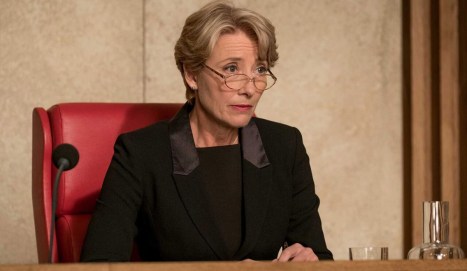
The Children Act is a film that very clearly aspires towards a certain style of prestige cinema. It is directed by Richard Eyre, responsible for awards fare like Iris or Notes on a Scandal and even the recent highly successful BBC adaptation of King Lear. It is written by Ian McEwan, adapting his own novel, the writer perhaps still best know to movie-going audiences as the novelist who provided the source material for Atonement. It stars Emma Thompson and Stanley Tucci, two actors who are always highly engaging, and who should bounce off one another.

Unfortunately, almost nothing within the film actually works, with strange decisions contorting the narrative into strange shapes. The Children Act is a curiousity that is more intriguing than it is engaging, more compelling for how completely it refuses to work than for anything that it is actually trying to say.

Just this.

Continue reading