• Following Us

  • Categories

  • Check out the Archives


  • Awards & Nominations

The X-Files – Three of a Kind (Review)

This July, we’re taking a trip back in time to review the sixth season of The X-Files and the third (and final) season of Millennium.

Unusual Suspects is perhaps an underrated episode.

The third episode broadcast of the fifth season is a light adventure that offers viewers an origin story of the Lone Gunman. Byers, Langley and Frohike have been around since E.B.E. towards the end of the first season, and have become an integral part of the show’s ensemble cast. Unusual Suspects is frequently written off as a piece of fluff designed to work around the limited availability of David Duchovny and Gillian Anderson due to on-going production work on The X-Files: Fight the Future.
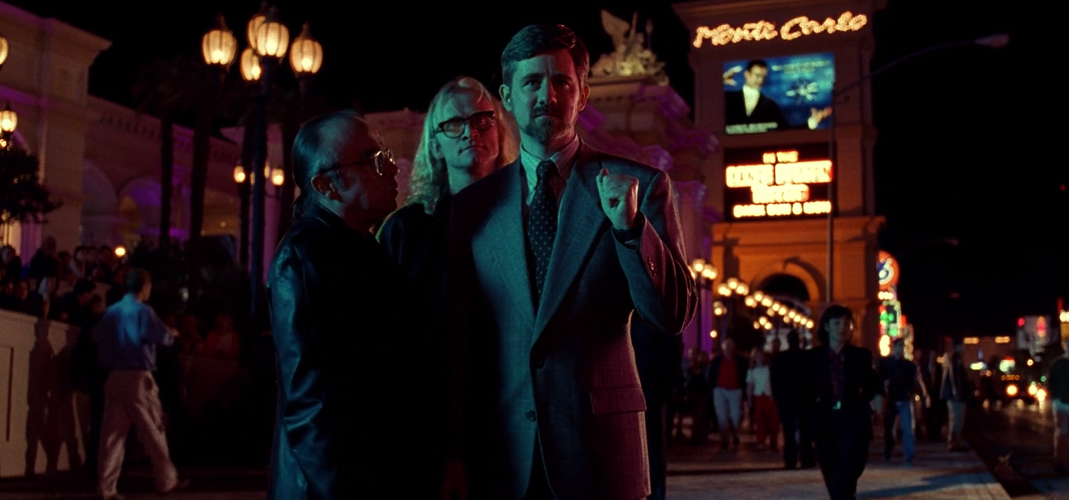
Viva Las Vegas...

Viva Las Vegas…

This seems dismissive of Vince Gilligan’s paranoid origin story, which is one of the few times that Gilligan engages directly with the themes that underpin the sprawling mythology at the heart of the show. Unusual Suspects is not a “mythology episode” in the way that gets episodes repackaged on DVD collections, but it does explore the idea of conspiracy and paranoia as a personal narrative. Unusual Suspects is a very sweet story about a lost and heartbroken man who builds a conspiracy mythology around himself because he has nothing else to do.

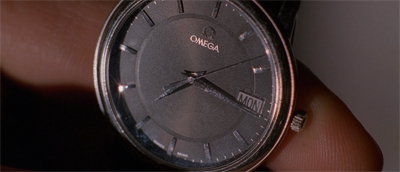
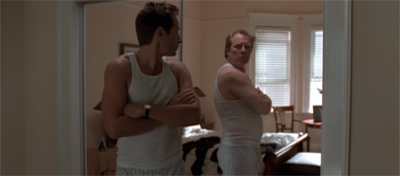
Three of a Kind is very much a sequel episode to Unusual Suspects, focusing again on the Lone Gunmen and bringing back Susanne Modeski. However, it is a much lighter and more disposable story. Barring the beautifully crafted prologue, Three of a Kind is an entirely disposable episode of television. It feels like filler. It is neither a beginning nor an end to the story of Byers or the Lone Gunmen. It is just a long middle, with the characters ending up back where they began. In a way, this makes it feel very much like a standard sixth season episode.

A man alone...

A man alone…

Continue reading

The X-Files – Monday (Review)

This July, we’re taking a trip back in time to review the sixth season of The X-Files and the third (and final) season of Millennium.

It always ends the same way. As is appropriate for a story about a time loop, Monday begins with an ending. The teaser catches the last few minutes of one of the episode’s repeating time loops. It is a striking image. Everybody dies – including Mulder and Scully. How could the episode possibly continue past that point? It is simple. Time resets. The universe snaps back into shape around Mulder and Scully, much like it did at the climax of Dreamland II. Everybody gets another chance to set things right. The show bounces back to its status quo, as it did with One Son.

Time for a do-over. Revise it until it’s right.

A ticking clock...

A ticking clock…

Continue reading

The X-Files – Tithonus (Review)

This July, we’re taking a trip back in time to review the sixth season of The X-Files and the third (and final) season of Millennium.

Alas! for this gray shadow, once a man—
So glorious in his beauty and thy choice,
Who madest him thy chosen, that he seem’d
To his great heart none other than a God!
I ask’d thee, ‘Give me immortality.’
Then didst thou grant mine asking with a smile,
Like wealthy men, who care not how they give.
But thy strong Hours indignant work’d their wills,
And beat me down and marr’d and wasted me,
And tho’ they could not end me, left me maim’d
To dwell in presence of immortal youth,
Immortal age beside immortal youth,
And all I was, in ashes. Can thy love,
Thy beauty, make amends, tho’ even now,
Close over us, the silver star, thy guide,
Shines in those tremulous eyes that fill with tears
To hear me? Let me go: take back thy gift:
Why should a man desire in any way
To vary from the kindly race of men
Or pass beyond the goal of ordinance
Where all should pause, as is most meet for all?

– Alfred, Lord Tennyson, Tithonus

Shades of grey...

Shades of grey…

Continue reading

The X-Files – Dreamland II (Review)

This July, we’re taking a trip back in time to review the sixth season of The X-Files and the third (and final) season of Millennium.

Morris Fletcher is (and remains) one of the more interesting aspects of the Dreamland two-parter.

Fletcher would go on to become perhaps the most unlikely recurring character in the history of The X-Files. Michael McKean would reprise the role for a brief cameo in Three of a Kind at the end of the season. As with Kersh, he would disappear from the show’s world for the troubled seventh season, but would return the following year. He made a guest appearance in All About Yves, the finalé of The Lone Gunmen. Fletcher would then follow the Lone Gunmen back to The X-Files, appearing in Jump the Shark during the final season.

And the shippers went wild...

And the shippers went wild…

A large part of what makes Fletcher work is the wonderful guest performance of Michael McKean. McKean is a veteran actor with a long history of great work, dating back to his breakout role as Lenny (and Squiggy) on the sitcom Laverne and Shirley. Along with the move to Los Angeles, the sixth season of The X-Files began to drift away from Chris Carter’s initial reluctance to cast recognisable actors in significant roles. The X-Files: Fight the Future had featured guest appearances from Martin Landau, Blythe Danner, Armin Muller-Stahl and Glenne Headly.

The two-parter built around Michael McKean paves the way for appearances from Ed Asner, Lily Tomlin and Bruce Campbell. These are all superb guest performances, and consciously play into the idea that the sixth season of The X-Files has taken on a more playful or vaudevillian style. It is too much to describe these guest roles as “stunt casting” in the same way that putting Jerry Springer in The Post-Modern Prometheus or Burt Reynolds in Improbable was stunt casting, but the casting decisions are part of a broader change in the show.

Our man Morris...

Our man Morris…

On paper, Morris Fletcher could easily come off as a one-note creep. After all, he is a character who thinks nothing of using his body swap with Fox Mulder to cheat on his wife of twenty years. There is a creepy and pervy banality to his evil, one that mirrors that of Eddie Van Blundht in Small Potatoes. However, while Small Potatoes felt a little too sympathetic to pathetic Eddie Van Blundht, Dreamland strikes a better balance in its portrayal of Morris Fletcher. McKean plays Fletcher as a very human character, but one who is no less creepy for his well-practiced charm.

It goes almost without saying that Michael McKean’s guest performance is a major reason why Dreamland (mostly) works.

Not particularly reflective...

Not particularly reflective…

Continue reading

The X-Files – Dreamland I (Review)

This July, we’re taking a trip back in time to review the sixth season of The X-Files and the third (and final) season of Millennium.

It occasionally seems like the sixth season of The X-Files is having something approaching a midlife crisis.

It has gone through a fairly massive change in routine and lifestyle; the show recently pulled up sticks and moved to Los Angeles. It has gotten a lot more ostentatious; it looks to be spending a lot more money than it was before, and it is hanging around with a whole new caliber of guest star. It has reinvented itself completely; no longer the brooding and atmospheric show it once was, it is now downright goofy and silly. Old acquaintances would be forgiven if they had trouble recognising the show. And it’s perfectly understandable.

Back to back...

Back to back…

This is the sixth season. Dreamland I is the one-hundred-and-twenty-first episode of The X-Files. The show is well past what Chris Carter had originally planned, and well past just about any measure of success. Most shows are lucky to reach a sixth season, let alone come into the sixth season off the back of a summer film and with a great deal of security about the future. David Duchovny, Gillian Anderson and Chris Carter were all committed through to the end of the seventh season. There was even talk of a sequel to The X-Files: Fight the Future being released in 2000.

Dreamland I and Dreamland II just externalise that midlife crisis, using the classic “freaky friday” body swap set up putting Fox Mulder in a dead-end job with a family that hates him as Morris Fletcher tries to help the FBI agent grow up just a little bit.

"Yep. It's a little... out there."

“Yep. It’s a little… out there.”

Continue reading

The X-Files – Drive (Review)

This July, we’re taking a trip back in time to review the sixth season of The X-Files and the third (and final) season of Millennium.

In many ways, Drive feels like an episode that tackles the move to California head-on.

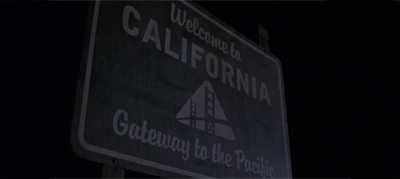
After all, the plot of Drive essentially finds Mulder trapped in a car heading westwards through Nevada and into California. The episode even lingers on a “welcome to California” sign, tacitly acknowledging the massive change that had taken place behind the scenes between the fifth and sixth seasons of The X-Files. It is a very clever way of addressing a major change to the production of the show, one that is candid and open about the fact that things are inherently different now.

"Running out of west..."

“Running out of west…”

More than that, Drive figures out how to build an episode of The X-Files around the change in production location. The sixth season often finds the production team struggling to find the right tone and mood to match the new location; after all, the show cannot simply pretend that it is still filming in Vancouver. California is sunnier, hotter and drier than Vancouver ever was – the sixth season of The X-Files spends a little time trying to adapt to those new filming conditions.

This challenge is arguably most obvious in the string of (literally and metaphorically) lighter episodes in the first stretch of the season. The sixth season is quite controversial among fans of the show because there is a period of time where it seems like The X-Files might transform itself into a quirky romantic sit-com. Episodes like Triangle, Dreamland I, Dreamland II, How the Ghosts Stole Christmas and The Rain King would be the lighter episodes of any previous season; they seem to pile in on top of one another at the start of the sixth season.

Feels like going home...

Feels like going home…

In contrast, Drive is very much a quintessential episode of The X-Files. It is a classic episode of the show. It is scary, it is tense, it is meticulously constructed. There is humour to be found, but the stakes feel real and personal. Writer Vince Gilligan very shrewdly plays into the constraints of the new Los Angeles production realities. A lot of Drive takes place during the day on long desert roads. It takes advantage of California’s impressive interstate system, with twenty-five highways covering almost two-and-half thousand miles.

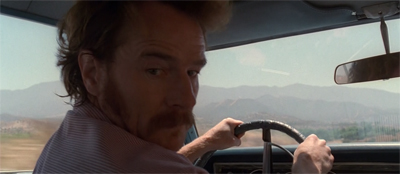
However, Drive is more than simply a demonstration that The X-Files can still work in its new home. Drive is a superb piece of television in its own right. It is highly regarded as one of the finest episodes of The X-Files from the second half of the run. It is notable for a wonderful premise, a great script, and a mesmerising guest performance from Bryan Cranston. Drive would be the first collaboration between writer Vince Gilligan and actor Bryan Cranston, but not the last.

Drive of your life...

Drive of your life…

Continue reading

The X-Files – Folie à Deux (Review)

This May and June, we’re taking a trip back in time to review the fifth season of The X-Files and the second season of Millennium.

Folie à Deux is the last stand-alone episode of the fifth season, and the last stand-alone episode to be produced in Vancouver. It is also a pretty essential episode before The X-Files: Fight the Future, reinforcing just how essential Mulder and Scully are to one another shortly before the movie threatens to break them up for good.

Folie à Deux is also one of Vince Gilligan’s most underrated scripts from the show’s entire run, a thoughtful examination of the relationship between Mulder and Scully that provides a clever counterpoint to his script of Bad Blood. If Bad Blood was essentially a story about how Mulder and Scully see the universe differently, then Folie à Deux represents an attempt to heal that rift, perhaps suggesting that Mulder and Scully have come to share their own unique form of madness.

Bugging Skinner...

Bugging Skinner…

Continue reading

The X-Files – Bad Blood (Review)

This May and June, we’re taking a trip back in time to review the fifth season of The X-Files and the second season of Millennium.

Despite a notable absence of Darin Morgan, Bad Blood makes a much more convincing case for Vince Gilligan as the heir apparent to Darin Morgan than Small Potatoes did at the end of the fourth season.

Bad Blood finds Gilligan touching on some of the same broad ideas as Small Potatoes – how Mulder is perceived and how he perceives himself, a sly awareness of the show’s tropes and conventions. However, Bad Blood feels a lot more honed and focused than Small Potatoes. It felt like Small Potatoes only got to the meat of the story it wanted to tell in its final third, while Bad Blood is shrewd enough to put its core concepts front-and-centre. While Bad Blood has the same broad humour of Small Potatoes, it feels a lot more convincing when it comes to characters.

The tooth is out there...

The tooth is out there…

It could be argued that Gilligan drew quite heavily on the work of Darin Morgan in some of his scripts. There is no shame in this. After all, Darin Morgan is perhaps the most widely-praised writer to work on The X-Files. In this context, Bad Blood is something of a spiritual successor to Jose Chung’s “From Outer Space.” Gilligan’s script is not quite as structurally or philosophically ambitious as Darin Morgan’s final credited script for the series, but it does hit on the same fundamental idea that truth is an inherently subjective construct.

Bad Blood is essentially an episode that is not only about how Mulder and Scully see each other, but how they see themselves.

Mulder knows what's at stake...

Mulder knows what’s at stake…

Continue reading

The X-Files – Kitsunegari (Review)

This May and June, we’re taking a trip back in time to review the fifth season of The X-Files and the second season of Millennium.

Kitsunegari hits on a lot of fifth season anxieties for The X-Files.

The episode is rather clearly a sequel to a beloved third season installment, featuring a returning monster of the week for the first time since Tooms brought back Victor Eugene Tooms. In this case, Kitsunegari is built around Robert Patrick Modell, the mind-controlling psychopath from Vince Gilligan’s first script as a staff writer. Given the level of Gilligan’s skill, the affection for the episode, and the charm of actor Robert Wisden, Kitsunegari really should be a “can’t miss” script for the series.

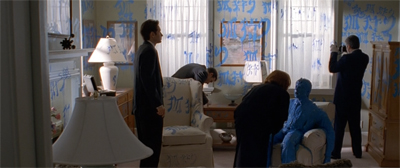
Painting the town...

Painting the town…

However, Kitsunegari proves to be a surprisingly joyless experience. The script hinges on incredibly coincidence and contrivance, everything feels a little too familiar, and even Robert Wisden seems relegated to a small supporting role. (It is telling he earns an “and” credit instead of heading the guest cast.) Kitsunegari has a host of memorable set-pieces and effective visuals, but it feels curiously hollow. It feels like a script going through the motions, rather than trying to say something new or intriguing.

Then again, there is a sense that this is the point. Kitsunegari plays beautifully as a self-aware critique of soulless sequels, of half-hearted follow-ups and cash-ins on popular monsters and villains. Kitsunegari is almost an ingenious parody of these conventions, teasing the viewer with what it might look like if The X-Files began to eat itself. It teases the audience with a trashy sequel to a classic episode, and then delivers exactly that. Kitsunegari does not just demonstrate the law of diminishing returns, it practically revels in it.

Pushing the Pusher...

Pushing the Pusher…

After all, Pusher was an episode about a man with complete control of his own story. Robert Patrick Modell was able to change the world using nothing more than mere words, crafting a new identity and persona for himself, casting himself in role of a criminal mastermind pursued by dogged investigators. It is no wonder that Kitsunegari portrays Modell as exhausted and strung out. Kitsunegari is essentially a story about how Modell has lost control of the narrative, how it has begun to control him. In a way, he gives voice to the same concerns that haunt The Post-Modern Prometheus.

Of course, all this postmodern self-awareness is ingenious, but it still leaves one sizable problem with Kitsunegari. Kitsunegari is so effective at mimicking a soulless sequel that is almost indistinguishable from the real thing. The result is a well-constructed and clever little episode, but one that is not particularly enjoyable or fun.

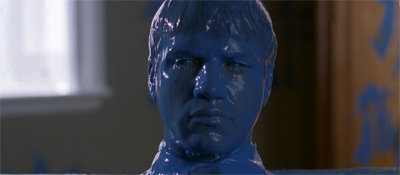
"I'm blue, dabba-dee-dabba-di."

“I’m blue, dabba-dee-dabba-di.”

Continue reading

The X-Files – Emily (Review)

This May and June, we’re taking a trip back in time to review the fifth season of The X-Files and the second season of Millennium.

The biggest problems with Emily can be summed up in five words:

“… and then Mulder showed up.”

Sorry, Mulder.

Sorry, Mulder.

Continue reading