• Following Us

  • Categories

  • Check out the Archives


  • Awards & Nominations

The X-Files – Christmas Carol (Review)

This May and June, we’re taking a trip back in time to review the fifth season of The X-Files and the second season of Millennium.

Part of the challenge of the fourth and fifth seasons is watching The X-Files adapt the speed of its mythology.

The mythology has a very clear momentum in the first three seasons. For all that Chris Carter and his writers loved teasing out new questions, there was a clear sense of momentum and movement. The show had gone from a series about an isolated alien abduction in The Pilot to a series with a date set for the alien colonisation of Earth in Talitha Cumi. For all that the series was accused of being ambiguous and mysterious, there was a sense that it was at least going somewhere.

And so this is Christmas...

And so this is Christmas…

Things changed during the fourth season, most likely as the prospect of The X-Files: Fight the Future loomed in the future. It was clear that Fox would not allow Carter to set an end date on the television show before transitioning to feature films, and that the series would have to stretch beyond Carter’s original roadmap for it. All of a sudden, the mythology started stalling. The fourth season’s mythology had no clear direction in which to go, as evidenced by the fact that the decision to give Scully cancer in Leonard Betts was an eleventh hour decision with no long-term planning.

The fifth season’s mythology comes with its own particular set of problems. The movie had been written during the fourth season and filmed during the gap between the fourth and fifth seasons. This is quite evident in the way that the movie carries over abandoned elements of the fourth season mythology like the bees, who do not register at all in the fifth season. However, this also meant that the end point of the fifth season was essentially set in stone for the production team. The End would have to lead into Fight the Future, no matter what happened in the intervening nineteen episodes.

Picture perfect...

Picture perfect…

This means a lot of things for the fifth season. It means that the fifth season is stuck with the “Mulder as a skeptic… sort of” setup until Fight the Future, even if the show generally ignores it as much as it can. It also means that the mythology episodes probably should not contain any earth-shattering revelations or introduce any major character who were not already written into the film. Although Patient X and The Red and the Black effectively throw out these constraints almost completely, Christmas Carol and Emily try to adhere to them.

The result is a mythology episode that adheres rather closely to the successful approach adopted by Tempus Fugit and Max, a story that takes the backdrop of what the show has already revealed about the conspiracy and then uses that as a setting in which it can tell a decidedly more intimate and personal story.
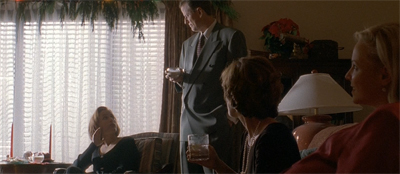
It's a Scully family Christmas...

It’s a Scully family Christmas…

Continue reading

The X-Files – Unusual Suspects (Review)

This May and June, we’re taking a trip back in time to review the fifth season of The X-Files and the second season of Millennium.

On the surface, Unusual Suspects looks like quite a clean little episode.

It is an obvious production save – a story thrown together when it became clear that David Duchnovny and Gillian Anderson’s commitments to The X-Files: Fight the Future meant that they would not be available to film even the shortened order of twenty episodes in the fifth season. Although Unusual Suspects aired as the third episode of the season, it was actually the first produced. With limited availability to David Duchovny, Unusual Suspects was constructed as an episode that could be built around a member (or members) of the supporting cast.

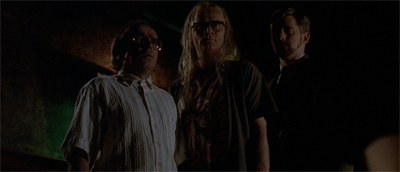
Hero shot!

Hero shot!

Five seasons in, this is not a radical concept. While Mulder and Scully are still very much the heart of the show, the supporting cast has been developed to the point where the show can turn over an episode to somebody who isn’t Mulder or Scully. The fourth season offered a glimpse of the (possible) secret history of the Cigarette-Smoking Man in Musings of a Cigarette-Smoking Man and allowed Walter Skinner to act out his own morality play in Zero Sum. After these two characters, the Lone Gunmen were likely candidates for their own episode.

As such, Unusual Suspects also works quite well as “ground zero” for the eventual development of The Lone Gunmen during the eighth season of The X-Files. It is the episode that demonstrated that the trio could carry their own story with their eccentric little dynamic, while still being engaging and exciting. Given how The Lone Gunmen turned out, a particularly cynical commentator might suggest that Unusual Suspects very much over-sold the appeal. Nevertheless, Unusual Suspects is a logical and clear step forward in the evolution of the Lone Gunman.

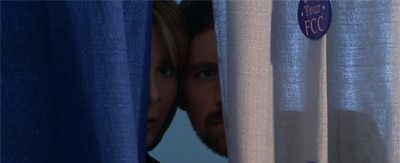
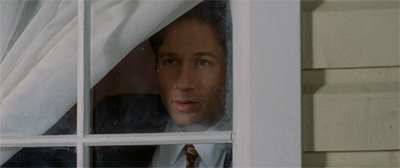
Peering through the curtain...

Peering through the curtain…

And yet, for all that these are the aspects of Unusual Suspects that generate discussion and debate, they are not the heart of the episode. What is most interesting about Unusual Suspects is the way that it allows writer Vince Gilligan to brush up against the show’s central mythology, albeit only fleetingly. Gilligan is fond of arguing that Memento Mori was his only credit on a mythology episode, but that sells Unusual Suspects rather short. Although it does not dabble directly with “black oil” or “alien bounty hunters”, it does allow Gilligan to play with the show’s big central story thread.

Unusual Suspects is not just positioned by Gilligan as the “secret origin” of the Lone Gunmen. The episode is decidedly more ambitious than all that. Without directly acknowledging it, and without explicitly coming out and saying it, Unusual Suspects presents itself as the roots of the show itself. Although nowhere near as boldly and triumphantly subversive as Jose Chung’s “From Outer Space” or Musings of a Cigarette-Smoking Man, the episode allows Gilligan to offer his own sly (and slightly stinging) commentary on the show’s central mythology.

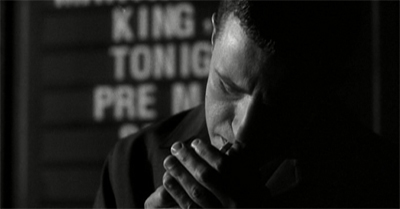
Tonight we're gonna party like it's 1989.

Tonight we’re gonna party like it’s 1989.

Continue reading

The X-Files – Season 4 (Review)

This February and March, we’re taking a trip back in time to review the fourth season of The X-Files and the first season of Millennium.

The fourth season of The X-Files is a work of chaotic genius.

While the third season of The X-Files is one of the most consistently well-made seasons of television ever produced, the fourth season is a lot more uneven. There are a lot of reasons for this. Chris Carter was busy launching Millennium. Fox had decided to press ahead with The X-Files: Fight the Future. Behind the scenes, it was chaotic. Glen Morgan and James Wong hung around for half the season before leaving to work on their own pilot, a planned script from Darin Morgan fell through, Chris Carter’s attention was divided.

xfiles-musingsofacigarettesmokingman17

However, the fourth season represents something of a changing of the guard on the writing staff, a transition between two generations. The fourth season sees the permanent departure of writers Glen Morgan, James Wong and Howard Gordon. These were all writers who worked hard to give The X-Files its unique flavour and identity in the show’s earliest years. The X-Files would not be the same show without the input of those three writers. It is a shame to see them depart, although four years is a long time in the industry.

In contrast, the fourth season also sees younger talent rising up. It sees the first collaboration of Vince Gilligan, John Shiban and Frank Spotnitz. The trio would become one of the most consistent (and productive) writing ensembles on the series. The fourth season also saw the rapid ascent of Vince Gilligan, who had only contributed one script to the third season; Gilligan’s three solo scripts for the third season are iconic and influential in their own right. These are the voices that will steer The X-Files through to the end of its nine-year run.

xfiles-paperhearts22

As such, the fourth season feels transitional. It is a season that lacks the finely-honed efficiency that defined the third season, in favour of a more ambitious and even experimental style. The result is a season that feels wildly creative, a joyous cacophony rather than a harmonious symphony. The fourth season may not always hit the notes, but it is doing something very fresh and exciting. There is an energy and enthusiasm to the season that carries even some of the weaker episodes.

The fourth season is not consistently brilliant, but it is more than occasionally transcendental.

xfiles-max15

Continue reading

The X-Files – Small Potatoes (Review)

This February and March, we’re taking a trip back in time to review the fourth season of The X-Files and the first season of Millennium.

Darin Morgan’s absence haunts the fourth season of The X-Files.

According to Frank Spotnitz, Darin Morgan had originally hoped to contribute a script in the middle of the season. Unfortunately, that idea fell through. The scramble to fill that gap in the schedule led to Memento Mori, which ultimately became the centre of the fourth season’s mythology arc, for better or worse. Scully’s cancer arc was just one result of the Darin-Morgan-shaped hole in the fourth season. Small Potatoes is another, the show’s first real “comedy” episode since Morgan departed the staff at the end of the third season.

A sting in the tale...

A sting in the tail…

Darin Morgan often gets credit for introducing the concept of comedy to The X-Files. That is not entirely fair; Glen Morgan and James Wong wrote Die Hand Die Verletzt shortly before Darin Morgan wrote Humbug. However, Morgan did refine the idea of comedy on The X-Files. Darin Morgan won an Emmy for writing Clyde Bruckman’s Final Repose, and he still considers Jose Chung’s “From Outer Space” to be among the best things that he has ever written.

Despite Morgan’s departure, it was clear that The X-Files could not completely avoid comedy. Once a show has demonstrated that it can do something particularly well, it becomes very difficult to stop doing that thing. Comedy episodes became something of a staple on The X-Files, with the show regularly churning out light-hearted and funny episodes (with varying degrees of success) until the show was finally cancelled after its ninth season. However, there was a long stretch after Morgan departed where the series seemed quite grim. Somebody would have to go first.

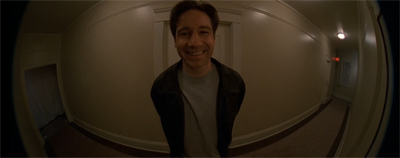
The inside, looking out...

The inside, looking out…

So Vince Gilligan stepped up to bat. Gilligan had been on staff for a bout a year at this point. He had quickly established himself as one of the most promising young writers in the room. While his first script for the show – Soft Light – was arguably more interesting than successful, Gilligan enjoyed an incredible hot streak when he joined the staff. Pusher, Unruhe and Paper Hearts are among the best scripts of the third and fourth seasons. With Small Potatoes, he seemed to position himself as the logical successor to Darin Morgan.

Darin Morgan even appears in Small Potatoes to pass the metaphorical baton.

"Here's Mulder!"

“Here’s Mulder!”

Continue reading

The X-Files – Memento Mori (Review)

This February and March, we’re taking a trip back in time to review the fourth season of The X-Files and the first season of Millennium.

It is easy to see why Scully’s cancer arc is so fondly remembered.

It arrived at a point where the show was at the very top of its game. Scully’s cancer arc comes amid a slew of beloved and classic episodes, in the middle of a season that contains Home, Unruhe, Paper Hearts and many more. It is the defining mythology plot point for the show’s fourth season, which was the point at which The X-Files just exploded into the centre of popular consciousness. More than that, the episode introducing Scully’s cancer – Leonard Betts – was the most-watched episode of The X-Files ever broadcast.

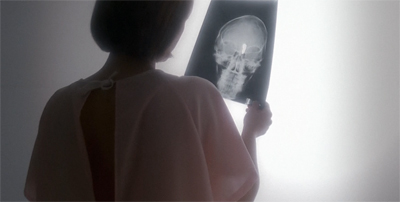
What's in your head?

What’s in your head?

Memento Mori has its own endearing aspects. If Leonard Betts was the show’s highest profile and most populist success, Memento Mori counts as one of the show’s biggest critical successes. The episode is largely responsible for winning Gillian Anderson her Primetime Emmy Award for Outstanding Lead Actress in a Drama Series. It also took home the Primetime Emmy Award for Outstanding Art Direction for a Series and received a nomination for Outstanding Writing for a Drama Series. It is perhaps the most prestigious episode of the fourth season.

However, in spite of all of that, Memento Mori remains something of a mess. It feels like a clumsy retread of One Breath, a story that worked much better in the show’s second season.

Send in the clones...

Send in the clones…

Continue reading

The X-Files – Leonard Betts (Review)

This February and March, we’re taking a trip back in time to review the fourth season of The X-Files and the first season of Millennium.

Leonard Betts is a big one. In fact, it may just be the biggest one.

Leonard Betts attracted the largest audience in the history of The X-Files, with almost thirty million people tuning in to watch the episode. This audience was largely carried over from Superbowl XXXI, but it arrived at a fortuitous moment for the series. The X-Files was exploding into the mainstream. Chris Carter and Frank Spotnitz had spent Christmas 1996 in Hawaii plotting The X-Files: Fight the Future, a blockbuster movie based on the series. The week before, Mulder and Scully had paid a visit to Springfield in The Springfield Files.

What a waste...

What a waste…

The show’s moment had arrived. Leonard Betts makes for quite the moment. It might not be the best episode in the history of the show; it might not even be the best episode of the season. However, it ranks with Pusher as one of the great archetypal episodes of The X-Files. The show captures so much of what makes The X-Files great, almost perfectly distilling the appeal of the show into a tight forty-odd minute package. It is a beautifully-crafted piece of television that checks all of the right boxes. This is a pretty fantastic introduction to the show and its world.

Leonard Betts is an episode that has been put together with incredible skill, one that demonstrates why The X-Files had such an impact on the popular consciousness.

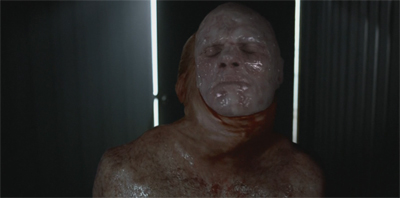
Comfortable in his skin...

Comfortable in his skin…

Continue reading

The X-Files – Paper Hearts (Review)

This February and March, we’re taking a trip back in time to review the fourth season of The X-Files and the first season of Millennium.

Paper Hearts is one of the best scripts that Vince Gilligan would write for The X-Files, and one of the best episodes of the fourth season. This is enough to put it in the frontrunners of any possible “best episode ever” ranking.

The episode is spectacular. It works on just about every conceivable level. It has a great script from a great young staff writer. It has a great guest star in Tom Noonan. It features a great performance from David Duchovny. Rob Bowman does a spectacular job directing. Mark Snow is one of the most consistent composers working in nineties television, and his score for Paper Hearts manages to be simple, effective and memorable. It is thoughtful, atmospheric, emotional and compelling. It is the perfect storm.

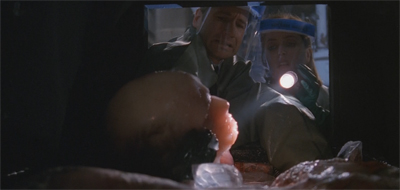
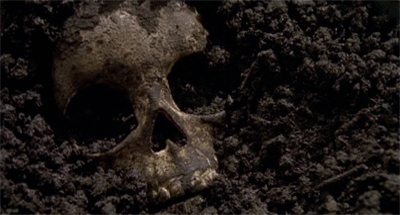
The truth is buried...

The truth is buried…

However, the real cherry on Paper Hearts is just how easy it would be to mess up an episode like this. On paper, Paper Hearts seems like a disaster waiting to happen. It is an episode that teases the audience with a potentially massive reversal of one of the show’s core truths. It posits an alternative theory for the abduction of Samantha Mulder that would shake the show to its very core. If Paper Hearts followed through on that basic premise, everything would change. Much like Never Again, this is an episode with the potential to poison the show.

Which makes it inevitable that Paper Hearts will back away from its potentially game-changing premise, which brings its own challenges. It is one thing to up-end the apple cart; it is another to pretend to up-end the apple cart only to restore the status quo at the end of the hour. On paper, and from any synopsis, Paper Hearts seems like the biggest cheat imaginable. “Everything is different!” it seems to yell. “And then it’s not!” The real beauty of Paper Hearts is the way that the episode works almost perfectly even with these huge hurdles to clear.

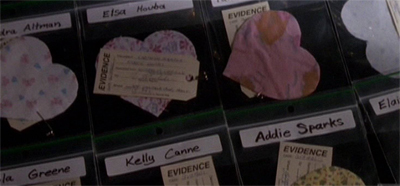
The heart of the matter...

The heart of the matter…

Continue reading

The X-Files – Unruhe (Review)

This February and March, we’re taking a trip back in time to review the fourth season of The X-Files and the first season of Millennium.

Unruhe was the first episode of The X-Files to air on Sunday nights.

The show had vacated its traditional Friday evening slot to make room for Millennium. It had been moved to Sunday evenings. Although the production team were initially quite cautious about the move, it would ultimately pay dividends for the show. The show had already become a mainstream hit, but the Sunday night slot would help to push it into the stratosphere. Airing alongside Fox’s other long-running success story, The Simpsons, the show would secure its highest ratings ever less than six months after moving into its new slot.

Photo copy?

Photo copy?

Of course, this also draws attention to another interesting facet of Unruhe. This was the first episode of The X-Files to air after Millennium hit the air. Unruhe aired two days after the pilot. The impact of Millennium has already been keenly felt on the fourth season of The X-Files in a number of ways; deadline and production issues hindered Herrenvolk, while James Wong and Glen Morgan had been drafted back to The X-Files to help shore up the fourth season. However, Unruhe seems to directly (and perhaps pointedly) acknowledge Chris Carter’s younger series.

Unruhe is an episode that would probably have been quite at home on Millennium. It is an episode that could easily have been re-worked or re-tooled for Carter’s new show – with only a few minor changes. With its serial offender, fascination with forensic psychology, and its grim reflection on mankind’s capacity for evil, it feels like an story that could comfortably have been told using Frank Black. While it serves to welcome Millennium to the genre neighbourhood, it also seems to suggest that Millennium might be a little redundant.

A walk among the tombstones...

A walk among the tombstones…

Continue reading

The X-Files – Pusher (Review)

This November (and a little of December), we’re taking a trip back in time to review the third season of The X-Files and the first (and only) season of Space: Above and Beyond.

Pusher is perhaps one of the most effective stand-alone “monster of the week” stories that the show ever did.

It is no wonder that the episode is frequently cited among the best episodes of The X-Files ever produced, but it is telling that it was identified by Slate as the perfect “gateway” episode of the show. If you want to give someone a taste of The X-Files without burdening them with continuity or back story, this is a good choice. It may not be the best episode that Vince Gilligan ever wrote, and it may not even be the best episode of the third season, but it is one the strongest demonstrations of what the show does on a weekly basis.

Mano a mano...

Mano a mano…

Pusher is the first episode that Vince Gilligan wrote after joining The X-Files writing staff. It is the only episode credited to Gilligan in the show’s third season. He had been offered a position on staff after turning in Soft Light at the end of the second season, but had hesitated before accepting the job. When he did accept the job, he came down with a dose of infectious mononucleosis. As a result, Gilligan only wrote one script for the third season, despite becoming one of the show’s most prolific writers.

Pusher is a pulpy delight, a spectacularly constructed standalone that perhaps points the way to Gilligan’s later work.

Gift of the gab...

Gift of the gab…

Continue reading

The X-Files – Season 2 (Review)

This August (and a little of September), we’re taking a trip back in time to review the second season of The X-Files. In November, we’ll be looking at the third season. And maybe more.

The first few seasons of a television show are very much about defining the show – figuring out what works and what doesn’t, and what form the show will take. After all, a lot of discussion and planning takes place during development, but all of that is on paper. It’s only once you’ve worked with the cast and had a chance to gauge audience response that it is possible to truly understand a television show.

The first two seasons of The X-Files seem like an attempt to map out the show, to mark the boundaries and do some fine calibration. The show had been a sleeper hit in its first season, popular enough to secure a second season on Fox. However, the second season had seen the series become a breakout hit. It climbed rather dramatically in the ratings, and the show would continue that ascent through to the fifth season in the lead-in to the feature film. However, the second season still feels like it’s a learning curve.

xfiles-onebreath6

There are exceptional episodes in the second season. The season provides a wealth of classic stories. Fresh Bones and Our Town stand out as two of the best monster-of-the-week stories that the show had done by this point in its life-cycle. Even outside of that, there are classics like One Breath or Humbug or The Host or F. Emasculata. However, there are also quite a few misfires like Fearful Symmetry or Excelsis Dei or 3.

There are a lot of points in the second season where it feels like The X-Files is experimenting, trying new things that would ultimately become part of the show’s unique identity. Not all of these elements worked, but that is the luxury of a second season. It allows the production team to do that sort of experimentation so they might find their groove.

xfiles-duanebarry16 Continue reading