• Following Us

  • Categories

  • Check out the Archives


  • Awards & Nominations

435. Star Trek Into Darkness (#—)

Hosted by Andrew Quinn and Darren Mooney The 250 is a weekly trip through some of the best (and worst) movies ever made, as voted for by Internet Movie Database Users.

This week, JJ Abrams’ Star Trek Into Darkness.

Captain James T. Kirk has been in command of the USS Enterprise for a year. In that time, he has not lost a single service man. Kirk is angling for the hottest new assignment – a five year mission of exploration into uncharted territory – when a terrorist attack masterminded by a rogue Starfleet Security Officer throws everything that Kirk thinks he knows into doubt.

At time of recording, it was not ranked on the list of the best movies of all time on the Internet Movie Database.

Continue reading

427. Star Trek (#—)

Hosted by Andrew Quinn and Darren Mooney, The 250 is a (mostly) weekly trip through some of the best (and worst) movies ever made, as voted for by Internet Movie Database Users. New episodes are released every second Saturday at 6pm GMT, with the occasional bonus episode between them.

This week, JJ Abrams’ Star Trek.

Orphaned following an encounter with a strange and hyper-advanced alien ship, James Tiberius Kirk drifts through life in search of purpose. Prompted to enroll in Starfleet Academy, Kirk finds himself drawn into an epic web of fate that crosses time and space, seemingly drawing him towards the most unlikely of companions, a half-Vulcan named Spock.

At time of recording, it was not ranked on the list of the best movies of all time on the Internet Movie Database.

Continue reading

367. Star Trek: Generations (#—)

Hosted by Andrew Quinn and Darren Mooney, The 250 is a weekly trip through some of the best (and worst) movies ever made, as voted for by Internet Movie Database Users. New episodes are released Saturdays at 6pm GMT.

This week, David Carson’s Star Trek: Generations.

Disaster strikes during the maiden cruise of the USS Enterprise-B: James T. Kirk is killed in a freak accident, an encounter with a cosmic force beyond all reckoning. Nearly a century later, Jean-Luc Picard commands another Enterprise. Grappling with horrific news from home, Picard finds himself drawn into the sinister machinations of the mysterious Tolias Soran. A survivor of that fateful tragedy that killed Kirk, Soran is pursuing something beyond even Picard’s deepest imaginings.

At time of recording, it was not ranked on the list of the best movies of all time on the Internet Movie Database.

Continue reading

364. Star Trek V: The Final Frontier (#—)

Hosted by Andrew Quinn and Darren Mooney, The 250 is a weekly trip through some of the best (and worst) movies ever made, as voted for by Internet Movie Database Users. New episodes are released Saturdays at 6pm GMT.

This week, William Shatner’s Star Trek V: The Final Frontier.

The planet Nimbus III was supposed to be “the Planet of Galactic Peace”, but it has descended into a wretched hive of scum and villainy. From the desert comes a stranger, a mysterious Vulcan named Sybok with an incredible gift for recruiting followers. Sybok has a divine mission. He plans to journey to the centre of the galaxy and speak to God. He just needs a starship to do so. And, to get that, Sybok will be reunited with his estranged half-brother: Spock.

At time of recording, it was not ranked on the list of the best movies of all time on the Internet Movie Database.

Continue reading

New Escapist Column! On How “Strange New Worlds” Finally Confronts a Long-Standing “Star Trek” Blindspot…

I published a new piece at The Escapist earlier this week. We’re doing a series of recaps and reviews of Star Trek: Strange New Worlds, which is streaming weekly on Paramount+. So we thought we’d take a look at the second episode of the second season.

Strange New Worlds is obviously a nostalgic appeal to classic Star Trek, particularly the Berman era of the nineties. However, the show has been somewhat reluctant to engage with some of the blindspots of that era, in particular its refusal to acknowledge or engage with the ongoing debate around gay rights. Ad Astra Per Aspera represents a long overdue reckoning with this failure on the part of the franchise, constructing a very classic Star Trek narrative that reckons very overtly with the marginalisation of these minorities.

You can read the piece here, or click the picture below.

New Escapist Column! On How “Strange New Worlds” Performs “Star Trek”…

I published a new piece at The Escapist earlier this week. We’re doing a series of recaps and reviews of Star Trek: Strange New Worlds, which is streaming weekly on Paramount+. So we thought we’d take a look at the second season premiere.

There is a fascinating recurring emphasis on the idea of performance within Strange New Worlds. In particular, the idea of performing Star Trek. It is not enough for Strange New Worlds to be Star Trek, or even to engage in the familiar Star Trek tropes. The show has to constantly remind and reassure viewers that it is Star Trek. This is distracting and ultimately undermines the series, which seems to spend more time asserting that it is Star Trek than it does actually being Star Trek.

You can read the piece here, or click the picture below.

New Escapist Column! On How “Strange New Worlds” is a Relic of an Older Form of Television…

I published a new piece at The Escapist yesterday. We’re doing a series of recaps and reviews of Star Trek: Strange New Worlds, which is streaming weekly on Paramount+. The second season will premiere later this week.

Strange New Worlds is an inherently nostalgic piece of Star Trek, a throwback to a kind of franchise storytelling that was inexoribly rooted in the realities of nineties television. Indeed, given the decline of the franchise during Star Trek: Voyager and Star Trek: Enterprise, there is a solid argument to be made that this mode of storytelling was specifically tied to the medium of syndicated mass media broadcast television during the nineties, which makes it an awkward and uncomfortable fit for the modern age of streaming media.

You can read the piece here, or click the picture below.

New Escapist Column! On the Trump Era Paranoia of “Star Trek: Picard”…

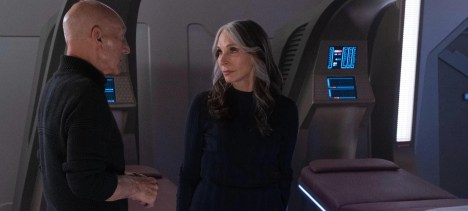
I am doing weekly reviews of Star Trek: Picard at The Escapist. They’ll be dropping every Thursday morning while the show is on, looking at the third season as the show progresses. This week, the season’s fifth episode.

The third season of Picard is fascinating, in large part because it’s so narratively and thematically empty. So much of the show is given over to empty nostalgia, that there’s little sense of what this story is supposed to be about, beyond a loose assemblage of familiar clichés into a recognisable pattern. There’s none of the urgency of the immigration and xenophobia metaphors that informed the first two seasons, as clumsy as those were. Instead, Picard falls back on a set of unfortunate science-fiction clichés that speak to the worst impulses of the current moment, a paranoia that feels tied to the worst of the American zeitgeist.

You can read the piece here, or click the picture below.

324. Star Trek III: The Search for Spock (#—)

Hosted by Andrew Quinn and Darren Mooney, The 250 is a (mostly) weekly trip through some of the best (and worst) movies ever made, as voted for by Internet Movie Database Users. New episodes are released every second Saturday at 6pm GMT, with the occasional bonus episode between them.

This time, Leonard Nimoy’s Star Trek III: The Search for Spock.

The Enterprise returns from its disastrous confrontation with Khan Noonien Singh, a battle that ended with the death of Spock and the creation of Genesis. However, Kirk is haunted. McCoy appears to be having a psychological breakdown, while Spock’s father chastises him for leaving Spock’s body on the Genesis Planet. Determined to return his friend’s body and soul to Vulcan, Kirk embarks on a dangerous mission to Genesis. However, he’s operating in contravention of Federation orders and quickly discovers that other parties have an interest in the secrets of Genesis.

At time of recording, it was not ranked on the list of the best movies of all time on the Internet Movie Database.

Continue reading

New Escapist Column! On The Meaningless Conflict of the Third Season of “Star Trek: Picard”…

I am doing weekly reviews of Star Trek: Picard at The Escapist. They’ll be dropping every Thursday morning while the show is on, looking at the third season as the show progresses. This week, the season’s third episode.

There is a longstanding tradition within the Star Trek franchise of avoiding conflict between the primary characters, one rooted in Gene Roddenberry’s conception of Star Trek: The Next Generation. However, many of the franchise’s best stories have come from disregarding that basic rule, most notably a lot of Star Trek: Deep Space Nine. Seventeen Seconds is a frustrating piece of television because it demonstrates the appeal of Roddenberry’s rule, by generating sets of meaningless conflict between lead characters that have no depth and will inevitably be quickly erased and forgotten.

You can read the piece here, or click the picture below.