• Following Us

  • Categories

  • Check out the Archives


  • Awards & Nominations

Non-Review Review: Jumanji – Welcome to the Jungle

Jumanji: Welcome to the Jungle is a weird and interesting experiment, in part because it is a nostalgic and belated sequel that remains caught between its past and the present.

Welcome to the Jungle joins a long (and perhaps undistinguished) line of twenty-first century franchise revivals for beloved nineties properties. The original Jumanji was a hardly a breakout hit, even if it did make an impression on a younger generation who would have grown up on it as part of Robin Williams’ nineties family-friendly oeuvre along with Hook or Ms. Doubtfire. Indeed, Jumanji is arguably the nineties Robin Williams film most perfectly suited to a revival like this, in that it involves a premise that can be divorced from its iconic and beloved star.

Franchises find a way.

At the same time, Jumanji is undoubtedly near the bottom of nineties adventure films in need of a revival, lurking in the shadow of other resurrected blockbusters like Independence Day or Jurassic Park. Perhaps because of this distance, and perhaps because of the lack of a true cult iconography, Jumanji serves as an interesting control case. This is a film with one leg in the present, aimed at what modern families expect from blockbuster entertainment. The other leg it planted firmly in the past, harking back to certain aspects of formula that seem almost quaint.

Welcome to the Jungle is not a particularly good film, but it is an interesting one. It serves as a prism through which certain aspects of nostalgia might be deconstructed and explored.

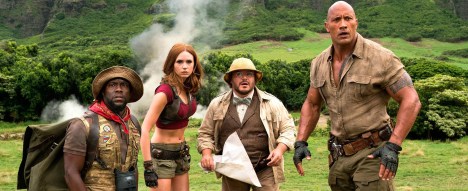
Players.

Continue reading

Star Trek: Deep Space Nine – Tacking Into the Wind (Review)

Tacking Into the Wind might just be the last truly great episode of Star Trek: Deep Space Nine.

Of course, there are some very good episodes lying ahead. However, none of them hum as perfectly as Tacking Into the Wind does. The Dogs of War is fantastically constructed and does pretty much everything that a penultimate episode of a long running series needs to do, but it largely feels like a prelude episode to the grand finale. What You Leave Behind is a powerful and emotive piece of television, and an effective conclusion to seven years of storytelling, but it suffers from some pacing issues and some poor storytelling choices in its second half.

The end of an era.

However, Tacking Into the Wind is just brilliant. Deep Space Nine has produced more than its fair share of (relatively) standalone classic episodes: Duet, The WireThe Way of the Warrior, The Visitor, Trials and Tribble-ations, Far Beyond the Stars, In the Pale Moonlight. Even in the seventh season, there have been any number of episodes that work beautifully on their own terms: Treachery, Faith and the Great River, Once More Unto the Breach, The Siege of AR-558, Chimera. Even those tied into larger arcs like the Dominion War still worked as relatively standalone units of story.

However, Tacking Into the Wind is brilliant in a way that is very particular to this moment of Deep Space Nine. Perhaps the closest companion pieces are episodes like Call to Arms or Sacrifice of Angels, episodes that work well enough on their own terms, but become transcendental when approached as the culmination of long-running story threads that pay off months of storytelling decisions. Taking Into the Wind takes this approach and escalates it further. Taking Into the Wind is the culmination of a narrative that has been brewing for the better part of a decade.

Surviving by the skin of his teeth.

Tacking Into the Wind is an episode that could never have worked on Star Trek: The Next Generation or Star Trek: Voyager. It is too dependent on lingering narrative threads, on long-running arcs, on a grand and sweeping (and ironic) view of history. Tacking Into the Wind ties up the fate of the Klingon Empire, an institution that has been in decline since Heart of Glory and rotting from the inside out since Sins of the Father. It parallels that with a fundamental underlying shift in the Cardassian society introduced in The Wounded.

Tacking Into the Wind is an episode that could only possibly work as the pay off to serialised storytelling, and which demonstrates the power of a good dramatic pay-off almost a decade in the making. In many ways, Tacking Into the Wind is the perfect episode for this so-called “Final Chapter”, the perfect distillation of everything that the creative team have been trying to do with this ten-part sprawling epic.

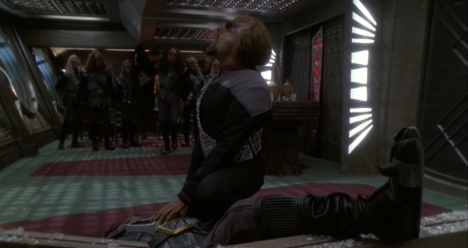
Cloak of office.

Continue reading

The Defenders – Royal Dragon (Review)

Royal Dragon might just be the best episode of The Defenders. It is also the smallest.

Royal Dragon is in many ways the runt of the litter. It is an episode relatively low on action beats, particularly given that it is sandwiched between the closing scenes of Worst Behaviour and the opening scenes of Take Shelter. It also has a relatively small primary cast. There is no sign of supporting players like Colleen Wing, Misty Knight, Trish Walker, or Claire Temple. The episode also confines most of the four heroes to one location for the bulk of the runtime, even if Jessica Jones gets to take a breather. It could easily be the “bottle” episode.

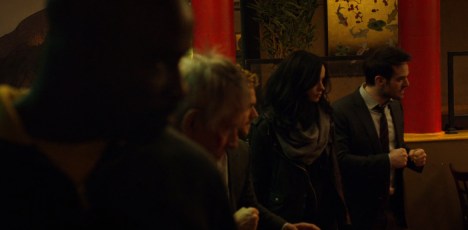
Hero shot.

Royal Dragon is also an episode that accomplishes relatively little in terms of plot momentum or forward movement. There are no major revelations in the episode, with a lot of the exposition covering information that the audience already knows from the other four shows. In some ways, Royal Dragon feels like a void at the centre of the season. It does not tangibly push the season forward. In many ways, the cliffhanger is arguably just a retread of the ending to Worst Behaviour; these four heroes, standing together against impossible odds.

At the same time, Royal Dragon luxuriates in this space and this emptiness. It is an episode that essentially locks its four leads together in a confined space for most of the runtime, which affords the writing staff the opportunity to have the characters slow down and process what has happened to them, to bounce off one another. Royal Dragon allows for the first extended interactions between various combinations of these four players.

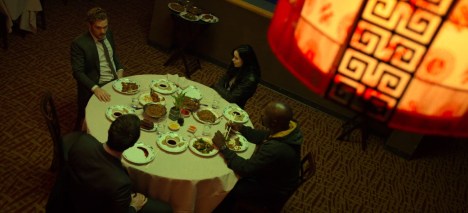
A taste of teamwork.

Continue reading

The Defenders – The H Word (Review)

It’s a hell of a town.

One of the most striking aspects of The Defenders is its emphasis on New York City. Of course, the Marvel Universe has always been centred on the Big Apple. Decades before Fantastic Four #1 laid the foundation stone for that elaborate shared continuity, Marvel Comics #1 established New York City as a hub for characters like Namor, the Angel and the Human Torch. The city has a long and rich shared history with the comic book publisher, allowing visitors to take tours of iconic comic book locations and even lighting the Empire State Building in the colours of The Amazing Spider-Man.

Matt’s got the devil off his back.

Of course, this long-standing association between New York and the Marvel universe has inevitably bled over into the Marvel Cinematic Universe. Most obviously, The Avengers places its iconic long pan around the eponymous heroes right in front of Grand Central Station. Spider-Man: Homecoming features its hero swinging through Queens and the suburbs. However, most of these scenes are shot on location outside New York; Atlanta and Toronto frequently double for New York.

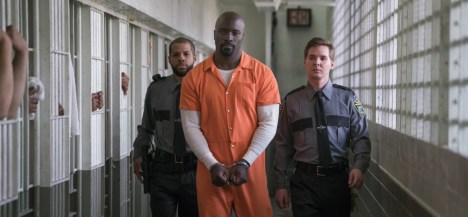
In contrast, the Netflix Marvel series have all shot in and around New York. Daredevil, Jessica Jones, Luke Cage and Iron Fist all went to the bother of filming Manhattan, rather than trying to recreate the city using another location. In many ways, it feels like these series unfold in a more authentic and grounded version of New York than the corresponding feature films, right down to the fact that their skylines all feature the real-life MetLife Building instead of the fictional “Avengers Tower.”

Trish Talk.

The Netflix shows did not always engage with a particular vision of New York. Iron Fist was so confused about its own identity that it never engaged with the city around it. Jessica Jones never invested in Jessica’s surroundings, but it still found time to include the city itself in the title character’s goodbye tour in AKA Top Shelf Perverts. However, both Daredevil and Luke Cage were very firmly rooted in their own versions of the Big Apple. Daredevil imagined a pre-gentrification eighties urban hellscape, while Luke Cage celebrated the history and culture of Harlem.

Given that The Defenders is being overseen by showrunners Marco Ramirez and Doug Petrie, it makes sense that the series would have a very strong sense of place. Ramirez and Petrie were previously in charge of the second season of Daredevil, which imagined a version of New York that seemed trapped in the urban decay of the late seventies and early eighties, Bang even evoking the Summer of Sam in its introduction of the Punisher while the ninjas that populate the second half of the film look to have escaped a particularly dodgy seventies exploitation film.
Cage re-match.

However, The Defenders is not particularly interested in one individual version of New York. It is not a show that is firmly rooted in one single idea of the Big Apple, not a story that unfolds against the backdrop of one individual conception of the urban space. Instead, The Defenders is particularly interested in the capacity for these various iterations of New York to overlap with one another. The opening credits offer a visual expression of this approach, suggesting the series serves as a point of intersection.

The Defenders is a series built around the infinite potential of New York, this idea of the city as a space in which narratives collide and coalesce, where separate stories might come together and where people on their own journeys might find common cause with one another. The Defenders seems to accept that nightmarish cityscape of Daredevil is hard to reconcile with the uncaring urban environment of Jessica Jones or the vibrant community of Luke Cage. However, The Defenders also insists that they are are all facets of the same city.

Oh, and Danny is there too.

Continue reading

The Sound of Not-Quite Silence: The Era of Dialogue-Lite Blockbusters

There are several remarkable things about the blockbuster slate for 2017. The most obvious is that the blockbuster slate for 2017 is remarkably strong.

It is definitely the strongest slate of summer releases since at least 2012, if not 2008. Sure, there have been misfires like CHiPs or Baywatch or Transformers: The Last Knight, but there has also been a lot of great stuff. Wonder Woman, Baby Driver, War for the Planet of the Apes, Dunkirk, The Big Sick. Going back to earlier in the year, there is a fine selection of genre material. Get Out, Logan, John Wick: Chapter II. Even the second-tier blockbusters like Kong: Skull Island, Spider-Man: Homecoming, Guardians of the Galaxy, Vol. 2 are relatively solid.

However, there is also an interesting trend in how these stories are being told. In particular, the summer blockbusters of 2017 are quite interesting on a formal level. In particular, these blockbusters are very invested in non-verbal storytelling. While the superhero movies of the summer – Guardians of the Galaxy, Vol. 2, Wonder Woman, Spider-Man: Homecoming – still conform to a familiar structure of dialogue-driven exposition, a lot of the other films tend to be quite light on conventional dialogue, relying on other ways of communicating character, story and theme.

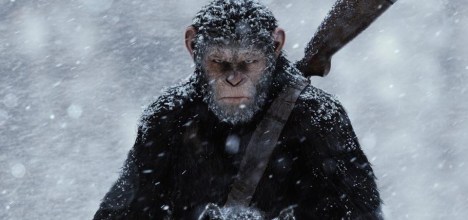
This is most obvious with War for the Planet of the Apes and Dunkirk, impressive blockbusters that feature a number of extended dialogue-light scenes. When the characters do communicate, it is often in unconventional ways; the technical dialogue plays beneath the soundtrack in Dunkirk, while the apes communicate through sign language in War for the Planet of the Apes. In some ways, Baby Driver is also part of this trend. It is a movie that features dialogue, but is largely driven by its soundtrack. It characters often seem to speak in pulp clichés, with movie’s individuality shining on Baby’s iPod.

Continue reading

The X-Files – Redux I (Review)

This May and June, we’re taking a trip back in time to review the fifth season of The X-Files and the second season of Millennium.

Redux I hits on the same problem that haunted The Blessing Way. It is very hard to structure a three-parter that bridges two seasons of television. The biggest problem is the second episode, which has the unfortunate position of having to serve as a season premiere while carrying the baggage from the last season finalé and remaining unable to resolve anything. So the episode inevitably becomes an exercise in spinning wheels as the show saves all of its potential resolutions for the third episode.

A particular cynical commentator might suggest that Redux I plays as Chris Carter’s twisted take on Aaron Sorkin. Sorkin is famous for his sequences of characters walking through corridors while trading witty banter – a very nice way of keeping physical movement in the midst of largely dialogue-driven plots. This would become a defining feature of The West Wing, the show that Sorkin would launch in September 1999. Redux I seems to prefigure the style, albeit with a twist. There is lots of walking through corridors as characters talk to themselves in monologue.

"Wow, and I though my filing system was bad..."

“Wow, and I thought my filing system was bad…”

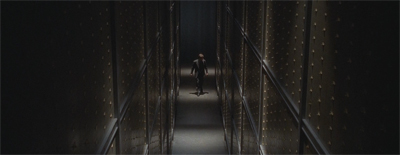
Redux I plays as a collection of voice-over monologues transposed over sequences of Mulder wandering through corridors in the Pentagon. One immediately wonders how the Department of Defence could have staged such a complex and convincing hoax against the American people when they cannot find one lost FBI agent inside the Pentagon. The drab setting makes for a shockingly dull episode; the majesty of the Yukon Mountains is lost, replaced by long sequences of grey walls and red doors.

Redux I has more than a few interesting ideas, but its structure is a mess. Sitting between Gethsemane and Redux II, the episode has no clear sense of purpose or momentum; no drive or ambition or excitement.

Don't worry, it could still make sense...

Don’t worry, it could still make sense…

Continue reading

The X-Files – Musings of a Cigarette-Smoking Man (Review)

This February and March, we’re taking a trip back in time to review the fourth season of The X-Files and the first season of Millennium.

“No great man lives in vain. The history of the world is but the biography of great men.”

– Thomas Carlyle, On Heroes, Hero-Worship, and the Heroic in History

Light 'em up...

Light ’em up…

Continue reading

Millennium – Dead Letters (Review)

This February and March, we’re taking a trip back in time to review the fourth season of The X-Files and the first season of Millennium.

Dead Letters is the first Millennium episode credited to writers James Wong and Glen Morgan, and to director Thomas J. Wright. These are three creative forces that would come to be massively influential in the development of the show.

As with Gehenna, the obvious point of comparison in this early stage of development is with The X-Files. Chris Carter wrote the first two episodes of both shows, outlining the core themes and larger direction. However, the crucial third episode was handed to the team of James Wong and Glen Morgan. They would be the first writers other than Carter to write for Fox Mulder, Dana Scully and Frank Black. They were tasked with demonstrating that these concepts could work in the hands of writers other than Chris Carter.

A hair's breadth away from insanity...

A hair’s breadth away from insanity…

The first script that Wong and Morgan wrote for The X-Files was Squeeze. It was the show’s first stand-alone monster-of-the-week episode, and effectively codified a very flexible subgenre of The X-Files, while also creating a very popular and iconic monster. Dead Letters does something vaguely similar for Millennium, even if it is not quite as effective. Free from a lot of the millennial anxieties that drove The Pilot and Gehenna, Dead Letters offers an example of a fairly pure-blooded “serial-killer-of-the-week” story.

For better or for worse, Dead Letters sets the tone for the rest of the show’s first season.

Bits and pieces...

Bits and pieces…

Continue reading

My 12 for ’14: Gone Girl and the most $£@!ed up people…

With 2014 coming to a close, we’re counting down our top twelve films of the year. Check back daily for the latest featured film.

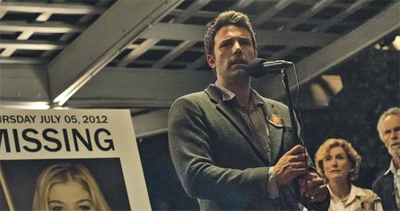
Gone Girl is a surprisingly playful film.

David Fincher is a director who likes to play with his audience, constructing elaborate and stylish labyrinths that might trap the audience as easily as they trap his characters. Gone Girl plays to Fincher’s strengths, as Gillian Flynn adapts her best-selling novel into a pulpy thriller. The news that Fincher and Flynn would collaborate on HBO’s Utopia is fantastic, giving television viewers something to anticipate; one hopes that the collaboration might be as fruitful as that enjoyed by Nic Pizzolatto and Cary Joji Fukunaga on True Detective this year.

gonegirl3

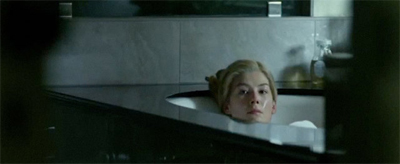
Gone Girl is a story about stories. Most particularly, it is the story of two people fighting to control their own narratives; to try to steer the stories being told around them. Is Nick Dunne a loving husband desperately searching for his missing wife? Or is Nick Dunne a sociopath desperately trying to cover-up her murder? Is Amy Dunne an innocent victim who has worked her way into the heart of the American public? Or is Amy Dunne a manipulative and ruthless (and ruthless) cynic who has helped to turn her marriage into a perpetual struggle?

Gone Girl is a very sleek and stylish film that is lovingly crafted and wryly self-aware. It is a horror story about a dysfunctional marriage, a tale about media fascination and a black comedy about resentment and revenge. More than that, it is a puzzle that competes against the audience, a story that seems to change form at any point where the viewer might finally have come to grips with what they are watching.

gonegirl5

Note: This “best of” entry includes spoilers for Gone Girl. You should probably go and see the movie, because everybody is talking about it. Don’t worry, we’ll wait for you. Still there? Good. Let’s continue. Continue reading

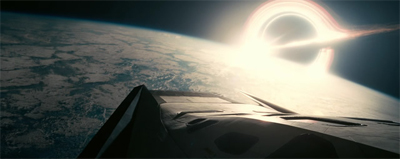
Non-Review Review: Interstellar

Interestingly, Christopher Nolan seems to have generated a reputation as a rather detached director. Common wisdom around Nolan’s films suggest that the film-maker is perhaps too cold and clinical in his approach to the material; that his films lack warmth or humour. This reputation is probably a result of the director’s fascination with non-linear storytelling. After all, The Dark Knight is his only straight-arrow-from-beginning-to-end film.

Probably also due to the narrative contortions and distortions of films like Memento or The Prestige, Nolan is generally presented as a film-maker who constructs visual puzzle-boxes. His films are frequently treated as riddles to be solved. Consider the discussion of narrative “plot holes” in The Dark Knight Rises that fixates on how Bruce Wayne got around back to Gotham, or the discussion on the mechanics of the final shot of Inception. This approaches to his work tend to divorce the viewer from his films.

Everything burns...

Everything burns…

Interstellar will likely be Nolan’s most polarising film to date, replacing The Prestige or The Dark Knight Rises. The film offers an extended two-and-a-half hour rebuttal to accusations that Nolan is detached or distant. Much has been made about the attention to detail on Interstellar. The physics on the movie were so exact and precise that physicist Kip Thorne actually made theoretical advances while working on the film.

However, at the same time, one character posits love as a force more powerful than gravity or time. Interstellar might be precise and meticulous, but it is not a film that lacks for an emotional core; it is not a movie that lacks for warmth. Interstellar feels like a conscious attempt to cast off the image of a cynical and cold film-maker.

Out of this world...

Out of this world…

Continue reading